
In Britain, a jury recently decided that the so‑called Khaybar chant is not antisemitic. The chant invokes Khaybar, a seventh‑century battle in which Jewish communities were slaughtered by the armies of Muhammad. The actual chant in Arabic, “Khaybar, Khaybar Ya Yahud, Jaish Mohammed Sauf Ya’ud” means “Watch Out Jews, Remember Khaybar, the Army of Mohammed is returning”. Its meaning is not subtle. It is a threat dressed up as history: remember what happened to the Jews then—remember what can happen again.
If that chant is deemed legally innocuous, what else must now be tolerated?
Would crowds chanting, “Jews, remember the ovens—the Nazis are coming,” be waved through as historical commentary about the Holocaust? What about “We love October 7—it will happen again, in your neighborhood,” explicitly celebrating the mass murder of Jews in Israel and promising its repetition elsewhere? These are not metaphors. They are incitement through remembrance, violence recalled as promise.
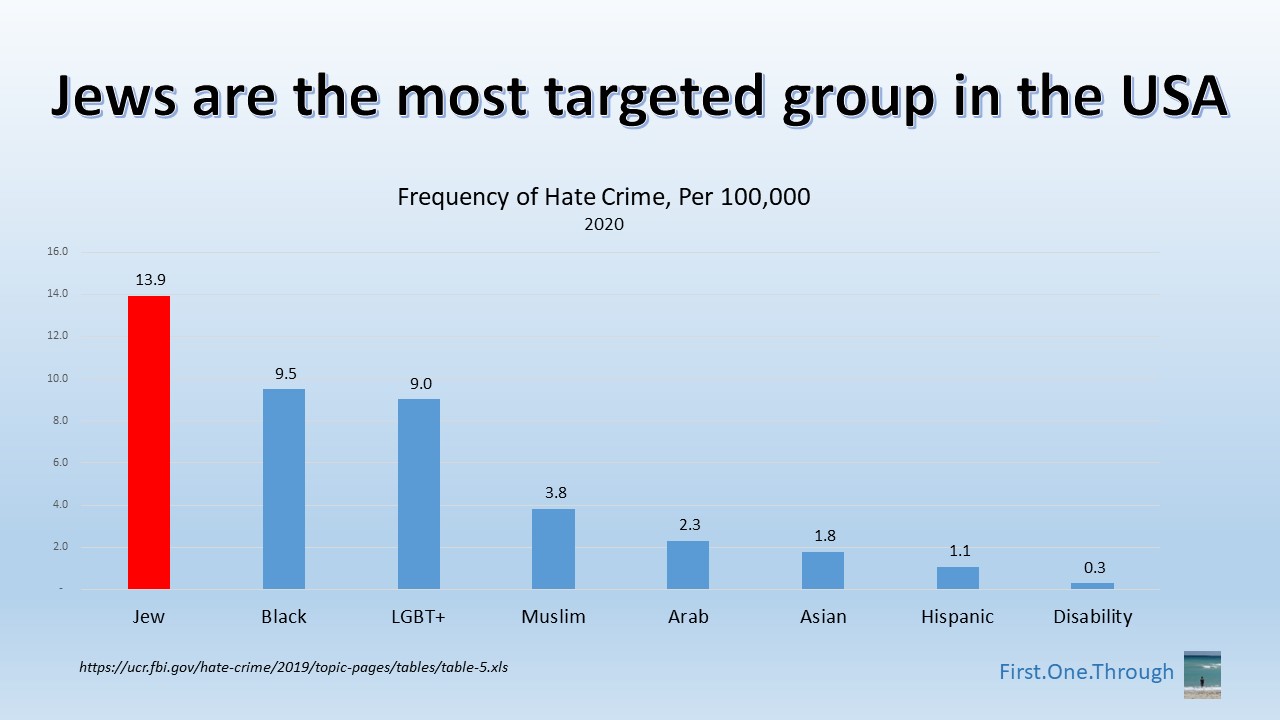
The problem is not that the law is incapable of recognizing hate. It plainly can. Careers are ended for misgendering. A single racial slur can bring swift institutional punishment. Speech codes are enforced with zeal—except, it seems, when the targets are Jews.
When courts insist on laundering openly antisemitic chants into something more refined and dignified—while other forms of bigotry are policed to the syllable—Jews are stripped of basic protections. Uniquely so. They are told to absorb the abuse, to endure the menace, to treat threats as culture and calls to murder as mere politics.
Law enforcement, under this logic, will intervene only—perhaps—after Jewish blood is spilled. Until then, Jews are instructed to tolerate the intolerable.
The divergence between the United States and the United Kingdom is often overstated. America claims the shield of the First Amendment; Britain claims the precision of hate‑speech law. In practice, both systems now converge on the same result: maximal latitude for antisemitic intimidation, coupled with maximal scrutiny of everyone else.
In the U.S., threats are dismissed as protected speech until they metastasize into action. In the U.K., chants that openly celebrate or foreshadow Jewish slaughter are judicially sanitized as cultural or historical expression. Different doctrines, identical outcomes.

This is not neutrality. It is a re‑creation of an old status under a modern name: Jews may live here, but only on sufferance; they may speak, but only quietly; they may appeal to the law, but not expect its protection.
If Western societies imagine that this posture will buy peace—by indulging jihadist rhetoric while disciplining polite speech—they are deluding themselves. A legal order that cannot name antisemitism, that cannot distinguish remembrance from menace, has already corroded from within.
History’s lesson is not subtle. The moment a society teaches Jews to absorb threats, it has decided that Jewish safety is optional. And when the law makes that decision, it is only a matter of time before others learn the same lesson.







 First One Through