
Campus Jewish Life Needs a Mainstream Voice

On elite campuses, something more consequential than protest is unfolding. Jewish life is being redefined by extremists.
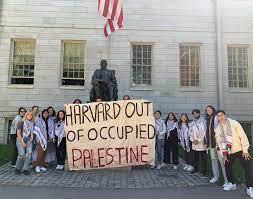
Groups like Jewish Voice for Peace and “Jews for Liberation” present themselves as the authentic moral voice of Jewish students. They speak in the language of justice, liberation, and equality that resonates with their peers. But strip away the branding and the position is blunt: the Jewish state is illegitimate and cast as a project of racial supremacy, apartheid, even genocide.

That is not critique. That is an argument for erasure.

The danger is not only that these claims are false. It is that they are being laundered into the mainstream through the fig leaf of Jewish identity. When anti-Israel activism is voiced by non-Jews, it is political. When it is voiced by Jews, it is marketed as moral truth. Then the fringe becomes credible and slogans become scholarship. Eliminationist ideas acquire the authority of internal dissent.

That shift matters.

Once Israel is no longer seen as a flawed state – much like others – but as an illegitimate one, every boundary collapses. If the state itself is the crime, dismantling it becomes justice, and whatever follows can be rationalized as liberation.

This is how language is turned into a weapon.

Mainstream Jewish campus institutions have not met this moment with equal clarity. Groups like Hillel are focused, rightly, on building Jewish life: community, ritual, continuity. They create space. They avoid litmus tests. They keep doors open. But when the central attack is not on Jewish practice but on Jewish legitimacy, generality reads as hesitation.

When others define Zionism as racism, it is not enough to respond with programming and belonging. The argument has moved to first principles. It demands an answer at that level.

And so a vacuum has opened.

Into that vacuum have stepped the loudest voices, not the most representative ones. The result is a distorted picture of Jewish opinion, one in which the extremes are visible and the center is absent.

That center needs a voice of its own.

Not a mirror image of the anti-Zionist fringe. Not a reaction that turns legitimate security concerns into collective hostility toward all Arabs. But a clear, unapologetic articulation of what most Jews actually believe, and what a sustainable future requires.

That position is not complicated.

The Jewish people have a right to sovereignty in their historic homeland. Israel must remain secure and capable of defending itself against those who seek its destruction. Terrorism and the glorification of violence are disqualifying, not contextual. No serious political future can be built on a culture that celebrates October 7 or teaches that murder is resistance.

The “two-state solution” is treated as moral doctrine, as if repeating it resolves the conflict. It does not. Self-determination is not a slogan tied to a single map. It can take different forms across different political arrangements. Millions of Palestinian Arabs have held Jordanian citizenship. Others live under varying structures of autonomy. The real question is not whether self-determination exists in theory, but whether any proposed structure can produce stability rather than violence.

A future Palestinian state, if it is ever to emerge, must come after a profound transformation: demilitarization, institutional reform, and an educational shift away from incitement and toward coexistence. Statehood is not an entitlement. It is a responsibility.

This is baseline reality, yet it is rarely stated plainly on campus.

A new kind of Jewish student group is needed, one that is explicit where others are cautious and disciplined where others are reckless. A group that centers Israel not as an abstraction but as a living, embattled state. One that can say, without hedging, that Jewish self-determination is legitimate, that its delegitimization is dangerous, and that moral seriousness requires both strength and restraint.

Such a group would do three things differently.

  • It would reject the language trap. Words like apartheid and genocide would be treated not as serious analysis but as distortions that inflame rather than illuminate.
  • It would refuse the false binary. Supporting Israel does not require abandoning moral judgment. Rejecting terror does not require rejecting an entire people.
  • It would re-anchor the conversation in reality. Israel exists. Threats are real. Peace requires conditions, not just intentions.

The goal is not to win an argument in a seminar room. It is to prevent a generation from being taught that the existence of the world’s only Jewish state is a moral error to be undone.

Campus Jewish life needs a mainstream voice that is willing to speak clearly – and be heard.

Courageous Jews On Hostile Campuses

College campuses have become extremely hostile places for Jews. The spike in anti-Semitic actions and anti-Israel vitriol spewed by both teachers and students are forcing many Jewish students and their parents to seek a course that is both safe and rewarding.

Those concerns and desire to find a blueprint forward brought fifty people to a Westchester synagogue to hear from two notable speakers.

On December 13, 2021, Tikvah’s Jewish Parents Forum presented a panel on “Raising Courageous Jews: A Guide Through the Cultural Minefield” at the Young Israel of Scarsdale. The group dedicated to “Preserving Jewish, Zionist, and American Values for the Rising Generation,” featured Jonathan Silver, Editor of Mosaic, and Liel Leibovitz, a Senior Writer for Tablet.

After Silver’s opening remarks, Leibovitz took the podium and essentially offered the audience his “Get Out” advice which he summarized in four points:

  • Jewish institutions won’t save you; the forces of culture are too great
  • Know who your friends are; it is now the moment to choose sides
  • ‘Do’ Jewish. Membership cards are meaningless; one needs deep engagement in Jewish life
  • Stop going to the expensive universities which despise your values

The approach made many in the audience uneasy. Several were the products of Columbia University (like Leibovitz) and other well-regarded institutions and hoped that they would hear methods for giving their children courage to stand for their Jewish values and the Jewish State. Instead, Leibovitz asked for the parents to have the courage to buck their instincts and send their kids elsewhere – or nowhere.

Silver seemed a bit uncomfortable with the suggestion as well, but for a different reason. Tikvah is dedicated to “bringing Jewish thinking and leaders into conversation with Western political, moral, and economic thought,” not to flee from the conversation.

So let me offer some of my own thoughts here which will be expounded upon in future articles in the FirstOneThrough blog and elsewhere where the articles are openly shared.

I start with a quote from a hero of Roger Hertog, the president of Tikvah, Winston Churchill:

“Success is not final, failure is not fatal: it is the courage to continue that counts.”

Success and failure come-and-go, rise-and-fall like a spinning wheel, but courage is the engine that keeps propelling people forward through the various ups-and-downs. If we want to raise courageous Jews who will not break with Jewish values and the Jewish State, we need to give them life skills that will allow them to flourish in the good times, sustain them in the difficult times and a desire to stay on the path.

Parental Modeling

Asking a child to be a proud Jew and supportive of the Jewish State begins with instilling those values from a young age. Starting the conversation in the senior year of high school or once they’ve entered university is oftentimes too late.

Children are sponges and learn behavior from watching. When they are brought up appreciating Israel and Judaism and see that their family actively engages in the great aspects of the religion and peoplehood and stands up to fight and defend Jews, Judaism and Israel, their instincts are already trained.

  • Belong to a synagogue and attend classes
  • Donate to Jewish causes
  • Write to government officials and the media when anti-Semitic and anti-Israel articles are posted
  • Talk about Israel and Judaism at the dinner table
  • Attend seminars both on education and political matters
  • Vote in elections
  • Visit Israel
  • Bring your children to protests
  • Be involved in Jewish activities at your children’s school

Education and Conviction

It is much easier to have courage when one has conviction about the cause.

Sending children to Jewish schools and camps is a critical way to make them appreciate their history, culture, religion and the remarkable nature of the Jewish State. Being in Israel with peers is a wonderful way to connect with Jewish history, such as made available from Birthright Israel.

Young adults on a Birthright trip to Israel

College campuses tend to be much more liberal than society at large. Liberals’ focus on empathy drives them to support those perceived as weaker and more vulnerable. Pro-Palestinian supporters have leaned into this theme to draw progressives to their cause. Young adults need to understand that Israel is the most liberal country for over 1,000 miles in any direction, as it lays the foundation for deeper engagement.

Our educational system needs a different approach for discussing Zionism, doing so via teaching critical thinking, critical listening and engaging narratives. That is a longer discussion for another article.

Recognize Audience / Be a Critical Listener

Today’s mainstream media is growing ever more hostile about Israel. The media has normalized an anti-Zionist lexicon that is also increasingly anti-Jewish. Understanding language and the forum is critical for knowing how and when to show courage.

There was a time when society at large resembled a bell curve. Most people sat in the middle on particular issues and there were fewer people on the extremes of right and left. Social media and the death of news in favor of editorials have now magnified those margins. In the beginning, it just appeared that the fringe was large as they were loud. Unfortunately, society continues to move towards a barbell shape with people and politicians in the middle lurching to more openly radical positions.

On campuses in particular, students are being asked to take sides on issues which they may or may not have any vested interest or real concern. Leaders, followers and participants now show up at rallies in calls for “allyship,” the comfort of belonging, or simply classic peer pressure. While they may look like a menacing horde, they are still individuals.

Courage requires intelligence. It does not mean taking on every situation in the same way, responding to every action or to every person in the same manner. It is important to help our young adults listen critically to their classmates and distinguish between those groups and individuals that should be engaged in conversation and those that should be confronted aggressively, both directly and indirectly.

Tactics and Support

The anti-Semites and anti-Zionists have playbooks which are being shared in universities around the world. They include: “die-ins” and “apartheid weeks”; boycott, divestment and sanctions (BDS) resolutions; keeping Jews and Jewish organizations out of school clubs and student government; taking over Middle East Studies departments with anti-Zionist lecturers; anti-Israel and anti-Semitic speakers on campus; etc. These are the manifestations that make campuses feel unwelcoming to Jews which showcase the animus towards the “Chosen People” and God’s “Promised Land.”

It can be very overwhelming to young adults who are simply looking for a quality education and a nice time on campus to deal with such organized hate. Fortunately, there are groups who can help students understand that they are not alone in confronting the mob. It is easier to be courageous with company.

College groups like Students Supporting Israel are springing up on various campuses. StandWithUs gives students materials and information to stand up to misinformation and malicious activities. Fuel for Truth focuses on pro-Israel education for young adults. Club Z is helping train teens to be articulate proactive Zionist leaders. Hillel provides students a Jewish experience on campus. The Louis Brandies Center helps students understand their legal rights when confronting abuse. Students should visit these institutions on a regular basis and not be reactive to negative events on campus.

Each organization uses a variety of approaches in combatting the anti-Jewish and anti-Israel venom. An example may be handing out notices in front of the “apartheid wall” exhibit, about Neta Sorek, an Israeli teacher and feminist who was a strong supporter of making peace with Palestinian Arabs. She was slaughtered while walking in a monastery garden by two Palestinian men who slipped through that “apartheid wall.”

Of course, there’s always the excellent choice of attending Yeshiva University, a proudly Jewish and Zionist university, among the top ranked universities, where the demand to be courageous for Jewish values and the Jewish State is commonplace.

It is a sad state of affairs that one has to talk about the courage required to be Jewish and a proud Zionist on college campuses today. We must prepare our children appropriately, and support those organizations which stand with them in these critical and volatile years.

Related articles:

Is Columbia University Promoting Violence Against Israel and Jews?

‘The Maiming of the Jew’

In San Francisco Schools, Anti-Zionism is Anti-Racism

Follow the Money: Democrats and the Education Industry