A Fever Called Antisemitism Hatched In Schools

The human body always has a temperature but no one talks about it unless it spikes. At a perfect 98.6 degrees Fahrenheit, no one even uses the word “temperature.” Jump a few degrees, and suddenly it’s sirens and sick days.

Antisemitism works the same way.

Jews have long been the most targeted religious group per capita in the United States. Attacks, slurs, defacements, discrimination were normalized and ignored. Society treated Jew hatred like a low-grade temp: just part of the day-to-day hum of our civic immune system.

Then came October 7, 2023.

The massacre of Israeli civilians by Gazan terrorists ignited something far beyond protests thousands of miles away — it was an outbreak of unmasked hatred. Jewish students were chased off college campuses. Synagogues were vandalized. Civilians were gunned down in Washington, D.C. Jews were burned alive in Boulder, Colorado.

Vandalism at Washington synagogue, November 2023

The low-grade temperature turned into a public health emergency.

The presidents of leading universities were like first year medical school students, offering cooling words while feeding the fever. They were mum as professors glorified the slaughter of Jewish children. They discussed free speech while student groups blamed the victims. The campuses didn’t just incubate antisemitism — they made it a fashionable teaching moment of civic engagement.

The pandemic of antisemitism chased Jews indoors and to their homes while the fever set up camp in quads. President Biden fumbled the vaccine, creating task forces that dealt with antisemitism – and Islamophobia. Biden couldn’t figure out whether to adopt the IHRA definition of antisemitism or not, while it invited the Council of American Islamic Relations (CAIR) – which glorified the October 7 slaughter – onto the task force meant to address Jew hatred. (To no one’s surprise, no Jewish groups were placed on the Islamophobia task force.)

Enter President Trump with an ice bath.

His administration is moving to dismantle the academic machinery that has enabled the plague, including revoking visas for foreign students at institutions like Harvard. Those students tend to come from the Global South where antisemitism is endemic. It’s not a gentle response. It’s designed to be a fever-breaker.

And it’s not just the universities which are infected.

California’s public schools – the Santa Ana Unified School District in particular – have become the Wuhan lab of American antisemitism — unleashing a virus of hate that targets the young and vulnerable. Unlike COVID-19, this disease travels faster through idealism than droplets, and to the young more than seniors. It spreads through TikTok videos and campus chants. It thrives in “social justice” syllabi soaked in Hamas talking points.

At SAUSD, Jews were not just excluded from ethnic studies; they were labeled “oppressors” and “racists.” Those who dared to push back opposing the antisemitism were accused of suffering a “colonized Jewish mind.”

The school board intentionally set a fire in the California desert: it condemned Jews as heretics in absentia, to be burned at the stake. While a lawsuit shut down the SAUSD ethnic studies and social justice courses, the virus had already spread.

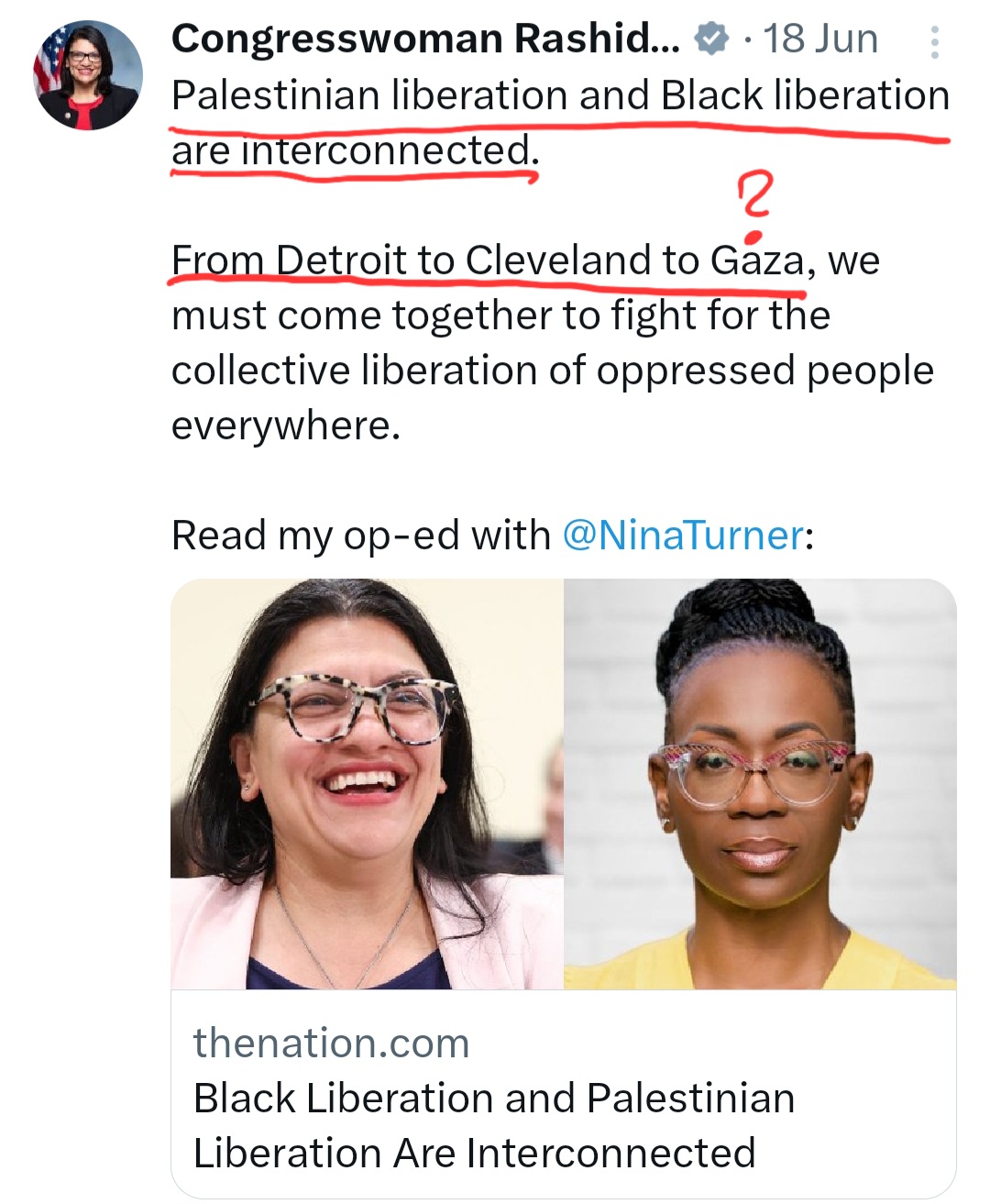
Antisemitism is highly contagious when the populous is reeducated with lies and slander. Schools and woke media spread a narrative that Jews are “powerful” who stole their wealth and land in a capitalist and racist fashion from noble people of color. The blood libel – always there at the comfortable 98.6 degrees – became elevated after pro-Palestinian activists attached their cause to Black Lives Matter, and politicians fanned the flames during the pandemic. Marc Lamont Hill’s 2015 “from Ferguson to Palestine” and Rep. Rashida Tlaib’s 2021 “from Gaza to Detroit” and 2024 “from Detroit to Cleveland to Gaza” were an incubation continuum, turning global Jewry into a virus to be vanquished. October 7, 2023 was the breakout moment.

We have been led to believe that antisemitism is a sickness that infects non-Jews which can be healed via education. The consequential thought is that reeducating people that Jews are neither powerful nor racist will somehow break the fever. Teaching people about the Holocaust and the frequency of antisemitic attacks are marketed as cures for the ailments.

But those approaches inherently keep Jews distinct; it leaves them as foreign entities in the body which will sooner or later be attacked by white blood cells. It is best to get blood cells to view Jews as normal, healthy cells like others, not unnatural tumors.

There are abundant opportunities to do so. A significant percentage of people from Latin America are descendants of conversos, Jews who were forced to convert by the Church during the Inquisition. Does the Hispanic community know they share common ancestry with Jews? The United States was founded on Judeo-Christian values. Are schools teaching the humble faith of America’s founding fathers which looked to build a “government for the people by the people”?

Yes, Jews are distinct, but a healthy and functioning part of the body like a heart or lung. The antisemitic and anti-Israel movements which characterize Jews as a dangerous alien mass – strangers to be attacked by both White supremacists and the majority-minorities pushing DEI – places global Jewry perpetually in the crosshairs.

Jews should not hide in the manner President Biden’s Jewish Engagement Director Aaron Keyak posted on X in May 2021 that “It pains me to say this, but if you fear for your life or physical safety take off your kippah and hide your magen david (Jewish star),” in response to growing antisemitic attacks. Quite the opposite. Schools must showcase Jews as an integral part of a healthy and functioning society.

It is for the safety of American Jewry and betterment of America.

Related articles:

Anti-Israel Socialists Are Coming For Public Schools (May 2025)

Ignoring Columbia’s – And The Education Industry’s – Systemic Antisemitism (July 2024)

The Antisemitic Campus: Decolonize Palestine (October 2023)

‘The Maiming of the Jew’ (May 2021)

The Progressive New World Order Flips The Holocaust From Anti-Semitism To Woke Fodder (November 2020)

Eyal Gilad Naftali Klinghoffer. The new Blood Libel. (June 2014)

White Plains School District – Vote Tuesday May 20

Westchester County has three neighboring towns which act very differently when it comes to their public schools. White Plains stands out relative to neighboring Scarsdale and similarly sized New Rochelle: it spends more and gets worse student performance.

White Plains has a staggering 2025-2026 budget of $277,965,500 for 6,836 students. That amounts to $40,662 per student. That is 13% more than Scarsdale spends, which is one of the best school districts in the entire country. It is also significantly more than New Rochelle which is a similarly sized city with comparable demographics.

And White Plains performs much worse than both despite its massive budget.

Almost all of the Hispanic and Black students in Scarsdale perform well in math, with both groups having over 80% proficiency. In New Rochelle, proficiency in mathematics is 57% each for the groups. Yet in White Plains, only 38% of Hispanics and 42% of Black students have proficiency in math.

Where does the money go in White Plains if not into educating students?

Ten years ago, the White Plains school budget was $208,750,0000 in 2016-2017 when it had 7,091 students, spending $29,439 per student. White Plains is now spending 38% more per student. Much of the cost is NOT GOING FOR THE STUDENTS but to facilities and teacher benefits.

Facilities

The school district has 1.4 million square feet of buildings, not including the new $33 million high school building going up now. New York State generally guides schools to have 85 to 125 square feet per child, depending on the grade. White Plains has 199 square feet per student, 60% more than the high-end recommendation.

And the White Plains school district is planning on spending much more on facilities despite a declining enrollment.

According to the school district’s long-term plan, school enrollment is projected to decline to 6,540 in 2028-9. Despite the shrinking student body, the 20-year plan has $395 million of expenditures to upgrade its facilities.

The city already has $88 million of debt and an $11 million capital lease (page 26). The capital lease and $38 million in notes are coming due in 2026. Presumably this is going to be refinanced in a higher interest rate environment which will add expenses into the school budget.

Fewer kids, worse performance and state-of-the-art buildings.

Teacher Salaries and Benefits

The budget lays out teacher salaries (page 39), with school principals making just under $200,000 per year and the school superintendent making over $300,000.

Employee benefits account for $68.6 million (page 10), or 25% of the budget. This is a 10% jump from the previous year, and accounts for OVER HALF OF THE INCREASE from last year’s budget. So while curriculum development went down this year, teacher benefits rose by $6.25 million.

And this is going to continue according to the long-term plan (page 25). Contributions to the teachers retirement and employee retirement systems are going to keep going up while the number of students declines.

Student Performance

There is a lot of data on student performance (pages 43 onward). There are a few take-aways:

  • The school is 70% Latino and Black and those groups are not reaching proficiency in English or math
  • Roughly 19% of the students are English language learners, 17% have disabilities and 56% are economically disadvantaged. The English learners and those with disabilities are doing terribly. It is unclear how the school can continue to keep these children in the school system when they are clearly unable to service them. The government should do a full review of the situation.

School Board

The school board will tell you that your taxes are not going up and that the school district is an incredibly open and caring environment with state-of-the-art facilities. What they are not telling you is that they have been over-taxing you for years to fund capital projects, have $50 million of looming debt coming due in 2026, are spending incredible sums on teacher benefits while allowing a significant percentage of the student body to flounder.

That is the sad reality.

ACTION PLAN

Vote on May 20. Polls are open from 12:00PM to 9:00PM. Find your voting location here.

Vote ‘No” on the school budget to reduce it by $3.4 million.

Vote for Julia Oliva, a parent of a second grader who wants to put money into services instead of football fields. It is time to phase out the old school board which has spent your money on shiny buildings instead of our youth.

Related articles:

School Boards Are the New Battleground: Why the New York Jewish Community Must Vote on May 20

School Boards Are the New Battleground: Why the New York Jewish Community Must Vote on May 20

If you thought the fight for our values ended with Jamaal Bowman’s defeat in last year’s Congressional Democratic primary, think again. That victory—fueled by a coalition of Jewish voters, moderates, and outraged citizens—was just one front in a much larger war. The next battleground? Our local school boards.

Yes, school boards—those often-overlooked panels of elected volunteers who decide how to spend hundreds of millions of taxpayer dollars, what our children are taught, and what values our public institutions promote. Voting to approve school budgets and new school boards will take around New York State on May 20. In Westchester County, two city school board races —in New Rochelle and White Plains—are shaping up to be ideological flashpoints, and the Jewish community cannot afford to sit them out.

Because what’s happening in these school districts mirrors the dynamics that led to Bowman’s rise—and fall. And unless we show up, the same extremist playbook will continue to take root, just under a different banner.


From Bowman to the Board: The Same Movement, New Target

In 2020, former public school principal Bowman’s ascent was cheered by radical groups like the Democratic Socialists of America (DSA) as he defeated Eliot Engel in New York’s 16th Congressional District, one of several “progressive” victories. The DSA’s 2023 convention called on its members to build on those victories and get people elected not only in Congress but on local school boards.

The strategy was simple: infiltrate local systems—schools, unions, and boards—with activists trained not in pedagogy or finance, but in ideology. These organizations view school boards as soft targets: low-turnout races that are easy to win with grassroots organization, with enormous power over curriculum, staffing, budget and even political culture.

Nowhere is this strategy more visible than in the New Rochelle school board election, where Dr. Rosa Rivera-McCutchen is aligned with the same progressive, anti-Israel networks like WESPAC that propelled Bowman into Congress. Rivera-McCutchen has been outspoken in her support of “radical care” models, a euphemism for politicized curricula that blur the line between education and activism. Her book on “Radical Care” has a foreword by Bowman and he has endorsed her in the race, which should alarm every Jewish and moderate voter.

Remember: Bowman didn’t fall because his opponents suddenly outspent him, despite what radical socialists scream. He fell because our community turned out. In Westchester, especially in places like New Rochelle, Scarsdale, and White Plains, Jewish voters made the difference. And we must do it again on May 20.


The Stakes in New Rochelle

New Rochelle’s school district is large—9,700 students and over $360 million in spending—and politically volatile. While minority student outcomes have improved, the district is on shaky fiscal ground, and ideological activism is increasingly overt.

Two candidates—Elana Jacob and Jessica Klein—are running to restore balance. Both are active members of the Jewish community and parents. Both are running because they believe in education, not indoctrination. They are not interested in scoring political points—they’re interested in ensuring that students can read, write, think critically, and treat others with respect.

They are up against a well-organized, highly motivated bloc that views school boards as the next front in a larger ideological war. If we don’t match that energy, we lose the ground we worked so hard to win when we sent Bowman packing.


What’s Going On in White Plains?

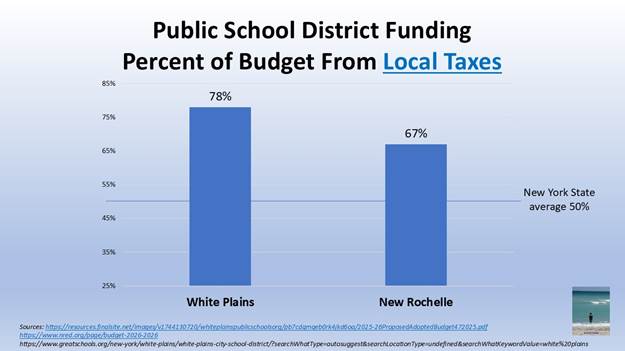
White Plains is not immune. There, a two-seat school board race has drawn four candidates—two incumbents and two challengers. Sheryl Brady and Charlie Norris have each served for over 15 years. They are status quo guardians who toe the superintendent’s line, not particularly concerned about antisemitism indoctrination in the district, favor “age-appropriate” instruction on gender identity to even the youngest students in kindergarten, and are giddy about the city’s capital program that has professional-grade football fields. Their governance has led to skyrocketing costs—over $40,000 per student, among the highest in the state—while academic outcomes for minority students, especially Black and Hispanic students, have remained poor. That astronomical cost is funded 78% with local taxes, also a high in the state where the normal local tax burden for public schools is around 50%.

Enter Julia Oliva, a new candidate who is running on a platform of fiscal discipline, academic excellence, and common sense. She has a child in the public elementary school and believes in redirecting funds from flashy capital projects toward things that actually benefit students: vocational training, classroom instruction, and teacher development.

While it is unclear how she will do in a board setting, Oliva deserves our support. She would bring a fresh, needed voice to a board that desperately needs one.

The fourth candidate, Dr. Mohammed S Chowdhury, has no children in the school, is unfamiliar about the weak performance of minority students and the enormous budget, and not a serious invested candidate.


The Broader Trend: Silence Is Not Neutrality

Some in our community may ask, “Why get involved in school board politics?” Here’s why:

  1. School boards set the tone for everything: what’s taught, how it’s taught, and whether bias—subtle or overt—is allowed to fester. They help set the budget for the public schools and influence whether charter schools or transportation for students at private schools will get funded.
  2. These elections are winnable. Most school board races are decided by just a few hundred votes. In districts like New Rochelle and White Plains, the Jewish vote is not only significant—it is decisive.
  3. The opposition is not sleeping. Progressive networks have identified these races as key footholds. They are training, funding, and running candidates who align with their views. If we stay home, we hand them the keys.

Remember: the same activist energy that got Bowman elected now animates many of these local candidates. They may not use his name—but they are advancing his ideology.


What You Can Do

  • Vote on May 20. Put it in your calendar. Bring a friend. Tell your synagogue or community group. You do not need to have students in public school to vote. You pay taxes and fund the future.
  • Support Jacob and Klein in New Rochelle. Support Julia Oliva in White Plains.
  • Vote on the school budget: Reject the White Plains budget to lower the expenses by $3.4 million.
  • Prepare to run in 2026: There is an election every year, and all that is needed is 100 signatures from the district.
  • Speak up: Attend board meetings, write letters, post on social media. White Plains Superintendent is Dr. Joseph Ricca (Josephricca@wpcsd.k12.ny.us 914-422-2019)
  • Volunteer: Local races are won with word-of-mouth and turning out.

These are low-turnout races. Your vote isn’t one in a million—it might be the one that tips the balance.


Final Word: This Is Where the Fight Is Now

We can’t let down our guard. The battle against Bowman was just the beginning. The activists who filled his rallies are now aiming for school board seats. And they are counting on your apathy.

Don’t give it to them.

Vote on May 20.

Stand up—for our children, our community, and our values.

RESOURCES

If you are out of town or unable to vote on May 20, you can pick up absentee ballots and drop them off before May 20.

White Plains Board of Education election information

New Rochelle Board of Education information

Related articles:

School Board Elections Are Like Rotten Tomatoes Documentaries—Unanimously Approved Because No One Watches

School Board Case Studies: White Plains and New Rochelle

Anti-Israel Socialists Are Coming For Public Schools

Talking About Local School Boards In New York State

Ignoring Columbia’s – And The Education Industry’s – Systemic Antisemitism (July 2024)

CNN And NY Times Call Congressional Hearing On Antisemitism in Public Schools A Fake Issue Concocted By Republicans (May 2024)

Follow the Money: Democrats and the Education Industry (November 2020)

School Board Elections Are Like Rotten Tomatoes Documentaries—Unanimously Approved Because No One Watches

If school board elections were Rotten Tomatoes scores, they’d be 97% Fresh—but only because nobody bothered to show up.

White Plains held its 2024 budget approval and school board elections and just over 2,100 voters cast a ballot in a city of more than 60,000 people. That’s less than 4% of the population deciding who controls a school budget north of $250 million. The budget got almost a 90% approval because only the devout show up to vote. You’d get more engagement trying to organize a bocce tournament in a thunderstorm.

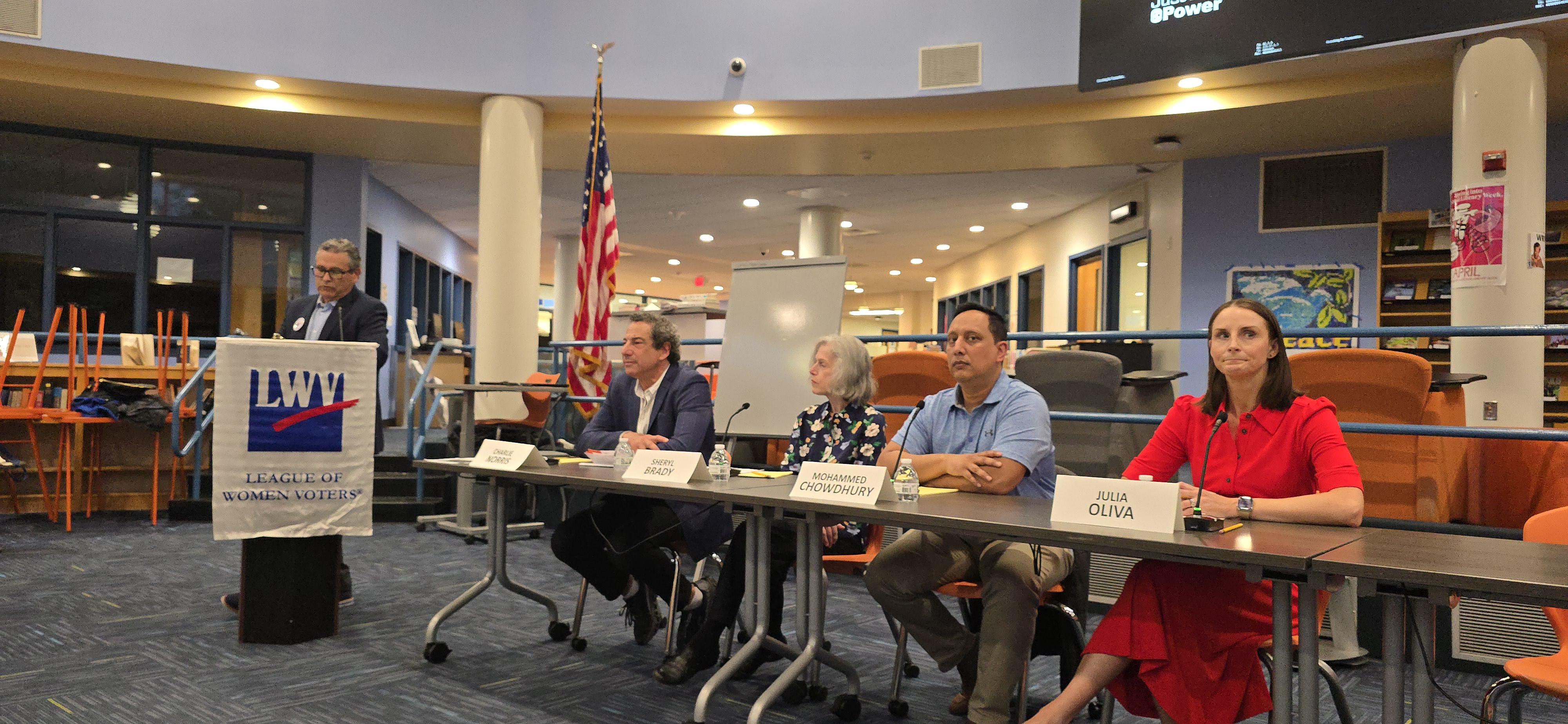
This year, four candidates are competing for two open board seats, making the election a contested one – a rarity. Alas, fewer than twenty people showed up to hear them speak and two of them were the timekeepers. And what did the candidates talk about? Diversity, as if that’s a school board issue rather than a census reality. No discussion of education, student performance, budget allocation, or academic results. Just talking points straight out of a DEI seminar.

Candidates for White Plains School Board Debate in White Plains High School library, May 13, 2025

No one mentioned that Black and Hispanic students continue to underperform in math and science. No one asked why 14% of the city’s students—those in private schools—get zero dollars from the school budget. And not a peep about the fact that White Plains spends an eye-watering $40,000 per student, one of the highest per-student spends in the entire state.

Local taxpayers are footing 78% of the school bill. That’s not just high—it’s the highest in the state. The state average is 50%. If the board had its way with no one watching the shop, they’d probably approve one-on-one tutoring for every student and throw in a life coach just to round things out.

In a functioning democracy, school board elections should be about education policy, results, and fiscal responsibility. In White Plains – and most school boards – it’s a sleepy backroom handshake and a baked-in majority. The less people show up, the more the insiders run the show. And in 2025, they’re running it like it’s their own personal foundation.

Don’t believe me? The city is now adding a $33 million building to the sprawling high school as part of a $395 million 20-year capital plan, even though demographers predict that enrollment will stay flat for the next decade.

White Plains High School is adding a $33 million building to be a free vocational school for teenagers

It is no wonder that the school board panel discussion happened in the fantasy section of the high school library. Everyone in the room imagined that they were directors in a high school musical where education is irrelevant and money grows on trees. Maybe next year, the school board candidate debate should be held in a science lab so people can reorient the discussion towards student success.

Don’t get me wrong – I very much appreciate the volunteer work that the school board does. It’s essential. However, they have seemingly lost the focus on teaching students critical skills and have adopted an orientation that school is really drop-off child care so parents can go to work. The primary function – no, the mission – is to keep kids in elementary and middle school safe and happy. With few basic skills, the high school (read pre-vocational school), will prepare them for jobs in nursing and food services after they change out of their prom dresses.

Vote on May 20 in your local school board election and bring a friend. Trust me, there will be no lines.

Related articles:

School Board Case Studies: White Plains and New Rochelle

Talking About Local School Boards In New York State

Talking About Local School Boards In New York State

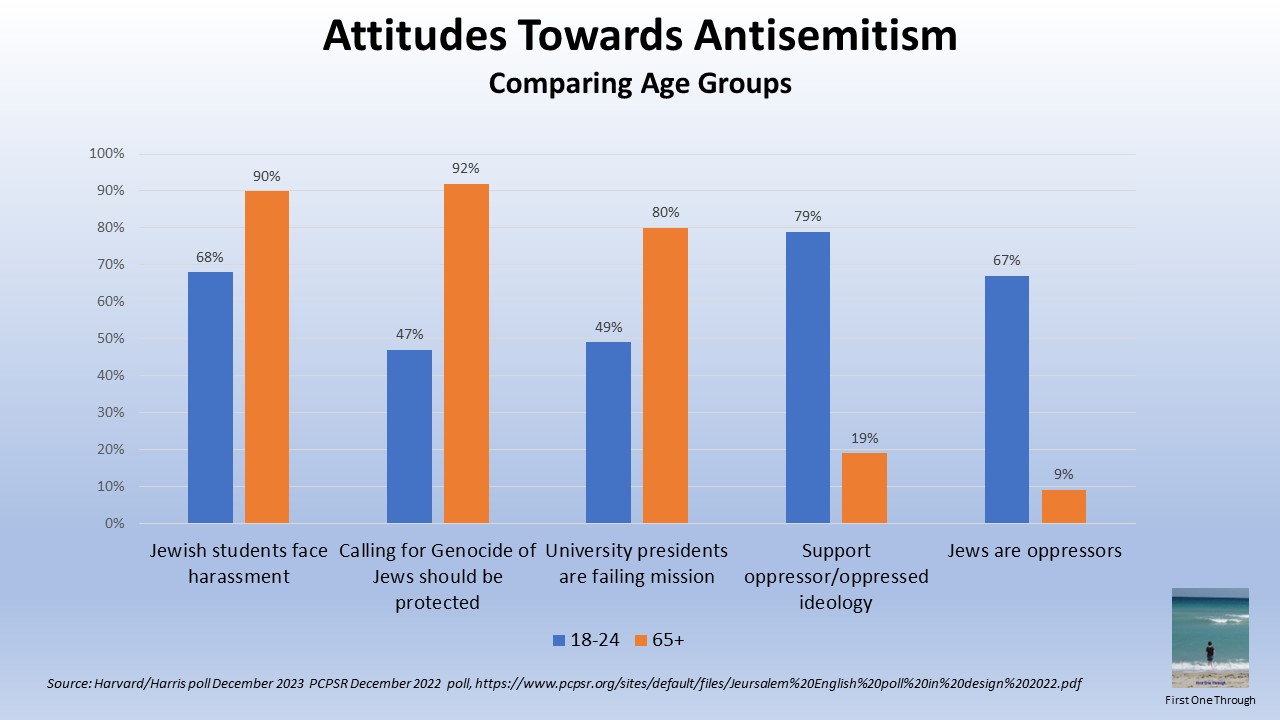
There has been an alarming increase in antisemitism at universities which has prodded the federal government to get involved. A lot of the foundational problem at colleges is set by the failures of kindergarten through high school (K-12) education. Today’s youth is much more likely to be antisemitic than older Americans, who tend to be more racist, setting the stage for many years of university Jew-hatred.

It is therefore critical for people to get involved in local school boards and impact the budget and curricula.

K-12 Anti-Jewish Bias Around The Country

School boards and teachers’ unions around the United States have pushed anti-Israel and anti-Jewish programming since the October 7, 2023 massacre in Israel, and before then as well. Here is a sampling:

  • In September 2015, third grade students in Ithaca, NY heard from anti-Israel activists Bassem Tamimi and Ariel Gold about the supposed evils of Israel.
  • In April 2021, Randi Weingarten, president of the American Federation of Teachers (AFT) which has roughly 1.7 members said that “American Jews are now part of the ownership class,… who want to take that ladder of opportunity away from those who do not have it.” 
  • In October 2023, the Oakland Education Association, a teacher’s union, condemned “apartheid” and “genocidal” Israel. The OEA handed out material from Teach Palestine, with curriculums for educators.
  • In November 2023, the Minneapolis Federation of Teachers (MFT 59) union produced a resolution which “condemn the role our government plays in supporting the system of Israeli occupation and apartheid, which lies at the root of the Palestinian Israeli conflict.”
  • In May 2024, Teachers Unite and a handful of other groups including NYC Educators for Palestine took their high school students out of class to protest Israel at the Department of Education headquarters in Lower Manhattan.
  • In May 2024, Portland Oregon’s teacher union, the Portland Association of Teachers, had a meeting about how to teach students both inside and outside of the classroom how to be anti-Zionists, complete with a website to disseminate propaganda.
  • In July 2024, the National Education Association (NEA), the largest labor union and teachers union with around 3 million members held its annual meeting with resolutions to boycott Israel and praise the October 7 massacre of 1,200 people in Israel (NBI 8). 
  • In August 2024, United Teachers Los Angeles (UTLA) leaders and Los Angeles Unified School District (LAUSD) teachers hosted a panel on how to teach the “struggle for Palestine” to young students and best practices to bring the minors to political protests.
  • The non-partisan American Jewish Committee (AJC) issued a report in December 2024 that “Leaders and activists within the Massachusetts Teachers Association (MTA) have waged an aggressive campaign that has encouraged K-12 teachers to become pro-Palestinian activists and bring anti-Israel propaganda into their classrooms.” 
  • In February 2025, the Santa Ana Unified School District of California settled a lawsuit for using “courses that were developed in secret and infected with anti-Semitism.” Committees at the school said “Jews are the oppressors,” and “racist” and worked with outside groups who decried “Zionist control.”

The bias against Jews and Israel is systemic, and starts well before people enter colleges.

State of New York

The State of New York is a Democratic stronghold in which the party controls the governorship, Senate (41-22) and Assembly with a super-majority (103-47). The Democrats have held this trifecta since 2019 which has enabled the party to advance particular policies without much pushback. Some current bills include:

  • NY A08053, which deals with transgender students in locker rooms and bathrooms
  • NY A06415, which examines admission diversity in specialized senior high schools
  • NY S06901, which teaches all students in K-12 about sexuality, including gender identity
  • NY S02498, which allows parents to exempt their children from lockdown drills
  • NY S05700, which eliminates religious exemptions for immunizations

This is a sample of current bills impacting schools. Note that there is an exemption for parents to limit their child’s participation in lock down drills, but no accommodation for religious parents to exempt their children from gender ideology classes or be exempted from immunizations.

The orientation of New York politicians is very much about majority-minority groups of Hispanic, Black and the LGBT+ communities. It is not about the minority-minority Jews, despite pervasive antisemitism.

Consider NY Senate bill S317, which requires anti-bias training for every medical student. The text of the bill refers to “people of color, women, and the LGBTQ+ community.” Despite threats by nurses and doctors to injure and kill Jewish patients and prevalent antisemitism, Jews were not mentioned.

Ohio doctor publicly denigrates Jews and threatens them

Disgraced former Congressman Jamaal Bowman is a textbook example of ingrained bias against Jews in the public sphere, both in politics, education and media. He was a public school principal before going into politics. His anti-Jewish vitriol helped galvanize members in his NY16 district to oust him in a primary in favor of a more moderate politician. He now has a platform on the anti-Israel site Zeteo to continue to demonize the Jewish State.

Every year, seats on local school boards around the state come up for election. This year’s vote in New York State is on Tuesday, May 20. Here is a list for each town and city. The people on these committees will have an impact on the future, locally, in the state and the country.

Some things to evaluate and ask each candidate:

  • The school budget is $xxx million a year, averaging $xx,000 per student. Student to teach ratios are xx-to-1. Why?
  • Student enrollment peaked in 20xx and has declined over the years to only xx,xxx. What has caused the decline, beyond COVID?
  • The school budget is a mix of services, capital projects and administrative overhead. More specifically, it breaks down as XX% for education, XX% for employee benefits, XX% for “general support”, X% for child transportation, X% to repay debt and X% for other. Why?
  • What is the capital plan for the district and how is it prioritizing things like new buildings and football fields versus services for the students?
  • How is your school district doing in the absolute and relative to other school districts (rankings here). How is proficiency in math and reading for different groups? How are absentee rates for students? How are graduation rates? How prepared are they for college and how many attend?
  • Is the high school preparing students for vocational schools in the jobs of the future (like technology) or for professions in the neighborhood (say healthcare)? Is it teaching a class on financial literacy?
  • How are the schools handling current matters like gender identity classes for young students and banning phones in classes?
  • Are children with disabilities able to thrive in the district? What steps are being taken to address their situations?
  • How is the school addressing current events like the Arab-Israeli conflict?
  • How does the school make sure that all students are able to learn without discrimination, harassment and intimidation?
  • Are charter schools being allowed and under what framework?

Review the composition of your school board. Is the entire committee there for over 20 years? Are all there for less than five? It usually makes sense to have a balance of people with children who are current students and those with institutional knowledge.

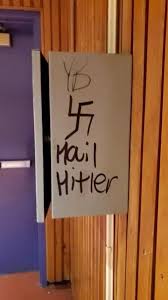
This is a sampling of things everyone should know about their school district. It will not guarantee a great education or prevent swastikas from being drawn on school property, as happened in Weber Middle School in Port Washington, Midwood Elementary, Clarkstown South High School and others. It will not prevent students from rioting against Jewish teachers as happened in Hillcrest. But unattended school boards lead to lax superintendents and distorted lesson plans and school culture. It leads to a systemwide decay in knowledge and values.

New York City has a resource list to help teachers learn and educate students about antisemitism. Other sites have recommendations as well. Have you reviewed the lists to see if there are materials that are omitted or should be removed? Do you have a relationship with the school chancellor, superintendent or people on the school board to effectuate change?

Are you showing up on May 20 to vote?

International actors are contributing to a negative influence at universities but so is the education before students get to college. Get involved in your local school board for the benefit of your community and society, whether or not you have children in the schools.

Related articles:

CUNY’s New Anti-Education Professor Of Intimidation (February 2025)

Ignoring Columbia’s – And The Education Industry’s – Systemic Antisemitism (July 2024)

CNN And NY Times Call Congressional Hearing On Antisemitism in Public Schools A Fake Issue Concocted By Republicans (May 2024)

Follow the Money: Democrats and the Education Industry (November 2020)

Orthodox Jewish Student At Trump’s White House Writes A Kvitel

Satire?

The public schools of the United States have become increasingly broken, failing to teach math and science, with the US placing 25th among 37 OECD countries for 15 year olds. Teacher unions have long prioritized teachers’ well being over students, and woke causes over basic skills, leading America to fall far behind other developed countries. Fewer and fewer Americans are opting to bother going to college or graduate schools, leading to a giant visa program for people of the Global South to enter the US, with a record 1.1 million international students in the US in 2023/4.

President Donald Trump applied the woke-standard of absolutism like “defund the police” and “abolish ICE” to begin the process of eliminating the federal Department of Education and move control of schools to the states. He orchestrated a photo op with signing an executive order in front of school children which bemoaned the DOE’s spending over $3 trillion since its creation in 1979, without improving student knowledge.

US President Donald Trump holds an executive order in the East Room of the White house in Washington, DC, March 20, 2025 to start dismantling the Department of Education, in front of young students. (Photo by Mandel NGAN / AFP)

The photo session included a young Orthodox Jewish student in the background. It was perhaps not surprising, as Trump was the only president to invite an Orthodox rabbi to speak at his inaugurations – both times.

When Trump held the signed EO aloft and the other students similarly did so, the Orthodox boy in large blue kippah continued to write. People speculated whether he had OCD and was compulsively checking his spelling. Perhaps he was correcting grammar in the EO or adding footnotes like the biblical commentator Rashi (1040-1105).

Others wondered whether the boy was asking Trump to protect yeshivas in Brooklyn which are being closed right-and-left for failing to teach secular studies, or perhaps leave the DOE open a little longer to root out rampant antisemitism on campuses.

It is rumored that both Sotheby’s and Kestenbaum & Company are fighting to obtain the Jewish boy’s mock EO for auction.

“Don’t Say ‘Baby'” Bill Considered By New York Republicans

A satire.

The State of Florida has advanced a bill that would restrict the education of sexual orientation to children below third grade “in a manner that is not age-appropriate or developmentally appropriate for students in accordance with state standards.” LGBT+ activists and Democratic politicians coined it the “Don’t Say ‘Gay’” to mock the bill as something draconian. The tag line has caught on in the media and is drumming up support to oppose the bill.

Noting the success of the powerful – albeit non-factual – slogan, other politicians are looking to coin similar phrases to gather support to fight legislation viewed as extremist.

On January 22, 2019, New York State Governor Andrew Cuomo signed into law the ‘Reproductive Health Act’ that was pushed by New York’s Democratic politicians, which decriminalized abortion up to the moment of birth. Republicans were unable to block the infanticide bill as they did not have a catchy jingle. They are now considering billing it as the “Don’t Say ‘Baby'” law, in an unoriginal copy of the “Don’t Say ‘Gay'” catchphrase.

NY State Senator Liz Krueger (D, WF-Manhattan East Side) who sponsored the ‘Reproductive Health Act’ which made the abortion-until-birth bill seem less than extreme.

In Virginia, Republicans introduced a bill to allow children taught in private schools or at home to participate in after-school programs of public schools. Democrats do not want to afford privileges to these students who are disproportionately White, religious, conservative and headed by two parents. For years, they called these bills the “Tim Tebow” bills after the religious football player who was homeschooled and later played in the NFL. As more states are passing these bills (Virginia shot it down), people are forgetting who Tim Tebow is, and more Hispanics are opting for homeschooling (26% of homeschooled students in 2016, up from 9% in 1999), Democrats are worried about society abandoning public school education so are trying to rename the legislation. Current working names are “Robbing Public After School Programs,” “1% School Theft Bill,” “Church’s Cake-And-Eat-It-Too Bill,” “Shloimy Stealing Your Kid’s Saxophone Bill.”

The advertising industry is excited about politicians fighting for public attention all day on every front, albeit worried that the jaundiced press is giving free air time in echoing the taglines of the parties.

Related articles:

New York To Offer Brothel Licenses To Prostitutes

NY Times’ Sarah Jeong Guides Rep Ilhan Omar Tweets

Governor Cuomo Comes After the Powerful Black Lobby

Bernie Sanders’ New Book: Nazi Germany Had Clean Streets

Follow the Money: Democrats and the Education Industry

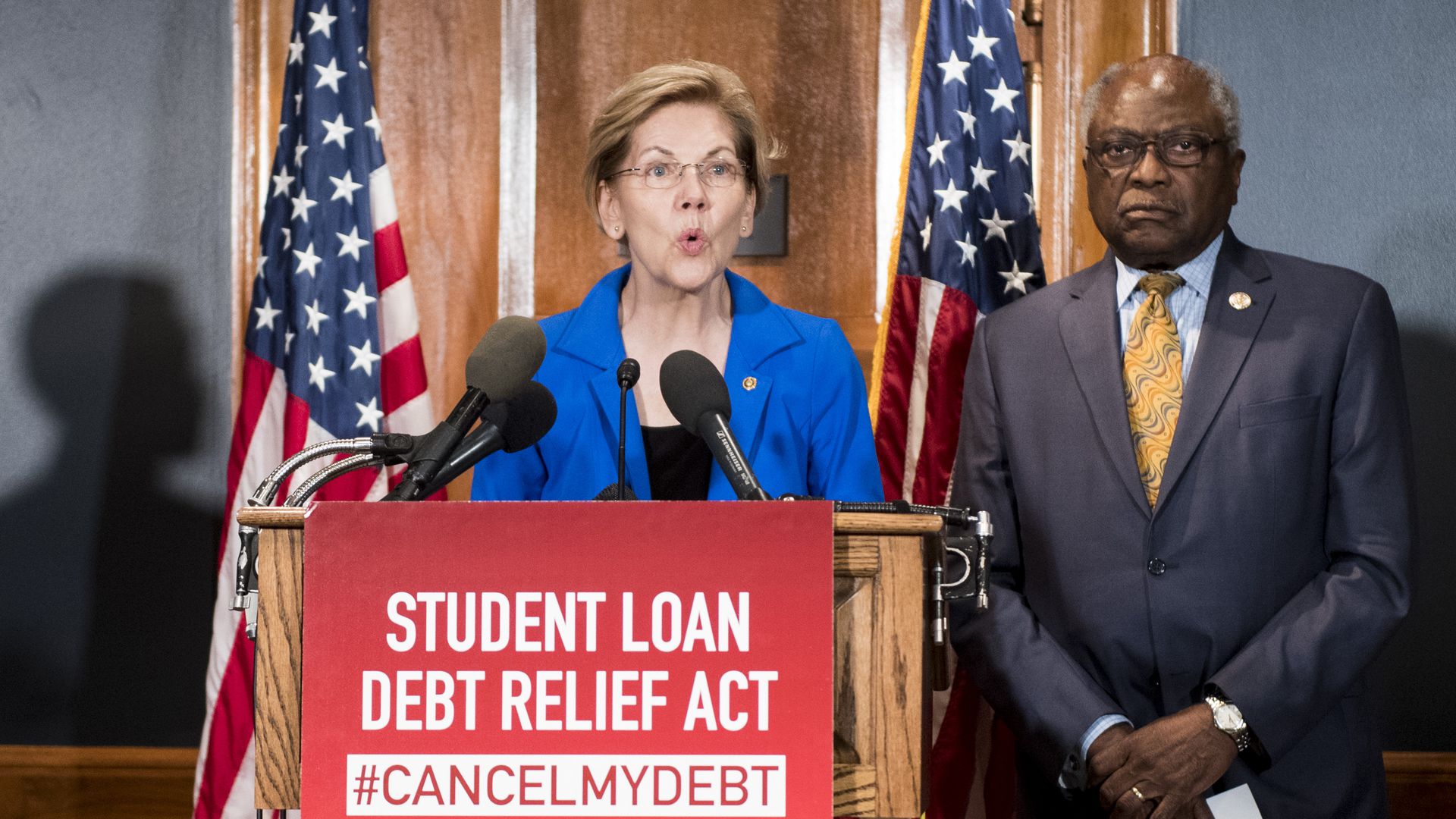
Democratic Senators Chuck Schumer (NY) and Elizabeth Warren (MA) proposed that a new Joe Biden administration immediately cancel student debt upon taking office. They proposed cancelling $50,000 for all borrowers of federal student loans while Senator Bernie Sanders (VT) proposed cancelling all student debt.

Sen. Elizabeth Warren and House Majority Whip Jim Clyburn in July 2019, well before the pandemic. Photo: Bill Clark/CQ Roll Call

This initiative has great appeal to progressives whose economic mission is to transfer wealth to lower income people. It also goes directly to big Democratic donors.

The Education Industry is Democrats Big Money Donor

Democrat Joe Biden out-raised Republican Donald Trump in the 2020 presidential election by 48% ($1.38 billion to $864 million). While the legacy liberal media lies that small donors made up Biden’s base, according to the non-partisan OpenSecrets.org calculations, Biden was all about big money. Libertarian Jo Jorgenson had 68.6% of her donations come in small amounts followed by Trump with 45.0%. Biden was third with only 39.3% coming from small donors.

The big money to the Biden campaign came from the usual Democratic loyalists like lawyers and lobbyists ($83 million in total, almost all to Democrats). The Education sector was even bigger, with over $110 million being contributed to the presidential campaign, of which 94.2% went to Democrats. To give a sense of scale, the hedge funds and private equity industry gave a total of $55 million – HALF as much as the education sector. The oil and gas industry gave $16 million.

Why would the education industry pour so much money into a presidential campaign? Isn’t it struggling to keep up? Don’t they always ask for more money as though cash strapped? If money is so tight, how do schools “donate” more money to an election campaign than the hedge fund, oil and gas, casino and gambling industries combined?

The education industry gave more money to the 2020 presidential campaign than the hedge fund/private equity, oil and gas, and the casino/ gambling industries COMBINED.

source: opensecrets.org

Public Schools K-12

The giant and powerful teacher unions are the big contributors. According to Open Secrets, “two organizations account for practically all of the contributions made by teachers unions: The National Education Association (about $20 million in 2016) and the American Federation of Teachers (almost $12 million). Both groups — which compete for members, but also collaborate with each other through the NEA-AFT Partnership — are consistently among the organizations that contribute the most money to candidates and political groups.” The NEA is seemingly transparent about their partisan spending, showing on its website that 96% of its funds go to Democrats. AFT is a 1.7 million member organization headed by Randi Weingarten who makes no bones about trying to use her influence to enact liberal priorities on matters like climate change and universal healthcare.

The payoff scheme is pretty straightforward: Democrats work to empower unions whether in committing to only hire union labor or the ability to collect fees from members. In turn, the union leaders give money to Democrats and push their members to vote for their candidates. These paid-for local Democratic politicians now negotiate the contracts of the people who just helped give them their jobs, a much more loyal base than exists among taxpayers. The Democratic politicians give the unions favorable pay increases and the best healthcare and pension benefits found in the country, far superior than non-unionized citizens.

The cost for K-12 public education has ballooned under this corrupt money transfer scheme where Democratic politicians pour taxpayer money into unions who in turn pour money back into their election campaigns.

According to the US Census Bureau, the per pupil cost to educate public school students consistently rises more than inflation. In 2016, the average cost for a pubic school student was $11,763 while in 2013 it was $10,724, a 10% increase in just three years. That’s OVER THREE TIMES the 3.0% inflation of the consumer price index in that time period.

The ramp in expenses is due to a variety of items including building state-of-the-art facilities and professional-quality ball fields as well as a range of inclusion and enrichment programs for students who need more help. But the biggest costs are the teacher salaries and benefits. In 2016, 88% of the $665 billion of U.S. public school costs were in “Current Spending” of which 65% was for salaries and 35% for benefits.

Teachers’ unions focus on their core constituents – the teachers – not the students. The unions protect even the weakest non-performing teachers, making it almost impossible to fire anyone. Employees of the public education system have health and retirement plans which are the envy of CEOs of large corporations. Teachers and administrators get to retire in their 50’s with amazing benefits throughout retirement while fellow citizens must work into their 70’s. Of course, there are summers off and the occasional sabbatical, unique to the education industry. It is estimated that between 2001 and 2018 the proportion of the educational budget that went to retired teachers grew from 7.5% to 14.4%. Those fixed liabilities keep growing and are crowding out funds for children. The teacher unions prioritize their own early retirees over children and the future.

Teacher unions prioritize their own early retirees over children and the future.

Free K-12 public school is not so free to taxpayers. It is one of the major wealth transfer schemes in America where the wealthier people who own homes shoulder 65% of the costs of public school via property taxes. The wealthy and religious, who are much more likely to send their children to private school, are effectively taxed twice by paying for the services for a second time.

Public and Private Colleges

The inflated costs for education do not stop at high school and Democrats’ fingerprints are here as well.

From 1998 to 2018, the inflation for a vast range of items was 56%. The items with the highest inflation were hospital services (+211%) and colleges (+184%). A year of college today costs an average of $26,820 for in-state public college, $43,280 for out-of-state, and $54,880 for private colleges.

The cost for these degrees is beyond the budget of most people, so they apply for grants, scholarships and student loans. If it were not for the loans, many could not attend school or be forced to attend a lower cost community or in-state school.

The student loan market now stands at $1.6 Trillion. Roughly 66% of borrowers who attended public college have an average loan balance of $25,550. Graduates of private non-profit colleges have more debt, with 75% owing student loans averaging $32,300. The biggest borrowers are for private for-profit colleges where 88% of graduates have debt averaging $39,950.

Note the trend lines. The facts continue to paint an interesting story.

According to a Pew study, the number of poor and non-White people attending college increased significantly between 1996 and 2016, with the share of college students from poor households going from 12 percent to 20 percent over those 20 years, and non-White students jumping from 29 percent to 47 percent. The greatest growth occurred in private for-profit colleges, where 58 per cent of undergraduates were non-White in 2016.

The private for-profit colleges run a very different program than local colleges. As described in The Best Schools, “For-profit colleges often have higher acceptance rates than their non-profit counterparts. Many for-profit schools have an open admissions policy, meaning that they admit all who apply and meet specific, noncompetitive criteria, regardless of grades, test scores, etc. Typically schools with open enrollment only require that applicants have a high school diploma or GED certificate. For students who might struggle to gain admission to schools with competitive admissions requirements, a for-profit college might provide an open door that leads to further academic and career success.” As students with poor grades want to be able to get good jobs that often come with a college degree, they buy their college degrees at these for-profit institutions.

More poor and non-White students attending these schools are increasingly defaulting on the loans they take out for tuition. According to a report by the U.S. Department of Education, “Looney and Yannelis (2015) found that, between 2000 and 2014, the substantial increase in borrowers and the doubling of loan default rates were associated with attending for-profit, and to a lesser extent, 2-year and other nonselective institutions. Among students attending 2-year institutions who borrowed, for-profit students borrowed four times the amount borrowed by their peers who attended public colleges (Belfield 2013).”

The higher default rates are not only associated with the more expensive tuition costs at the for-profit colleges. The same report noted “on average, employment and earnings are higher for students who attend public or nonprofit institutions (Liu and Belfield 2014; Deming, Goldin, and Katz 2012). Six years after beginning their programs, students who ever attended for-profit institutions were more likely than students who attended only public and nonprofit institutions to be unemployed or out of the labor market, and they earned less than students with similar student characteristics and school completion rates did (Liu and Belfield 2014).”

The private for-profit college industry is seemingly taking advantage of everyone: the poor and non-White communities by awarding degrees at a high cost with seemingly lower ultimate earnings, and the American taxpayers who fund the loans to these students which are not being paid back.

Enter Democrats.

Rather than fight to remove the accreditation of these private for-profit colleges which fail everyone or refuse to give student loans to students with poor grades (or cap the loan amounts at a minimum as the poor grades are the underlying reason many apply to the schools), Democratic politicians are making the grand generous offer – WITH YOUR MONEY – to bail out people with high student debt because most of them are non-White. Far-left Rep. Ayana Pressley (MA) was clear in that point when she argued that cancelling student loan debt will “close the racial wealth gap.” The scheme also keeps these for-profit colleges afloat as they need the students and tax-payer funded student loans to pay their shareholders. Democrats need these institutions around to keep churning out degrees for people with poor grades who cannot get accepted to other colleges.

Knowing that the student demand is there and the loans are available, colleges have little incentive to cut costs including terminating the system of professor tenure and sabbaticals as well as renegotiating teachers’ pension largess. There is also no reason to turn away applicants with poor grades as the American tax-payers fund the farce. Democrats join the joke as they hand-out money and college degrees to loyal constituents – the education industry, the poor and non-White communities.

The education industry is a runaway freight train and Democratic politicians are gleefully throwing away the brakes.


Related First One Through articles:

New York Times Reprints Union Manifesto

The New York Times Recognizes the Problem of Municipal Unions, Selectively

The Democratic Socialists Tell Lies and Half Truths About Lobbyists

Subscribe YouTube channel: FirstOneThrough

Join Facebook group: Israel Analysis and FirstOneThrough