Parshat Terumah introduces the Mishkan, a sanctuary built in the wilderness, precise in measurements and portable by design. It moved as the people moved. God’s presence rested among a nation without a permanent home.
For nearly two thousand years, Jewish life functioned in Mishkan mode.
Without sovereignty and without a Temple, Jewish law became the architecture that traveled. Halacha, Jewish law, created sacred space wherever Jews settled. The synagogue stood in place of the courtyard and the Shabbat table carried echoes of the altar. Study sustained covenant across continents.
Judaism survived in the diaspora because it was built to move.
But the Mishkan was never meant to be the final form. It pointed toward the Mikdash, the Temple that was ultimately built 3,000 years ago in Jerusalem, enduring and anchored in sovereignty. The Mishkan belongs to wandering. The Mikdash assumes a people settled in its land.
Exile required portability. The State of Israel reintroduces permanence.
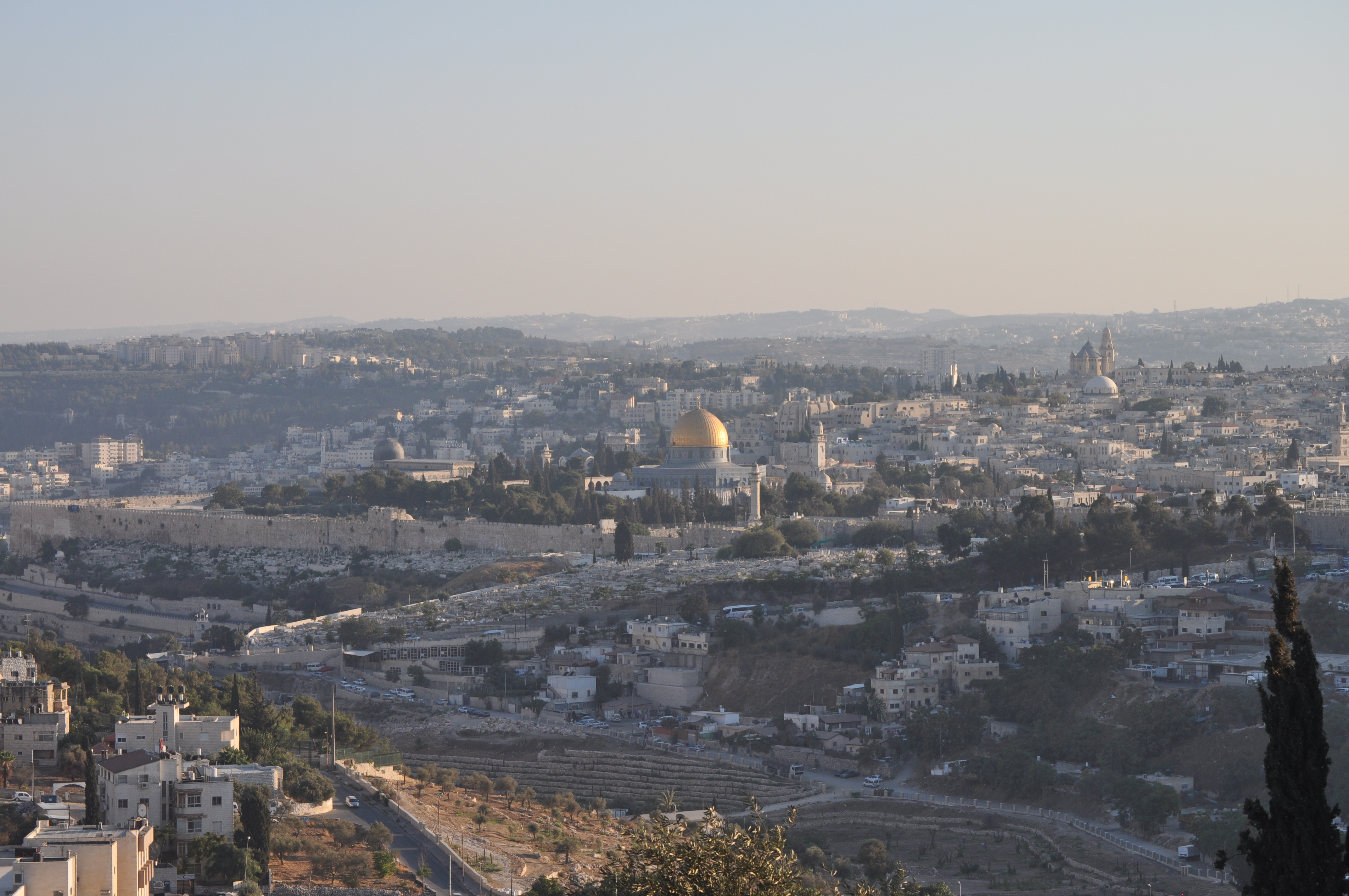
The Old City of Jerusalem including the Jewish Temple Mount/ Al Aqsa Compound
That shift changes the demands of Jewish life. Law still shapes the individual and the community, but it now encounters public power. Covenant enters the arena of governance.
The wilderness sanctuary rose from voluntary gifts. The Temple required national structure and responsibility. Now, sovereignty requires the same. While a portable faith sustains survival, a rooted nation must translate that faith into courts, policy, defense, and public ethics.
Jewish history has moved from dispersion to statehood. Yet the deeper challenge is spiritual: whether a tradition perfected in exile can shape a society in power without losing its moral clarity.
Terumah begins with a traveling sanctuary. It gestures toward something fixed and enduring.
The journey from Mishkan to Mikdash continues in our own time.
The final season of Game of Thrones disappointed many viewers.
For years the show carried two storylines: an existential threat to humanity and a political struggle for the throne. When the ending came, the cosmic danger faded first and the camera returned to palace intrigue. Technically both plots resolved but emotionally, it felt like the story had mistaken the setup for the destination.
That structural tension comes to mind every year at Parshat Yitro.
The most dramatic moment in Jewish history — Sinai, revelation to the entire people, the Ten Commandments — arrives astonishingly early in the Torah. If receiving the law is the climax, why does it appear so soon in the Bible?
Because it isn’t the ending; it’s the beginning.
Sinai gives the people a constitution. It shapes their character, their obligations, their relationship with God and each other. But from the very first promise to Abraham, the Torah’s narrative is moving somewhere concrete — toward a land.
Walk the text and it reads like a map: journeys, wells, borders, inheritances. The story is geographic as much as spiritual. It is about building a nation in a place.
Torah and land were always meant to live together.
Torah without a homeland leaves Jewish life suspended in theory. A homeland without Torah loses its moral compass. Sinai forms the people; the land is where that formation is meant to be lived.
Over a thousand years of exile forced a different emphasis. When Jews lost soil, they carried scrolls. When borders disappeared, mitzvot became portable homeland and identity. That devotion was critical for survival.
Now history has shifted again.
For the first time since antiquity, a plurality of Jews lives in the Land of Israel, and soon it will likely be a majority. The part of the Torah that once felt distant and theoretical — sovereignty, agriculture, public responsibility, national life — is no longer abstract. It is daily reality.
Which reframes Parshat Yitro.
Sinai is not the finale of the Jewish story. It is the preparation. The training. The moment a people receives the tools it will need to build something lasting in its own land.
The Torah itself tells us this by where it ends: at the edge of the land, looking forward.
After centuries of mastering how to live as guests in other people’s history, Jews are being invited back to the main storyline: living in the land, with the Torah in hand.
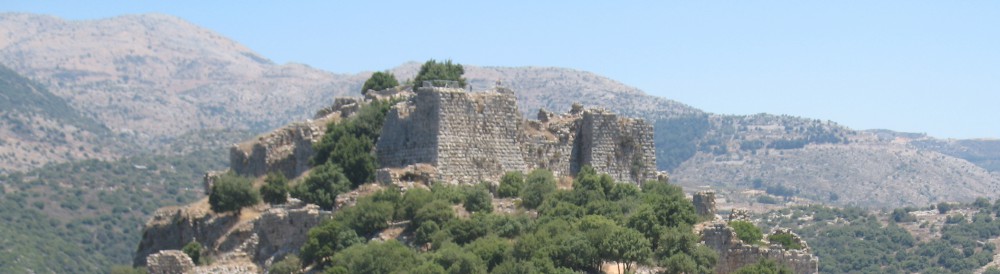
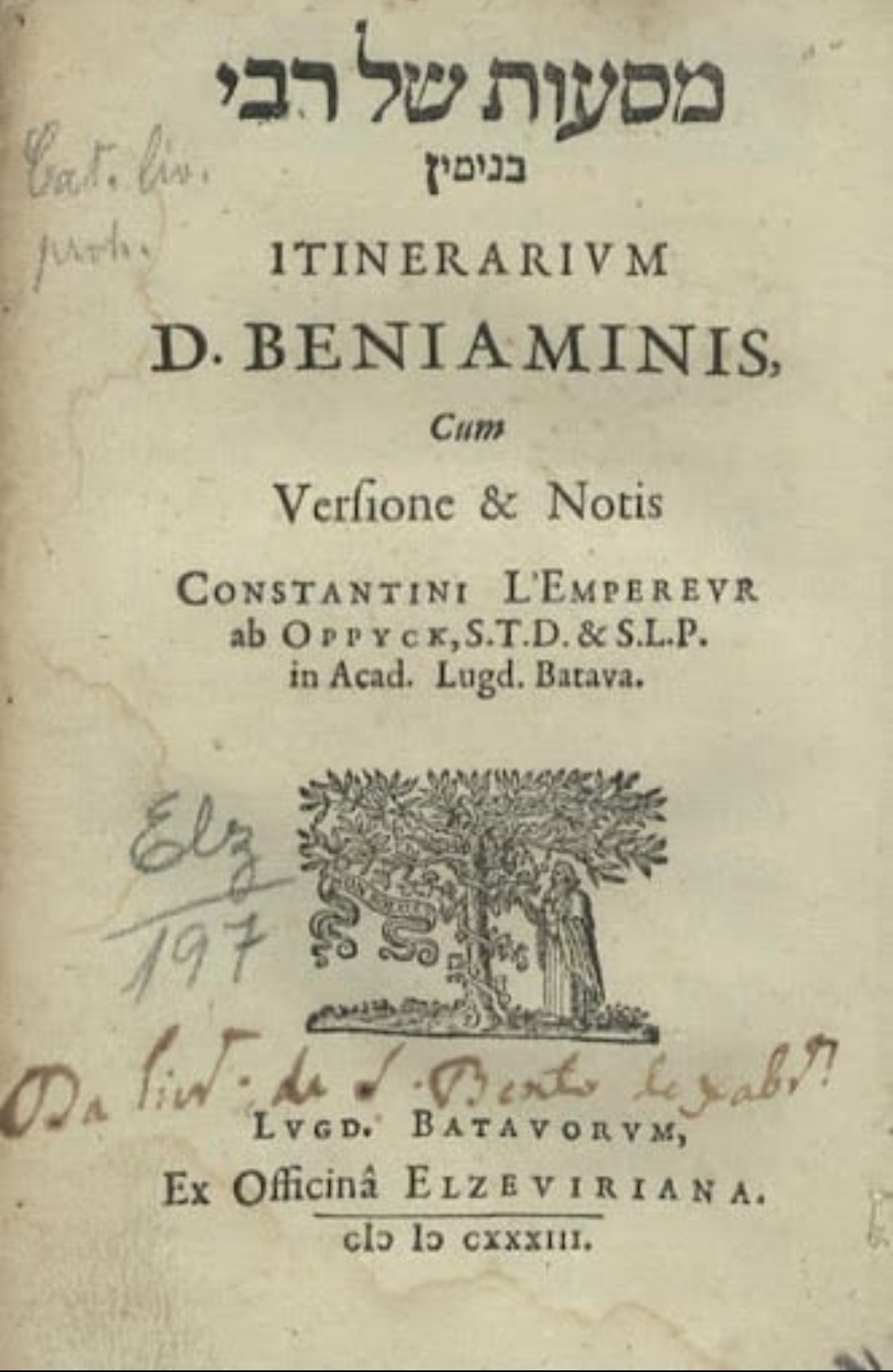
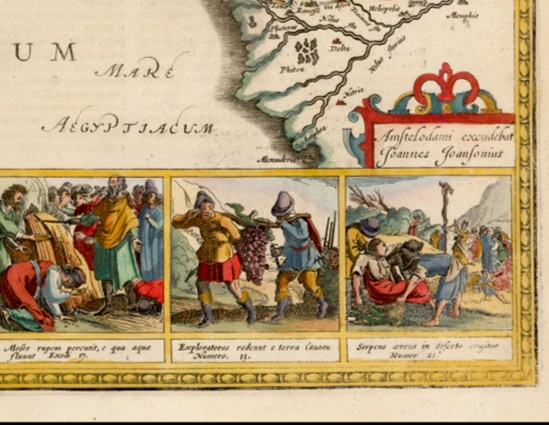
The Travels of Benjamin of Tudela was an eight year travelog from circa 1165 to 1173, chronicling the pilgrimage of a Jew from Spain to the Jewish holy land.
When famine made Canaan (the land of Israel today) unlivable, Jacob’s family went down to Egypt. What began as a temporary refuge became something else entirely. Goshen (Genesis 45:9) was fertile, welcoming, and safe. The Jews prospered there. They built families, livelihoods, and a future. And for a time, it worked.
That is what makes Goshen so instructive. Unlike earlier famine detours in Genesis, this was not a brief excursion. Goshen was a one-way trip. It felt secure enough to settle into—and that comfort lasted generations. Until it didn’t.
Jews talk about it today as they ponder antisemitism’s historic trajectory. It has moved millions of Jews around the world for thousands of years, marking them as the “wandering Jew.” In 1900, most Jews spoke Russian, German, Polish and Arabic. In 2025, they almost all speak Hebrew and English, with French and Spanish covering virtually everyone else.
The land of Israel itself was not without Jewish migration. The land flourished, kingdoms rose, institutions formed. Then came division, exile, and destruction. First the northern tribes disappeared into history. Later Judah followed. The Jews did not just lose modern incarnations of Goshen; they lost their homeland for nearly two thousand years.
Parshat Vayigash is often used as the Torah’s first meditation on long-term diaspora. It offers no illusion that comfort guarantees permanence. Goshen was pleasant until a Pharaoh arose who no longer remembered Joseph. But the Jewish homeland was also strong until it fractured from within and fell to external powers. Neither place offered permanent security.
The lesson is not that exile is doomed or that the Jewish Promised Land is automatically safe. It is that where Jews live is often situational, not absolute. Prosperity can mask vulnerability. Stability can decay quietly. The obligation is vigilance—reading the environment honestly, assessing quality of life soberly, and understanding that history turns even when life feels settled.
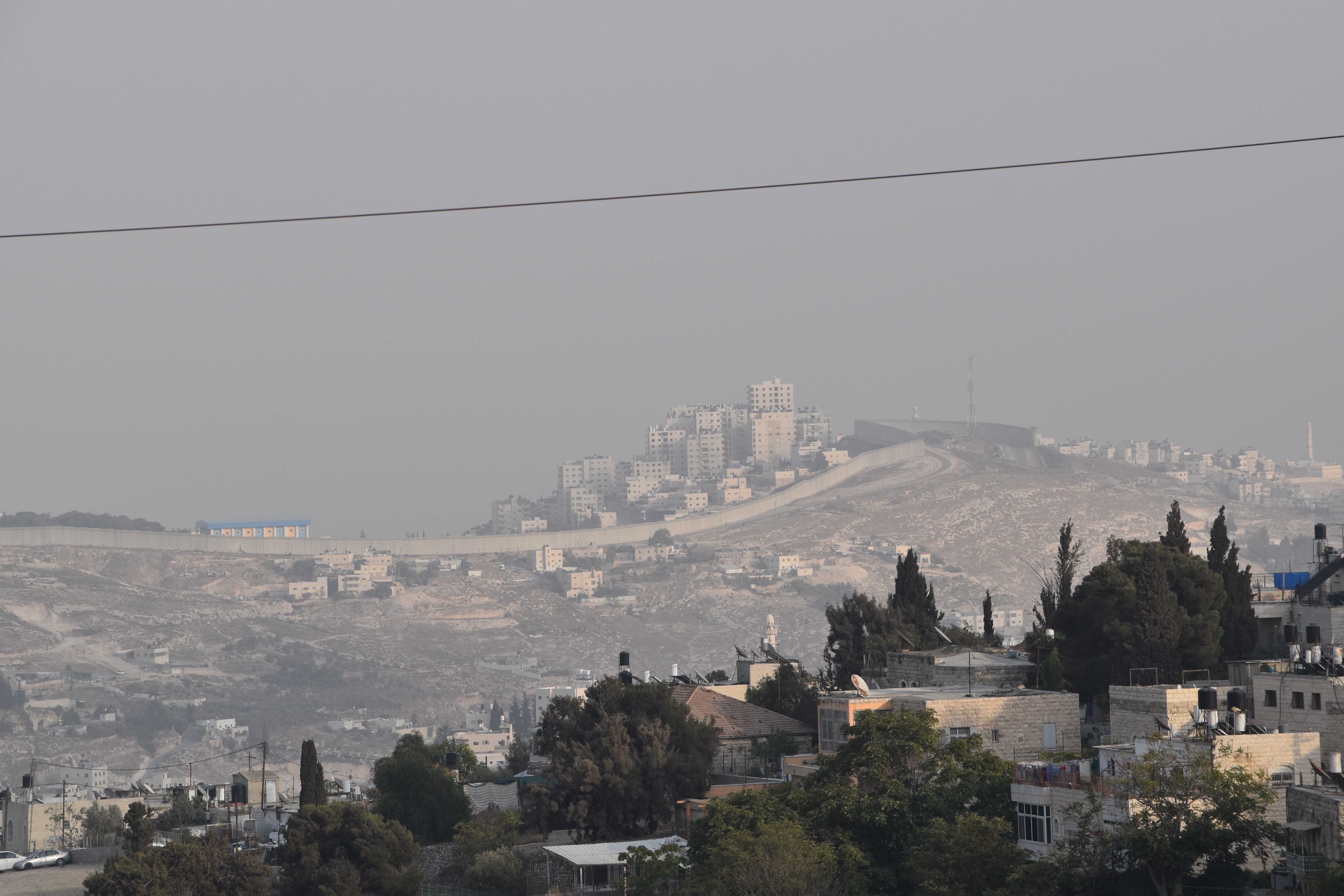
Israel’s Security Barrier as seen from Jerusalem, built to stop terrorism during the “Second Intifada”
Goshen teaches that success today is not a promise for tomorrow. But Israel teaches the same. Awareness, not geography, is what determines whether a place remains livable.
To arrive in Israel is never just a landing. For millennia, Jews faced this land in hope and longing, turning toward Jerusalem even when the path was blocked by oceans, armies, or fate itself. Countless generations passed on without ever setting foot on the stones their ancestors walked.
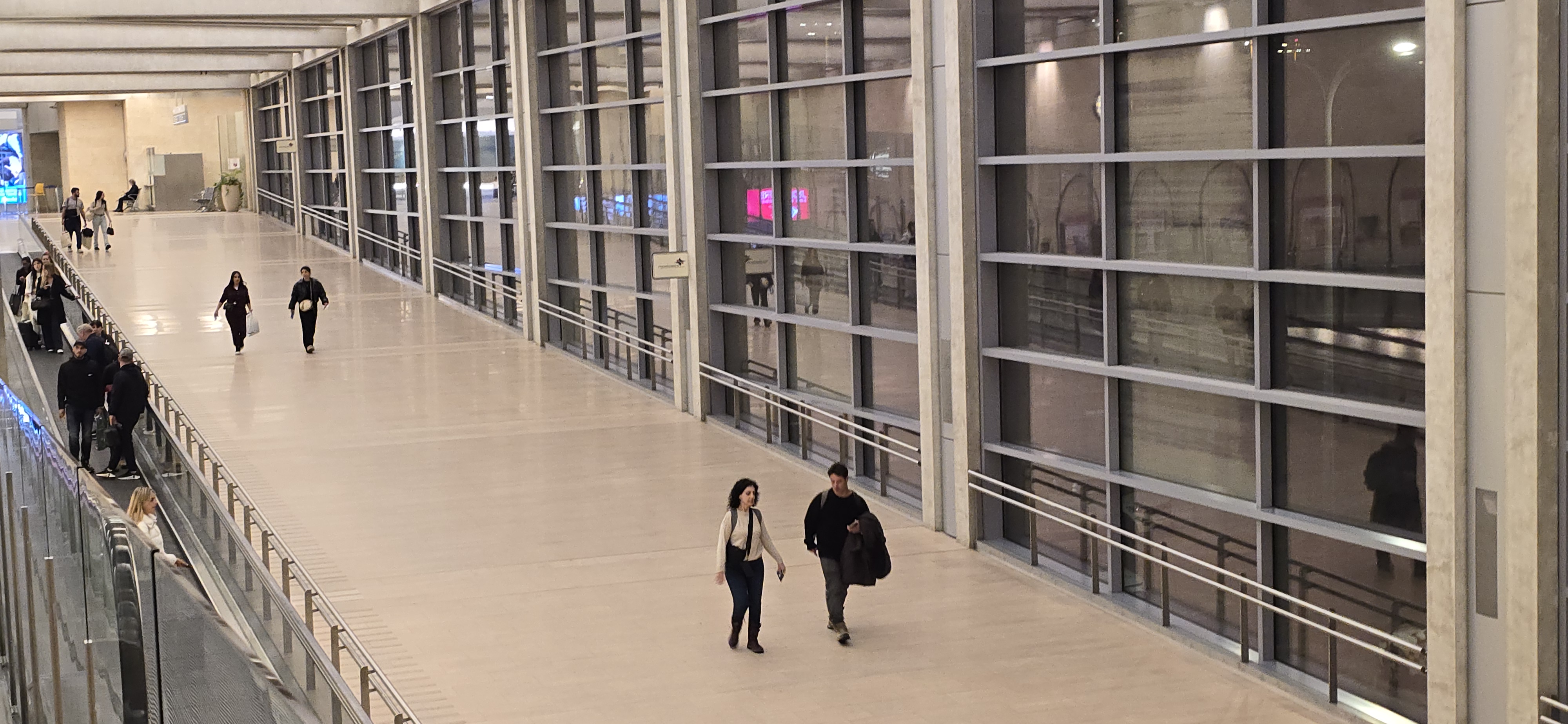
The architects of Ben Gurion Airport understood this ache.
Between the terminal and passport control, travelers move through parallel glass corridors — one for those entering the land, one for those departing. You can watch them the entire way: people going home, people leaving home. From above, the scene resembles Jacob’s Ladder, angels ascending and descending, a ceaseless movement connecting heaven and earth. Biblical commentators taught that the angels Jacob saw were the guardians of the Land of Israel — one set departing when he left, and a new set arriving to accompany him in the diaspora. So too here: those making aliyah rising in spirit; those heading abroad descending from holiness for a time, yet still tethered by an invisible thread.
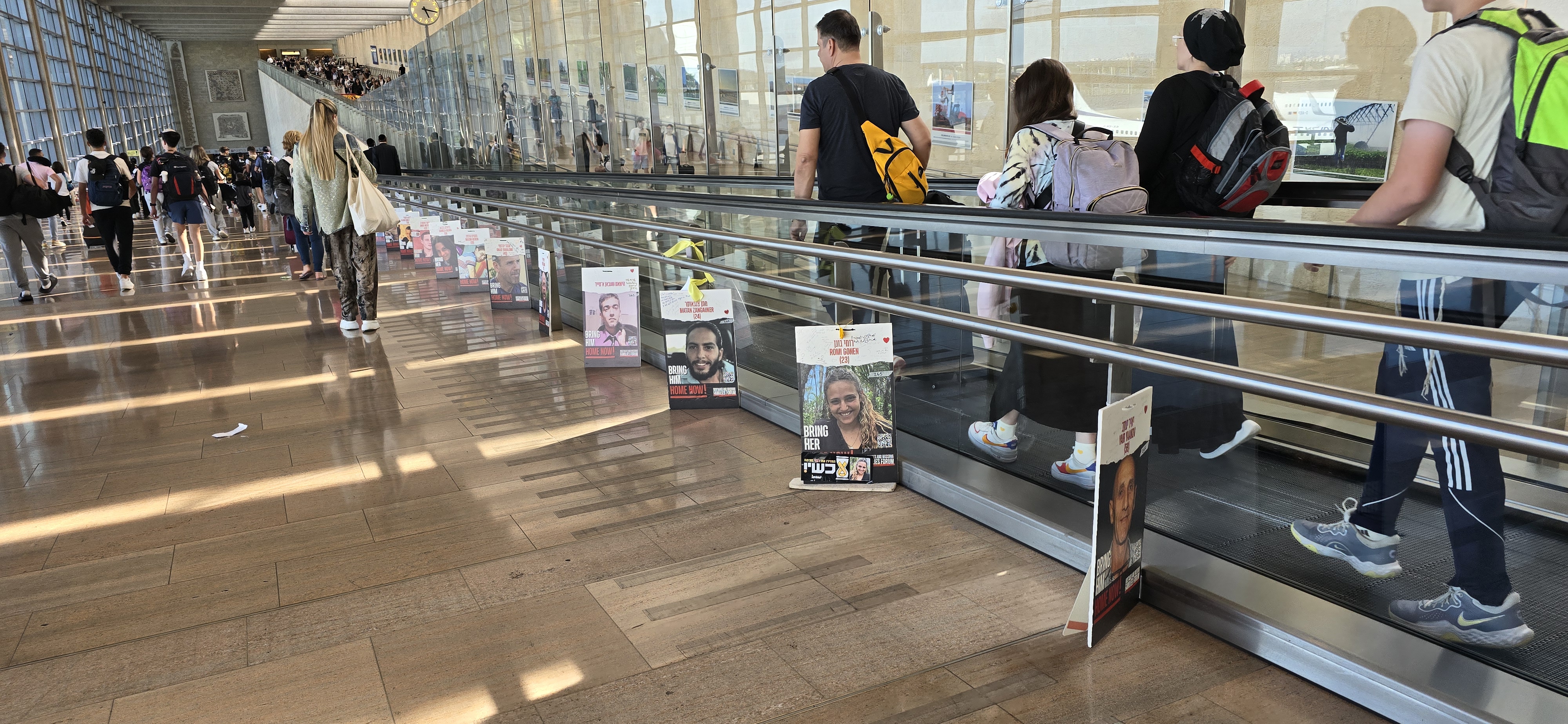
In the last two years, this modern ladder of the Land of Israel took on a painful weight. Along the railing, as every arriving passenger stepped into the corridor, 251 photos lined the wall — the faces of each hostage seized by Hamas on October 7. Every person entering the land confronted them. No one could step onto the soil of the Jewish homeland without understanding the national wound, the unfinished promise that Israel would bring every soul – living and dead – home.
Photos of the hostages hung from railings meeting every person arriving in Israel at Ben Gurion Airport in 2024 (photo: First One Through)
On my most recent trip, the first picture I met was that of Dror Or. I did not pass. I lingered. For two years, his body was held in Gaza — a grotesque bargaining chip in a war the captors refused to end. Israel kept searching, praying, fighting, refusing to abandon its dead. A week after my arrival, his body was finally returned to his family and to the state. When I walked back through the airport corridor to depart, his photo was gone. His picture had been removed, but his passing — and his dignity — stayed with me.
On arrivalAt departure
In Israel, passings are never casual. In this small land, every encounter feels like a reunion: bumping into someone you have not seen in years; meeting friends to celebrate a simcha; honoring the memory of someone who has passed on; meeting a stranger and then talking intimately for twenty minutes. Moments here are not ordinary. The land itself seems to insist that they matter.
To pass by someone, to pass through a hallway, to pass from life — in the Jewish homeland, is not trivial. This is a country stitched together by arrivals and departures, by longing and fulfillment, by angels ascending and descending in steady and deliberate devotion.
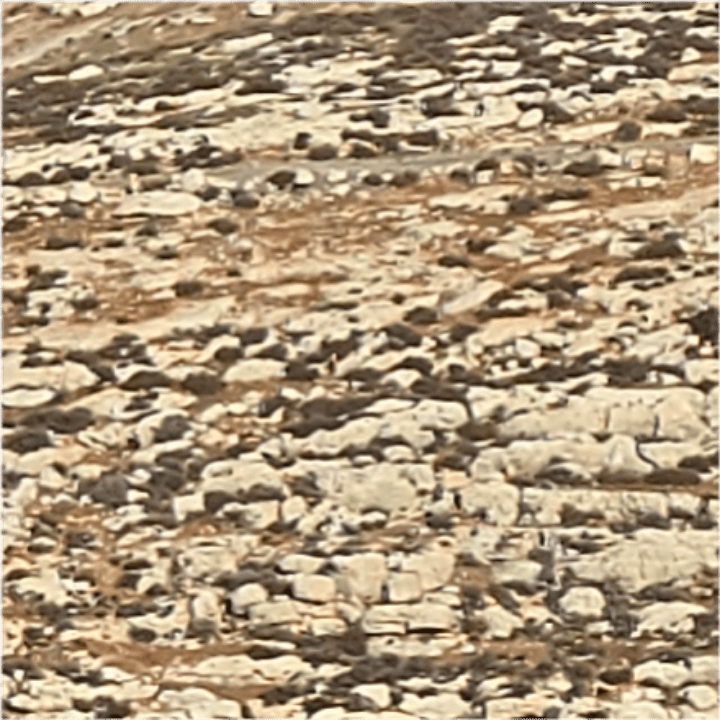
To walk the land of Israel is to feel stitched into the fabric of time. Every trail from Beersheva to the Galilee whispers of footsteps that appear in the Bible—not legends, but people who actually lived, planted, quarreled, dreamed, and prayed on this soil. The stones beneath one’s feet carry the gravity of memory. They seem fused to the foundation of the earth itself, like the Even haShtiyah—the legendary rock at the center of the Temple Mount from which creation is said to have sprung.
Rocks in Judean Hills
But that connection is not geological. It is human.
The rocks of Eilat, the oldest in the region, date to around 800 million years. They feel unimaginably ancient to us—far older than Abraham’s tents, King David’s psalms, or the Hasmonean rebellions that command our sense of deep history. Yet even those craggy cliffs and mineral seams are infants compared to the rocks of Canada. In the Canadian Shield lie formations over 4 billion years old—some of the earliest surviving pieces of Earth’s crust. Five times older. A geologic eternity older.
And yet no one reveres those rocks. No pilgrim circles them. No faith assigns them cosmic origin stories. They are “pretty,” not primordial. They are scenery, not scripture.
Why?
Because we measure age in lifetimes. We crown the stones of the Holy Land as ancient not because they are old, but because we are old here—because human meaning saturated this place for millennia. The rocks become vessels for our significance.
It is, in a sense, a subtle arrogance: the centering of human experience as the measure of the world. We treat Earth’s deep past as a backdrop to our stories rather than a reality that dwarfs them. We act as if history begins with us, as if time itself depends on our noticing it.
When we walk these trails—past the ruins of synagogues, the outlines of Israelite cities, the remnants of Crusader walls—we feel connected because these places speak to human time. They anchor us. They dignify us. But the rocks beneath those ruins hum a different message: we are temporary here. Our religions, nations, languages, and conflicts occupy a blink of the planet’s eye.
A dose of humility would serve us well. To appreciate the holiness of our stories without mistaking them for the age of the world.
We walk ancient paths, and the ground reminds us we are all newcomers.
In Parshat Toldot, as the last of the forefathers is birthed and named, we are reminded that Isaac stands out for a quiet but powerful distinction. He is the only one of the forefathers whose name was never changed.
Abram became Abraham. Jacob became Israel.
But Isaac remains Isaac — Yitzchak — from the moment God speaks his name before he is even conceived. His existence, his identity, and his destiny are declared in advance. Not earned, not negotiated, not revised.
God tells Abraham that Sarah will have a son in her old age (Genesis 17:19), and when he laughs at the impossibility of it, that laughter becomes his name. His very being is rooted in divine certainty: what looks impossible to humans is already written by God. Isaac’s name is fixed because the promise is fixed.
And so it is with the Land of Israel.
Israel is the only nation on earth whose name predates its people’s return, their sovereignty, their wars, their exiles, and their rebirth. The name was carved into Tanach, inscribed into prayer, whispered by exiles across continents, and sustained through millennia when Jews had no army, no state, no power — only a promise. [see more below]
The Romans tried to erase it, renaming Judea as Palestina to sever Jewish memory from Jewish land. Empires rose and fell, borders shifted, conquerors rewrote maps. But the name Israel endured, unchanged — the national parallel to Isaac himself. A people and a land whose identity was not invented but inherited, not imposed but foretold.
Just as Isaac’s name was spoken before his birth, the name “Eretz Yisrael” was spoken long before the modern state emerged. A name older than Rome, older than Islam, older than every foreign flag that temporarily claimed the soil. A name that outlived exile and humiliation, the Crusades and expulsions, pogroms and partitions.
You can conquer a territory. You can redraw borders. You can rename provinces.
But you cannot undo a promise.
The modern State of Israel is often framed as a political accident — a product of diplomacy, war, and the ashes of Europe. But its name tells a different truth. Like Isaac, its identity was scripted long before any diplomat voted or any soldier fought. It is not a modern label but an ancient declaration returning to life.
And Isaac’s life – the longest of all of the forefathers at 180 years – was only spent in Eretz Yisrael. While Abraham and Jacob both spent years outside, God told Isaac (Genesis 26:2) to not leave the land, even during famine. His presence, like his name, is fixed forever.
The world can debate policies, borders, governments. But the essence — the name — does not change. Isaac never needed a new one. And neither does Israel.
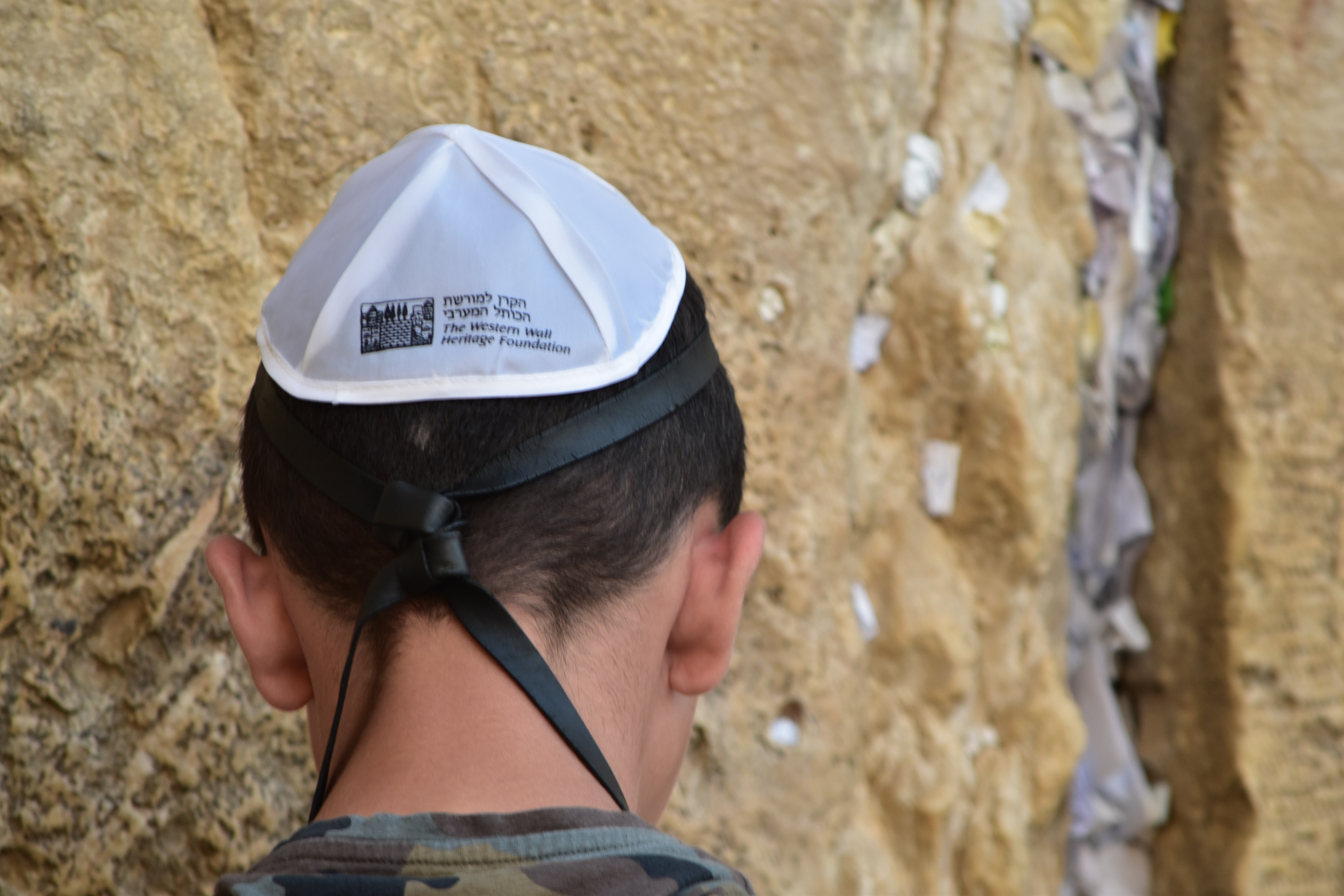
Young boy praying at the Kotel in the Old City of Jerusalem, Israel (photo: First One Through)
Eretz Yisrael, The Land of Israel
Biblical Origins The phrase Eretz Yisrael (ארץ ישראל) already appears in Tanakh: • Shmuel I 13:19 – “No blacksmith could be found in Eretz Yisrael.” • Melachim II 5:4 – Naaman’s Israelite maid and the cessation of Aramean raids reference Eretz Yisrael. • Yechezkel 40:2; 47:18 – Ezekiel is shown visions “in the Land of Israel.” • Divrei HaYamim I 22:2; II 2:16; 34:7 – Solomon’s labor and Josiah’s reforms occur “throughout Eretz Yisrael.”
These uses establish the term over 2,500 years ago, well before the Roman exile.
Early Rabbinic Usage — Mishnah The term becomes a formal halakhic category in the Mishnah: • Kelim 1:6 – “Eretz Yisrael is holier than all other lands,” the base level of the Ten Sanctities.
This is 2nd century CE — already treating Eretz Yisrael as a fixed legal reality.
Dead Sea Scroll known as 4QMMT (estimated written in 150BCE) is a halachic letter that refers to “Eretz Yisrael”
Talmudic Centrality The Talmud Bavli expands the spiritual meaning: • Ketubot 110b – “Whoever dwells in Eretz Yisrael is as one who has a God; outside it, as one who has none.” • Ketubot 111a – “Whoever lives in Eretz Yisrael dwells without sin.”
These sugyot codify the land’s religious centrality, not just its geography.
Halakhic Midrash — Sifrei The Sifrei on Devarim states: • “Dwelling in Eretz Yisrael is equal to all the commandments.”
An early, sweeping valuation of the Land as a spiritual axis.
Rishonim — Medieval Commentators • Ramban teaches that mitzvot are fully binding only in Eretz Yisrael, and observed in exile merely to preserve them. • Rambam (Beit HaBechirah 7:12) reiterates the Mishnah: “All of Eretz Yisrael is holier than all other lands.”
By the Middle Ages, the term is fully entrenched across halakhic, theological, and philosophical writing.
Bottom Line
“Eretz Yisrael” is not a modern, Zionist, or political invention. It is a halakhic and theological constant across 2,000+ years.
There is a reason the Bible lingers on grapes. They are rich, sweet, bursting with promise — a fruit that invites you in.
When the spies returned from scouting the Promised Land, they brought back a single cluster so heavy it had to be carried on a pole. That image has endured for millennia: the land was good, overflowing, generous. The fruit drew the Israelites forward, a taste of the future God promised.
Yet that same cluster became a stumbling block. The spies’ report turned the promise into fear. Instead of trusting that the God who brought them out of Egypt would also give them this land, they shrank back. The grapes that should have stirred hope instead fed doubt about the size and power of the land. The draw of abundance proved to be no guarantee of holiness.
Grapes in the Song of Moses
Forty years later, as Moses prepared the people to finally enter the land, he again reached for the image of the grape and the vine, which must have still captured the imaginations of the generation that wandered the desert. In the Song of Ha’azinu he sang of the bounty to come:
“Honey from the rock,… milk of the flock,… and the blood of the grape you drank as wine.” (Deuteronomy 32:13-14)
The land’s fruit would not be a passing token or aspiration as it was in the wilderness — it would be a daily reality. The vine was not only a sign of blessing but also of permanence.
And Moses warned that the very blessing could corrupt:
“Yeshurun grew fat and kicked… then he forsook the God who made him.” (Deuteronomy 32:15)
When abundance becomes self-indulgence, the sweetness sours. The gift is no longer an offering; it becomes an idol.
The Poisoned Vintage
The Song of Moses added a different reference to wine – not of over abundance but used for immoral purposes:
“Their vine is from the vine of Sodom, their grapes are grapes of poison, their wine is the venom of serpents.” (Deuteronomy 32:32-33)
The same fruit, when cultivated for injustice and oppression, becomes toxic. The vine can yield joy or venom depending on the heart of the grower.
The Test of Blessing
The Bible’s teaching is that grapes themselves are neither holy nor unholy. They are a draw — a gift meant to be enjoyed in gratitude and moderation.
When abundance is hoarded, flaunted, or wielded for harm, it ceases to be a blessing. The line between the vineyard of the Lord and the vineyard of Sodom lies not in the soil but in the soul.
The cluster carried by the spies, the wine of the Song of Moses, and the poisonous vintage of the nations all point to the same truth: the fruits of the earth reveal the heart of the one who gathers them.
It is our message as we leave the Fast of Yom Kippur and ready for the joyous and communal holiday of Sukkot: wine in moderation and with purpose, gladdens and sanctifies. In excess or in service of corruption, intoxicates and destroys.
Every other religion is based primarily on faith. Judaism is based primarily on lineage.
Every other religion is based on belief. Judaism is based on action.
Every other religion is not geographically-bound. Judaism is tied to the land of Israel.
The Old Testament has 613 commandments for Jews to observe. Many of those can only be kept inside the land of Israel. Those commandments relate to the sanctity of the land, as God promised the land to Abraham and the generations after him.
Observing “Shmita” only in Israel
(photo: FirstOneThrough)
Promised Land
The Bible has three sets of promises of the land of Israel for the Jewish people. The first set is God’s original promise to Abraham:
“The Lord appeared to Abram and said ‘To your descendants I will give this land’” (Genesis 12:7)
The book of Genesis repeats the promise to Abraham, Isaac and Jacob several times where the land is presented as “an everlasting possession” for the generations to come. (Genesis 17:8).
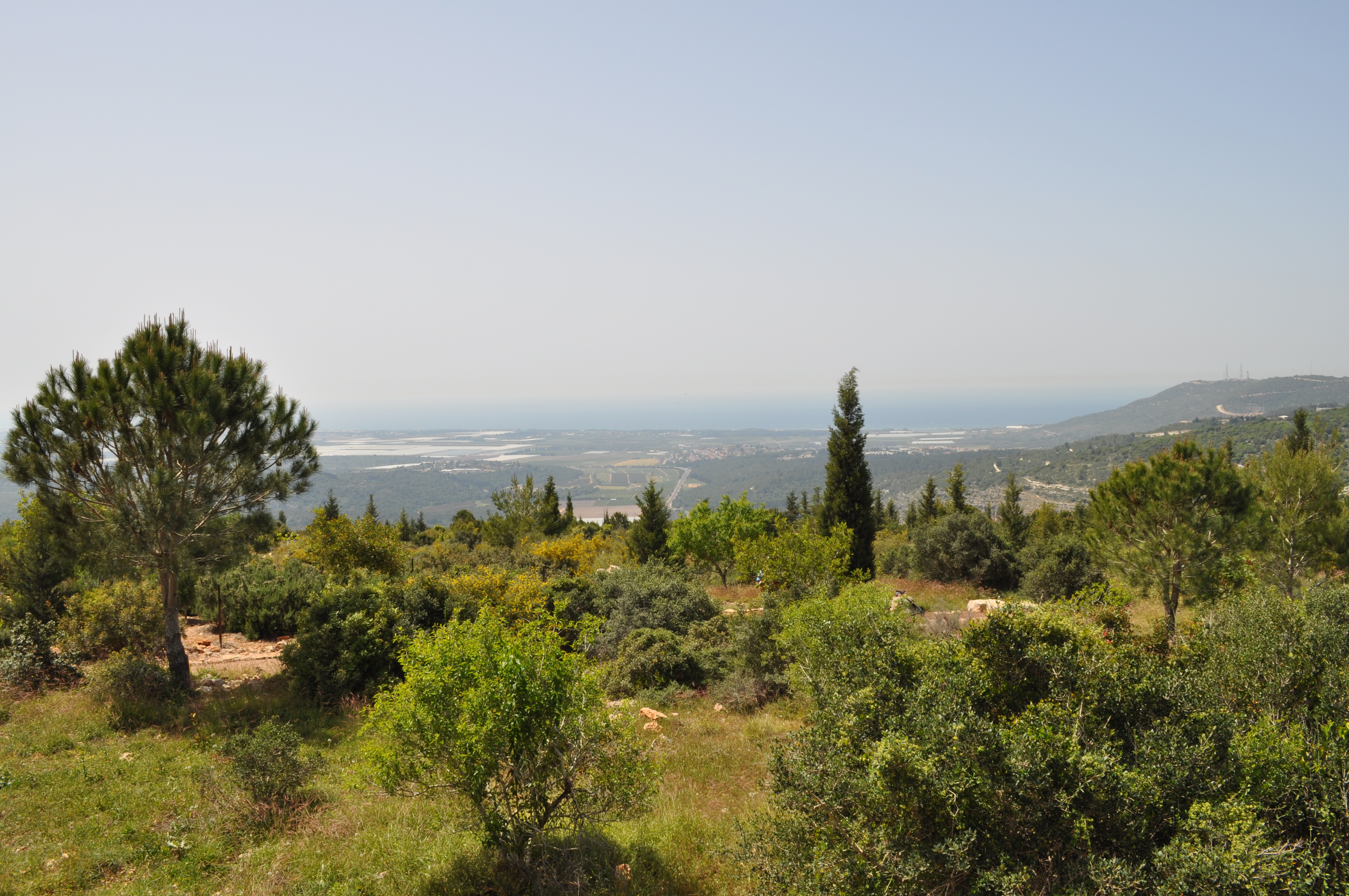
The Western Galilee
(photo: FirstOneThrough)
Promised Return to the Land
The second set of promises related to the return to Israel from slavery in Egypt. That promise is slightly different than the original promise to the Jewish forefathers:
The land is described as being a good land “flowing with milk and honey”
The land is occupied by others, by the “Canaanite and the Hittite and the Amorite and the Perizzite and the Hivite and the Jebusite.” (Genesis 3:8)
Hundreds of years earlier, God just told Abraham to go “to the land that I will show you” (Genesis 12:1) without any description of the location or nature of the land. At the point of the exodus from Egypt, God promised not only freedom from slavery, but to a land of great quality. Presumably, the land was so good, that others had now moved there while the Jews were trapped in Egypt. However, God promised to “drive them [the others] out” (Exodus 23:30) and that the Jews will ultimately possess it.
Cows in the Golan (photo: FirstOneThrough)
Promised Home
The Old Testament ends with yet a third promise: a return from the diaspora to the land of Israel, to their home.
The promise includes an ingathering of exiles from “the four quarters of the Earth” (Isaiah 11:12)
Israel is no longer only described as simply being a good land, an inhabited land or the land of the Jewish forebears. The land is described as belonging to the people of Israel. The prophets repeatedly describe that God will “bring you home again to your own land” (Jeremiah 29:14)
Home. A place that is established and well-known. That doesn’t require a list of directions of how to get there, nor many adjectives.
It is a place where a people grows up and lives. It is a place of life events, both happy and sad. Where families celebrate, quarrel and mourn. A place with family history and history to be made.
Home is where “house rules” apply; where the house decides what is allowed and denied. It decides what is in the best interest of its inhabitants. It is the safe space where a family comes to find sanctuary from the world at large.
Home is always home, even when people have been away. But especially when they come back.
Jerusalem’s Old City
(photo: FirstOneThrough)
A music video about God’s promises of the land of Israel to the descendants of Abraham, Isaac and Jacob to become a home for the Jewish people.












 First One Through
