John Kerry’s Hypocrisy: “Can You Deliver?”

Listening to US Secretary of State John Kerry try to explain and defend the P5+1 Iranian nuclear deal to various audiences is a spectacle to behold, regardless of one’s position on the best course of action.  One of the people who might want to watch the sessions and learn something from John Kerry is John Kerry.

Kerry CFR
John Kerry speaking at the Council of Foreign Relations
July 2015

Secretary Kerry argued at the Council for Foreign Relations (CFR) that Congress must support the deal or it would undermine his ability to negotiate any treaty with any government in the future. At 29:55 of the CFR talk, Kerry said: “Other people in the world are going to sit there and say ‘hey, let’s negotiate with the United States, they have 535 Secretaries of State. I mean, please! I would be embarrassed to try to go out… I mean, what am I going to say to people after this as Secretary of State? ‘Come negotiate with us?’ ‘Can you deliver?’ Please!

Kerry made the point that when two parties sit down to negotiate, it is critical for the sides to know that the negotiating parties are both authorized to negotiate and have the ability to fulfill their sides of the deal. If no such authority or ability exists, the discussions are an irrelevant waste of time.

Despite Kerry being quite clear about his logic, he has nevertheless insisted that Israeli Prime Minister Benjamin Netanyahu sit down and negotiate with Acting-President of the Palestinian Authority Mahmoud Abbas, even though it is clearly understood that Abbas can deliver nothing.

  • No Mandate: Abbas’s four-year term as president ran out in 2009. No presidential elections have been held since then.
  • No Authority: Abbas’s Fatah party lost legislative elections in 2006, winning only 33% of the parliament. No legislative elections have been held since then.
  • No Support: Abbas lags in every Palestinian poll held since 2006.
  • No Control: Abbas has no control of Gaza since his Fatah party was kicked out in 2007.
  • No Track Record: Abbas has shown zero credibility in being able to strike compromises to govern his own people, let alone deliver compromises with Israel.

Despite the glaringly obvious impotence of Abbas, the Obama administration continued to pressure Israel to negotiate with this straw man.

The Obama administration publicly acknowledged that the Palestinian Authority has absolutely no ability to deliver peace a few years ago. During the Gaza war on Israel in 2012, then US Secretary of State Hillary Clinton tried to broker a cease-fire. She made a dozen calls to various world leaders to halt the war- but not ONCE called the Abbas and the Palestinian Authority.

Compounding the inherent flaws in Abbas and the Palestinian Authority is Abbas’s insistence on bringing terms of any deal with Israel to a referendum. Abbas stated that he cannot decide on the “Right of Return” for all Palestinians, but that each of the 5 million Palestinian Arab “refugees” must make a decision for themselves. Hey Kerry- 535 “second-guessers” looks pretty good compared to 5 million! In terms of the rest of the components of a final agreement, Abbas stated that he “would go to a referendum everywhere because the agreement represents Palestinians everywhere.”  That’s impressive – he seeks the approval of 11 million “Palestinian” Arabs from all around the world!


Kerry’s comments regarding Iran are both on- and off-the-mark.  Iran and all of the parties in the negotiations know that the United States is a democracy and the political process must run its course.  Once the American people’s representatives in Congress make a decision, the government will deliver on its commitments.

However, Abbas – a complete straw man if ever there was one – with no authority or control whatsoever, openly states that millions of individuals will ultimately not only decide the fate of an Israeli-PA deal overall, but even on certain components on an individual basis.


Kerry fully appreciates that before negotiators start a process that they want to know the answer to the fundamental question: “Can you deliver“? However, he doesn’t care when he forces Israel to do exactly that with Abbas and the Palestinian Authority.


Related FirstOneThrough video and articles:

Abbas demands R-E-S-P-E-C-T

The Disappointing 4+6 Abbas Anniversary

Palestinian “Refugees” or “SAPs”?

Subscribe YouTube channel: FirstOneThrough

Join Facebook group: FirstOne Through  Israel Analysis

The Joys of Iranian Pistachios and Caviar

This is not a Satire (?)

The full text of the Iranian nuclear deal completed in Vienna on July 14, 2015 was a weighty 159 pages. The many members of the negotiating teams clearly used their time very productively as they worked through months of discussions and debates, even working past several deadlines on complicated scientific matters of nuclear fission.

The great citizens of the United States can thank the members of Secretary of State John Kerry’s team who negotiated endlessly on behalf of every American. His negotiating skills were clearly evident as he secured important points to benefit the country in these tense talks. In particular, Americans may not have caught a key clause buried inside the deal points. I offer one here (see page 67 of the agreement):

“Section 5.1.3 License the importation into the United States of Iranian-origin carpets and foodstuffs, including pistachios and caviar.”

kerry green tieThis was an important concession that Kerry’s team was able to secure.  Americans have grown tired of California pistachios and miss their Beluga Caviar from the Caspian Sea.  While the Iranian team was busy focused on centrifuges, missiles and fissile material, Kerry scored a big hit for US bellies.

Over the coming weeks, Obama will surely point out this key item in emphasizing that this is a “good deal” for the United States. The American people have suffered long enough from the sanction regime that has denied them these delectable treats from Iran.

pistachios

To paraphrase Robin Leach in Lifestyles of the Rich and Famous to the Obama Administration trying to sell this “good deal” to Congress:  “Wishing you pistachio wishes and caviar dreams.”

Netanyahu’s View of Obama: Trust and Consequences

Summary: Obama has asked Netanyahu to trust him on an issue (Iranian nuclear power) that is an existential threat to his country, even though Obama hasn’t earned that trust on more basic issues. Obama then compounds Netanyahu’s fear by stating Obama will act completely alone in controlling the outcome. Netanyahu’s nightmare is not just becoming “1938 Czechoslovakia”, but “2014 Ukraine”.
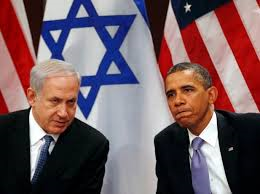
 obama netanyahu2
Netanyahu and Obama

TRUST

Trust is the bedrock of a functional relationship. It enables one party to rely on the other. A trust that includes both intention and capability permits a sharing of responsibility and workload.

The relationship between US President Obama and Israeli Prime Minister Netanyahu started off badly and further deteriorated over the years. Personalities aside, the lack of a shared vision about the path to peace and security in the violent Middle East damaged relations.  However, it was a series of bad decisions which destroyed the trust between the two leaders.

Negotiation with Palestinians. Obama’s actions early in his presidency, hurt his credibility with Netanyahu. Obama insisted on an Israeli settlement freeze as a pre-condition to negotiations with the Palestinians- a pre-condition that was never introduced before, even by the Palestinians. Despite Netanyahu’s serious reservations, he instituted a ten-month freeze on building new homes in the west bank of the Jordan River. In exchange, Obama could not get acting-Palestinian President Abbas to even show up to talk for the first nine months, and when he did, all Abbas offered was extending the freeze even longer.

When US Secretary of State John Kerry tried another round of negotiations with Abbas in the fall of 2013, the US again asked Israel to give up something to start talks while it made no demand of the Palestinians. Israel released dozens of terrorists that were convicted of murder from its prisons. In exchange, Kerry could not even get Abbas to recognize Israel as a Jewish State, let alone any compromises for a Palestinian state. The negotiations failed again.

In both situations the US pressured Israel to give up something just to initiate negotiations and asked nothing of the Palestinians. In the end, the Palestinians continued to give exactly the same: nothing.

Giving it away upfront. The Obama administration has used the tactic of giving away bargaining points upfront in the hope of gaining something in the negotiations down the road. In Cuba, Obama has pulled back sanctions, in the hope that the country reforms. In Iran, the US eased sanctions to get Iran to consider allowing monitors to watch it build nuclear power.

Netanyahu does not believe in such negotiating tactics and it has not worked out well for Israel.

Giving up on Allies. The disagreement on negotiating style is only part of Netanyahu’s issue.  Israel and the Middle East watched the Obama administration turn its back on its allies. Egyptian President Mubarak was once a close ally of the United States. One day, the Obama administration decided it would no longer stand by its ally and called for Mubarak’s ouster. He was rushed off to jail.

The US’s Middle Eastern allies were dumb-founded by Obama’s action. A senior Arab government official stated “[The Saudis] are at odds with the U.S. position, publicly pushing Mubarak out. And frankly so are we—this isn’t how you handle issues in region.”

Failure to Understand Regional Dynamics. Obama’s turn on Egypt’s Mubarak was followed by an embrace of the democratically-elected Muslim Brotherhood. Obama’s infatuation with the “Turkish model” of democratic Islam made him welcome the new Egyptian ruler Mohammed Morsi. Morsi reopened Egypt’s ties with Hamas (the Muslim Brotherhood in Gaza) , much to the chagrin of Israel’s Netanyahu. Those actions also undermined the more moderate (on a relative basis) acting PA President Abbas.

Obama back-tracked from his support of democracy in Egypt by not objecting to the replacement of Morsi via a takeover by Abdul Fattah el-Sisi. El-Sisi clamped down on Hamas and the Muslim Brotherhood which won praise in Israel. From Israel’s perspective, a mistake was rectified to some degree, but the damage done by Obama of not standing by an ally and not appreciating the regional dynamics was etched in memory.

Obama not standing by Treaties or Comments. In addition to not standing by allied leaders, Obama has not stood by his own word or by US treaties with governments. For example, Obama’s declared “red line” on Syria’s use of chemical weapons came and went without ramifications for Syrian President Assad. While Obama claimed credit for negotiating a solution to get rid of Syria’s known chemical weapons, there was no personal penalty for Assad. Assad continues to remain in power and murder his countrymen.

Saudi Arabia was incredulous and stated“We’ve seen several red lines put forward by the president, which went along and became pinkish as time grew, and eventually ended up completely white…When that kind of assurance comes from a leader of a country like the United States, we expect him to stand by it.”
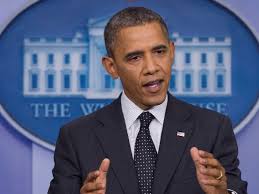
obama syrian red line
Obama asserting a “red line” on Syrian chemical weapons

The Ukrainian situation is even more telling. In 1994, Ukraine signed onto the Budapest Memorandum which was to guarantee its territorial integrity in exchange for giving up its nuclear weapons. While it adhered to its upfront part of the bargain by giving up its weapons, the Obama administration refused to enforce its end of the agreement by coming to the aid of Ukraine when Russia invaded and annexed Crimea in 2014. Russian leader Putin correctly assessed the temperament of Obama that he would fail to honor his obligation, just as he failed to take action in Syria. Putin has continued to move past Crimea to other parts of Ukraine while the US not only fails to come to the defense of Ukraine, but drags its feet in sending weapons to defend itself.

The situation is not lost on Netanyahu (while it is on the knee-jerk liberal New York Times which stated in its lead editorial on March 12, 2015 that “Republicans are perfectly willing to diminish America’s standing as a global power capable of crafting international commitments and adhering to them.”  As detailed above, Obama has made very clear that HE has diminished America’s commitments, not the Republicans).

Obfuscation. The last loose thread in the unraveling fabric of trust is the lack of transparency.

While Obama touted his goal of transparency when he ran for office, his administration has been one of the least transparent. Witness Obamacare, where House Speaker Nancy Pelosi famously said “We have to pass the bill to that you can find out what is in it.” Secretary of State Hillary Clinton ran her own email server outside of the State Department and deleted emails at her own whim. Now, Obama refuses to provide details of the Iranian negotiations with Israel.

The trust between Obama and Netanyahu is broken.

ACTING ALONE

Compounding the Israeli frustration with the lack of trust in the Obama administration’s dealing with Iran, is the unilateral course that Obama has taken. Obama has effectively barred Israel from attacking Iran and is attempting to seal negotiations without legislative approval.

Blocking an Israeli attack. As soon as Obama began to negotiate with Iran, it became impossible for Israel to attack Iran. How could Israel attack the facilities while the US was pursuing a diplomatic initiative? The start of Obama’s talks signaled the end of Israel’s ability to destroy their nuclear program.

Skipping Congress. Obama repeatedly stated that he does not believe that he needs congressional approval to sign a deal with Iran. As such, he has asserted that he has complete authority to negotiate and finalize a deal.  The Republicans, which now have majority control of both the House and Senate, strongly disagree and have taken steps to make their position known to both the Obama administration and Iran itself.

COMPETENCIES and CONSEQUENCES

Israel’s Netanyahu is left in a precarious situation.  As his country is under threat of annihilation by Iran, its close ally has put itself in the lead seat in negotiations.  However, Netanyahu is looking at the current US president as:

  • Lacking an understanding of regional dynamics;
  • Incapable of negotiating;
  • Refusing to be transparent about the negotiations;
  • Unwilling to stand by statements and treaties in support of allies;
  • Determined to act alone without the legislative branch of government

The Trust in Competencies and Fear of Consequences leaves Israel in a vulnerable and lonely spot.  While Israel fears it will be sacrificed at the alter of larger players like Czechoslovakia in 1938, it sees how the lead negotiator will not enforce any security agreements that may be struck, as in the embattled Ukraine today.


Related First.One.Through articles:

Arab states agree with Netanyahu in speech to Congress: https://firstonethrough.wordpress.com/2015/03/08/missing-netanyahus-speech-those-not-listening-and-those-not-speaking/

Conservative focus on safety: https://firstonethrough.wordpress.com/2015/03/01/the-gap-between-fairness-and-ramifications-wmds-in-iraq-and-iran/

Obama’s Iranian red line: https://firstonethrough.wordpress.com/2014/11/24/obamas-iranian-red-line/

The need for a global public reaction to Iran’s nuclear aspiration: https://firstonethrough.wordpress.com/2015/03/03/hidden-reactor-silent-reaction/

Failing Negotiation 101: The United States

One Party that can deliver

US Secretary of State John Kerry invested heavily in Israel-Palestinian Authority peace talks from July 2013 to March 2014. In the wake of the failure, many people looked to blame one of the two parties for the talks’ failure. A recent New York Times article quoted Israeli left-wing politician Tzipi Livni as blaming the Palestinians for the collapsed negotiations (a surprising statement, as in Israeli election season she only criticizes her political opponent Benjamin Netanyahu.)

In reality, it was the US that was to blame.

The US did not fail for lack of effort. It did not fail in trying to find creative solutions. It failed because the entire basis of having negotiations in the current format was a fool’s errand.

The process was doomed from the outset because Secretary Kerry deliberately ignored Negotiation Rule 101: negotiations between parties that can deliver. A negotiation between parties without authority is meaningless. A person without authority or control could theoretically promise anything – but deliver nothing. That was precisely what Secretary Kerry insisted upon when he pushed Israeli Prime Minister Benjamin Netanyahu to negotiate with a straw man named Mahmoud Abbas.

Abbas has no mandate. Mahmoud Abbas was elected to a four year term as president of the Palestinian Authority in January 2005. After his term expired in January 2009, no new elections were held. He no longer has a mandate.

Abbas has no backing. The reason that no new elections for the PA have been held is that everyone knows that Abbas and his Fatah party would lose. One year after Abbas won the presidency, his Fatah party was trounced in legislative elections. Hamas won 58% of the parliament. Every poll taken since then has shown that Abbas would lose in a presidential election.

Abbas has no control. Gaza, with its population of 1.7 million people, is under complete control of Hamas. Hamas routed all PA forces in 2007 and Abbas has no ability to control any activities from the region. Hamas controls thousands of missiles which it fires at Israeli population centers with or without Abbas approval. Therefore, what “peace” can Abbas deliver?

Despite these enormous glaring flaws, the US pushed forward a peace process that was doomed from the start because of the very essence of one of the negotiating parties. Netanyahu was forced to sit across from a counter-party who could not deliver any compromise that he may have offered. As Netanyahu’s authority was clear, any negotiating point that he made was secure; Abbas could “bank” every concession. However, any compromise that Abbas would theoretically offer, could be negated by the Palestinians. Just as the Palestinians complained that they were never asked about the British Mandate in 1922, they could once again complain that the public was never consulted about the peace process, as a mothballed politician without backing negotiated the agreement.

Further, Abbas’ lack of control meant that he had no means of enforcing the agreement. Israel would be left (at best) with making peace with those parties that accepted the peace agreement, but still be at war with those that rejected the agreement. With Abbas unable to enforce the compromises and the peace, it would continue to fall on Israel to confront those Palestinians that were still at war with the country. Noting how the world reacted to Israel’s defensive operation against Gaza in 2014, could Israel have any sense of security that it could effectively counter-act Palestinian aggression post a mock peace deal?

Secretary Kerry compounded the mistake of the bogus negotiation by building up expectations. His earnest and persistent involvement aggravated the talk’s failure. By investing so heavily in the process, Kerry made the failure that much more pronounced. While there was no direct line linking the talk’s collapse to the July-August battles with Hamas, the environment was poisoned.


Abbas gets no R-E-S-P-E-C-T music video (music by Aretha Franklin): https://www.youtube.com/watch?v=LipAKFsUNq8


Sources:

NY Times on Tzipi Livni impression on talks failure: http://www.nytimes.com/2014/12/24/opinion/roger-cohen-why-israeli-palestinian-peace-failed.html?_r=0

Related First One Through articles:

Abbas 10-year anniversary for a 4 year term: https://firstonethrough.wordpress.com/2014/09/30/the-disappointing-46-anniversary/