Joseph, Yusuf and the Stories We Tell

The story of Joseph is the longest sustained personal narrative in the Bible. It is a life told end-to-end—youth and jealousy, betrayal and exile, moral clarity under pressure, reversal of fortune, and reconciliation. Jews have lived inside this story for millennia and drawn from it lessons about love misdirected, loyalty earned, leadership forged, and fate revealed only in retrospect.

It begins, uncomfortably, at home.

Jacob’s overemphasis on Joseph—his public favoritism, symbolized by the coat of many colors—fractured the family. It was not Joseph’s dreams alone that enraged his brothers, but the hierarchy their father imposed. Love, unevenly expressed, curdled into resentment. That resentment escalated to violence. The brothers nearly killed Joseph, then sold him into slavery, persuading themselves that exile was mercy.

And yet, the terror of the pit became the opening move in a larger design. Joseph’s descent—into slavery, into prison, into obscurity—ultimately saved thousands from starvation, including the very brothers who betrayed him. The Torah insists on an uncomfortable truth: human cruelty can coexist with divine purpose, without being excused by it.

Over time, the transformation that matters most occurs not in Joseph, but in Judah. The brother who once proposed selling Joseph later rises to moral leadership. Faced with the potential loss of Benjamin, Judah offers himself instead. Ultimatelty, kingship does not emerge from brilliance or dreams, but from responsibility and loyalty. Judah learns what Jacob failed to teach early: leadership is love with a wide visual field.

But this is not the only Joseph story in the world.

Yusuf and Zulaykha: A Different Emphasis

In Islamic tradition, Joseph is Yusuf, and his story unfolds with different texture and purpose. The Qur’an (Surah Yusuf) adds layers absent from the biblical text. Where the Bible does not even name Potiphar’s wife, Islamic tradition gives her a name—Zulaykha—and an entire inner life.

Her attraction to Yusuf begins as physical longing, but in later tradition becomes a spiritual ascent. Love itself is refined—from desire for beauty to yearning for the divine. This is not biography alone; it is allegory.

Persian culture preserved these layers visually, through extraordinary manuscript art that does not merely illustrate scripture but interprets it.

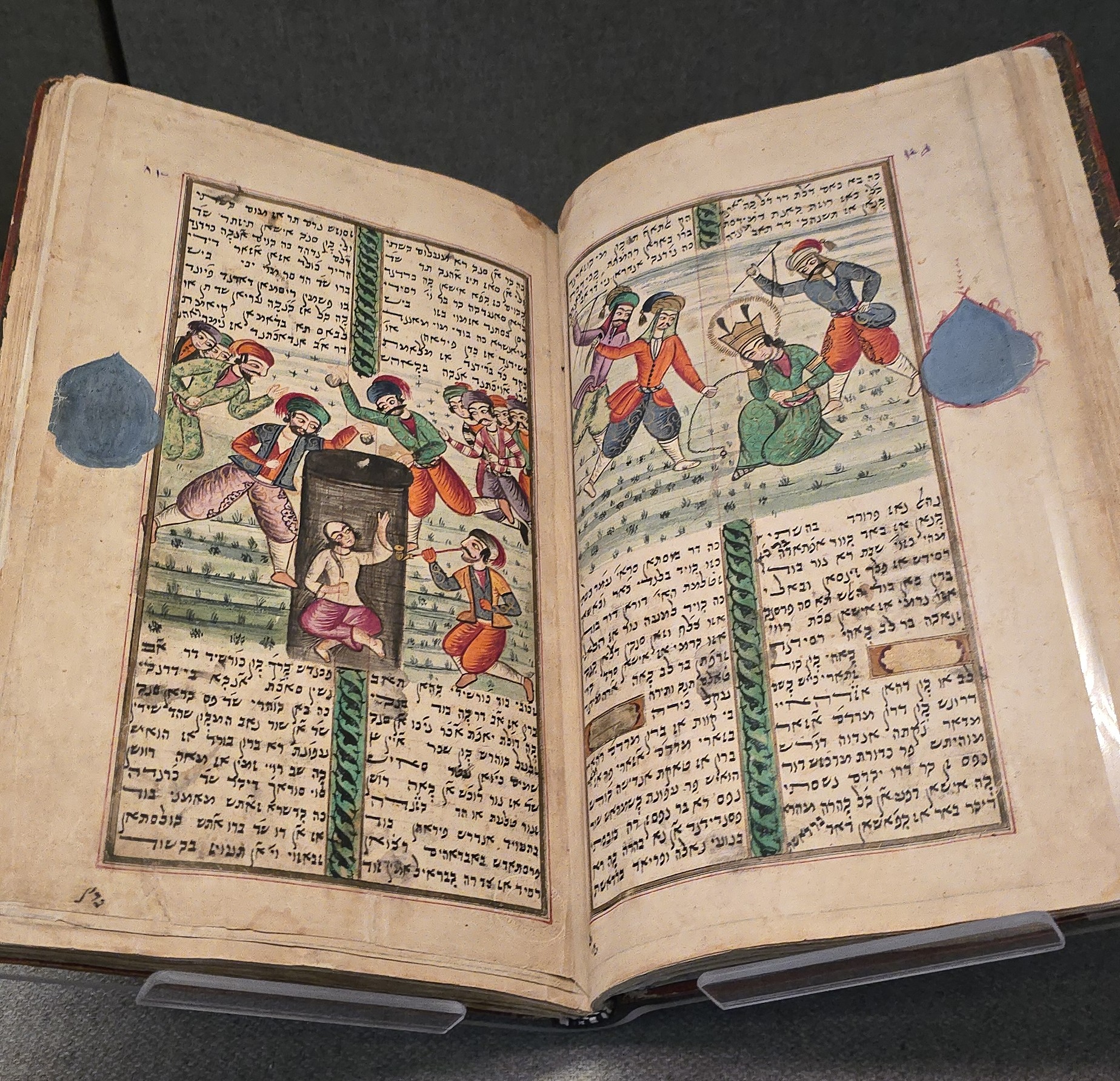
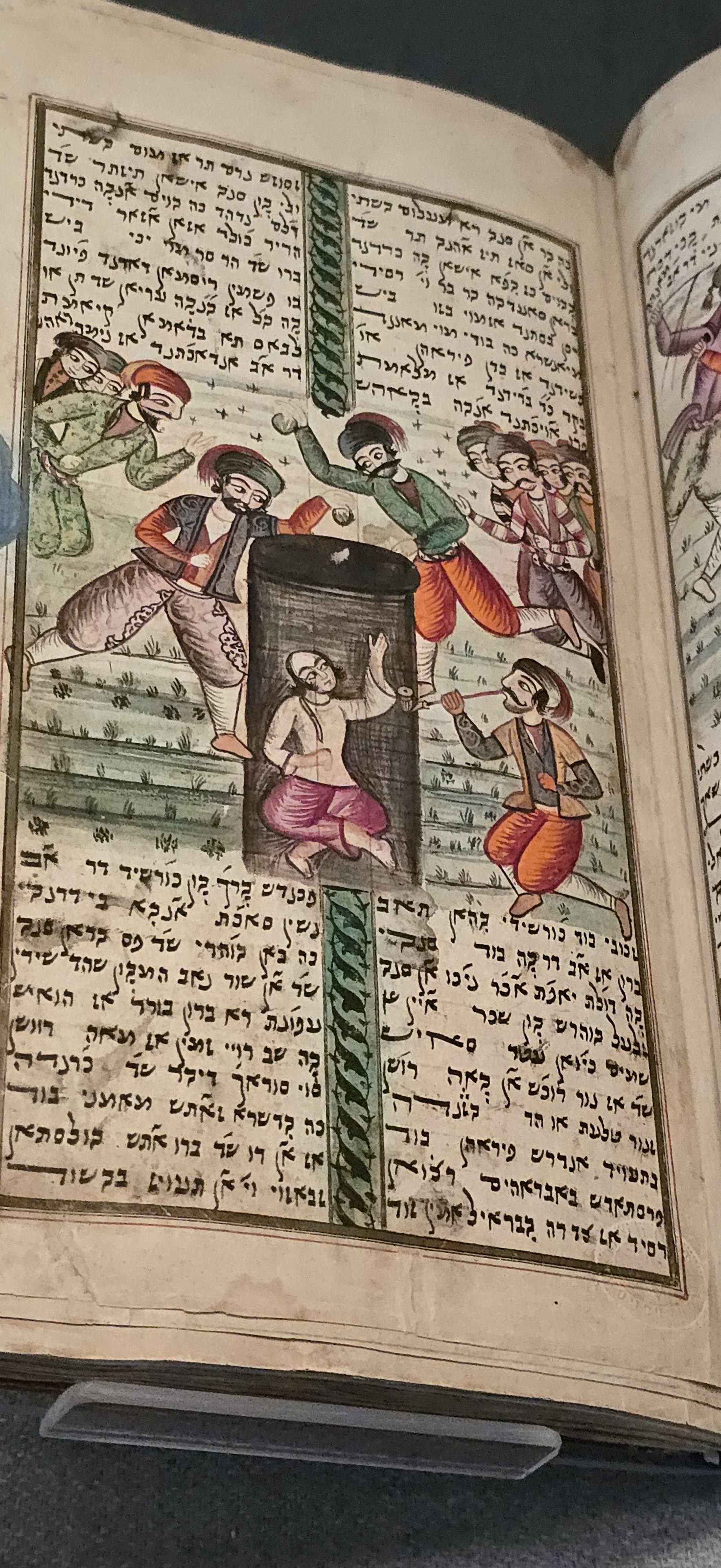
One remarkable manuscript—now on display at the Grolier Club from the collection of the Jewish Theological Seminary (until December 27, 2025)—shows Joseph cast into a well. The details are arresting. Joseph has lost not only his coat of many colors, but his hat and shoes as well—status stripped away piece by piece. The brothers even drop rocks down on him.

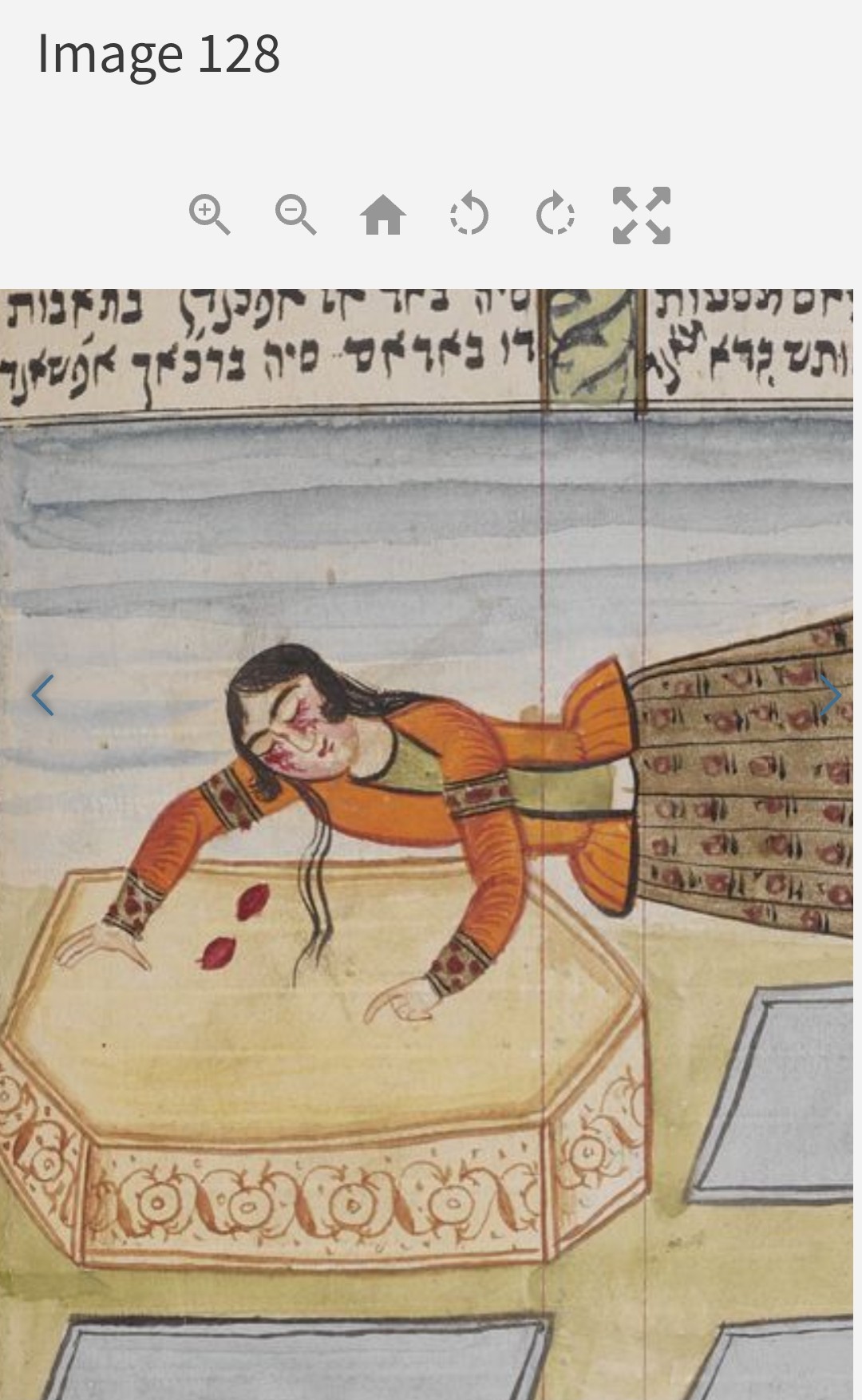
Story of Yusuf and Zulaykha from Mashhad, Iran in 1853 by the Jewish scribe Eliyahu ben Nisan ben Eliyahu Gorgi. Digitized entire manuscript can be viewed here

One figure stands apart in the drawing. At the bottom of the scene, a brother sits almost contemplatively. His hands alone are painted with henna, marking higher status. He smokes a long çubuk (copoq)—a dry-tobacco pipe, not the classic Persian water-based hookah—an unsettling detail as Joseph languishes in a dry well below. The image quietly foreshadows hierarchy, survival, and reversal. Even in betrayal, the future is being seeded. This must be Judah, on the side of the well with his five brothers from mother Leah, who is destined to help Joseph out of the pit and rise to fame himself.

One brother seems to connect at the same level of Joseph – at a low point in this story but will rise to fame later in life: Judah

Other images in the Yusuf cycle go further still in the manuscript. Women cut themselves upon seeing Joseph’s beauty (image 70 from Surah Yusuf 12:31). Zulaykha is said to lose her sight from longing for him (image 128). Beauty becomes dangerous, overwhelming, transformative. The Islamic tradition does not deny desire; it seeks to discipline and redirect it.

Zulaykha losing her sight at the end of the story is one of the versions transmitted through the ages

Two Traditions, One Origin

For Jews, Joseph’s story is about dreams and reversals, exile and return, family rupture and national survival. For Muslims, Yusuf’s story adds a meditation on beauty, temptation, and love’s ascent toward God. The Islamic telling emerged nearly two thousand years after the Jewish forefather lived. It is not wrong; it is different.

What matters for us today is that these differences did not need to fight. The stories coexist without trampling on the other.

The same characters—Jacob, Joseph, the brothers—carried distinct lessons without cancelling one another. No one is frozen forever as a villain. Jacob loved poorly but learned. The brothers failed catastrophically but changed. Judah rose. Sacred storytelling, at its best, refuses to eternalize blame.

That restraint is precisely what feels absent today.

Stories, Power, and the Present

The Holy Land, sacred to both Jews and Muslims, is no longer widely treated as a shared inheritance, but as a zero-sum possession. Hamas openly declares that Jews will be wiped out. Clerics in parts of the Islamic world speak in timelines of Jewish disappearance due to their being “enemies of world peace.” This is not interpretation; it is incitement. It rejects the Joseph model, in which history bends—slowly and painfully—toward survival, accountability, and reconciliation rather than annihilation.

And yet, Islamic civilization itself offers another precedent. Islam historically made room for Jewish continuity—absorbing biblical figures, preserving Jewish prophets, and allowing traditions to dovetail rather than collide. Yusuf did not replace Joseph; he walked alongside him. Zulaykha did not negate Potiphar’s wife; she deepened the moral inquiry. Reverence did not require negation.

That capacity still exists.

If Joseph teaches anything durable, it is that sovereignty, survival, and holiness are not insults to one another. Jews returning to and governing their homeland need not be read as a theological defeat for Islam. They can be understood, instead, as another chapter in a long, shared story—one that does not deny difference, but refuses extermination as destiny.

The question is whether we choose that inheritance again.

Collective Responsibility From Dinah in Shechem to the Hostages in Gaza

When Shechem raped Dinah in Genesis 34, the Torah condemns not only the man who violated her but the entire city that allowed her to remain captive. Dinah was held openly in Shechem’s home, and no one objected. Not one elder confronted the crime. Not one resident demanded her release. Their silence became their guilt.

This is the Torah’s principle: A society that tolerates the humiliation of the innocent becomes responsible for it.

October 7 Made That Principle Contemporary

The political-terrorist group Hamas did not merely murder and rape on October 7, 2023. They dragged 251 human beings—children, women, men, elderly—into Gaza. For months, those hostages were kept in houses, apartments, tunnels beneath family homes, mosques, and clinics. People fed their captors. People guarded entrances. Crowds celebrated the kidnappings. The captivity was not hidden from the population; it was woven into daily life.

Crowds of Gazans celebrate the taking of captives – alive and dead – on October 7, 2023

And just as in Shechem, no one in Gaza intervened. Not one hostage was smuggled out. Not one family risked itself to free a stranger. Not one community leader demanded their return.

The Torah would not call this ignorance. It would call it complicity.

Dinah’s City and Gaza: A Shared Moral Failure

Shechem’s offense was personal; the city’s offense was communal. The same moral structure applies today: the crime begins with Hamas, but it enlarges to those who shelter, celebrate, or simply accept the captivity of innocents. The vast majority of Gazans supported Hamas’s actions.

Jacob criticized Shimon and Levi for endangering the family, but the Torah never suggests that the men of Shechem were innocent. Their passivity was enough to implicate them. When God protects Jacob’s family afterward, it signals that defending dignity—even forcefully—was morally justified.

The Torah’s Message for Our Generation

The world tries to draw a sharp line between Hamas and “the people of Gaza,” as though collective moral responsibility vanished in modern times, and the celebrated terrorism is not inherently a collective attack on an entire society. Dinah’s story rejects these illusions. It teaches that a society that houses kidnapped people is not neutral, and a population that normalizes and endorses cruelty shares responsibility for it.

Jacob scolded his sons Shimon and Levi for carrying out the revenge attack against Shechem’s people, and said that it would make their family a pariah. That too is repeating today, as many countries condemn and isolate the State of Israel for its actions in Gaza.

Dinah’s captivity was a test of Shechem’s moral fabric, and it failed. The captivity of Israeli hostages – for years – was a test of Gaza’s, and it also failed. The anger over the slaughter of the guilty has also left a deep mark then and today.

The lesson is simple and ancient: When a people accepts atrocity in its midst, the stain becomes communal. But it will not leave leave the actors in the just war untarnished in the days and years ahead.


A Name That Never Changes

In Parshat Toldot, as the last of the forefathers is birthed and named, we are reminded that Isaac stands out for a quiet but powerful distinction. He is the only one of the forefathers whose name was never changed.

Abram became Abraham.
Jacob became Israel.

But Isaac remains Isaac — Yitzchak — from the moment God speaks his name before he is even conceived. His existence, his identity, and his destiny are declared in advance. Not earned, not negotiated, not revised.

God tells Abraham that Sarah will have a son in her old age (Genesis 17:19), and when he laughs at the impossibility of it, that laughter becomes his name. His very being is rooted in divine certainty: what looks impossible to humans is already written by God. Isaac’s name is fixed because the promise is fixed.

And so it is with the Land of Israel.

Israel is the only nation on earth whose name predates its people’s return, their sovereignty, their wars, their exiles, and their rebirth. The name was carved into Tanach, inscribed into prayer, whispered by exiles across continents, and sustained through millennia when Jews had no army, no state, no power — only a promise. [see more below]

The Romans tried to erase it, renaming Judea as Palestina to sever Jewish memory from Jewish land. Empires rose and fell, borders shifted, conquerors rewrote maps. But the name Israel endured, unchanged — the national parallel to Isaac himself. A people and a land whose identity was not invented but inherited, not imposed but foretold.

Just as Isaac’s name was spoken before his birth, the name “Eretz Yisrael” was spoken long before the modern state emerged. A name older than Rome, older than Islam, older than every foreign flag that temporarily claimed the soil. A name that outlived exile and humiliation, the Crusades and expulsions, pogroms and partitions.

You can conquer a territory.
You can redraw borders.
You can rename provinces.

But you cannot undo a promise.

The modern State of Israel is often framed as a political accident — a product of diplomacy, war, and the ashes of Europe. But its name tells a different truth. Like Isaac, its identity was scripted long before any diplomat voted or any soldier fought. It is not a modern label but an ancient declaration returning to life.

And Isaac’s life – the longest of all of the forefathers at 180 years – was only spent in Eretz Yisrael. While Abraham and Jacob both spent years outside, God told Isaac (Genesis 26:2) to not leave the land, even during famine. His presence, like his name, is fixed forever.

The world can debate policies, borders, governments. But the essence — the name — does not change. Isaac never needed a new one. And neither does Israel.

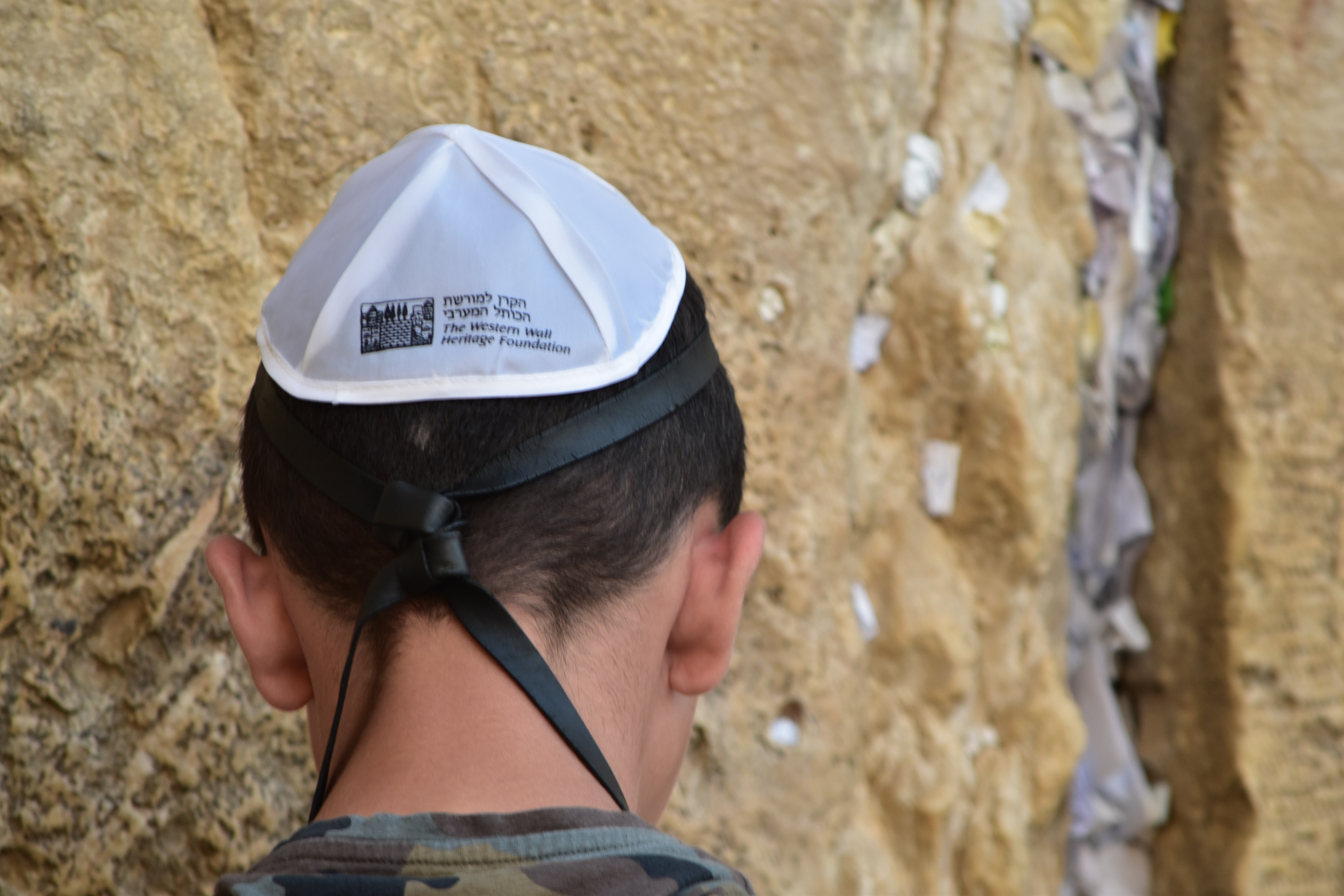
Young boy praying at the Kotel in the Old City of Jerusalem, Israel (photo: First One Through)

Eretz Yisrael, The Land of Israel

Biblical Origins
The phrase Eretz Yisrael (ארץ ישראל) already appears in Tanakh:
Shmuel I 13:19 – “No blacksmith could be found in Eretz Yisrael.”
Melachim II 5:4 – Naaman’s Israelite maid and the cessation of Aramean raids reference Eretz Yisrael.
Yechezkel 40:2; 47:18 – Ezekiel is shown visions “in the Land of Israel.”
Divrei HaYamim I 22:2; II 2:16; 34:7 – Solomon’s labor and Josiah’s reforms occur “throughout Eretz Yisrael.”

These uses establish the term over 2,500 years ago, well before the Roman exile.

Early Rabbinic Usage — Mishnah
The term becomes a formal halakhic category in the Mishnah:
Kelim 1:6 – “Eretz Yisrael is holier than all other lands,” the base level of the Ten Sanctities.

This is 2nd century CE — already treating Eretz Yisrael as a fixed legal reality.

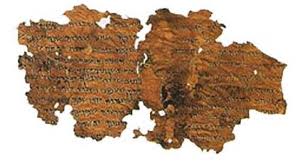
Dead Sea Scroll known as 4QMMT (estimated written in 150BCE) is a halachic letter that refers to “Eretz Yisrael”

Talmudic Centrality
The Talmud Bavli expands the spiritual meaning:
Ketubot 110b – “Whoever dwells in Eretz Yisrael is as one who has a God; outside it, as one who has none.”
• Ketubot 111a – “Whoever lives in Eretz Yisrael dwells without sin.”

These sugyot codify the land’s religious centrality, not just its geography.

Halakhic Midrash — Sifrei
The Sifrei on Devarim states:
• “Dwelling in Eretz Yisrael is equal to all the commandments.”

An early, sweeping valuation of the Land as a spiritual axis.

Rishonim — Medieval Commentators
• Ramban teaches that mitzvot are fully binding only in Eretz Yisrael, and observed in exile merely to preserve them.
• Rambam (Beit HaBechirah 7:12) reiterates the Mishnah: “All of Eretz Yisrael is holier than all other lands.”

By the Middle Ages, the term is fully entrenched across halakhic, theological, and philosophical writing.

Bottom Line

“Eretz Yisrael” is not a modern, Zionist, or political invention. It is a halakhic and theological constant across 2,000+ years.

Choosing Our People

In Chayei Sarah, Abraham does something brave. When it’s time to find a wife for his son Isaac, he refuses to choose from the neighbors around him. These were the people he did business with, lived among, interacted with every day — but they did not share his values. So he sends his servant far away to find someone who does.

Abraham teaches us something simple and powerful: proximity is not loyalty. Geography is not identity. Values matter more than convenience.

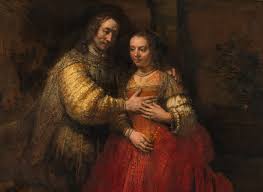
Rembrandt’s “The Jewish Bride,” (c. 1665) originally called “Isaac and Rebecca”

We are living this lesson now. In the last year, too many of us have watched people we assumed were “ours” turn their backs — classmates, coworkers, fellow Jews, even friends who share our politics. Being nearby doesn’t make someone trustworthy. Sharing a label doesn’t make them aligned. We’ve learned, painfully, that not everyone who sits next to us stands with us.

Abraham reminds us that it’s okay — even necessary — to choose our people carefully. To build relationships around courage and truth, not comfort or habit. To seek out the ones who show up for Jewish dignity when it’s hard, not only when it’s fashionable.

Isaac didn’t need a local partner; he needed the right partner. So do we.

From the Merit of the Righteous to the Merit of Evil

Abraham once defended the wicked on the merit of the righteous few. Today, the world defends the wicked for the sake of evil masses.


The Moral Math of Vayera
In Parashat Vayera, God tells Abraham that Sodom will be destroyed for its depravity. The city is beyond saving — cruelty is civic policy, justice a mockery. But Abraham does the unthinkable: he defends the wicked, not because he excuses them, but because he believes that within their city a few righteous might remain.

“Will You indeed sweep away the righteous with the wicked?”
(Genesis 18:23)

Abraham bargains God down — fifty, forty-five, thirty, twenty, ten. If even one percent (population of Sodom estimated 1,000) righteous can be found, the city deserves another chance. Abraham’s plea becomes the Torah’s first moral equation: mercy for the many on the merit of the few. He argues for the wicked because of the righteous – or perhaps for only the righteous to be spared.

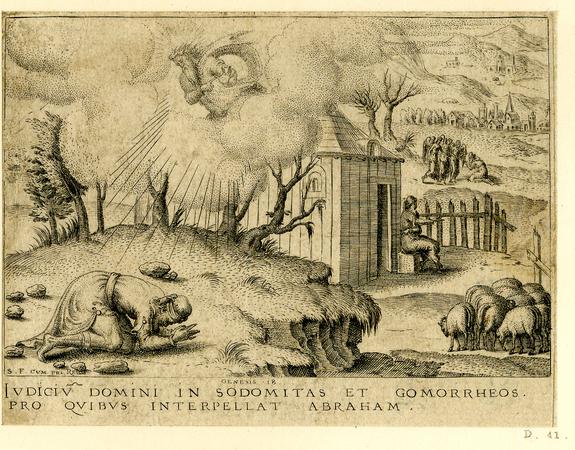
Abraham praying to God on behalf of the residents of Sodom and Gomorrah, by Étienne Delaune (1518-1583)

A Sordid Defense of Evil
Four thousand years later, the moral logic has flipped. After the October 7 massacre — the torture, murder, and kidnapping of civilians — millions marched not to defend the righteous within Gaza, but to defend the wicked who carried out the atrocities. From London to New York, the cry was “Globalize the Intifada.” The United Nations would not even utter Hamas’s name.

They did not plead for ten good souls but glorified evil itself. Abraham argued for the guilty because he believed in goodness; today’s socialist-jihadists argue for the guilty because they despise Jews. That is not compassion — it is moral rot spreading far from the center of evil, infecting universities, newsrooms, and now city halls.

In Sodom’s time, no one defended depravity. Today, Genocide becomes “context.” Rape becomes “resistance.” Decapitation becomes “desperation.” Abraham fought for the 99 percent on the merit of the 1 percent righteous. Now we see millions fighting for the 75 percent wicked, based on the very actions of the depraved.

Nowhere is this clearer than in New York City — home to the world’s largest Jewish community — where activists chanting “Globalize the Intifada” and rape deniers will shape city politics. The descendants of Abraham are mocked as colonizers in their own synagogues and schools.

The Torah is silent on the punishment for those who aid and abet wickedness, but American law is not. The U.S. forbids “material support to terrorism.” Groups like CAIR face renewed scrutiny for Hamas ties; Students for Justice in Palestine has been banned from campuses for celebrating terror. Perhaps the law will finally catch up to those who glorify murder under the banner of justice.

Or New York City’s new mayor will bend and enforce the law to his own tune.

Abraham taught that one may plead for the wicked only on the merit of the righteous — never for the wicked in a moral void. The first is faith and mercy; the second, blasphemy and depravity. Today, we have lost the lesson, a moral stain on this generation.

Lech Lecha — The Courage to Stand Alone

The first words God ever spoke to the first Jew were not of comfort, but command:

“Go forth from your country, from your birthplace, and from your father’s house, to the land that I will show you.”
(Genesis 12:1)

Abraham was told to leave everything that gave him safety — his home, his family, his people — and to walk alone to a foreign and unknown land.

That is the Jewish story. And it remains Israel’s story today.

Abraham Ortelius map “Journey of Abraham”, 1595

The Call to Walk Alone

Lech Lecha is more than a journey of geography; it is a test of courage. Abraham separated from a world that had lost its moral compass. He stood against the idols of his age.

Israel does the same now. The world pities the violent. It demands “restraint” from the victim and “understanding” for the murderer. Israel stands almost alone — mocked, pressured, condemned — for defending its people from those who glory in death.

Lech Lecha reminds us that holiness begins with separation. To follow conscience sometimes means turning your back on the crowd.

The Lonely Battle

When Abraham heard that his nephew Lot was taken captive, he didn’t wait for permission. He gathered a few hundred men and faced an army of kings. Outnumbered, he fought — and won.

That is Israel today. A small nation surrounded by hostile powers, fighting not for conquest but survival. Like Abraham, it refuses to wait for global approval before rescuing its own.

The Modern Lech Lecha

To stand alone is never easy. It is lonely, painful, and exhausting. But moral isolation is not failure — it is faith.

Abraham began our story by walking away from a world gone mad.
Israel continues it by standing firm in one.

Lech Lecha — Go forth. Fight on. Even if you walk alone.

Chosen Inheritance

The Torah opens in a world where inheritance belongs to the firstborn — where privilege is order, and order is destiny. Yet from its very first stories, the Bible breaks that rule.

Cain, humanity’s firstborn, murders his brother and loses everything. Abel, the second, dies without heirs. Humanity continues through Seth, the third son. The pattern is set. Abraham, father of monotheism, is not his father’s eldest. His younger son Isaac inherits the covenant, and Isaac’s younger son Jacob inherits it again.

By the time Israel becomes a nation, the inversion is complete. The Jewish people today descend from Levi and Judah — the third and fourth sons — not from Reuben, the firstborn. A book born in a culture of primogeniture systematically overturns it.

Why?

The Bible begins by showing the cost of bad choices. Adam and Eve possess everything, yet choose wrongly. The Fall from Eden inaugurates the central lesson of Scripture: that moral choice determines inheritance. Paradise is not lost by fate but forfeiture.

Michelangelo, The Fall of Man (1509-10), Sistine Chapel, Rome

Rabbi Lord Jonathan Sacks wrote that this pattern is not incidental but revolutionary.

“The Torah is not a chronicle of power. It is a critique of power.”
— Covenant & Conversation: Genesis

The Bible’s rejection of firstborn privilege is a moral protest against the idea that greatness is inherited. Sacks called it “the divine displacement of power” — God’s way of declaring that leadership is not a birthright but a calling.

Each time the younger supplants the elder, it signals that the future is not fixed. The world may honor the order of birth, yet God honors the order of the heart. Greatness is not bestowed by lineage but achieved through moral courage.

This inversion gives agency to every person. The Torah’s message is that destiny is not preordained. We are not bound by family rank or societal hierarchy. Cain’s fall was not inevitable. Abraham could have ignored God’s call. Jacob could have reconciled instead of wrestled. Every figure in Genesis acts — and through action, alters the story of the world.

Sacks extends the idea to Israel itself:

“God’s chosen people are not the privileged people; they are the choosing people — those who freely choose to live by the call of holiness.”

We are all born into someone else’s order. Or disorder. The question is whether we accept it, or, like our forefathers, we choose holiness — and through that choice, earn that inheritance.

Jacob – And Esau’s – Ladder

One of the most famous stories in the Book of Genesis is about Jacob’s ladder with angels ascending and descending. The famous biblical commentator Rashi (1040-1105) said that the angels going up were tied to the holy land and had to leave Jacob as he journeyed to live with his uncle Laban outside of the land. The angels coming down were new angels who would accompany Jacob while he lived outside of the holy land.

Jacob’s Ladder by Frans Francken II the Younger (1581-1642)

I would like to share an alternative interpretation: the angels on the ladder represent Jacob’s relationship with Esau.

There is no tool that connects hands and feet like a ladder. Both are required to go up as well as to come down. If several people are on a ladder at one time, hands and feet would likely be touching.

That is a reference to Jacob. His name literally came from his act of holding onto the heel of his brother Esau at their births. “Jacob” stems from the Hebrew word for heel, “akeb” (Genesis 25:26):

וְאַֽחֲרֵי־כֵ֞ן יָצָ֣א אָחִ֗יו וְיָד֤וֹ אֹחֶ֙זֶת֙ בַּעֲקֵ֣ב עֵשָׂ֔ו וַיִּקְרָ֥א שְׁמ֖וֹ יַעֲקֹ֑ב וְיִצְחָ֛ק בֶּן־שִׁשִּׁ֥ים שָׁנָ֖ה בְּלֶ֥דֶת אֹתָֽם׃

The clutching of the heel in the world’s first recorded twins set the primogeniture battle for the ages.

Birthright

There are two stories of Jacob angling to take the birthright from Esau. First, Jacob operates on his own and trades food with a hungry Esau for the birthright (Genesis 25:29-34). Years later, as their father Isaac wasn’t likely to abide by the earlier exchange between the brothers, Jacob acts at the urging of his mother Rebekah to trick Isaac into giving the special blessing intended for Esau to himself. Esau was so distraught by this action, that he swore he would kill Jacob, forcing Jacob to flee to live with Laban. (Genesis 27:1-21).

Jacob had the dream of angels on the ladder while he was fleeing from Esau. Jacob was not sure whether he had the advantage of the blessing or was a hunted man. On the ladder, the person higher up is only ahead while ascending; the elevated person actually trails the person below him when they are all descending.

The story of Jacob clutching Esau’s leg finally comes to a close when Jacob returns to the holy land. In Genesis 32:25-33, Jacob wrestles a man/angel who dislocates Jacob’s hip. As the angel breaks free he blesses Jacob by changing his name to Yisrael:

וַיֹּ֗אמֶר לֹ֤א יַעֲקֹב֙ יֵאָמֵ֥ר עוֹד֙ שִׁמְךָ֔ כִּ֖י אִם־יִשְׂרָאֵ֑ל כִּֽי־שָׂרִ֧יתָ עִם־אֱלֹהִ֛ים וְעִם־אֲנָשִׁ֖ים וַתּוּכָֽל׃

“Said he, ‘Your name shall no longer be Jacob, but Israel, for you have striven with beings divine and human, and have prevailed.'”

Jacob/Israel, together with his wives and children, are then able to meet with Esau with his 400-person army, no longer carrying the weight of the contest. After they meet, Jacob gets affirmation from Gd about moving beyond the Jacob-Esau heel connection in Genesis 35:9-13.

וַיֹּֽאמֶר־ל֥וֹ אֱלֹהִ֖ים שִׁמְךָ֣ יַעֲקֹ֑ב לֹֽא־יִקָּרֵא֩ שִׁמְךָ֨ ע֜וֹד יַעֲקֹ֗ב כִּ֤י אִם־יִשְׂרָאֵל֙ יִהְיֶ֣ה שְׁמֶ֔ךָ וַיִּקְרָ֥א אֶת־שְׁמ֖וֹ יִשְׂרָאֵֽל׃

Gd saying to him, “You whose name is Jacob, You shall be called Jacob no more,
But Israel shall be your name.” Thus he was named Israel.

וַיֹּ֩אמֶר֩ ל֨וֹ אֱלֹהִ֜ים אֲנִ֨י אֵ֤ל שַׁדַּי֙ פְּרֵ֣ה וּרְבֵ֔ה גּ֛וֹי וּקְהַ֥ל גּוֹיִ֖ם יִהְיֶ֣ה מִמֶּ֑ךָּ וּמְלָכִ֖ים מֵחֲלָצֶ֥יךָ יֵצֵֽאוּ׃

And God said to him, “I am El Shaddai. Be fertile and increase; A nation, yea an assembly of nations, Shall descend from you. Kings shall issue from your loins.

וְאֶת־הָאָ֗רֶץ אֲשֶׁ֥ר נָתַ֛תִּי לְאַבְרָהָ֥ם וּלְיִצְחָ֖ק לְךָ֣ אֶתְּנֶ֑נָּה וּֽלְזַרְעֲךָ֥ אַחֲרֶ֖יךָ אֶתֵּ֥ן אֶת־הָאָֽרֶץ׃

The land that I assigned to Abraham and Isaac I assign to you;
And to your offspring to come Will I assign the land.”


Jacob’s view of himself was tied to his name which conveyed a pursuit of his brother and his blessing. Once he broke free of that pursuit – together with a limp and a new name – Israel was able to accept that he was the heir to the blessings Gd bestowed upon his forefathers.

The angels on the ladder in Jacob’s dream were not geofenced protectors of Jacob but a reflection of his link with Esau, together with confusion of his actions. Esau would always be older and above him on the ladder, but descending and on the ground in the holy land, Jacob/Israel was entitled to the blessings and inheritance.

Related articles:

Jacob’s Many Angels and Vayetze Jews (December 2023)

The First Dreamer Foreshadowed The Life Of Joseph (December 2022)

Jacob’s Many Angels and Vayetze Jews

The weekly parshas read from the Torah normally begin at the start of a chapter and conclude at the end of another chapter. It is extremely rare for any parsha to both start and end in the middle of chapters, which happens for the weekly reading of Vayetze (Genesis 28:10 – 32:3).

The reason for doing so has very much to do with the story told in Vayetze, as well as the stories which the rabbis wanted to separate at the start of Genesis chapter 28:1-9 in Parshat Toldot, and the story told afterward in Parshat Vayishlach, chapter 32:4-33.

Vayetze relays the story of Jacob leaving the land of Canaan to find a wife at Lavan, his mother’s brother’s house. When embarking, Jacob dreamt of a ladder going to the heavens with angels going up and coming down. God informed Jacob that he will be blessed with many children and that God would protect Jacob on his journey and bring him safely back to his land. At the end of the parsha, Jacob headed back to the land of Canaan with wives and eleven children, and met angels once again (Genesis 32:2-3). Angels are bookends of Vayetze, telling the story of Jacob marrying, and having many children and accumulating much cattle in his uncle’s house.

If one were to read Genesis straight through the chapters instead of with the breaks of the weekly portions, that story is less clear.

At the beginning of Genesis chapter 28 (1-5), Isaac instructed Jacob to not marry a local woman from Canaan and to visit his uncle’s house, seemingly consistent with the overall theme of Vayetze. However, 28:6-9 describes Esav’s overhearing Isaac’s command who subsequently embarked to marry his father’s brother’s daughter. Esav’s actions interrupted the focus on Jacob.

At the end of the parsha, the narrative also breaks around Esav. While Vayetze’s Genesis 32:2-3 has Jacob encountering angels and naming the location due to the holiness of the event as he did after his ladder dream, Vayishlach’s Genesis 32:4-7 has Jacob sending the angels off as mere messengers to scout out Esav’s intentions as he journeyed to return to Canaan. In one sentence, from 32:3 to 32:4, Jacob treated the malachim as holy people and then errand boys, which does not happen with the weekly parsha pause separating the sentences.

The neat angel bookends of Vayetze act as separators from Esav. While Jacob got married and returned with eleven children and a large flock, the difficult years were none-the-less realized as blessings. However, the stress of the world he left and to which he returned made the blessings harder to recognize, and maybe even finite.

Esav married Ishmael’s daughter and came to meet Jacob with an army of 400 men (32:7). While Jacob had been promised by God that his progeny would be numerous as he left Canaan, his brother Esav seemed to become even greater over that same time.

Upon learning of the large gap in power with his brother, Jacob became very frightened and prayed to God (32:8-13) seemingly thinking that his heavenly protection had ended. When Jacob next sends out messengers to meet Esav, they are no longer described as malachim, angels, but avadim, servants (32:17).

Jacob lost the ability to recognize angels as he approached his brother. When Jacob was next alone at night, he didn’t dream of angels on a ladder but wrestled with an ish, a man who is described by biblical commentators as an angel who renamed Jacob ‘Israel’ for prevailing in his fight with man and God. While Jacob should not have been scared of Esav as he had angels with him, he could no longer recognize them and fought them.

Jews today see their homes like Jacob as Vayetze Jews. Even in the face of family difficulties, a home is nevertheless a sanctuary in which we count our blessings and feel protected. It is when we compare ourselves to others and see their wealth and fear what they might do to us that we forget those blessings. We no longer see the angels and blessings they provide. So we demand that they serve our needs, and fight them thinking that they are strangers meant to do us harm.

And then we question the blessings we once enjoyed. Esav had no angels and yet prospered even more than Jacob. An unblessed life seemingly yielded greater rewards if one focuses purely on numbers.

Jacob produced a family which became a holy nation while Esav’s actions netted a massive army. During peace, it is easy to understand why Jacob’s descendants reach heights of thought and purity but in times of conflict, Esav’s army appears ready to conquer those achievements.

In a pre-October 7 world, Vayetze Jews imagined themselves blessed and protected in their home of homes, in their houses in Israel. The neat angel bookends of the parsha were the protective layer of building a home and family, and Vayetze Jews felt God’s blessings.

In the aftermath of the October 7 slaughter in which Arabs killed Jews in their homes in Israel, the Vayetze Jews were vanquished. We became Vayishlach Jews ready to fight man and God for the inhumanity inflicted on us.

Gustave DoréJacob Wrestling with the Angel (1855)

Is that our fate? Can the Jewish community become more?

Jews must internalize the text in the chapters and not just the parshas.

Esav DOES interfere with the story-telling of Jacob finding a wife. Esav does continue to build a family and army outside of Jacob’s Vayetze bubble. Jacob and the Vayetze Jew fail to internalize the outside world as they were self-absorbed which led to complacency. Jacob only saw angels’ blessings as partners for his activities in his home but did not use the gift for the fight to come outside.

We are both the Children of Jacob (Vayetze Jews) and the Children of Israel (Vayishlach Jews), and need to live lives focused internally and externally. Partnering with angels must extend beyond the bounds of angelic bookends and touch activities in everything we do. That is the pathway to true blessing and success inside and outside of our home and communities.

Related articles:

The Nation of Israel Prevails

The First Dreamer Foreshadowed The Life Of Joseph

3 1 4, Hebrew Pi

The Karma of the Children of Israel

The Descendants of Noah

The Place and People for the Bible

The Shrinking Modern Jewish Homeland

Even In The End, You Must Ensure The Future

Genesis chapter 23 describes the death of the Jewish matriarch Sarah and her burial. It is immediately followed by a peculiar opening in chapter 24:

וְאַבְרָהָ֣ם זָקֵ֔ן בָּ֖א בַּיָּמִ֑ים וַֽיהֹוָ֛ה בֵּרַ֥ךְ אֶת־אַבְרָהָ֖ם בַּכֹּֽל׃

Abraham was now old, advanced in years, and ‘ה blessed Abraham in all things.

Abraham had just buried his wife and the Torah says that Abraham had everything. A strange phrase, as he just lost his spouse!

The Bible would then describe that Abraham sent out one of his trusted attendants to make sure that his son Isaac got a suitable spouse. The biblical commentator Rashi noted that the numerical value of the Hebrew word for with everything, בַּכֹּֽל, is the same as the numerical value in Hebrew of son, בֵּן. Rashi said that because God blessed Abraham with a son, Abraham needed to find him a wife.

Looking at the Haftorah section for the weekly portion of Chayei Sarah when this portion is read, could lead to a broader interpretation of this sentence.

The rabbis decided to match Chayeh Sarah with Kings 1, which starts with King David being very old. Sentences 1 to 4 describe David as being so old that he could not retain heat, so he was brought a young virgin who stayed with him to warm him. The passages were clear that the king was not intimate with her. A lot of detail to share that the king was very old and mostly stayed in bed.

The rest of the reading would describe King David setting Solomon to be his heir, instead of sons who competed for the role of king.

King David playing the Harp, by Peter Paul Rubens ca. 1616

The two biblical stories convey a message to be taken together.

As Abraham and King David approached the end of their lives, they had seemingly accomplished everything. They had finished having children and building their fortune. It was time to retire peacefully.

But they did not.

Abraham made sure that his son would marry an appropriate woman and be able to carry on the family’s good name. King David made sure the appropriate son would lead the kingdom.

The bible relates that each man did this when they were old and without an active companion. While they would have no more children – hence the bible making clear that the virgin brought to David remained a virgin – they still had an active role to play in directing their children and the course of Jewish history.

Rashi’s comment that Abraham had a son could be reread that Abraham was not going to have any more sons. He needed to focus on the future of the son he had.

It is a lesson for older people even today: you are more then just a link in a chain. The next generation continues to need your guidance to make sure important values and traditions are imparted.

Related articles:

The Place and People for the Bible

The Year 2023: Entry To The Holy Land

The Journeys of Abraham and Ownership of the Holy Land

Abraham’s Hospitality: Lessons for Jews and Arabs

The First Dreamer Foreshadowed The Life Of Joseph

3 1 4, Hebrew Pi

The Karma of the Children of Israel

Kohelet, An Ode to Abel