In October 2002, in a case before the Supreme Court, Justice Antonin Scalia did something characteristically disarming. In the middle of a commercial case—a dispute about representations, intent, and liability—he reached for an example so blunt that no one in the courtroom could miss the point.
“let’s assume that there is a Federal statute that makes discrimination because of, or failure to hire someone, or let’s say, let’s say killing someone solely because of his race a crime, a separate crime. And someone, let’s assume he kills someone who is Jewish, and he said, well, I didn’t kill him solely because he was Jewish; I killed him because I disagree with the policies of Israel. Does that get him out of the statute?” – Supreme Court Judge Antonin Scalia on October 8, 2002
The question was not theatrical. It was instructional.
Scalia was making a narrow, lawyerly point about intent laundering—the habit of rebranding a harmful act with a more palatable explanation after the fact. In commercial law, courts reject that move every day. You cannot sell a defective product and escape responsibility by calling the defect innovation. You cannot mislead customers and then claim a higher purpose. Labels don’t change outcomes; explanations don’t erase harm.
He chose that example because everyone understood it immediately. Not because it was exotic, but because it was familiar. People do, in fact, come for Jews with reasons. They always have. The reasons change; the target does not. That is why the hypothetical worked even in a commercial case. It required no ideological scaffolding, no speech doctrine, no moral hedging. The room got it.
Scalia wasn’t talking about protest or expression. He was reminding the Court that post-hoc justification does not transform reality. A Jew selected as a Jew remains a Jew, regardless of the banner the attacker waves. You cannot launder murder through geopolitics any more than you can launder fraud through branding.
What makes the moment unsettling two decades later is not that Scalia saw this clearly in 2002. It’s that today, society now pretends not to.
Today, the very maneuver Scalia identified is routinely indulged. Violence against Jews is reframed as politics. Targeting Jews is explained as resistance. The word “Israel” is treated as a solvent capable of dissolving antisemitism on contact. The act is dissected until the victim disappears into the explanation.
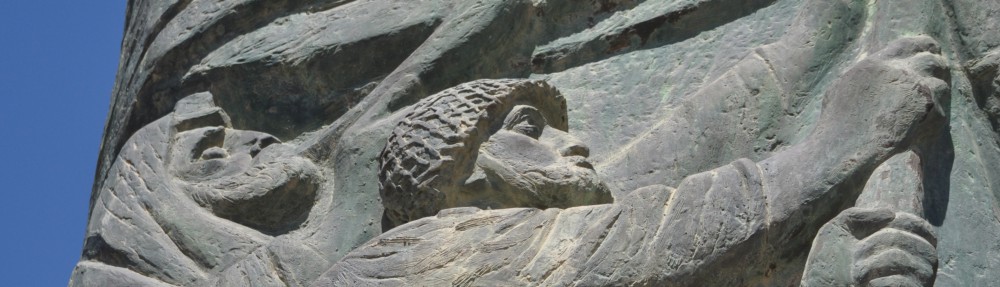
Scalia understood that this maneuver was not new. In the Middle Ages, it was radical preachers who performed the laundering. On Easter, from pulpits across Europe, Jews were accused of killing Christ, poisoning wells, murdering Christian babies. The charge was always moral, never personal. The violence that followed—pogroms, expulsions, massacres—was framed not as hatred, but as righteous response. The excuse sanctified the act. The victim was still Jewish.
“The crimes you are committing in Palestine by desecrating the sanctity of the holy sites – foremost among them the blessed Al-Aqsa Mosque – you should expect reactions, not only from the Muslims, but rather from the entire world.” – Palestinian Authority Chairman Mahmoud Abbas’ Advisor on Religious Affairs and Islamic Relations Mahmoud Al-Habbash on December 15, 2025 about the massacre of Jews in Sydney, Australia
The vocabulary has changed. The mechanism has not.
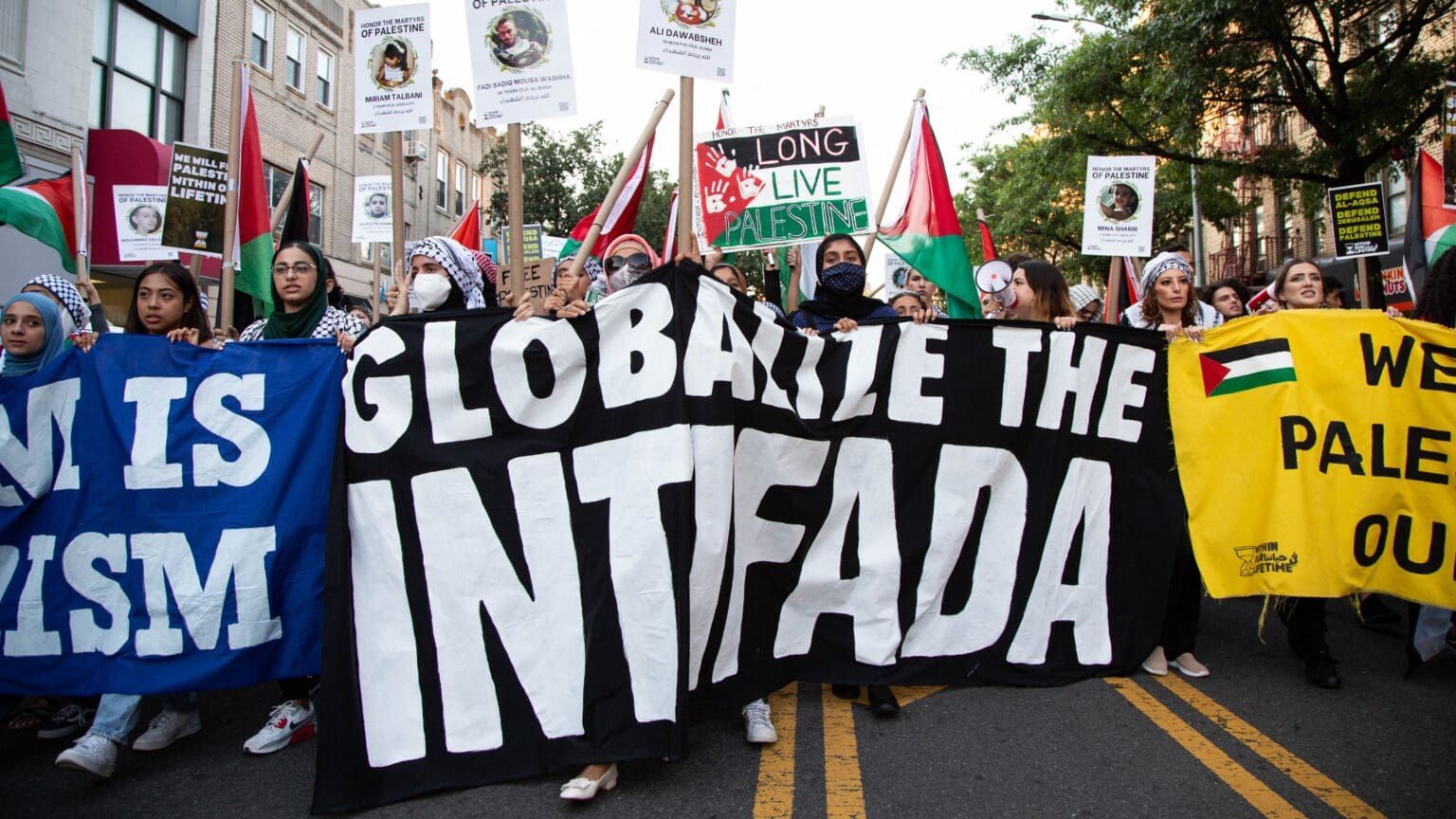
Today the laundering is done in different robes—through left-wing media narratives, academic language, teacher-union resolutions, and activist slogans. The Jewish state is branded unholy, colonial, imperial. Zionism is recast as original sin. Once that premise is accepted, Jews everywhere become legitimate stand-ins—symbols of something larger, targets by proxy. “Globalize the intifada” is not poetry. It is a call that travels, and it always knows where to land.
The laundering does not stop on the left. Figures like Candace Owens have vilified Jews across time itself—casting them as architects of the slave trade two centuries ago, as hidden hands behind modern social decay, as a people uniquely responsible for nearly every ill that can be stitched into a narrative. The effect is not historical inquiry; it is moral conditioning. When Jews are blamed for everything, they become appropriate targets for anything. The excuse differs. The permission is the same.

This is why Scalia’s example mattered—and why he chose it so plainly. He knew that people come for Jews with reasons. He knew those reasons are never the point. And he assumed, reasonably at the time, that everyone else could still see the difference between explanation and absolution.
Decades later, that clarity is treated as controversial. Motives are said to cleanse acts. Ideology is said to transform targets. Murder is said to become discourse if the language is fashionable enough.
You can change the sermon.
You can update the slogans.
You can trade Easter blood libels for postcolonial theory.
But you cannot launder murder.

 First One Through