
Europe is declaring peace while America is building it.
As Britain and France rush to recognize a Palestinian state to pressure Israel, the United States is doing something more durable: expanding the Abraham Accords. With Kazakhstan now actively promoting its joining Muslim-majority nations normalizing ties with Israel, the U.S. is advancing a vision that builds relationships rather than rhetoric.

European leaders say recognition will balance the scales and restart diplomacy. But what exactly are they recognizing? The Palestinians remain divided between an unpopular and corrupt authority in the West Bank and Hamas in Gaza—an antisemitic terrorist group that thrives on conflict and rejects coexistence. There are no elections, no functioning institutions, no borders, and no credible security force. Declaring this fractured reality a “state” doesn’t bring peace any closer. It just flatters the fantasy that paperwork can substitute for progress.
For Palestinians, European gestures feel validating, but validation without change is illusion. No declaration from Paris or London can rebuild Gaza, reform leadership, or disarm Hamas. It’s diplomacy as performance—morally satisfying to distant audiences but meaningless in practice.
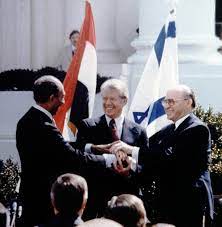
The Abraham Accords take a different approach. They focus on cooperation. Each new country that signs—Bahrain, Morocco, the UAE, and now Kazakhstan—proves that Israel can be accepted across the Muslim world without waiting for Hamas’s permission. This shift is reshaping the region. It turns rejection into partnership, slogans into investment, and isolation into integration. Every handshake chips away at the myth that the Middle East must remain hostage to its oldest conflict.
But peace will never advance while Hamas holds power. Hamas doesn’t just oppose Israel; it opposes peace itself. It rejects every agreement, glorifies violence, and sacrifices its own civilians to preserve control. Allowing Hamas to participate in elections or continue ruling Gaza ensures that destruction will repeat everywhere. Disarming Hamas and excluding it from Palestinian politics isn’t an Israeli condition—it’s a Palestinian necessity. Without that step, there can be no state, no sovereignty, and no future.
Alas, Palestinians disagree. In the latest PCPSR October 2025 poll, Hamas remains the most popular political party (60% approval) and Khaled Mashal, the leader of Hamas would trounce Fatah’s Mahmoud Abbas by 63% to 27%. Palestinian Arabs (69%) remain adamant that Hamas not give up its arms. Even after the decimation of Gaza, a majority (53%) still approves the October 7 massacre. And imagine that now, as the ceasefire appears to be bringing the end of the war, a remarkable 39% of Palestinians still think Hamas will win.
The choice is clear. Europe can keep recognizing an idea of Palestine that doesn’t exist and that the Palestinian Arabs are more moderate than they really are, or the U.S. can keep building the conditions for a reformed Palestinian society. The road to peace will not run through European parliaments; it runs through a changed Palestinian worldview, normalization between Israel and Muslim countries, economic growth, and a regional consensus that leaves Hamas behind.
The pathway to peace in the Middle East is the Abraham Accords, not European theater.



 First One Through