The Copyrights of Winnie the Pooh and Jews

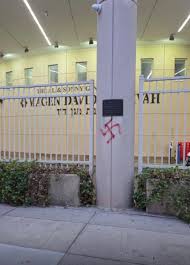
When Winnie-the-Pooh entered the public domain in 2022, the cultural floodgates opened. A once-beloved children’s character, wrapped in honey jars and innocent nostalgia, was immediately remade into a monster. “Blood and Honey” turned Pooh into a savage killer. Games, parodies, and dark pastiches flooded the market. The comforting bear was no longer safe; he had been transformed into a canvas for other people’s fears, cynicism, and jokes.

It feels eerily familiar.

For two thousand years, Jews have been cast into the public domain. Stripped of the right to define their own story, they became available for anyone’s use. And abuse. Once known as the people of the Book, bearers of commandments, prophets, and a covenant, their identity was seized and rewritten. Medieval Christians branded them Christ-killers. Islamic empires reduced them to dhimmis. The Enlightenment caricatured them as rootless and ruthless bankers. In the modern age, they became “colonizers,” “supremacists,” and the avatars of “genocide.”

The Jews never sold the copyright to their name or history, but the world took it anyway. Just as horror producers found amusement in twisting Pooh into a monster, antisemites—left, right, secular, religious—have scribbled their darkest nightmares onto Jewish bodies. Pogroms, expulsions, inquisitions, and now, boycotts and campus rallies all stem from a warped creativity that insists Jews cannot own their own narrative.

Israel’s rebirth was supposed to end this. After all, if you reclaim your home, revive your language, rebuild your state, surely you also reassert your identity. But even here, the appropriation continues. Israel was smeared as “apartheid,” “genocide,” “ethnic cleansing,” “racist,” and “colonial” decades before Hamas launched its latest genocidal war. “Jewish self-determination” is rewritten as oppression. “Defending children” is recast as war crimes. The oldest continuous nation on earth is treated as a villain in someone else’s morality play.

The difference between Winnie-the-Pooh and the Jews is stark. The fictitious character Pooh was released into the public domain by the natural passage of time, his copyright protection simply expiring. The Jews were thrust into the public domain by malice—by the unwillingness of societies to allow them ownership of their story. The Jewish Bible was rebranded as the Old Testament, out of copyright protection. Blood libels took hold on the bleached pages of Jewish foundational documents.

The current Jewish year is 5786. Traditionally, Jews write the date in Hebrew letters like Roman numerals and drop the 5 as being well understood. The letters for 86 spell “Pooh” in Hebrew, so now is as good a time as any to attempt a change that the 1948 reestablishment of the Jewish State did not provide.

One simple action is for everyone to write a large ‘5’ before the date, making clear to themselves and others that their faith predates all others, and continues still.

Challenge every use of the phrase “Promised Land” as a vicious varietal of cultural appropriation, which strips Jewish indigenous people from their divine heritage.

More dramatic is to reclaim Jewish rights on the Temple Mount. Why should the world care about Jewish faith and feelings if the majority of Jews treat the center of its religious devotion as a vestigial organ instead of the beating heart? Are we a living people or a hollow chamber for others to draw upon?

We must not countenance the free license for others to slander, parody, or profit off the Jewish name. The Jewish people are not public property. They are the authors and owners of their own identity—and it is time for them to act as such.

Beyond The Battle Plan

For the last several parshas, Moses has been addressing the children of Israel with a constant refrain: follow the commandments in the land, and you will be blessed; stray from them, and you will lose your inheritance. To us today, these verses are about mitzvot — the commandments that define Jewish life. But to the Israelites standing on the banks of the Jordan, the charge must have sounded different.

They had just watched an entire generation die in the desert. The memory of the spies still lingered — those men who declared that the land was too difficult to conquer, that the people within were too mighty to destroy. Could such whispers have been forgotten? Surely the children had heard rumors of what their parents had repeated around campfires for forty years. And now, standing on the edge of the land, they might have expected Moses to lay out the strategy, the order of battle, the plan of conquest.

Instead, Moses did something else entirely. He skipped the war. He jumped straight to what life would look like after. The rules of worship, the rhythms of daily life, the blessings and curses of obedience. It was as if the battles ahead — Jericho’s walls, Ai’s ambush, the wars against mighty kings — would be non-events.

Imagine a coach gathering his team before kickoff and skipping the playbook. Instead, he passes out dinner menus for the victory banquet to follow. No Xs and Os. No defensive schemes. Only a vision of celebration after the game.

Why? Perhaps it was Joshua’s role to direct the war, the next chapter of the Tanach already waiting to be written. Perhaps Moses, who knew he would not enter the land, wanted to leave the people with principles for the future. Or perhaps Moses was teaching something deeper: that the wars were only one part of securing a peaceful future. That the real challenge was not in winning the land, but in living faithfully within it.

The truth is, the dream of the land was already realized — even if the Israelites didn’t know it. Hundreds of years of diaspora were ending. The promise was being fulfilled before their eyes, not through a war plan but through divine decree. The land would be theirs. The victory was guaranteed. What remained in doubt was whether they would keep it.

Moses understood: the conquest would be won by God’s hand, but the inheritance would be maintained only through God’s law. The spies had feared giants and fortified cities, but the true danger was disobedience and forgetfulness once the land was secured. That is why Moses spoke not of how to conquer, but of how to live.

The people knew that Joshua would lead them to battle, just as he had over Amalek. And they had seen that Moses was their intermediary with God, who prayed for their success (Exodus 17:10-13). Now Moses was telling the people: you no longer need me as your agent; you are they keys to victory. Prayers during battle to secure victory; obedience thereafter to keep the peace.

Aaron and Hur hold up the hands of Moses in prayer as he grew tired, asking God’s help for Joshua to lead the people to victory in battle

And so it is today. The battles of our time are real, but they are only part of the threat. We must not be complacent. We must not assume that everything is on the battlefield. Beyond the battle plans lies our own responsibilities in living a meaningful life and knowing the source of our strength.

ACTION PLAN

Go to the United Nations and sing outside the line from Al Tira, “Utzu Etza”: “Take counsel together, and it shall come to nought; speak the word, and it shall not stand: for God is with us.”

Rockefeller Center and The Modern Tower of Babel

In biblical times, after the Great Flood destroyed the known world, mankind responded not with humility but with defiance. They sought to raise themselves above God’s wrath, building the Tower of Babel as a monument to their own power, reaching for the heavens.

Centuries later, as the Great Depression ransacked America, another tower began to climb skyward. John D. Rockefeller, the oil titan turned philanthropist, commissioned an audacious complex in the heart of Manhattan. Out of the rubble of despair rose Rockefeller Center, a collection of soaring structures anchored by “30 Rock,” a 70-story monument of steel and stone.

Construction workers having lunch as they build the RCA Building in 1932

At its entrance, the vision was chiseled into eternity: “Wisdom and Knowledge shall be the stability of thy times” — the words of Isaiah engraved above the door. Flanked by sculptures representing Light and Sound, the building proclaimed its purpose: to be the voice of news and entertainment for the world, a modern temple to information and culture.

Sculptures atop the main entrances of 30 Rockefeller Plaza (photo: First One Through)

Yet curiosity lingers when one gazes up at that famous inscription. The line from Isaiah 33:6 was never meant to stand alone. The full verse concludes: “…and the fear of the Lord is his treasure.” But that final clause was deliberately omitted. The builders sanctified wisdom and knowledge, but excised God. The omission transformed Rockefeller Center into secular scripture, elevating man’s wisdom over divine truth. For nearly a century, the complex stood representing a modern Tower of Babel: a singular voice beaming news, culture, and entertainment to a world tuned to one frequency.

Sculpture above doorway of 30 Rockefeller Plaza (photo: First One Through)

But the world has shifted. The authority of a single edifice has collapsed. The pandemic pulled workers from office towers into spare bedrooms and kitchen tables. The internet, social media, and ubiquitous cell phones scattered the once-unified audience into billions of isolated “my-truthers.” The great tower that once declared itself master of wisdom and knowledge no longer reigns over truth — or even news. Instead, we have a digital cacophony, a post-Babel of infinite voices, each one clamoring for relevancy.

In the ancient tale, God looked down upon Babel, saw mankind united in defiance, and scattered the people with a confusion of tongues. It was divine intervention that broke apart the human project. The modern incarnation lacks lightning bolts from the heavens with thunderous judgment. The fracture came from within. By sanctifying ourselves over the divine, the builders enshrined wisdom and knowledge as supreme — and in so doing, they planted the seeds of our undoing.

Even in scattering, the ancient world retained stability. Though tongues differed, mankind still clung to faith. Out of the dispersion of dialects came hundreds of religions, with Abraham’s radical monotheism, affirming that there was one God who bound the human family together, at its heart. In contrast, modern society’s disdain for God has left us truly unstable. We do not scatter into tribes of belief but dissolve into atomized individuals, each enthroning himself as arbiter of truth, each rejecting the notion of any higher authority.

There is no “stability of thy times.”

As Lord Jonathan Sacks once observed, “If you want to take this diverse, fractured culture and turn it into a united nation, you have to get them to build something together.” Culture is not born of proximity but of purpose. Yet even that is not enough. For building without faith leads only to another Babel — a project that may rise high but will ultimately fracture under the weight of its own pride.

Our ancestors knew this instinctively. They struggled, they questioned, they even quarreled with God — but they never erased Him from the story. Faith provided the mortar that held their collective together. In contrast, our age has celebrated knowledge while amputating belief, enthroning technology while dismissing transcendence. We build networks instead of communities, platforms instead of sanctuaries. And without faith, what we construct collapses into confusion, as surely as Babel once did.

A Way Forward

The modern Tower has already cracked. Today’s Titans do not build skyscrapers broadcasting monoliths of truth but platforms and algorithms addicting both tweeter and tweeterdom. We live in a splintered archipelago of isolated truths. To endure, we must restore the missing half of Isaiah’s wisdom. It is time to harken to Isaiah’s full words and engage with humble faith together with wisdom and knowledge, so that we may yet build a more perfect union.

Perhaps an answer for us today is not chiseling new words above our heads into the stone of Rockefeller Center to amend the verse. The real task is closer to home. Each of us can sanctify our own entrances with God’s presence. A mezuzah affixed to the doorpost — of a house, an apartment, and our workplaces — serves as the quiet reminder that wisdom and knowledge alone are not enough. It is God’s presence within that provides the stability of our times. Where the tower excised Him, the mezuzah restores Him. And if enough doorways bear that mark, perhaps our fractured society can yet rediscover a shared foundation.

30 Rockefeller Plaza at night, September 2025 (photo: First One Through)

The Biographies of Two Shofars

The sound of the shofar is meant to pierce the heavens. Sometimes the shofar’s story pierces the heart.

I remember coming home one day to find my son in tears. His beloved shofar — a gift from his grandfather — had been chewed by his dear dog. The horn was mangled beyond salvation. I carried it to the rabbi in desperation, asking if it could be saved. Perhaps the mouthpiece could be trimmed…. Alas, it could not, and I never saw it again.

My father had given it to him not long before, teaching his grandson how to coax sound from its ancient curves in preparation for his bar mitzvah. That shofar, which transitioned from a smooth polished mouthpiece to a rough and natural opening, was more than bone and horn — it was a link between generations.

My father bought my son a new shofar and continued to teach him how to blow. He was there on the bimah as my son blew it proudly in Jerusalem on the first day of Elul for his bar mitzvah. I took in the special moment, and also considered my son’s previous shofar that was not there. Even more, the profound emotion of a young boy torn at losing his grandparent’s bar mitzvah gift – to a dog whom he also loved, who was just being a dog. The gathered family and milestone in Jerusalem were the key celebrations of the day, but recalling my son’s well of tears months earlier over this moment which may not have happened, enriched it.

My father’s own shofar has a different story. He blew it for decades in his shul, year after year, his steady blasts calling our community to repentance. Eventually the horn began to crack, to dry, to lose its voice. He gifted the treasure to me some years ago, and I have placed it on my living room mantle, its curves still beautiful though its sound has fallen silent.

This year, my father — approaching 90 — will not blow the shofar. While he’s strong enough to walk to synagogue, some health issues will keep him from the bimah as he has done for as long as I can remember. The body ages. The shofar ages.

There are shofars that pass through the generations, blown by grandparents and great-grandparents a hundred years ago and still blown today. They carry not just sound but touch — the hands that held them, the lips that pressed them, the prayers that filled them. In many ways, these shofars still live.

We think of the shofar as the instrument through which we hear God’s call on Rosh Hashanah. It is the vehicle – and the subject. The shofar itself has its own biography. Some are placed on mantles, mute witnesses to decades of service. Some are destroyed, leaving only the memory of their sound. Some are retired to museums as quiet curiosities.

As we enter a new year, I think of two particular shofars in my life — one that I can no longer see, one that I can no longer hear — and of the special people who breathed life through them whom I am blessed to still hold and cherish. These horns, like us, are finite. But their stories resound forever, calling us to remember, to connect, and to pray for many more years of holding them and each other as a family and community.

The Touch of the Sound of the Shofar (September 2015)

Ki Tavo: From Wandering to Rooted

When the Torah commands the farmer to bring his first fruits, it does not let him talk about his soil or his labor. Instead, the ritual begins: “My father was a wandering Aramean…” (Deuteronomy 26:5) The commentators note that gratitude is not complete without memory. To thank God for the harvest, one must first recall that the Jewish story began in exile and slavery. Only against that backdrop does the basket of figs become miraculous.

Later in the same parsha (Deuteronomy 28:4), the Torah turns to blessings and curses. If Israel listens to God, “Blessed shall be the fruit of your womb, the fruit of your soil, and the fruit of your livestock.” If not, those very fruits will wither. Here too, fruit is not agricultural output — it is covenantal currency.

Put together, the two passages form a cycle. The first fruits ceremony roots gratitude in memory: remember that you were once landless and fruitless. The blessings and curses tie the future of fertility to obedience: remember that your continued abundance is not guaranteed.

And notice where this all happens: Jerusalem. The farmer did not simply thank God in his vineyard or whisper gratitude in his kitchen. He carried his produce up to the city, presented it at the Temple, and declared his history publicly. Jerusalem was not just a capital; it was the beating heart of Jewish memory and faith. The fruits gained meaning when they were placed before God in the city chosen for His name.

The Old City of Jerusalem including the Jewish Temple Mount

This is why the prophets, the rabbis, and Jewish history itself encircle Jerusalem. The city is not peripheral to Judaism — it is central. It is where private labor becomes national testimony, where agriculture becomes covenant, where the wandering Jew becomes rooted in a people’s eternal home.

To this very day, Jews sing at their wedding the verses of Psalms 137:5-6: “If I forget you, O Jerusalem, let my right hand wither; let my tongue stick to my palate if I cease to think of you, if I do not keep Jerusalem in memory even at my happiest hour.” Jerusalem is bound in memory, that same memory that reminds us of our history, our promise, our obligations.

Today, too, the Jewish people encircle Jerusalem. Jews bring their “first fruits” to the city not only in the form of produce, but through aliyah, prayer, innovation, and sovereignty. Just as in ancient days, the city transforms personal blessings into collective covenant.

And yet, the world still questions that rootedness. Governments refuse to recognize Jerusalem as Israel’s capital. Diplomats condemn the building of homes in areas like E1 — the very corridor that links Jerusalem to the rest of the land, enabling Jews from north, south, east, and west to come to their eternal city.

Ki Tavo reminds us that Jerusalem cannot be negotiable. To encircle it, to build in it and around it, is not a matter of politics but of foundational principle. Without Jerusalem at the center, our fruits risk becoming mere produce, and the people risk becoming wanderers once more.

Advancing Religion In America

On October 28, 2011, Lord Jonathan Sacks, the Chief Rabbi of England, came to New York City and sat with Rabbi Meir Soloviechik at Yeshiva University. Their hour long talk touched on Lord Sacks’ book The Home We Build Together, and the role of religion in society, focusing on the United States and the United Kingdom, in particular.

Chief Rabbi Lord Jonathan Sacks Speaks at Yeshiva University with Rabbi Meir Soloveichik, October 2011

In the opening remarks (3:10), Rabbi Soloveichik shared a story about Senator Joseph Lieberman, who once observed that on Simchat Torah, Jews dance with the Torah in the streets with joy, yet often fail to carry that Torah into the world during the rest of the year. It was a reminder that religion cannot remain confined to ritual but must be brought into society.

Lord Sacks followed with a story of his own. Prime Minister Tony Blair once teased him that he had reached the “boring part” of the Hebrew Bible—the lengthy passages about the building of the Mishkan (Tabernacle). Why, Blair asked, does the Torah devote hundreds of verses to it, compared to just 34 for the creation of the universe?

Lord Sacks replied:

Prime Minister, it is not difficult for an omniscient, omnipotent, infinite God to create a home for human beings. But for finite, fallible human beings to create a home for the infinite God, that is difficult.

The Mishkan, Sacks explained, was not just architecture—it was a project that united the people. More than what God does for us, it is what we do for God that transforms and binds us together. “If you want to take this diverse, fractured culture of Britain and turn it into a united nation,” Sacks said, “you have to get them to build something together.”

Rabbi Soloveichik and Lord Sacks went on to describe that the decline of religious life and secularization of Europe was tied to fewer children being born. A self-centered focus weakens families, weakens faith, and weakens society. In contrast, raising children—caring for someone more than oneself—provides both the foundation of belief and the roots of charity: “having somebody whose life you care about more than yourself, that could actually be the foundation of faith for many of us.”

Washington (D.C.) and Rembrandt

Nearly fourteen years later, on September 8, 2025, U.S. President Donald Trump held an event at the Museum of the Bible in Washington, D.C. He invited members of the newly established (May 1, 2025) Religious Liberty Commission to hear how he was advancing the centrality of religion in American public life. He said “When faith gets weaker, our country seems to get weaker. When faith gets stronger… good things happen for our country…. To have a great nation, you have to have religion.”

President Trump remarks at the Museum of the Bible, September 8, 2025

One of the members of the Presidential Committee on Religious Liberty is Rabbi Meir Soloveichik. He was unable to attend the speech by the president in Washington because he was giving a day long-lecture in New York City at the home of Mem and Zalman Bernstein and the Metropolitan Museum of Art for the Tikvah Fund about art, religion and western society.

Rabbi Meir Soloveichik discussing Rembrandt’s 1635 painting “The Sacrifice of Isaac” for Tikvah

Rabbi Solveichik focused on Rembrandt’s two versions of the Sacrifice of Isaac. He contrasted Abraham’s devotion to God’s command to offer his son Isaac, to the investment of love and devotion he had made in his son. The angel broke the conflict, and with it, the end of human sacrifice which was prevalent in the world at that time. From this point onward, belief in a higher power could be accompanied by protecting and investing in our children.

Religion, Children and Western Democracy

It made for an interesting sermon triptych connecting religion, children and western values: Lord Sachs, Rabbi Soloveichik and President Trump all emphasized that religion has the power to strengthen ourselves, our families, our communities and our nation.

In Lord Sacks book, The Great Partnership, published in June 2011, right before his talk at YU, he wrote:

My argument has been that contrary to the received narrative, freedom has been better served in the modern world by a religious vision rather than a secular one. The Abrahamic vision, with its insistence on the non-negotiable dignity of the human person and the importance of protected space – the families and communities that make up civil society – where relationships are not based on power, saved England and America from the worst excesses of the revolutionary politics that cost tens of thousands of lives in France and tens of millions in Russia….

Abrahamic politics, by contrast, is politics with a human face, the politics that knows the limits of power, as well as the transformative effect of free persons freely joining together to make social institutions worthy of being a home for the divine presence. Abraham politics never forgets that there are things more important than politics, and that is what makes it the best defense of liberty.”

That is the motion before Western democracies: can humble faith as embodied in “Abraham politics” lead our different faiths to help build a cohesive society of respect and growth.

Concluding Circle

The discussion of religion and democracy is being advanced passionately today because it feels abandoned.

According to Lord Sacks, democracy under secularism preached intersectionality which yielded segregation and isolationism. Rabbi Solveichik responded that “a Mayflower of persecuted religions might leave England and Europe to come to safer shores [like America].” For his part, President Trump established the Religious Liberty Commission to deal with such matters, with the first group’s term ending on July 4, 2026, on the nation’s 250th anniversary.

So it was fitting that Rabbi Soloveichik should end his talk to the Tikvah Fund, a group whose motto is “Advancing Jewish Excellence and Western Civilization through Education & Ideas,” before Emanuel Leutze’s Washington Crossing the Delaware, while President Trump was concluding his remarks in Washington, D.C.

Rabbi Soloveichik at the Metropolitan Museum of Art, September 2025

In the 1851 painting, the future president of the United States stood aboard a boat filled with a diverse crew, readying to end the rule of England and break with the British monarchy and Church of England, to establish a new democratic state in 1776. Nearly 250 years later, the Chief Rabbi of England, the president of the United States, and the rabbi leading the oldest synagogue in the United States were championing the importance of religion in strengthening democracies everywhere. A quiet revolution to return to the foundations of faith to help build a more perfect union.

Bury the Dead — or Bury Civilization

Ki Teitzei’s Call for Dignity vs. Hamas’ Celebration of Desecration

Parshat Ki Teitzei commands something extraordinary:

“If any party is guilty of a capital offense and is put to death, and you impale the body on a stake, you must not let the corpse remain on the stake overnight, but must bury it the same day. For an impaled body is an affront to G-d: you shall not defile the land that your G-d is giving you to possess.” – Deuteronomy 21:22-23

Even the guilty must not be left hanging overnight. The Torah demands swiftness in burial, even for one who deserved execution.

The biblical commentator Rashi (1040-1105) spells out the reason: “a degradation of the Divine King, for man is made in His image.” Since man is made in the image of G-d, it would be an insult to G-d to continue to embarrass the dead, even one who deserved capital punishment. The focus should be about restoring public order and nothing more.

Hamas: Desecration as Policy

Contrast that to Palestinian political-terrorist group Hamas. On October 7, terrorists not only murdered, but dragged Jewish bodies through the streets of Gaza, spat on them, and beat them before crowds cheering “Allahu Akhbar” – G-d is Great. Their deaths became props for Hamas’ theatre of hate.

Hamas took the dead and mutilated body of German-Israeli Shani Louk to Gaza, where the crowds spat on her body and beat her. Her head was later chopped off.

To this day, Hamas holds the bodies of Israeli hostages, denying their families the ability to bury them, to say Kaddish, to mourn. It is deliberate, drawn-out torture.

The Law of Nations Agrees

This is not only a biblical imperative — it is a universal one. Article 17 of the Geneva Convention states plainly “Parties to the conflict shall ensure that the dead are honorably interred… and that their graves respected and properly maintained.”

Even in war, even between enemies, the dead are to be treated with dignity.

Hamas has made clear it recognizes no such obligation. It does not simply kill — it advertises cruelty, turning murder into propaganda and humiliation into spectacle.

The Moral Divide

Ki Teitzei calls us to a higher standard. To quickly bury even the criminal, to shield the image of G-d from public shame. The radical Islamist group calls its people to something else entirely: to spit, to drag, to desecrate. To turn death into a carnival. Jews believe sanctifying G-d means sanctifying the human body, even a murderer. Fanatical jihadists believe that Gd wants the community to mock the dead, even a female dancer.

This is not just a fight over land. It is a war between those who sanctify life — even those they must punish — and those who have turned death into a brand identity.

The choice before the world could not be clearer: stand with those who respect the divine image, even in death — or with those who trample it.

Shoftim Inside the Gates vs. Judges Outside The Hague

Parshat Shoftim begins with a straightforward command:

“Judges and officers you shall appoint in all your gates … and they shall judge the people with righteous judgment.” (Devarim 16:18)

Rashi explains that every town needed both judges to rule fairly and officers to enforce those rulings. Justice could not be a distant idea — it had to be rooted locally, available to every community. That is the Torah’s formula for a moral society: equal justice, applied where people live.

Justice Where You Live

The genius of Shoftim is its insistence that justice must be accessible and equal. Not some imperial tribunal deciding cases in faraway capitals, but local courts where every person could seek fairness and truth.

It is inside the gates where justice takes hold. That’s what builds trust, stability, and morality in a society.

The ICJ’s Distant Spectacle

Contrast this with the International Court of Justice in The Hague. It claims universal authority, yet its judgments fall unevenly. Brutal regimes that slaughter their own citizens often escape its scrutiny. But Israel, a country with one of the most independent and activist judiciaries in the world, is hauled before it repeatedly.

This is an inversion of the Bible’s call for justice: a court far removed from the people, applying rules unevenly, more performance than principle.

Israel hauled before ICJ

Israel’s Local Justice vs. International Bias

Inside Israel, anyone can petition the Supreme Court — Arabs, NGOs, critics of the army. Judges regularly check government policy and military decisions. That is exactly what the Torah envisioned: justice dispensed locally, equally, and consistently.

The ICJ, by contrast, applies law selectively and from a distance. It does not strengthen justice; it hollows it out.

Conclusion

The United Nations had the opportunity for courts in its gates — with its agency UNRWA on the ground in Gaza, running schools, hospital and providing loans. It could have confronted Hamas’ crimes. Instead, it chose silence. It abandoned justice, allowed Hamas to fester, and turned Gaza into a terrorist enclave for Israel to face.

Now the same UN condemns Israel in The Hague. A body that ignored justice locally dares to preach it globally.

But the Torah is clear: a land cannot be moral when evil is allowed to sit at its gates. Hamas must be expelled. And the UN — which empowered terror and continues to undermine justice — has no rightful place in the Holy Land either.

Parshat Re’eh and E1: Gathering the Nation Around Jerusalem Then and Now

Parshat Re’eh commands the Jewish people:

“Three times a year all your males shall appear before Hashem your God in the place He will choose—on the Festival of Matzot [Pesach], on the Festival of Weeks [Shavuot], and on the Festival of Booths. [Sukkot]” (Deuteronomy 16:16).

At a time when the tribes of Israel were destined to live across a wide and varied land—from the Galilee to the Negev, from the Mediterranean to the Jordan Valley and beyond—this commandment ensured that all Jews, regardless of tribe or geography, would remain bound to a single center: the place “He will choose:” Jerusalem.


Then: One City for One People

The pilgrimage festivals were not simply religious obligations; they were national glue.

  • Unity in Diversity: Each tribe had its own territory, customs, and leadership. But Jerusalem reminded them that they were not twelve separate entities—they were one nation.
  • Physical Connection: The journey itself—families traveling for days from north, south, east, and west, THREE TIMES A YEAR—kept every Jew intimately connected to the city at the nation’s core.
  • Spiritual Focus: No matter how far they lived, Jews oriented their lives toward Jerusalem.

Without this ritual of convergence, the tribes might have drifted apart, their shared purpose diluted by distance and difference.


Now: Re-Centering Around Jerusalem

Fast forward over three millennia. Jerusalem is once again the capital of a sovereign Jewish state. But the modern challenge is becoming increasingly less about tribal dispersion, with Jews in the holy land making up a plurality of Jews – it is geopolitical pressure and strategic vulnerability.

Recent government plans to develop the area known as E1, just east of Jerusalem, have sparked international controversy. Critics claim the project is “obstructive to peace.” It’s an absurd claim. Supporters see it differently: as an essential step to connect Jewish communities around the capital, ensuring that Jerusalem remains safe and accessible and central to Jews from north, south, east, and west.

The parallels to Re’eh are striking:

  • Geographic Cohesion: Just as ancient pilgrimage routes tied the tribes together, modern infrastructure links surrounding communities to Jerusalem.
  • National Identity: Building around Jerusalem reinforces its role not just as a city, but as the beating heart of Jewish life.
  • Defying Fragmentation: Where outside forces seek to carve up and isolate Jerusalem, development ensures continuity and connection.

Jerusalem: The Eternal Center

Parshat Re’eh’s vision was never merely about geography—it was about survival through unity. When Jews journeyed to Jerusalem three times a year, they reaffirmed their covenant and their peoplehood. One God, one people.

Today, as Israel strengthens the areas around Jerusalem, it is engaged in the same mission: to keep the Jewish people close to their capital, secure in their homeland, and united across generations.

Then as now, Jerusalem is not just a place—it is the center of a people.

The Old City of Jerusalem including the Jewish Temple Mount on the holiday of Sukkot

Eikev, On Consequences

Parshat Eikev is about consequences. Love God and cherish the land, and there will be abundance. Turn away from them, and the blessings will vanish. It’s not just poetic scripture—it’s a binding principle embedded in Jewish destiny.

In 2005, Israel withdrew from Gaza, handing the Strip to the Palestinian Authority. The move was framed as a step toward peace, but Palestinians internalized a different lesson from the Second Intifada: violence works. Within two years, Hamas was elected to a majority of the Palestinian parliament, seized power in Gaza, and rockets became Gaza’s chief export.

The same pattern played out decades earlier. In 1967, Israel reclaimed eastern Jerusalem from Jordan in a defensive war and reunified the city. Yet, instead of asserting Jewish sovereignty on the Temple Mount—the holiest site in Judaism—Israel handed day-to-day control to the Islamic Waqf which banned Jewish prayer there. The Muslim world absorbed the message: Jews do not value their holy places as deeply as Muslims do.

These choices raise the uncomfortable question: do Jews truly love the land and God in the way Eikev commands? The Bible is not just a Jewish text. Billions of non-Jews around the globe read it. They know its covenantal clauses and its warnings. They understand—at least in their own terms—the consequences that befall Jews when we turn from God’s love and from the eternal heritage of the land. Some may even see themselves as agents in delivering divine justice.

God knows. The world knows.

It is time for Jews to internalize this truth. The Shema’s first line is often recited aloud with pride. But the second section (starting at Deuteronomy 11:13), with its stark outline of blessings for faithfulness and curses for betrayal, is whispered—if said at all. Perhaps it’s time to say it aloud, not just with our lips, but with our lives: affirming an unbreakable commitment to God and to the holiness of the land.

In Israel, that would be building homes in the area known as “E1,” cementing all of Jerusalem including the Temple Mount as integral to Israel. In the diaspora, it means putting mezuzahs on doorposts and wearing tefillin (11:18-20).

The Old City of Jerusalem including the Jewish Temple Mount/ Al Aqsa Compound

Consequences are not an abstraction in the Torah—they are the lived reality of Jewish history. Eikev’s message is as urgent now as it was on the plains of Moab.