
Before Christmas arrives in Europe, the barricades do.
Markets are designed around security corridors. Choirs rehearse behind concrete blocks. Armed patrols take their positions weeks in advance. In some cities, officials quietly shrink routes, replace gatherings with broadcasts, or advise citizens to celebrate privately. These decisions are made before a single hymn is sung, before a single candle is lit.
The season now begins with anticipation—not of joy, but of danger.
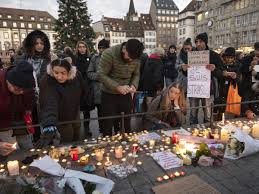
Europe carries this fear because Christmas has already been marked in blood. In Berlin in 2016, families shopping for ornaments were crushed beneath a truck driven by a man who pledged allegiance to ISIS. In Strasbourg in 2018, a gunman stalked a Christmas market, shouting Islamic slogans as he killed. An attack was foiled the following year in Vienna, Austria. Just days ago, five Muslim men were arrested for planning a Christmas attack in Germany. Another attack in Poland was foiled.

These attacks were not misdirected rage or incidental violence. Christmas itself was the target. Its visibility, its symbolism, its unapologetic presence in public space made it irresistible to jihadist ideology.
Time has passed, but the lesson lingers. Terror no longer needs to strike every year to be effective. Memory enforces compliance. The terrifying ghosts return on schedule, and cities respond accordingly.
The ideology behind this fear is explicit. Radical Islamism divides the world into rulers and the ruled, believers and infidels. Christians and Jews are permitted only when diminished, tolerated only when silent. Public faith is defiance. Celebration is rebellion. Holidays are moments when submission is tested.
That worldview does not stop at Europe’s borders.
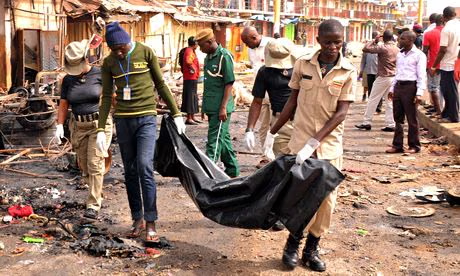
In Nigeria, Christmas approaches without illusions. In the northeast, churches shorten services or cancel them outright. Caroling routes remain undrawn. Families calculate risk before prayer. Islamist insurgents have repeatedly attacked Christian villages and churches on Christmas and Easter, murdering worshippers and burning sanctuaries. The timing is intentional. The theology is clear. Christmas is treated as an offense that must be punished.
Here, fear is not inherited memory. It is lived experience.
Jews have been bearing this burden for decades, their calendar similarly weaponized against them. Jewish holidays are chosen for attack because they gather families, because they proclaim continuity, because they announce survival in the open.
On Simchat Torah in Israel in 2023, 1,200 Jews celebrating the renewal of the Torah were slaughtered in their homes and at festivals. The date was chosen carefully. In Sydney, Australia, Jews gathering during Chanukah were met with terror and violence. A holiday of light confronted an ideology that demands darkness, enforced not metaphorically but operationally.
Across continents and faiths, the pattern holds. Jihadist terror does not only murder people. It seeks to reorder time. It teaches Christians and Jews that their holidays are liabilities, that joy invites punishment, that visibility must be negotiated. It aims to train infidels to bend the knee before violence is even required.
This is why the danger is most acute before Christmas, before Chanukah, before any non-Islamic holy day arrives. When celebrations are diminished in advance, when silence is praised as responsibility, when absence is framed as wisdom, terror has already achieved governance. Fear begins to regulate behavior.
A society that learns to cancel joy preemptively will eventually learn to cancel belief, then speech, then presence itself. When communities retreat before threats are issued, coercion has become ambient. Submission has become routine.
For the past decade, Islamic radicals have been chanting in Arabic in the West, “Khaybar, Khaybar Ya Yahud, Jaish Mohammed Sauf Ya’ud” which means “Watch Out Jews, Remember Khaybar, the Army of Mohammed is returning”. That Army of Mohammed is the ghost of jihadi Christmas coming to slaughter infidels near you.

 First One Through