Portable Colonialism: the anti-White Movement

Spain now admits “abuse” in Latin America over hundreds of years, while the United Nations praises France for its legacy, as it elevates 2 billion Muslims dominating dozens of countries.

Same actions. Different judgment.

What disappears in all three cases is the simplest word: invasion.

We prefer a softer story that cultures blended, languages spread, religions were adopted. But that story falls apart on contact with reality. Spain did not grow into the Americas. France did not organically merge with Africa. Arab armies did not quietly diffuse ideas across continents. They came from the outside, took control by force, and reshaped the societies they conquered—imposing language, religion, and identity.

That is not exchange. It is replacement.

Over time, something happens to memory. The longer the outcome lasts, the more natural it feels. A forced language becomes simply the language. An imposed religion becomes tradition. Conquest becomes history and eventually, heritage.

But modern outrage does not follow history evenly. It clusters around the United States as if European expansion began and ended there. The rest of the Americas, reshaped just as profoundly – perhaps more – by Spanish and Portuguese conquest, rarely draw the same sustained scrutiny.

Part of this is power. The United States is the dominant global actor today, and criticism follows visibility. Part of it is recency. But another part—rarely stated outright—lies in how colonialism is now framed.

In today’s discourse, colonialism is implicitly coded as a “white” phenomenon. The category is no longer just historical but visual.

Where power is perceived as Western and white, the language of colonialism sharpens. Where societies are seen as non-Western or part of the Global South, even when shaped by earlier conquests, the language softens into history or identity. Entire regions transformed by Spanish and Portuguese expansion or Islamic invasions are broadly framed as “indigenous,” while the United States becomes the central exhibit.

That same lens is applied even more aggressively to Israel.

Israel is often cast as a project of Western, even “white,” power. But that framing collapses under even modest scrutiny. The largest share of Israel’s population descends from Jewish communities across the Middle East and North Africa, whose skin is as dark as their neighbors.
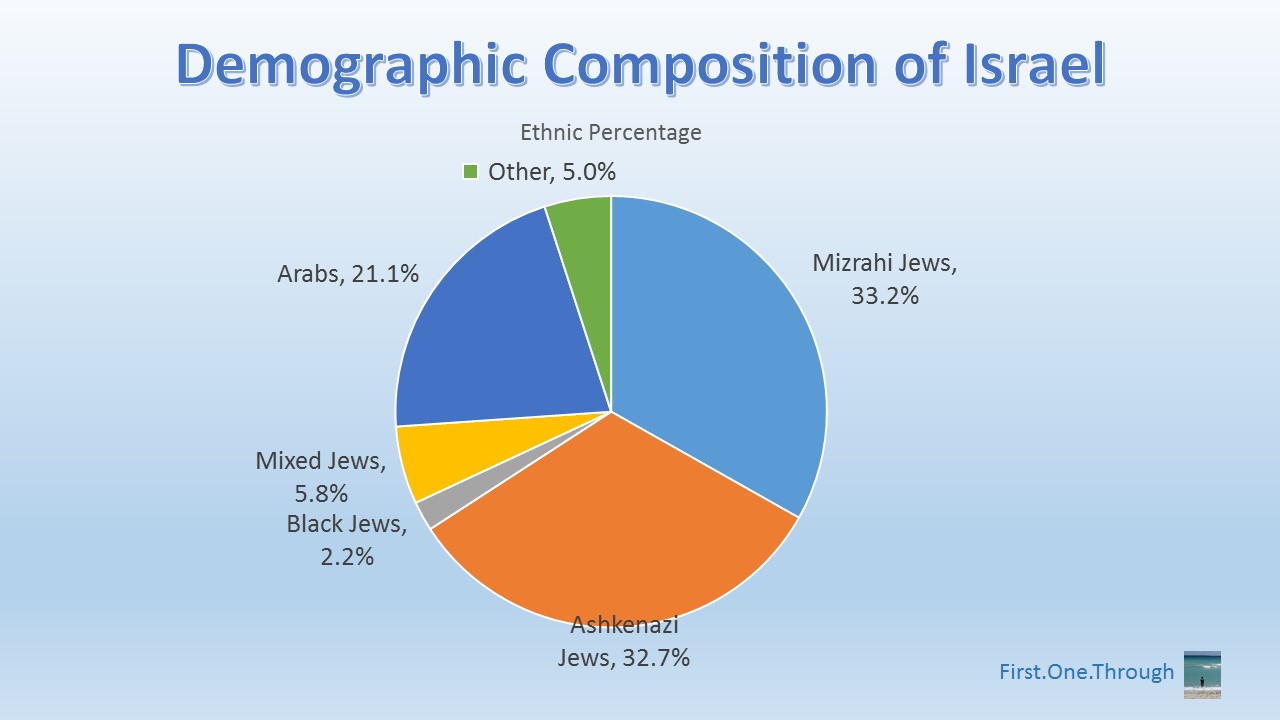
More fundamentally, the Jewish return to the land of Israel is a decolonization movement. It is not an external power projecting control into a foreign land. It is dispersed communities reconnecting to a shared origin and reviving their language and restoring their cultural framework in the place it began.

And yet it is falsely framed as colonial.

While the clearer cases fade into history, the exception is forced to fit the rule.

That contrast reveals something deeper. Colonialism is no longer a historical description. It has become a moral label which is applied unevenly, shaped by contemporary perceptions of identity, power, and alignment.

Histories that fit a “white West imposing on others” framework are foregrounded and moralized. Histories that do not fit as neatly are softened, reframed, or absorbed into the past.

European and Islamic invasions took over the Americas and Africa, but universities and progressive media only showcase the interlopers with whiter skin. The blind rage infects reason to such a degree, that even anti-colonial movements such as the Jewish State, cannot be addressed by fact and reason.

The colonial-imperial lens at work today is shaped by an anti-White racist Global South. Its mission is portable colonialism – to extract wealth and power from White societies and redistribute them to non-White communities.

De-Islamification, The Twin of Decolonization

“Decolonization” has become one of the most fashionable buzzwords of the modern age. It is taught in schools, shouted in protests, and deployed at the United Nations as a moral bludgeon against the West. European imperialists, we are told, robbed indigenous peoples of their land, stripped them of their culture, and erected foreign regimes on stolen soil. The work of decolonization — dismantling those legacies and restoring dignity — has been cast as the great ethical project of our time.

But what of the other colonial power that swept across continents, subjugating peoples and erasing their sacred spaces? What of Islamic imperialism, which invaded the Jewish promised land centuries ago, laying claim to sites that predated Muhammad’s birth by millennia?

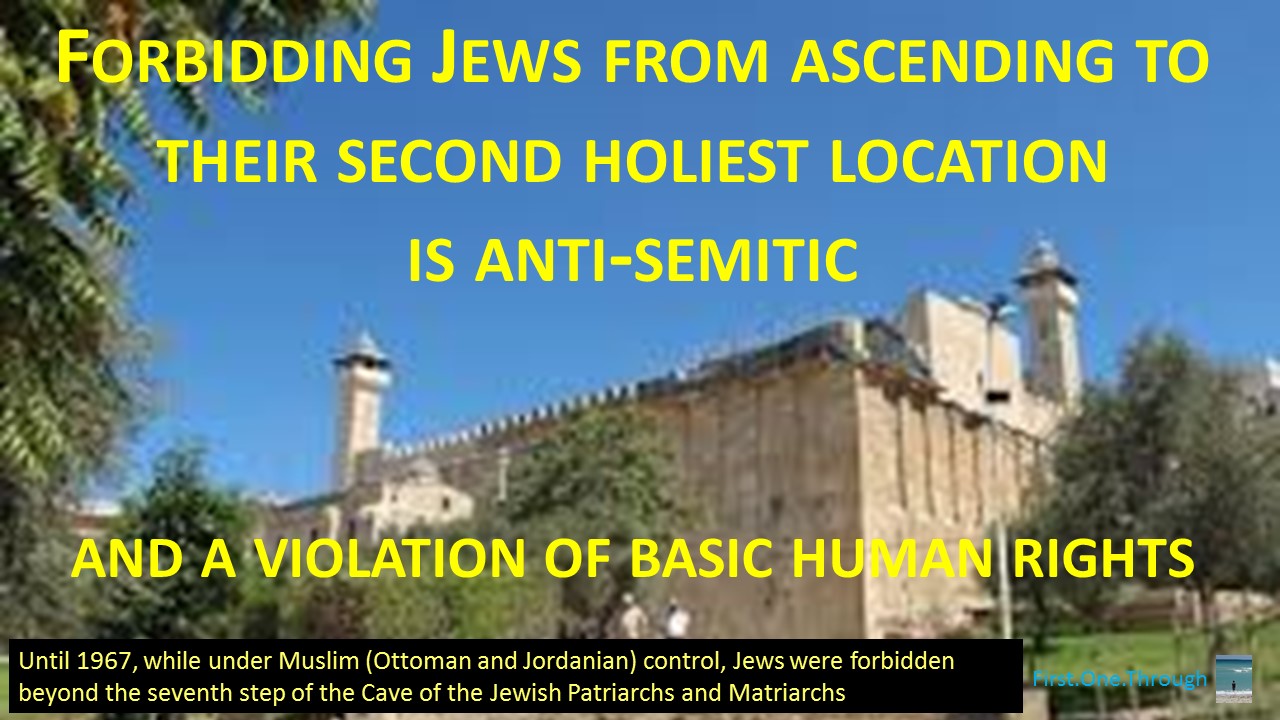
Consider Hebron, the resting place of Abraham, Isaac, Jacob, Sarah, Rebecca, and Leah. For Jews, it is the Ma’arat HaMachpelah, the Cave of the Jewish Matriarchs and Patriarchs — a holy site woven into the very text of Genesis. When Muslim conquerors took over, they renamed it the “Ibrahimi Mosque,” transformed it into a shrine for their own creed, and barred Jews from entering. For seven hundred years, Jews were not even allowed to set foot past the seventh step of the building.

This was not preservation; it was expropriation. A classic colonial tactic: erase the indigenous name, overwrite the meaning, and forbid the natives from practicing their own faith.

But unlike the narratives drilled into young students about European settlers in Africa or Asia, the Jewish story is not told.

In 1967, Israel liberated Hebron, and Jews once again could pray at the burial site of their patriarchs and matriarchs. Slowly, painstakingly, the work of de-Islamification has begun — not by erasing the Muslim presence, but by restoring Jewish rights. Jews may now pray, Jews may now enter, Jews may now sanctify their ancestral home.

And in June 2025, a historic step was taken: the Israeli government transferred administration of the second holiest site in Judaism to Jewish leaders in Kiryat Arba, removing it from the sole control of the Islamic waqf. This was neither vengeance nor displacement. It was simple justice — the recognition that all of those buried at the site are the founders of Judaism (while only one is revered by Muslims), and Jews are the indigenous people in the land as proven by that fact.

Decolonization movements have received global endorsement. Universities run entire programs on “postcolonial studies.” Yet when Jews engage in the parallel project of reclaiming their holy spaces from centuries of Islamic imperial rule, the world looks away — or worse, condemns.

Why should “decolonization” be celebrated while “de-Islamification” is scorned? Both are projects of justice. Both undo centuries of cultural theft. Both restore indigenous peoples to their rightful heritage.

If the United Nations were consistent, it would champion de-Islamification alongside decolonization. It would recognize Jewish efforts as authentic acts of restoration, not “provocations.” Schools should teach children that just as Africans reclaimed their lands from European empires, Jews are reclaiming their sacred spaces from Islamic erasure.

Instead, the UN gives its platform to radical jihadists who claim that Israel is trying to “Judaize” the Jewish holy sites in Jerusalem and Hebron. It’s an offensive smear deliberately made to try to erase the reality of their Islamic imperialism, colonization, ethic cleansing and cultural appropriation.

Palestinian Authority President Mahmoud Abbas talking about the “Judaization” of Jerusalem to conceal that Islamic cultural appropriation.

The jihadists fear that after Hebron, the Jews will come for the site they know is really Jewish – Jerusalem. They are calling the transfer of the Cave of the Jewish Matriarchs and Patriarchs from the Hebron Waqf to Jewish authorities a “rehearsal for al Aqsa” in Jerusalem. They know the Jewish Temple Mount is the holiest site for Jews and Muslims invaded and took the site. They are proud of the feat and fear a reversal would legitimize a people they consider “sons of apes and pigs.

There is no “Judaization” of Jerusalem and Hebron. There is de-Islamification.

Decolonization may be decades old, but de-Islamification is still in its early chapters. It deserves not only legitimacy, but applause.