Jacob – And Esau’s – Ladder

One of the most famous stories in the Book of Genesis is about Jacob’s ladder with angels ascending and descending. The famous biblical commentator Rashi (1040-1105) said that the angels going up were tied to the holy land and had to leave Jacob as he journeyed to live with his uncle Laban outside of the land. The angels coming down were new angels who would accompany Jacob while he lived outside of the holy land.

Jacob’s Ladder by Frans Francken II the Younger (1581-1642)

I would like to share an alternative interpretation: the angels on the ladder represent Jacob’s relationship with Esau.

There is no tool that connects hands and feet like a ladder. Both are required to go up as well as to come down. If several people are on a ladder at one time, hands and feet would likely be touching.

That is a reference to Jacob. His name literally came from his act of holding onto the heel of his brother Esau at their births. “Jacob” stems from the Hebrew word for heel, “akeb” (Genesis 25:26):

וְאַֽחֲרֵי־כֵ֞ן יָצָ֣א אָחִ֗יו וְיָד֤וֹ אֹחֶ֙זֶת֙ בַּעֲקֵ֣ב עֵשָׂ֔ו וַיִּקְרָ֥א שְׁמ֖וֹ יַעֲקֹ֑ב וְיִצְחָ֛ק בֶּן־שִׁשִּׁ֥ים שָׁנָ֖ה בְּלֶ֥דֶת אֹתָֽם׃

The clutching of the heel in the world’s first recorded twins set the primogeniture battle for the ages.

Birthright

There are two stories of Jacob angling to take the birthright from Esau. First, Jacob operates on his own and trades food with a hungry Esau for the birthright (Genesis 25:29-34). Years later, as their father Isaac wasn’t likely to abide by the earlier exchange between the brothers, Jacob acts at the urging of his mother Rebekah to trick Isaac into giving the special blessing intended for Esau to himself. Esau was so distraught by this action, that he swore he would kill Jacob, forcing Jacob to flee to live with Laban. (Genesis 27:1-21).

Jacob had the dream of angels on the ladder while he was fleeing from Esau. Jacob was not sure whether he had the advantage of the blessing or was a hunted man. On the ladder, the person higher up is only ahead while ascending; the elevated person actually trails the person below him when they are all descending.

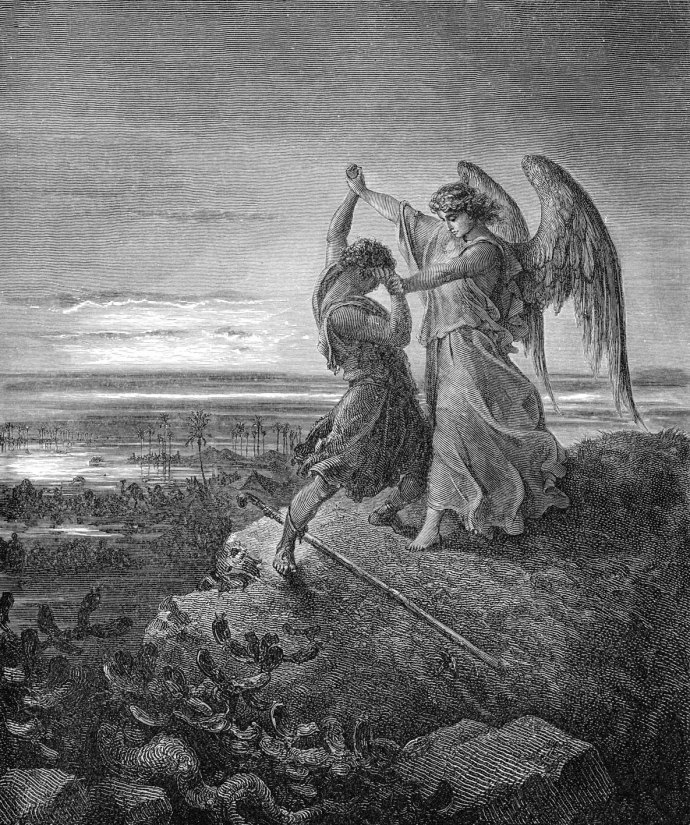
The story of Jacob clutching Esau’s leg finally comes to a close when Jacob returns to the holy land. In Genesis 32:25-33, Jacob wrestles a man/angel who dislocates Jacob’s hip. As the angel breaks free he blesses Jacob by changing his name to Yisrael:

וַיֹּ֗אמֶר לֹ֤א יַעֲקֹב֙ יֵאָמֵ֥ר עוֹד֙ שִׁמְךָ֔ כִּ֖י אִם־יִשְׂרָאֵ֑ל כִּֽי־שָׂרִ֧יתָ עִם־אֱלֹהִ֛ים וְעִם־אֲנָשִׁ֖ים וַתּוּכָֽל׃

“Said he, ‘Your name shall no longer be Jacob, but Israel, for you have striven with beings divine and human, and have prevailed.'”

Jacob/Israel, together with his wives and children, are then able to meet with Esau with his 400-person army, no longer carrying the weight of the contest. After they meet, Jacob gets affirmation from Gd about moving beyond the Jacob-Esau heel connection in Genesis 35:9-13.

וַיֹּֽאמֶר־ל֥וֹ אֱלֹהִ֖ים שִׁמְךָ֣ יַעֲקֹ֑ב לֹֽא־יִקָּרֵא֩ שִׁמְךָ֨ ע֜וֹד יַעֲקֹ֗ב כִּ֤י אִם־יִשְׂרָאֵל֙ יִהְיֶ֣ה שְׁמֶ֔ךָ וַיִּקְרָ֥א אֶת־שְׁמ֖וֹ יִשְׂרָאֵֽל׃

Gd saying to him, “You whose name is Jacob, You shall be called Jacob no more,
But Israel shall be your name.” Thus he was named Israel.

וַיֹּ֩אמֶר֩ ל֨וֹ אֱלֹהִ֜ים אֲנִ֨י אֵ֤ל שַׁדַּי֙ פְּרֵ֣ה וּרְבֵ֔ה גּ֛וֹי וּקְהַ֥ל גּוֹיִ֖ם יִהְיֶ֣ה מִמֶּ֑ךָּ וּמְלָכִ֖ים מֵחֲלָצֶ֥יךָ יֵצֵֽאוּ׃

And God said to him, “I am El Shaddai. Be fertile and increase; A nation, yea an assembly of nations, Shall descend from you. Kings shall issue from your loins.

וְאֶת־הָאָ֗רֶץ אֲשֶׁ֥ר נָתַ֛תִּי לְאַבְרָהָ֥ם וּלְיִצְחָ֖ק לְךָ֣ אֶתְּנֶ֑נָּה וּֽלְזַרְעֲךָ֥ אַחֲרֶ֖יךָ אֶתֵּ֥ן אֶת־הָאָֽרֶץ׃

The land that I assigned to Abraham and Isaac I assign to you;
And to your offspring to come Will I assign the land.”


Jacob’s view of himself was tied to his name which conveyed a pursuit of his brother and his blessing. Once he broke free of that pursuit – together with a limp and a new name – Israel was able to accept that he was the heir to the blessings Gd bestowed upon his forefathers.

The angels on the ladder in Jacob’s dream were not geofenced protectors of Jacob but a reflection of his link with Esau, together with confusion of his actions. Esau would always be older and above him on the ladder, but descending and on the ground in the holy land, Jacob/Israel was entitled to the blessings and inheritance.

Related articles:

Jacob’s Many Angels and Vayetze Jews (December 2023)

The First Dreamer Foreshadowed The Life Of Joseph (December 2022)

Jacob’s Many Angels and Vayetze Jews

The weekly parshas read from the Torah normally begin at the start of a chapter and conclude at the end of another chapter. It is extremely rare for any parsha to both start and end in the middle of chapters, which happens for the weekly reading of Vayetze (Genesis 28:10 – 32:3).

The reason for doing so has very much to do with the story told in Vayetze, as well as the stories which the rabbis wanted to separate at the start of Genesis chapter 28:1-9 in Parshat Toldot, and the story told afterward in Parshat Vayishlach, chapter 32:4-33.

Vayetze relays the story of Jacob leaving the land of Canaan to find a wife at Lavan, his mother’s brother’s house. When embarking, Jacob dreamt of a ladder going to the heavens with angels going up and coming down. God informed Jacob that he will be blessed with many children and that God would protect Jacob on his journey and bring him safely back to his land. At the end of the parsha, Jacob headed back to the land of Canaan with wives and eleven children, and met angels once again (Genesis 32:2-3). Angels are bookends of Vayetze, telling the story of Jacob marrying, and having many children and accumulating much cattle in his uncle’s house.

If one were to read Genesis straight through the chapters instead of with the breaks of the weekly portions, that story is less clear.

At the beginning of Genesis chapter 28 (1-5), Isaac instructed Jacob to not marry a local woman from Canaan and to visit his uncle’s house, seemingly consistent with the overall theme of Vayetze. However, 28:6-9 describes Esav’s overhearing Isaac’s command who subsequently embarked to marry his father’s brother’s daughter. Esav’s actions interrupted the focus on Jacob.

At the end of the parsha, the narrative also breaks around Esav. While Vayetze’s Genesis 32:2-3 has Jacob encountering angels and naming the location due to the holiness of the event as he did after his ladder dream, Vayishlach’s Genesis 32:4-7 has Jacob sending the angels off as mere messengers to scout out Esav’s intentions as he journeyed to return to Canaan. In one sentence, from 32:3 to 32:4, Jacob treated the malachim as holy people and then errand boys, which does not happen with the weekly parsha pause separating the sentences.

The neat angel bookends of Vayetze act as separators from Esav. While Jacob got married and returned with eleven children and a large flock, the difficult years were none-the-less realized as blessings. However, the stress of the world he left and to which he returned made the blessings harder to recognize, and maybe even finite.

Esav married Ishmael’s daughter and came to meet Jacob with an army of 400 men (32:7). While Jacob had been promised by God that his progeny would be numerous as he left Canaan, his brother Esav seemed to become even greater over that same time.

Upon learning of the large gap in power with his brother, Jacob became very frightened and prayed to God (32:8-13) seemingly thinking that his heavenly protection had ended. When Jacob next sends out messengers to meet Esav, they are no longer described as malachim, angels, but avadim, servants (32:17).

Jacob lost the ability to recognize angels as he approached his brother. When Jacob was next alone at night, he didn’t dream of angels on a ladder but wrestled with an ish, a man who is described by biblical commentators as an angel who renamed Jacob ‘Israel’ for prevailing in his fight with man and God. While Jacob should not have been scared of Esav as he had angels with him, he could no longer recognize them and fought them.

Jews today see their homes like Jacob as Vayetze Jews. Even in the face of family difficulties, a home is nevertheless a sanctuary in which we count our blessings and feel protected. It is when we compare ourselves to others and see their wealth and fear what they might do to us that we forget those blessings. We no longer see the angels and blessings they provide. So we demand that they serve our needs, and fight them thinking that they are strangers meant to do us harm.

And then we question the blessings we once enjoyed. Esav had no angels and yet prospered even more than Jacob. An unblessed life seemingly yielded greater rewards if one focuses purely on numbers.

Jacob produced a family which became a holy nation while Esav’s actions netted a massive army. During peace, it is easy to understand why Jacob’s descendants reach heights of thought and purity but in times of conflict, Esav’s army appears ready to conquer those achievements.

In a pre-October 7 world, Vayetze Jews imagined themselves blessed and protected in their home of homes, in their houses in Israel. The neat angel bookends of the parsha were the protective layer of building a home and family, and Vayetze Jews felt God’s blessings.

In the aftermath of the October 7 slaughter in which Arabs killed Jews in their homes in Israel, the Vayetze Jews were vanquished. We became Vayishlach Jews ready to fight man and God for the inhumanity inflicted on us.

Gustave DoréJacob Wrestling with the Angel (1855)

Is that our fate? Can the Jewish community become more?

Jews must internalize the text in the chapters and not just the parshas.

Esav DOES interfere with the story-telling of Jacob finding a wife. Esav does continue to build a family and army outside of Jacob’s Vayetze bubble. Jacob and the Vayetze Jew fail to internalize the outside world as they were self-absorbed which led to complacency. Jacob only saw angels’ blessings as partners for his activities in his home but did not use the gift for the fight to come outside.

We are both the Children of Jacob (Vayetze Jews) and the Children of Israel (Vayishlach Jews), and need to live lives focused internally and externally. Partnering with angels must extend beyond the bounds of angelic bookends and touch activities in everything we do. That is the pathway to true blessing and success inside and outside of our home and communities.

Related articles:

The Nation of Israel Prevails

The First Dreamer Foreshadowed The Life Of Joseph

3 1 4, Hebrew Pi

The Karma of the Children of Israel

The Descendants of Noah

The Place and People for the Bible

The Shrinking Modern Jewish Homeland

Even In The End, You Must Ensure The Future

Genesis chapter 23 describes the death of the Jewish matriarch Sarah and her burial. It is immediately followed by a peculiar opening in chapter 24:

וְאַבְרָהָ֣ם זָקֵ֔ן בָּ֖א בַּיָּמִ֑ים וַֽיהֹוָ֛ה בֵּרַ֥ךְ אֶת־אַבְרָהָ֖ם בַּכֹּֽל׃

Abraham was now old, advanced in years, and ‘ה blessed Abraham in all things.

Abraham had just buried his wife and the Torah says that Abraham had everything. A strange phrase, as he just lost his spouse!

The Bible would then describe that Abraham sent out one of his trusted attendants to make sure that his son Isaac got a suitable spouse. The biblical commentator Rashi noted that the numerical value of the Hebrew word for with everything, בַּכֹּֽל, is the same as the numerical value in Hebrew of son, בֵּן. Rashi said that because God blessed Abraham with a son, Abraham needed to find him a wife.

Looking at the Haftorah section for the weekly portion of Chayei Sarah when this portion is read, could lead to a broader interpretation of this sentence.

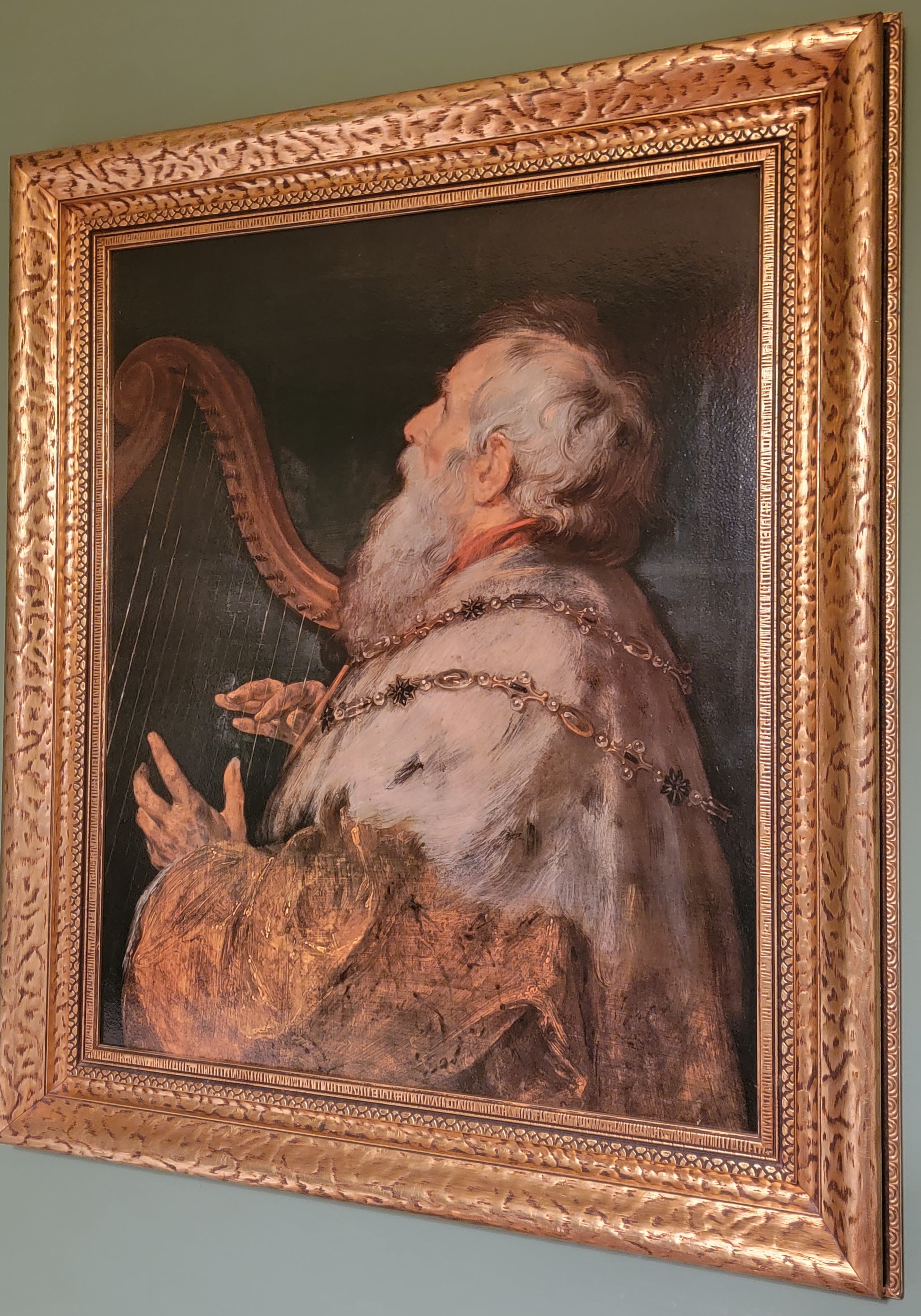
The rabbis decided to match Chayeh Sarah with Kings 1, which starts with King David being very old. Sentences 1 to 4 describe David as being so old that he could not retain heat, so he was brought a young virgin who stayed with him to warm him. The passages were clear that the king was not intimate with her. A lot of detail to share that the king was very old and mostly stayed in bed.

The rest of the reading would describe King David setting Solomon to be his heir, instead of sons who competed for the role of king.

King David playing the Harp, by Peter Paul Rubens ca. 1616

The two biblical stories convey a message to be taken together.

As Abraham and King David approached the end of their lives, they had seemingly accomplished everything. They had finished having children and building their fortune. It was time to retire peacefully.

But they did not.

Abraham made sure that his son would marry an appropriate woman and be able to carry on the family’s good name. King David made sure the appropriate son would lead the kingdom.

The bible relates that each man did this when they were old and without an active companion. While they would have no more children – hence the bible making clear that the virgin brought to David remained a virgin – they still had an active role to play in directing their children and the course of Jewish history.

Rashi’s comment that Abraham had a son could be reread that Abraham was not going to have any more sons. He needed to focus on the future of the son he had.

It is a lesson for older people even today: you are more then just a link in a chain. The next generation continues to need your guidance to make sure important values and traditions are imparted.

Related articles:

The Place and People for the Bible

The Year 2023: Entry To The Holy Land

The Journeys of Abraham and Ownership of the Holy Land

Abraham’s Hospitality: Lessons for Jews and Arabs

The First Dreamer Foreshadowed The Life Of Joseph

3 1 4, Hebrew Pi

The Karma of the Children of Israel

Kohelet, An Ode to Abel

The Year 2023: Entry To The Holy Land

There are millions of religious Christians who look at the founding of the State of Israel as a matter of divine will. One of the points of evidence they use is that the year of the founding of the state was 1948 in the Gregorian Calendar, commonly referred to as the Common Era. It was in that year in the Jewish Calendar – 1948 – that Abraham was born according to the Old Testament. Remarkably, after two thousand years of persecution and wandering, that the Jews would reestablish their homeland in that common year is considered too much of a coincidence. It is a sign from G-d.

It is therefore important to note this moment in time, 2023CE. As Israel celebrates its 75th anniversary milestone, it was in that year of the Jewish calendar, that Abraham entered the land of Canaan and G-d promised him and his descendants blessings and the land.

Genesis 12:1-4:

“יהוה said to Abram, “Go forth from your native land and from your father’s house to the land that I will show you. I will make of you a great nation, And I will bless you; I will make your name great, And you shall be a blessing. I will bless those who bless you, And curse the one who curses you; And all the families of the earth; Shall bless themselves by you. Abram went forth as יהוה had commanded him, and Lot went with him. Abram was seventy-five years old when he left Haran.”

Seventy-five years since the rebirth of the Jewish State, the country thrives while it continues to have challenges. It has remained stable and economically sound despite the mayhem in the surrounding countries. It has defeated its foes in battles repeatedly, and has forged peace treaties with several former enemies. It has managed to ingather millions of Jewish exiles from around the world, as it rekindled Hebrew into a common spoken language. It granted citizenship to non-Jews living in the land, in a unique forum of coexistence in the Middle East.

Abram was 48 years old at the time of the Great Dispersion from the Tower of Babel. He witnessed firsthand the ill effects of unanimity, and was part of G-d’s global directive towards particularism – in both language and place. At 75 years old, he was told to relocate, to a place already inhabited by others, to become the source of blessing for the entire world.

In 2023 of the Jewish calendar, the father of monotheism was not directed to conquer or convert the slightly more “indigenous” people (by 27 years) in the holy land, even as the land was soon to be promised to him, his son Isaac and the generations after him. Abram was to be an inspiration and a talisman for everyone. In that generation which broke the embraced orthodoxy of universalism, he embodied G-d’s will of particularism.

Today, in 2023 of the Common Era we live in a very tense world. People are divided, in part, because of technology that has enabled microtargeting of people with customized news and advertisements, couple with social media algorithms which keep people hyper-engaged. While fifty years ago everyone was basically fed the same media and news, now billions of people can consume and transmit whatever they want. While more satisfied with being fed unique content whenever they want, the hyper-particularism has left many isolated, angry and distrustful.

In considering the year 2023 both in the Jewish calendar and the Gregorian one, it is time to reset our thoughts on universalism and tribalism.

We don’t all need to think, dress or worship the same way. We must break with the notion of unanimity of position, and embrace a society of tolerance. That mean stop canceling, firing and unfriending people if they don’t share your opinions on critical race theory and transgenderism, or dislike the people you follow on Instagram. Allow space for unique attitudes, as long as they are not harmful.

The Bible tells us that Abraham left his “native land” to a land where he would become a focus of not just the local inhabitants but “all the families of the earth.” In today’s world of billions of isolated people, Jews and the Jewish State continue to demand global attention. It is an opportunity for a universalistic approach towards the particular: for the world to bless the Jews and receive G-d’s blessing in return.

A pretty simple formula for a better and happier world.

The Israeli flag at the Western Wall in Jerusalem

Related articles:

The Place and People for the Bible

The Jews of Jerusalem In Situ

The Journeys of Abraham and Ownership of the Holy Land

Abraham’s Hospitality: Lessons for Jews and Arabs

Israel, the Liberal Country of the Middle East

Judaism’s Particularism Protects Al Aqsa

Related music videos:

God is a Zionist (music by Joan Osborne)

Aliyah to Israel (music by The Maccabeats)

The Anthem of Israel is JERUSALEM

Ethiopian Jews Come Home (music by Phillip Phillips)

The First Dreamer Foreshadowed The Life Of Joseph

The beginning of the world as told in the Jewish Bible is a remarkable story. It is a world that seemingly is infused both with the natural and super-natural, where God and man interact regularly: the world was built and then destroyed in a flood, save for Noah and his family, whom God directed to build an ark; Abraham pleads with God to save corrupt cities which are nevertheless pummeled with fire and brimstone.

In the middle of the physical interfacing between God and mankind as well as family drama, the Bible pauses for a few sentence to relay a mundane story. Jacob has a dream.

וַיֵּצֵ֥א יַעֲקֹ֖ב מִבְּאֵ֣ר שָׁ֑בַע וַיֵּ֖לֶךְ חָרָֽנָה׃ וַיִּפְגַּ֨ע בַּמָּק֜וֹם וַיָּ֤לֶן שָׁם֙ כִּי־בָ֣א הַשֶּׁ֔מֶשׁ וַיִּקַּח֙ מֵאַבְנֵ֣י הַמָּק֔וֹם וַיָּ֖שֶׂם מְרַֽאֲשֹׁתָ֑יו וַיִּשְׁכַּ֖ב בַּמָּק֥וֹם הַהֽוּא׃ וַֽיַּחֲלֹ֗ם וְהִנֵּ֤ה סֻלָּם֙ מֻצָּ֣ב אַ֔רְצָה וְרֹאשׁ֖וֹ מַגִּ֣יעַ הַשָּׁמָ֑יְמָה וְהִנֵּה֙ מַלְאֲכֵ֣י אֱלֹהִ֔ים עֹלִ֥ים וְיֹרְדִ֖ים בּֽוֹ׃ וְהִנֵּ֨ה יְהֹוָ֜ה נִצָּ֣ב עָלָיו֮ וַיֹּאמַר֒ אֲנִ֣י יְהֹוָ֗ה אֱלֹהֵי֙ אַבְרָהָ֣ם אָבִ֔יךָ וֵאלֹהֵ֖י יִצְחָ֑ק הָאָ֗רֶץ אֲשֶׁ֤ר אַתָּה֙ שֹׁכֵ֣ב עָלֶ֔יהָ לְךָ֥ אֶתְּנֶ֖נָּה וּלְזַרְעֶֽךָ׃…Jacob left Beer-sheba, and set out for Haran. He came upon a certain place and stopped there for the night, for the sun had set. Taking one of the stones of that place, he put it under his head and lay down in that place. He had a dream; a stairway was set on the ground and its top reached to the sky, and messengers of God were going up and down on it. And standing beside him was יהוה, who said, “I am יהוה, the God of your father Abraham’s [house] and the God of Isaac’s [house]: the ground on which you are lying I will assign to you and to your offspring… (Genesis 28: 10-13)

God had already directly given such promise to Abraham while he was awake. It is peculiar that God would choose an elaborate dream with angels on a ladder to convey the same message to Jacob in his sleep.

Jacob’s Ladder by Frans Francken II the Younger (1581-1642)

It is also a curiosity that people today are so fascinated by the story, even more than God talking directly to man. Perhaps it is because God no longer talks directly to people today, even as many of us dream, so we can relate to the story.

Or perhaps it is because Jacob’s dream is the foreshadowing of the life of the biggest character of Genesis, his son Joseph.

Three “Places”, Four Conditions

When the Bible writes about about Jacob’s dream, it repeats the Hebrew word מָּק֥וֹם three times in a single sentence, an oddity. While it can mean “place” it can also mean “God”. It is as though the narrator is telling us that something significant is about to happen, and it is location and God.

The dream is definitely dramatic. While the builders of the Tower of Babel tried to reach the heavens, Jacob actually got to “see” it. While man labored unsuccessfully for years to ascend, angels effortlessly went up and down.

And alongside the ladder was God himself. No one, not even his father and grandfather, had seem Him, but only heard His voice. Now Jacob had a new medium for his connection with God and he chose to concretize the event while awake.

וַיַּשְׁכֵּ֨ם יַעֲקֹ֜ב בַּבֹּ֗קֶר וַיִּקַּ֤ח אֶת־הָאֶ֙בֶן֙ אֲשֶׁר־שָׂ֣ם מְרַֽאֲשֹׁתָ֔יו וַיָּ֥שֶׂם אֹתָ֖הּ מַצֵּבָ֑ה וַיִּצֹ֥ק שֶׁ֖מֶן עַל־רֹאשָֽׁהּ׃ וַיִּקְרָ֛א אֶת־שֵֽׁם־הַמָּק֥וֹם הַה֖וּא בֵּֽית־אֵ֑ל וְאוּלָ֛ם ל֥וּז שֵׁם־הָעִ֖יר לָרִאשֹׁנָֽה׃ וַיִּדַּ֥ר יַעֲקֹ֖ב נֶ֣דֶר לֵאמֹ֑ר אִם־יִהְיֶ֨ה אֱלֹהִ֜ים עִמָּדִ֗י וּשְׁמָרַ֙נִי֙ בַּדֶּ֤רֶךְ הַזֶּה֙ אֲשֶׁ֣ר אָנֹכִ֣י הוֹלֵ֔ךְ וְנָֽתַן־לִ֥י לֶ֛חֶם לֶאֱכֹ֖ל וּבֶ֥גֶד לִלְבֹּֽשׁ׃ וְשַׁבְתִּ֥י בְשָׁל֖וֹם אֶל־בֵּ֣ית אָבִ֑י וְהָיָ֧ה יְהֹוָ֛ה לִ֖י לֵאלֹהִֽים׃…Early in the morning, Jacob took the stone that he had put under his head and set it up as a pillar and poured oil on the top of it. He named that site Bethel; but previously the name of the city had been Luz. Jacob then made a vow, saying, “If God remains with me, protecting me on this journey that I am making, and giving me bread to eat and clothing to wear, and I return safe to my father’s house— יהוה shall be my God. And this stone, which I have set up as a pillar, shall be God’s abode; and of all that You give me, I will set aside a tithe for You.”…(Genesis 28:18-21)

Jacob was awestruck by the event and anointed the rock-pillow he slept on during the dream, but then conditioned his faith in the real world. He asked God for four things to prove Himself before he would accept Him as his God, and then seemingly for God to truly establish his promise of the land for his inheritance.

These four requests set the tone for the remainder of Genesis.

Three Pairs of Dreams

Jacob, the first dreamer, would be followed by his son Joseph. While Jacob dreamed only once and doubted the veracity of what he saw, Joseph seemingly was confident about his two dreams.

Genesis 37:5-11 relays Joseph having a dream which he told his brothers about their sheaves bowing down to his, and then a second dream which he told his brothers and Jacob, of eleven stars, moon and sun bowing to him. While the brothers hated Joseph for the dream, Jacob considered it, as he knew about dreams himself but continued to be unsure whether to embrace a message told in such fashion.

וַיְקַנְאוּ־ב֖וֹ אֶחָ֑יו וְאָבִ֖יו שָׁמַ֥ר אֶת־הַדָּבָֽר׃ So his brothers were wrought up at him, and his father kept the matter in mind. (Genesis 37:11)

The second pair of dreams (Genesis 40) happened in Egypt, as Joseph listened to the dreams of two fellow prisoners, a cupbearer and a baker. This time, Joseph interpreted their dreams which accurately predicted the fates of the two men.

The third pair of dreams happened to Pharaoh (Genesis 41), which Joseph was brought in to interpret. While they had not proven accurate, they rang true to Pharaoh who immediately sought to take action based on Joseph’s interpretation. This is the first time – after seven dreams told by the Bible – that anyone took dreams to be an omen that must be addressed immediately. Perhaps it was because Pharaoh viewed himself like a God who could take complementary action to God’s will. Either way, it was in sharp contrast to the first dream of Jacob in which he conditioned accepting God’s word.

Jacob’s Four Conditions

While Jacob asked God to stay with him and protect him from harm, it was Joseph who really faced numerous life-or-death situations, and survived. From his brothers trying to kill him, sell him into slavery and being cast into an Egyptian dungeon, God stayed with Joseph and protected him from the spiral of events that started from Joseph’s sharing his first pair of dreams.

Jacob’s second condition was about food. That foreshadowed the baker and winemaker who relayed the second pair of dreams in the prison cells of Egypt.

Jacob’s third condition was clothing. After Joseph interpreted Pharaoh’s dream and gave him a plan for addressing the famine that was to come, Pharaoh put him in charge of all the land of Egypt and dressed him in the finest fashion.

וַיָּ֨סַר פַּרְעֹ֤ה אֶת־טַבַּעְתּוֹ֙ מֵעַ֣ל יָד֔וֹ וַיִּתֵּ֥ן אֹתָ֖הּ עַל־יַ֣ד יוֹסֵ֑ף וַיַּלְבֵּ֤שׁ אֹתוֹ֙ בִּגְדֵי־שֵׁ֔שׁ וַיָּ֛שֶׂם רְבִ֥ד הַזָּהָ֖ב עַל־צַוָּארֽוֹ׃ And removing his signet ring from his hand, Pharaoh put it on Joseph’s hand; and he had him dressed in robes of fine linen, and put a gold chain about his neck. (Genesis 41:42)

The three sets of dream correlate to Jacob’s first three conditions to internalizing God’s message in his dream. They represent a life for Jacob without Joseph present, as if his favorite son had become a dream. Jacob did not know whether Joseph was alive or dead, much like he wasn’t sure about the dream’s veracity. The three pairs of dreams were divinely inspired as alluded to at the very beginning of Jacob’s dream with the word מָּק֥וֹם appearing three times in one sentence.

Ultimately, the fourth condition, to “return safe to my father’s house,” was the reunion between Jacob and Joseph. When Jacob heard that Joseph was alive his spirit was awakened, as if from a deep sleep (Genesis 45:27). It was then that God reappeared to Jacob – at night again – to go to Egypt to reunite with his son and that God would return him to the promised land. (Genesis 46:1-4)

That action brought the entire family together, and had Jacob – now Israel – believe in God’s promise, setting the future for the children of Israel.

The first dreamer was awe-struck but doubted the dream’s authenticity, setting conditions to accept God. That action set in motion the life of Joseph and the history of the Jewish people.

Related articles:

3 1 4, Hebrew Pi

The Karma of the Children of Israel

The Descendants of Noah

The Place and People for the Bible

Humble Faith

Ten Good Men

The Journeys of Abraham and Ownership of the Holy Land

The Nation of Israel Prevails

The Place and People for the Bible

By the eleventh chapter of the Bible, it appeared that mankind had reached perfection. United in time, place and purpose, the whole world appeared ready to accept the word of God. Yet God rejected this model of the human race, and instead opted to give his holy texts to a sliver of the world in entirely inverted circumstances. The message embedded in the choice is as timeless as it is important.

The Tower of Babel and the State

About 300 years after God destroyed the world in the flood, “the entire earth was of one language and uniform in words.” They assembled together in “a valley in the land of Shinar” and decided to make bricks to “build ourselves a city and a tower with its top in the heavens to make ourselves a name, lest we be scattered upon the face of the earth.” (Genesis 11:1-4)

This Tower of Babel was an incredible accomplishment. Ten generations – from Noah through Abraham – lived in this city and tower. The people were not just “of one language” but coordinated in a common goal. To a modern reader, this situation appears too good to be true – mankind working constructively to build a place where everyone could live together. It seems so aspirational that it puzzles the reader as to why God was upset and said “Lo! they are one people, and they have one language, and this is what they have commenced to do? Come let us descend and confuse their language, so that one will not understand the language of his companion’. And the Lord scattered them from upon the face of the earth and they ceased building the city.” (Genesis 11:6-8)

To appreciate God’s objection, biblical commentators compared this generation to that of the flood.

The Bible states that God destroyed the world in the flood because of “חָמָֽס” (Genesis 6:11) which is translated as ‘robbery’ by Rashi and the Ramban. While at first, robbery doesn’t seem so terrible a crime worthy of destroying a world, it does invite a reader to imagine the nature of such society.

If the world operates on the basis of theft – that the ownership of personal property has no inherent meaning – people prioritize stealing over work. In such environment, a person will invest his or her efforts in how to take the fruit, cattle or spouses of their neighbor rather than engaging in the actual work of cultivating such things. There would be no effort in saving or developing anything as it could be stolen, making people live for the day rather than invest in the future. Such a world cannot mature nor endure.

The society that built the Tower of Babel had a different notion about personal property. Rather than one person stealing another’s belongings for themselves, they collected it for the state. Rabbi Joseph Soloveitchik said “the generation… had a strict political code. The were not weakened by abundance [like those in the Flood]…. They were aggressive in undertaking, bold in design, and arrogant in execution. The ideology of Marxism as interpreted by Lenin and Mao Tse Tung could not have been better portrayed than in these verses.

Rabbi Solveitchik combined two principles in his critique of this society – one led by an authoritarian leader and one based on Socialism. He criticized this society that “tried to create a new social world order. In order to realize this ideal, they destroyed individual freedom, dictating to everyone what to do and how to live.” People can see this at play today in the alt-left’s efforts to institute a new social order under the marketing banner of the common good as it advocates for “canceling” those who break with their orthodoxy while they attempt to redistribute personal property.

Rampant robbery for personal gain that existed before the Flood was obsessed with the indulgence of living in the moment and needed to be wiped out as it destroyed the possibility of long-term development. The seizing of personal property for the state during the Tower of Babel, needed to be disrupted as well. God had previously directed Noah and his children to “be fruitful and multiply upon the earth” three times (Genesis 8:17, 9:1 and 9:7) and instead they constrained themselves to a small valley, thereby limiting their progeny and directed their efforts to building man-made structures rather than cultivating the land for personal use.

God “came down” (Genesis 11:7) to this authoritarian socialist society and did not see an ideal society worthy of receiving his holy words, and decided to “confuse their language” and “scattered them from there upon the face of the earth, and they ceased building the city.

Which makes one consider the society that actually did receive the Torah.

The Tower of Babel and Mt. Sinai

God handed the Ten Commandments to a very different society in a very different place. Mount Sinai and the Tower of Babel could not be more different:

Mount SinaiTower of babel
Natural mountainMan made structure
Located in remote desert away from peopleCenter of the world with all humanity
In the afterglow of the Exodus and destruction of Egyptian armyIn the shadow of the destruction of every living thing in the Flood
Only Moses ascended the mountain and the Israelites barred from approaching itThe entire world inhabited the tower
God “descended” to Mt. Sinai to see a man he had spoken to before who had followed his commandGod “descended” to find a society which ignored the direction he had given to some of them (Noah and his children)
Laws given to a single man to teach to a single tribe over timeLaws not given to the entire world at a moment in time
That tribe was scared and acting out, looking for leadership as the commandments were being given to MosesThe world was working seamlessly in concert, building their man-made city and tower which didn’t need a God as it reached the heavens via the work of its own hands

When God dispersed mankind in the year 1996 after Creation, He set in place the ability for humanity to follow his command to “be fruitful and multiply upon the earth” but simultaneously made engaging with everyone more difficult, as God’s preference for speaking to one person at a time would require multiple prophets to interact with local communities and tribes, even as the miracles would capture the attention of the whole world.

As noted above, God opted to give the Ten Commandments to a people who were just freed from slavery and eager for leadership and a new society. This was in sharp contrast to the people on the Tower of Babel who may not have been receptive to taking upon themselves the word of God, having seen the impacts of global devastation. Consider that they decided to build their city and tower in a valley. They were highly confident in their own abilities to reach the skies, almost as a further insult to God as they didn’t want any advantage from the natural world.

The Shortened Life

The dispersion had ramifications beyond the change in language, the abandonment of the tower and setting in motion the establishment of nations around the world. The lifespans of people dropped considerably as well.

Peleg, a descendant of Shem, died during the dispersion. Curiously, he was either named with prophesy as the name was derived from the Hebrew word for dispersion, or he was renamed at his death כִּ֤י בְיָמָיו֙ נִפְלְגָ֣ה הָאָ֔רֶץ (Genesis 10:25).

Peleg died when he was 239 years old, considerably less than his father, grandfather and great grandfather who were 464, 433 and 438 years old, respectively. The reduction of 225 years of Peleg’s life relative to his father is the numerical equivalent of the word scattered in Hebrew “הֱפִיצָ֣ם” (Genesis 11:9). From this day on, the lifespan of people continued to decline – all the way to 120 years old, the lifespan of Moses, the great teacher of the Torah.


There are people today – like Senator Bernie Sanders and the Democratic Socialists – who view the idea of collective global action on behalf of a powerful state that shuns religion as an ideal to be pursued. The Bible clearly instructs otherwise, as conveyed in the short story of global unity at the Tower of Babel.


Related First One Through articles:

The Descendants of Noah

Kohelet, An Ode to Abel

The Jewish Holy Land

From Promised Land to Promised Home

Subscribe YouTube channel: FirstOneThrough

Join Facebook group: Israel Analysis and FirstOneThrough

Humble Faith

“The universe is a pretty big place. If it’s just us, seems like an awful waste of space.”

– Carl Sagan (1934-1996)

For thousands of years, people thought of themselves as the center of the universe. People believed that they were the most sophisticated animal and assumed that Earth was the only planet to house life, let alone intelligent life.

Religions encouraged such beliefs. The story of Genesis made humans the pinnacle of God’s creation and center of His plan, as the master of all other life forms. As late as the early 17th century, when Galileo posited that the Earth rotated around the sun, not the other way ’round’, the Catholic Church called him a heretic, banned his books and sentenced him to prison.

Religion appeared vain, anchored in self-absorption, and in opposition to science.

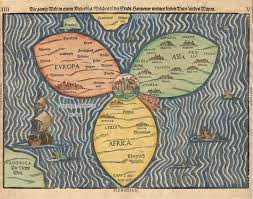
Map of world with Jerusalem in the center by Heinrich Bunting (1581)

As science became widely accepted over the following hundreds of years, people came to appreciate how small the Earth is in a remote edge of the galaxy. Mankind shifted from writing mythology about Gods in the stars, to scripting stories of alien life traversing the universe. Man seemingly embraced science and eschewed religion.

But people remained equally as arrogant.

Beyond the wave of science fiction books and movies over the past sixty years, sci-“fact” shows like the new “UFO” documentary have considered that aliens from other planets have come to Earth. The guise of awe for the unidentified flying objects at first conveyed humbleness in considering that humans are neither alone nor the center of the universe. Yet that premise fell completely flat. What kind of unbridled arrogance must someone have to believe that in the vastness of space, an alien managed to find earth and visit that one special person. Such remarkable conceit!

A profound faith in either religion or science could mask the same egotism with a different veneer of humility.

Carl Sagan, an astronomer and popular author about space strongly believed in science and of life on other worlds, and also believed in religion. He once said that “Science is not only compatible with spirituality; it is a profound source of spirituality.” Despite the appreciation for both belief and science, he nevertheless acknowledged the issue with fundamentalism in his book ‘Contact‘ and how religion and science could be at odds for those with profound faith.

At its worst, profound religion acts as a cudgel, enabling those who believe they speak with divine authority to dictate demands. Deep faith facilitates massacres like the Christian and Muslim crusades as well as the Inquisition.

This stands in sharp contrast in humble faith. Humble religion serves as a guide for people to act towards one another with kindness. The belief in a powerful God who judges people’s seen and unseen actions is designed to shepherd society with humbleness as a check on power.

Faith can act as rein or a weapon. It depends on whether it is embraced with humility or conceit.

Jews have often been accused of arrogance as they believe that much of the bible is particular and not universal. Yet it is a unique monotheistic religion in believing that all people can ascend to heaven: Jews need to follow 613 commandments while non-Jews only need to follow the seven Noahide Laws related to universal morality. That is why Judaism does not try to convert people as their souls do not require “saving.”

Judaism encourages a humble faith in God and science, pursuing both knowledge and coexistence.

The notion that there is a dichotomy between religion and science is widely touted and deeply false. The divide is between profound faith and humble faith. The latter will serve to the betterment of all mankind.


Related First One Through articles:

The Loss of Reality from the Distant Lights

Kohelet, An Ode to Abel

The Relationship of Man and Beast

Subscribe YouTube channel: FirstOneThrough

Join Facebook group: Israel Analysis and FirstOneThrough

On History and Civilization from the Bible to Columbus

The Jewish new year, Rosh Ha’shana, is celebrated as the anniversary of the birth of Adam, the first human. It also marks the beginning of the Ten Days of Repentance which culminates in Yom Kippur, the Day of Judgment for every Jew each year.

Around the world, Jews read a section of the Bible during the two days of Rosh Ha’ashana. On the first day, Genesis 21:1-34 is read telling the story of Abraham sending his son Ishmael out from his home, and on the second day, Genesis 22:1-24 is read, describing the near sacrifice of Abraham’s son Isaac.

The Torah readings seem like strange choices to mark the beginning of mankind. Why isn’t the story of creating Adam and Eve read on the first day and the story of the expulsion from the Garden of Eden on the second day to highlight the ramifications of sin to capture the essence of judgment? Those would be the obvious selections to mark history by recounting history.

The Bible readings direct us to not narrowly focus on history but on civilization.

While Adam and Eve were the parents of all humanity, they were deeply flawed. Their first two sons fought, with one killing the other. Their surviving sons and daughters committed incest as they populated the world. In reading the story of Genesis, one cannot find a single exchange between humanity’s original parents and any of their offspring. Adam and Eve were seemingly terrible role models for future generations.

The Torah portions of Rosh Ha’shana take on the issue of parenting. Abraham is directed by God to separate his fighting sons. At tremendous personal pain, Abraham sends off the older Ishmael with the promise that he will become a patriarch of a great nation. While Isaac remains with Abraham, God soon commands Abraham to sacrifice Isaac until He stays the execution at the last minute. In sharp contrast to the non-parenting exhibited by the world’s first parents, the father of the Arab and Jewish nations was actively – and painfully – involved with setting each of his sons on a path towards fathering nations.

The theme of how to live with family members is capped at the Yom Kippur mincha service. The very last Torah reading as the Day of Judgment comes to a close comes from Leviticus 18 which deals with forbidden sexual relationships, the majority of which surround family members. Like the readings on Rosh Ha’shana, Jews do not recount the obvious choice – in this case, the Ten Commandments – on their most solemn day; they review how to act in a constructive civilized manner with family in sharp contrast to mankind’s founders.

Jews mark the birth of Adam every year but refrain both from naming it “Adam’s Day” and recounting the family he created, and opt instead to map a course for a healthy thriving society.

This can serve as a template for how many Americans think about Columbus Day. Some people now consider the celebration of a man who was a poor leader as a terrible message for society. Others object to the European takeover of the Americas and choose to call the day “Indigenous People’s Day.”

That is self-righteous inanity.

Columbus’s landing in America was a momentous event for the world in which 99% of humanity was introduced to nearly one-third of the planet’s land mass. It forever changed the course of history.  

The anniversary must be marked but, like Adam, not necessarily by idolizing the man. It should certainly not call out the “indigenous people” who did not alter the course of civilization. It is the land that must be considered at such time, not the people. Perhaps the correct name is “America Day” and should celebrate the incredible natural resources and beauty of the two continents.

Important events should be marked by their history and consecrated by the related timeless message, whether in regards to man or land.

Related First One Through articles:

Abraham’s Hospitality: Lessons for Jews and Arabs

The Loss of Reality from the Distant Lights

Kohelet, An Ode to Abel

Subscribe YouTube channel: FirstOneThrough

Join Facebook group: Israel Analysis and FirstOneThrough

The Loss of Reality from the Distant Lights

On the fourth day of creation God set the Sun and Moon in the sky. Placed millions of miles from the Earth, the Sun did more than allow life to exist on the planet; it allowed time to be measured in seconds and seasons.

The distance between Earth and Sun changes throughout the year bringing warmer and colder weather, and the rotation of the Earth produces evolving shadows from the sunlight which enables people to tell time. As the seasons and time of day change, our views of the world around us also change. One minute the item before us may be almost black. The next it could be purple, followed by blue and red then brown. Our senses take in the natural world, and its constant evolution.

The mountains of Las Vegas at 6:16, 6:20, 6:23, 6:29 and 6:45am
(photos: First.One.Through)

The moon and stars also enable mankind to chart its path during the night. The various natural sources of light enable people know where they stand in time and place.

Man’s Ever-Encroaching Light and Lit Content

Man was able to harness and control some of nature’s light in developing and using torches and lanterns over thousands of years. However, it was in 1878 with the creation of the first light bulb that mankind began to change the essence of how we see the natural world.

It its first decades of existence, light bulbs illuminated its immediate surroundings. The light bulb first lit up a circumference of several feet and then, as the power grew, it illuminated even larger areas. But in 1927, the very nature of man’s light changed, as it also became the focus of attention with the creation of the television. No longer was man’s light used only to appreciate the natural world; it was used as a replacement to the natural world. Man’s light became embedded with its own truth.

For decades, that source of light and content remained roughly eight to ten feet from our eyes. That abridged space still afforded our eyes the ability to incorporate some other items in our peripheral vision. But the distance would continue to shrink over time, as would our incorporation of the natural world.

The first computers came to corporations in the 1960’s and individuals began to acquire them in the 1980’s and 1990’s, bringing the lit screens just two to four feet from our eyes. The distance would shrink again in the 21st century, as smartphones with luminous screens were welcomed into the hands of the masses, shrinking the space between our eyes and the screens to just one to two feet. Now, with the advent of virtual reality goggles, all space has disappeared.

AT&T’s vision for new virtual reality games based on its DC characters

The distance which had afforded us the space to see God’s creations has been eliminated. The natural world is shut out in favor of man-made reality.

Man’s Reality: The Destruction of Time and of Man

For centuries, mankind did not only use the sunlight to tell the time of day, it understood the nature of how the world changed based on the sunlight.

In the 1890’s French artist Claude Monet painted a series of paintings of the Rouen Cathedral at different times of day. While the subject of the church’s facade remained constant, Monet changed the color scheme based on the lighting of the sun. In doing so, each work of art was inherently time-stamped. A viewer understood whether the painting of the church was from the morning, during the day or at sunset, based on the palette of colors.

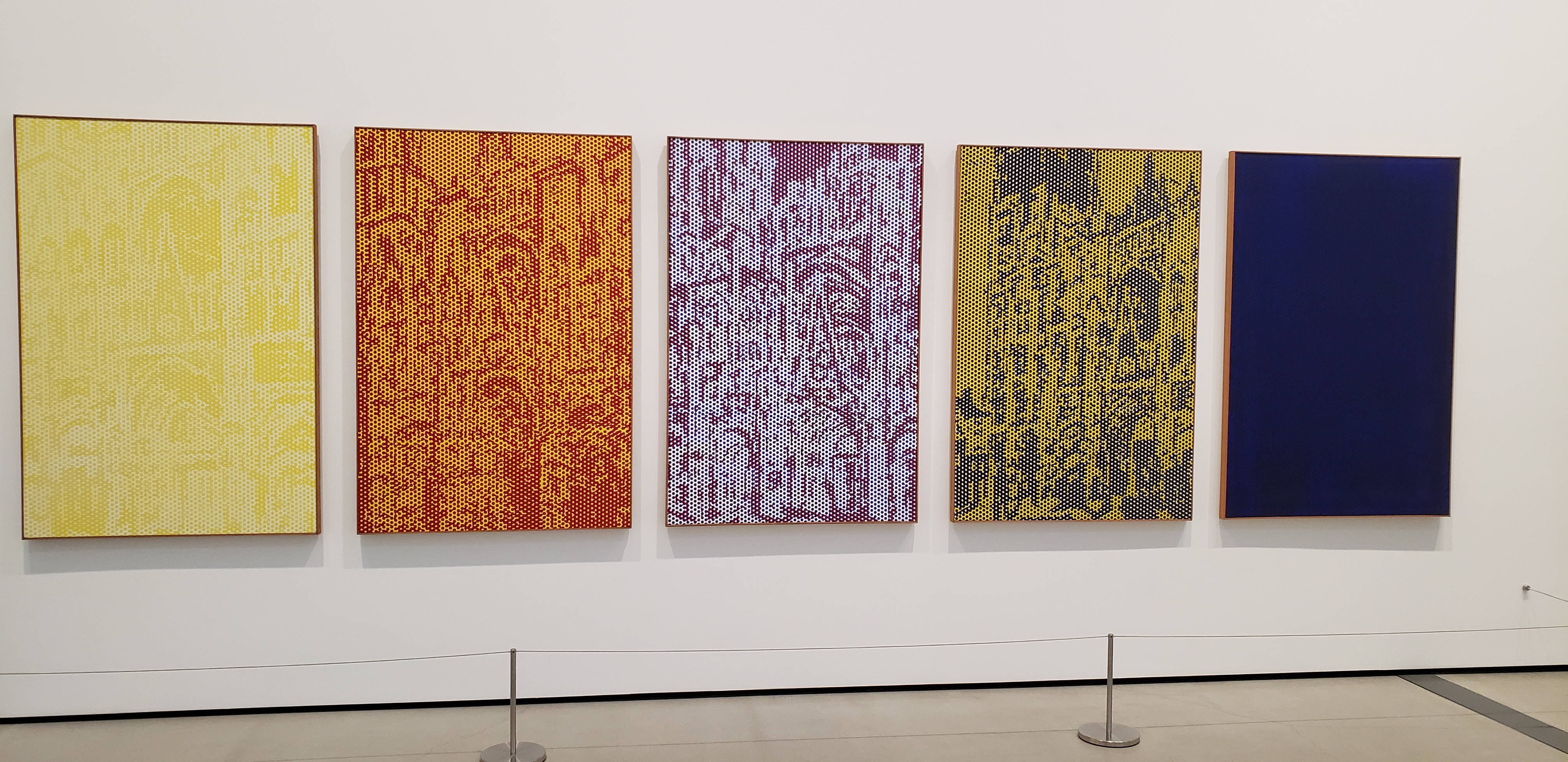
In the 1960’s, pop artist Roy Lichtenstein recreated the Monet series in his own style.

Roy Lichtenstein’s Rouen Cathedral series at The Broad
(photo: First.One.Through)

The various colors used by Monet designed to show the cathedral under different lighting conditions in moments of time was replaced by Lichtenstein into uniform sets of color. Lichtenstein’s yellow Rouen no longer conveyed daytime, his red was not sunset and his navy could not be considered night. The pop artist eliminated the element of time, as color was just meant as color, available in any and all shades.

Lichtenstein’s style also replaced Monet’s varied and emotional brushstrokes with machine-like circles. While he painted the artworks by hand, Lichtenstein gave his artwork a poster-like, mass produced cold feeling.

In just 70 years, man migrated from personal, emotional expressions of how sunlight influenced the world around us, to art which minimized both time and man’s own unique creativity.

The “Triumph” of Man’s/ Computer’s Virtual Reality

Until roughly 2008, the use of the internet ran roughly along working hours as people logged into their computers at work. However, with the ubiquity of connected cellphones and tablets, data consumption during the morning and evening hours – all of the way until 11:00pm – has now matched, and in some cases surpassed, data usage at work. People are consuming video content during all of their waking hours, and doing it at closer and closer distances to their eyes.

Technology is eliminating the physical space which enables us to absorb God’s natural world, as we allow ourselves to be ensnared by man’s manufactured reality. While the circling sun let us know that time moved on, the digital lights blind us of those same lost moments.

The sad loss of reality afforded by God’s distant lights will be rapped in the future by an avatar during a cinematic sequence in a virtual reality game. And alas, the masses will never understand the reference, as they parry the poetry to pursue additional precious points.


Related First.One.Through articles:

The Hidden Side of the Moon

The Relationship of Man and Beast

The Descendants of Noah

The Journeys of Abraham and Ownership of the Holy Land

The Jewish Holy Land

Subscribe YouTube channel: FirstOneThrough

Join Facebook group: Israel Analysis and FirstOneThrough

The Descendants of Noah

After God destroyed most of the world in the flood, He promised that He would never use water to destroy all living things again. After that covenant, the three sons of Noah – Shem, Cham and Japheth – embarked on settling the world anew:

שְׁלֹשָׁ֥ה אֵ֖לֶּה בְּנֵי־נֹ֑חַ וּמֵאֵ֖לֶּה נָֽפְצָ֥ה כָל־הָאָֽרֶץ׃

These three were the sons of Noah, and from these the whole world branched out. (Genesis 9:19)

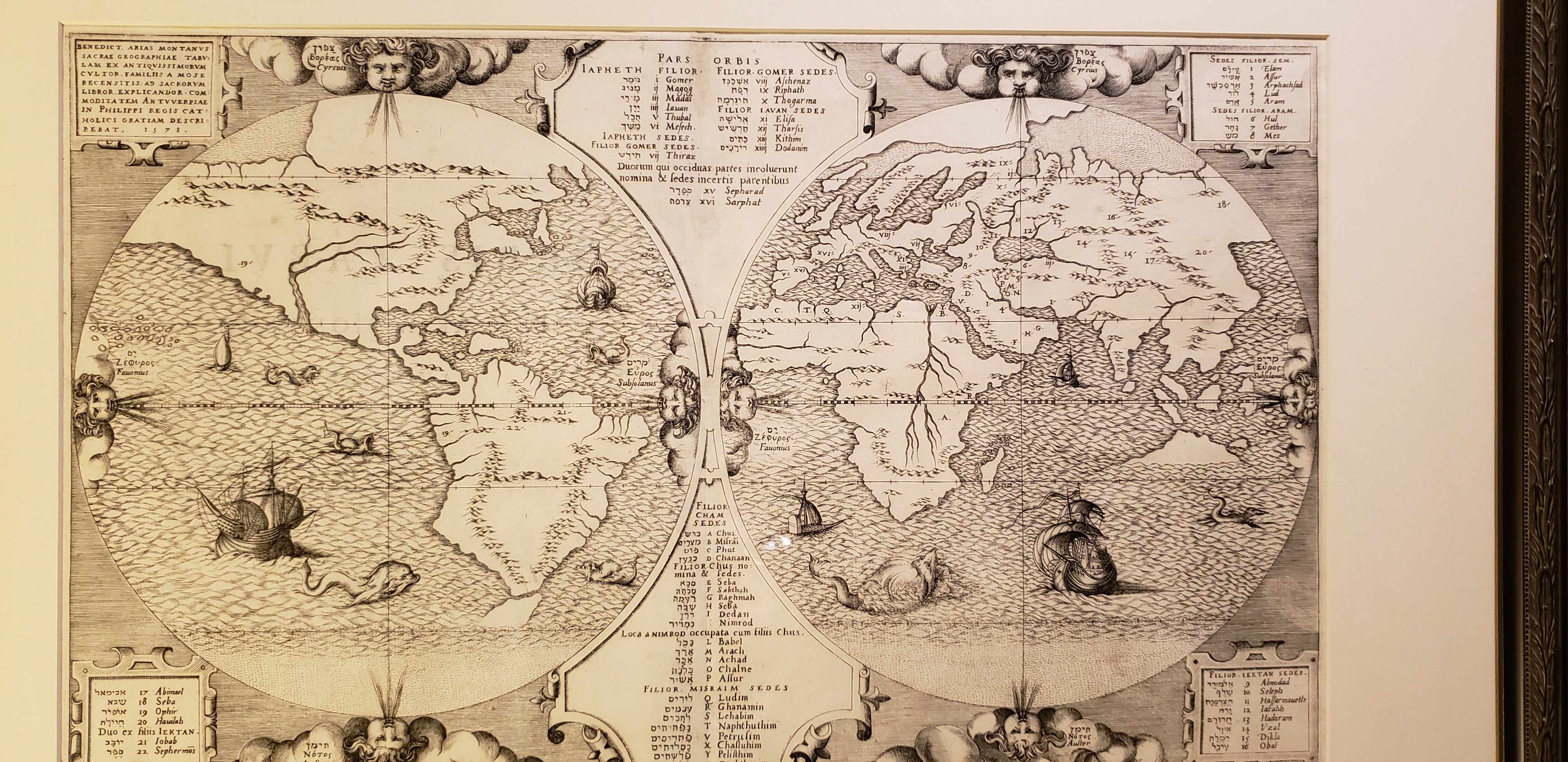
Genesis 10 relayed the descendants of the three sons and early bibles sought to educate people where each of those children settled by including maps inside the bound volumes. The most famous of these was one completed by a Benedectine Monk named Arias Montanus in the 16th century.

Benedict Arias Montanus Sacrae Geographiae Tabulam ex Antiquissimorum Cultor (1571)

Benito Arias Montanus (1527-1598) was born in Spain and entered the priesthood around 1559 where he gained a reputation as an important biblical scholar. In 1568, he was commissioned by King Phillip II to supervise a new polygot (multi-language) bible which would become part of the king’s scholarly volumes on the bible. This work was to replace the first “Royal Bible” completed by the Escorial Library in 1514.

Written in Hebrew, Greek, Latin and Syriac, and printed in Antwerp between 1569 and 1573, the polygot bible caused a stir. Montanus was reported to the Spanish Inquisition for purportedly giving preference to the Jewish rabbinic reading of the scriptures. His trial lasted several years and the Inquisition was finally convinced by the biblical scholar Juan de Mariane that Montanus’s interpretation of the text did not contradict Catholic dogma, acquitting him in 1580.

Montanus’s world map above shows the descendants of Shem, Cham and Japheth in Hebrew and Latin. Japeth’s sons are listed in the center of the map in Roman numerals; Shem’s sons are listed on the right side and indexed with numbers, while Cham’s sons are indexed with letters.

Japhet’s sons are portrayed as covering Europe. Sepharad is located in modern Spain, Sarphat is placed in France and Yavan in Greece – just like the modern Hebrew names for those countries. The lone exception is Madai who is placed in modern Iran. Biblical scholars consider Madai to be connected to the ancient Persian people of Medes.

Cham’s sons are placed throughout the Middle East and Africa, stretching from modern Iran to Morocco and Kenya. Mizrayim and Pelishtim are both located in northern Egypt, while Canaan is found in modern Jordan.

The children of Shem, from whom Abraham and the Jewish people are descended, were placed on the map from eastern Europe, Iraq and Kuwait eastward over China and Russia with a land bridge to the Americas. In a fascinating placement, Montanus placed Ophir both in modern-day California and Peru. It is a curious placement because Ophir was the city from which King Solomon imported gold to the Jewish Temple in Jerusalem (1 Kings 10:11). While it was known at this time that the Aztecs in Mexico had considerable gold, gold was not discovered in California for another 275 years.


The descendants of Noah scattered over the planet as described in Genesis 11:31, “according to their families, their languages, their lands and their nations.” They are part of the opening of the bible, before the text narrows its focus to the foundation of the Jewish people relocating from modern Iraq to modern Israel in the story of the Jewish patriarch, Abraham. Much like the nations of the world, the Jews would establish their nation in their land with their own language as descendants of their families’ ancestors of Abraham, Isaac and Jacob.


Related First.One.Through articles:

The Relationship of Man and Beast

The Journeys of Abraham and Ownership of the Holy Land

Abraham’s Hospitality: Lessons for Jews and Arabs

The Jewish Holy Land

Ruth, The Completed Jew

Kohelet, An Ode to Abel

Subscribe YouTube channel: FirstOneThrough

Join Facebook group: Israel Analysis and FirstOneThrough