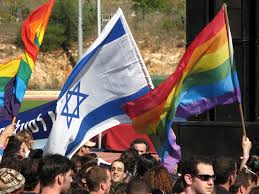
Yeshiva University – And Modern Orthodoxy – Are Non-Binary

Yeshiva University is in a lawsuit with some of its gay students in a case about discrimination that rose to the Supreme Court, and is hurting its reputation among progressives. Yet the case has nothing to do with discrimination, as it is about the inherent non-binary nature of modern Orthodoxy, something the progressive and LGBT community should understand.

A Modern Orthodox Institution

Yeshiva University is the flagship university of modern Orthodoxy in the world. Founded in New York City in 1886, the school has grown considerably, and now consists of three undergraduate schools – Yeshiva College for Men, Stern College for Women, and the Sy Syms School of Business – and numerous graduate schools.

While the entire university operates under a mission statement of providing an excellent education coupled with strong ethical and moral values, the undergraduate schools have a particular dual curriculum which stresses “the timeless teachings of Torah“, the Hebrew Bible and associated texts. The students learn Talmud, Mishnah, the Old Testament, the Prophets and various other texts for several hours every morning before focusing on secular studies. The long morning sessions are often rounded out by students with “night seder“, where they continue to study the ancient texts.

All of the discussions and classes are done through a modern Orthodox lens. Even beyond the school walls, the school posts old and new classes (shiurim) online on its YUTorah.org website for students, alumni and others. Rabbi Joseph B. Soloveitchick (1903-1993) has 525 classes on the site and Rabbi Dr. Aharon Lichtenstein (1933-2015) has 465. The rabbis are all modern Orthodox, many of whom were ordained at the university’s Rabbi Isaac Elchanan Theological Seminary (RIETS), its rabbinical school. The school even has a rabbinic placement office where it places rabbis in modern Orthodox schools and synagogues around the world.

The school acts as much more than a school for young Jews: it is very much part of the global modern Orthodox world.

No one questions the religious orientation of the school. Its mission statement is clearly laid out: “At Yeshiva University, our mission, Torah Umadda, is to bring wisdom to life through all that we teach, by all that we do and for all those we serve.” The phrase, “Torah Umadda” means Jewish commandments together with worldly knowledge. The term is emblazoned on the university’s logo in Hebrew, atop an outline of a Torah.

All Backgrounds Are Welcome

While the school is modern Orthodox, it does not limit admission to only Jews of that denomination. The Judaic part of the program has four tracks, enabling the students to find a level of study appropriate for their background and interest. For example, the James Striar School is designed “for students less familiar with Hebrew language and textual study.

Students who attend the school typically come from modern Orthodox high schools and families but not exclusively. All of the students understand that regardless of their backgrounds, the school is run as a modern Orthodox institution. For example, while some students may not be strictly kosher in their homes, they will only find kosher foods in the school cafeteria. Even if they do not observe the Sabbath in their homes, they will be expected to do so in the dormitories.

The students have a Bill of Rights and Responsibilities which specifically calls out freedom of expression, association and from discrimination:

  • Students have the right to examine and exchange diverse ideas, consistent with the mission of the University, in an orderly, respectful and lawful manner inside and outside the classroom.”
  • Students have the right to associate and interact freely with other individuals, groups of individuals, organizations and institutions in a manner that does not infringe on the rights of others or interfere with the mission of the University.
  • Students who are otherwise qualified have the right to participate fully in the University community without discrimination as defined by federal, state and local law.

As seen in the selection above, students’ rights are protected, as long as they are consistent with the mission of the university, which is infused and directed by the modern Orthodox interpretation of the Torah. That is further qualified by being able to participate in the community, without discrimination as defined by U.S. law.

LGBT Students

As described above, all students are welcomed at the university. The YU student body does not exclude people because of race, religious denomination, sexual orientation, disability or any other feature. The school has LGBT students and faculty and everyone is allowed to participate in all activities. There is no activity that is open to straight or cisgender students that is not available to others.

The LGBT students at Yeshiva have a club called the Pride Alliance. It is a student run club that decided it wanted to become an officially recognized club by the university, which would enable it to have a small budget and access to email addresses and school facilities. The school declined to give the club official status because it viewed the club’s mission as not in concert with the university’s mission as a modern Orthodox institution. It would have denied officially recognizing the club if straight cisgender students applied for the LGBT club as well. The university rejected the club, not the students.

As there is no bias against any individual in the university, there is no basic argument for discrimination. Any claim for discrimination would therefore rest on an argument that the university singled out the LGBT club while permitting other similar clubs to get official recognition.

Club Recognition and a Torah Mission

The university mission rests on the modern Orthodox interpretation of the 613 mitzvot (commandments) in the Torah. The list is commonly broken down into 248 positive commandments (like honor one’s parents) and 365 negative commandments (do not commit adultery).

The 365 negative commandments include many related to idol worship, to defiling the Temple and religious holidays, financial matters and sexual relationships. The school does not endorse any club that runs afoul of these negative commandments.

For example, if students asked for official recognition of a shatnez club (garments made from wool and linen), the school would decline based on the Torah (Leviticus 19:20). If a group of students wanted to arrange a ghost and sorcery club, the school would have blocked its establishment (Leviticus 19:32, 20:6, 20:27). Similarly for cross-dressing (Deuteronomy 22:5) and various forms of incest (Leviticus 20:10-21).

Some progressive members of the Orthodox community argue that the prohibition in Leviticus 18:22Do not lie with a male as one lies with a woman; it is an abhorrence,” relates to male-male sexual relationships only, and has nothing to do with lesbians or passively being gay. As such, the school should allow the club if it abstains from discussing or promoting gay sexual relationships.

That solution is problematic on multiple levels.

The school does not monitor student clubs. Should it allow the club but insist on monitoring it, that action could actually run afoul of U.S. discrimination laws, as the school would uniquely be singling out the club for oversight. If the university just allowed the lesbian club at the women’s school, it might also run afoul of discrimination according to U.S. law, allowing a club for one gender but not the other.

The university’s approach has been to follow the same guidelines it expects from its students: “to associate and interact freely with other individuals, groups of individuals, organizations and institutions in a manner that does not infringe on the rights of others or interfere with the mission of the University.”

Is Yeshiva University Religious or Secular?

The legal case about discrimination seems very straight-forward, which begs why the courts did not dismiss the case quickly in favor of the university.

In June 2022, New York Judge Lynn Kotler said that the university is chartered as a secular organization and is therefore subject to the city’s human rights law barring discrimination based on sexual orientation. The court also said the university offers too many secular degrees to qualify for religious exemptions, and therefore the school must recognize the LGBT club.

Kotler is technically correct that the school did check off the secular box in its charter. However, the choice before the institution was binary, either secular of religious. Had there been a third choice of both, the school would definitely have chosen that, as consistent with its mission of Torah Umaddah, Jewish religious teaching and worldly knowledge.

The non-binary position of YU should be abundantly recognizable to progressives and the LGBT community. The LGBT Foundation has a page on its website for “Non-Binary Inclusion.” It is used for individuals who do not feel that the discrete choices of male/female apply to them: “Non-binary people feel their gender identity cannot be defined within the margins of gender binary. Instead, they understand their gender in a way that goes beyond simply identifying as either a man or woman.

In a similar way, while secular Jews feel comfortable with the ‘secular’ label and ultra Orthodox / Haredi Jews like to be called ‘religious’, the modern Orthodox community does not fit neatly into either camp. It is both at the same time.

That fact is abundantly clear to the courts which are taking the narrow view of how the institution chose to designate itself according to the U.S. courts’ rigid charter choices, rather than acknowledging the reality that YU is both secular and religious, and cannot be compelled to officially recognize a club that is not in keeping with its reading of religious texts.

Progressive Activists Within Modern Orthodoxy

While the courts should be expected to ultimately understand the non-binary nature of YU, the LGBT students at YU know this better than anyone. Not only were they enrolled in an institution that lives the combined worlds of secular and religious everyday, many of the students live with their own duality of their sexual orientation within the university’s particular duality, like nested matryoshka dolls.

While it is undoubtedly understood, the progressive modern Orthodox community is looking to break the LGBT taboo.

While many non-Orthodox rabbis have begun to recognize gay weddings over the past few years, almost all Orthodox rabbis still do not officiate. Some progressive modern Orthodox rabbis have been trying to dance the line, congratulating gay couples from the synagogue bima, and some attend the wedding services, even when not officiating, in an attempt to welcome the individuals.

By pushing this matter in the courts, the LGBT and progressive communities are trying to force the entire modern Orthodox community to officially recognize the legitimacy of their relationships. It is a outcome that some in the modern Orthodox community are comfortable doing on a secular basis but almost all cannot on a religious basis.

Even more immediate and pressing, a great many socially-conservative members of the modern Orthodox community are appalled that the LGBT students have gone to the U.S. courts to force such a matter, and the progressive members of the community are angered at YU’s stance, as they would like to see a change in the community to accept such unions.

The New York and/or the Supreme Court will most likely decide in favor of YU in this case and that discrete matter will be settled. But the Jewish community must get past their internal anger and grievances on this topic, and appreciate that the modern Orthodox community is itself non-binary, and afford the rabbis and religious institutions the same grace and space it readily gives to non-binary individuals.

Related articles:

Pride. Jewish and Gay

Leading Gay Activists Hate Religious Children

US State Department Will Not Promote LGBT Human Rights In The Middle East Outside of Israel

Weddings are Religious Affairs

On December 5, 2017, the United States Supreme Court will hear a case, Masterpiece Cakeshop, Ltd. v. Colorado Civil Rights Commission.  The court will decide whether a baker has the right as a matter of religious freedom to not create a customized wedding cake for a homosexual couple, or whether turning down such clients is a matter of discrimination against gays.

Colorado baker Jack Phillips

The case will have Americans confront an issue that it has been pressing in the wrong direction for many years: the government should have NO ROLE in weddings, even while it maintains documents on marriages. The government should limit its involvement to a single legal document as to the selection of a civil partner and no more.

Judeo-Christian Society versus Freedom of Religion

American politicians have long stated that the country’s laws were based on the ethics and morals of Judeo-Christian teachings. But while American laws were established with such inspiration, a fundamental principle of American society is the separation of church and state. Nothing can be made more clear than the very first amendment in the Bill of Rights:

“Congress shall make no law respecting an establishment of religion, or prohibiting the free exercise thereof; or abridging the freedom of speech, or of the press; or the right of the people peaceably to assemble, and to petition the Government for a redress of grievances.”

The core of this amendment is that US laws cannot infringe on a person’s practice of their religion.

Religious Limits on Marriage

There are some laws found in the Bible that limit certain relationships, including bans on incest and homosexuality. For the first two centuries of America’s existence, the law of the land followed the Judeo-Christian ban on these two marriages. However, due to American society’s more accepting attitude towards homosexual relationships, the Supreme Court ruled that states could not prohibit gay marriages in June 2015. The ban on marriages between family members still remain.

The US lawsuit that brought about the legalization of marriage was filed because of American law that prevented the plaintiff, Jim Obergefell, from putting his name on the death certificate of his late husband. He was completely correct in being outraged that US law prevented him from doing so.

But our society has been making the wrong arguments in its defense of gay marriage, in advancing a bad set of arguments forcing a baker to create a cake against his religious sensibilities.

Religious Ceremonies versus Civil Documents

The US legal system uses many civil documents, including birth certificates, death certificates and marriage certificates. They are simple legal notices that must be filed to keep an appropriate record of people in the United States.

Anyone should be free to fill out these documents in a manner that fits their personal beliefs without ANY intervention by the government. That means that the government cannot object to someone naming their child Mohammed any more than two women filing a marriage certificate. (The government should also be prohibited from banning a civil union between siblings or close family members, which it still does).

Put simply, it should not be up to the government to put its Judeo-Christian founding above the principle of a separation of church and state.

In a similar vein, the government should not be able to infringe on people’s practice of religion.

Just as the government should not be allowed to ban the practice of circumcision (the Jewish custom of a bris when the boy is eight days old), it cannot interfere in a wedding ceremony.

Bris/Baptism/Wedding versus Civil Documents

There are certain life events that are religious in nature, where the participants use a priest or rabbi to officiate the ceremony. They often hold the event in a church or synagogue and invoke God’s name and recite prayers. Baptisms and weddings are such occasions.

US laws do not much care about the nature of the religious ceremony. While a priest may declare the couple to be man-and-wife, the legal system still requires a civil marriage certificate to be filed. It is that legal document that falls under the government’s purview, not the wedding itself.

Similarly, a rabbi may name a child in the synagogue at a child’s bris. But the parents must still fill out paperwork in the courts declaring the child’s legal name.

Ceremony and Party Participants

Should everyone be compelled to participate at a bris? Of course not. A photographer should not be compelled to take pictures at a bris just because she takes pictures at baptisms.

Should a baker be forced to design a custom wedding cake for homosexuals or an incestuous couple which goes against his religious beliefs? Absolutely not. It is every vendor’s right to not actively engage in a religious service to which he doesn’t subscribe.

In the case of Masterpiece Cake, the baker made clear that he would sell any ready made item in the store to any person who walked in, regardless of sexual orientation. However, Colorado law compelled him to design and create a cake against his religious beliefs. While that activity does not reach the level of a priest officiating the ceremony, it stands well above the electric company’s providing power to the event. The latter is “blind” to the religious ceremony, and the activity would be identical if the event were a convention. The baker crafts his cake for the ceremony.

Thomas Jefferson wrote in the Virginia Statute for Religious Freedom: “no man shall be compelled to frequent or support any religious worship, place, or ministry whatsoever.” The converse is just as true, that no person should be compelled to violate their religious beliefs.

To actively compel a person to engage in a religious practice – and a wedding ceremony is a religious practice – is wrong. And overturning the Masterpiece Cake Colorado ruling would have no impact on homosexual couples filing for government-approved civil unions.

It is time to clearly delineate between religious ceremonies and legal documents, and to give both gay people and those that have religious objections to gay marriage the freedoms they all deserve.


Related First.One.Through article:

The Baker and Government Doth Protest Too Much

Leading Gay Activists Hate Religious Children

Black People are Homophobic

Pride. Jewish and Gay

Subscribe YouTube channel: FirstOneThrough

Join Facebook group: FirstOne Through  Israel Analysis

The Baker and Government Doth Protest Too Much

On September 7, 2017 the Trump administration’s Department of Justice came out with a ruling that supported a baker that refused to create a cake for the wedding of a same-sex couple. The DOJ filed the motion in response to a pending Supreme Court ruling on religious liberty.

In August 2015, the state of Colorado ruled that the baker, Jack Phillips, broke Colorado law by not making a customized cake for a gay wedding, stating that his refusal to do so went against Colorado’s law that prevented discrimination based on sexual orientation. Phillips argued that baking the cake went against his religious beliefs as a devout Christian. The courts were not swayed and ruled against him.

Many people – including me – believed that the court was wrong, and in June 2017 the Supreme Court agreed to review the case.


Colorado baker Jack Phillips

In advance of a ruling, the DOJ backed up Phillips arguing that the baker’s creations involve his personal artistic talents and expression, and as such, should be protected by his rights to express his beliefs.

But such an argument also falls flat.

The crux of the issue of discrimination versus religious liberty has to do with the willingness to sell a product that is produced to any and all customers.

If the baker has cookies on the shelf for sale, he must sell it to everyone regardless of race, religion or sexual orientation. Similarly, if the baker makes a customized item – say a wedding cake without any couples or comments on it – he should be forced to sell such cake to any willing buyer, gay or straight.

However, neither state nor federal laws should ever be able to force someone to create a unique item. Ever.

The baker should be able to refuse to make a wedding cake with two men on top of it if he never makes such cakes, in the same manner that a vegetarian restaurant refuses to sell any meat items. The vendor need not cater to a client’s unique demands that are outside the universe of items sold.

Should a baker be forced to bake a swastika cake? Of course not. However, were he to make a cake in the shape of a swastika, he should be obligated to sell it to anyone interested in purchasing it. The baker must similarly sell a wedding cake to a gay couple if it is the same kind of cake that he sells to heterosexual couples.

The Department of Justice was right in arguing that the sate of Colorado went too far in fining the baker. However, the DOJ’s rationale for absolving the baker on the basis of his creative talents being a form of expression went in the wrong direction by inserting the baker into the end-product, rather than focusing on the end-product itself.

Whether an item is already on the shelves or is made custom, the threshold of discrimination should be on the willingness of the vendor to sell that product to anyone. However, a product need not be created or customized to a specification that falls outside the vendor’s desires – whether they be for religious reasons or any other.

Thomas Jefferson understood the possible tyranny of government when he said:

“To compel a man to furnish funds for the propagation of ideas he disbelieves and abhors is sinful and tyrannical.”

As part of a common community, all Americans should treat each other respectfully, but the government should never be allowed to obligate a person to create a unique, alien and distasteful product to satisfy the desires of others.


Related First.One.Through articles:

Leading Gay Activists Hate Religious Children

Pride. Jewish and Gay

The Gender Diamonds

Subscribe YouTube channel: FirstOneThrough

Join Facebook group: FirstOne Through  Israel Analysis

Pride. Jewish and Gay

If only Jewish Democratic leaders had an Iota of Pride in Being Jewish as they have for the gay community.


Pride is a bit of a confusing word. It has different meanings and is understood and used by people in peculiar ways.

The Merriam Webster Dictionary, defines “pride” as: 1) “inordinate self-esteem : conceit” or maybe something more modest like 2) “a reasonable or justifiable self-respect” or yet a more refined 3) “delight or elation arising from some act, possession, or relationship.”

Consider these definitions in reviewing pride of being Jewish and/or gay.

Pride in Judaism

Judaism frowns upon pride when it means conceit or arrogance.

The greatest prophet in Judaism was Moses, who was described as humble in the bible: “Now Moses was a very humble man, more humble than anyone else on the face of the earth.” (Numbers 12:3).  It is a trait that rabbis preach for Jews to emulate to this day.

Humility is the opposite of pride. The rabbis take issue with pride that is associated with conceit and arrogance. However, they have no issues with pride that relates to reasonable self-respect or elation. Leaders in the Jewish community can often be found discussing their appreciation for the value system embedded in Judaism. It is not meant as boastful, as much as a sense of deep admiration.

Pride in the Gay Community

The gay community has used the word pride in its own way. The gay pride parades that happen in cities around the world are not meant as a show of conceit. They are expressions of a community that was shunned for years, that is now declaring publicly that they have no shame in their actions and will no longer hide. It is not an arrogance, but a public affirmation of themselves.

Israelis and American Jews have their own approaches to pride as it relates to being Jewish and/or gay.

Israeli Pride – Being Jewish; Being Gay

Israelis have not been shy about their accomplishments. They are boastful of their “Start-up Nation” that is a technological marvel, that turned a desert into a flowering democracy. One blogger actually listed 66 different companies which made her “proud to be an Israeli.” Is this conceit? Is it a justifiable self-respect? An elation arising from various acts? Probably all of the above.

The Jews in Israel also reflect on their being Jewish. In a March 2016 Pew Research poll, 93% of Israeli Jews said they were proud to be Jewish. The majority of Jews also stated that their being Jewish was a matter of ancestry- something in which they had no control. That implies that the majority of Israeli Jews – regardless of the level of religious observance – felt pride in something in which they had no active involvement.

Israelis also displayed support of gay pride, one of the only countries in the entire MENA (Middle East and North Africa) that holds a gay pride parade. (In contrast, it is a capital offense to commit a homosexual act in many countries in MENA, including Iran and Saudi Arabia.).  Beyond annual parades, the Israeli Prime Minister Benjamin Netanyahu said that he was “proud” to welcome the first openly-gay Likud Member of Knesset.

The parade in the Israeli capital of Jerusalem was attended by thousands in July 2016. The mayor of Jerusalem, Nir Barkat saidI hope, with all my heart, that we come together, on this day, against every manifestation of incitement, hatred, and violence, and that we unite around the right of every individual and community to exercise their freedom of expression, regardless of gender, race, or religion.”  This was not arrogance. It was affirmation.

US Pride – Being Gay; Being Jewish

Democratic leaders have for years championed the rights of the LGBT community. The cause of same-sex marriage was almost exclusively fought by left-wing activists and politicians for decades. When the courts ruled on the legality of same-sex marriages, Democratic President Barack Obama, and many Jewish Democrats celebrated.

The Jewish Democratic presidential candidate Senator Bernie Sanders claims to have always been a proud supporter of gay rights, even going back to the 1970s.

The head of the Democratic party, Deborah Wasserman Schultz (who is Jewish), also celebrated same-sex becoming recognized in Florida with a statementToday, we proudly turn the page on marriage discrimination and look toward a future that is more loving and closer to our ideals as a state.”

Are these Jewish Democratic leaders also proud about their own Judaism? Not so much.

Democratic National Committee chair Congresswoman Debbie Wasserman Schultz speaks at a press conference promoting the endorsement of David Wecht, Kevin Dougherty, and Christine Donohue for Pennsylvania Supreme Court, and Heather Arnet for State Senate, Thursday, Oct. 15, 2015, in Pittsburgh. (AP Photo/Keith Srakocic)

Democratic National Committee chair Congresswoman Debbie Wasserman Schultz  (AP Photo/Keith Srakocic)

In January 2016, Bernie Sanders effectively punted on his religion. Consider this exchange on the Jimmy Kimmel show:

“You say you’re culturally Jewish, you don’t feel religious,” Kimmel told Sanders. “Do you believe in God, and do you think that’s important to the people of the United States?”

Sanders didn’t skip a beat. In fact, he didn’t even let Kimmel finish the question before jumping in.

“Well, you know, I am who I am,” he replied. “And what I believe in and what my spirituality is about is that we’re all in this together. That I think it is not a good thing to believe that, as human beings, we can turn our backs on the suffering of other people,” he continued, as the crowd applauded and cheered so loudly he had to pause. 

“And you know, this is not Judaism. This is what Pope Francis is talking about, that we cannot worship just billionaires and the making of more and more money. Life is more than that.”

Members of the DNC knew that Sanders dodged the question, and in their effort to discredit him and boost Secretary Hillary Clinton in the Democratic primaries, they used his lack of positive Jewish affirmation against him.

In July 2016, several emails from the DNC came to the public light.  The DNC commented that Sanders seemed to skirt around his being Jewish and that he only associated with being Jewish as it related to the Holocaust.  Here is an exchange on that point:

One email from DNC chief financial officer Brad Marshall read: “It might may no difference, but for KY and WVA can we get someone to ask his belief. Does he believe in a God. He had skated on saying he has a Jewish heritage. I think I read he is an atheist. This could make several points difference with my peeps. My Southern Baptist peeps would draw a big difference between a Jew and an atheist.”

Marshall added in a later email: “It’s these Jesus thing.”

In response, CEO Amy Dacey said: “Amen.”

The head of the Democratic National Committee, a Jew, decided to trash another Jewish leader, over the extent of his affirmation and pride in being a Jew. On the national stage.  With the US presidency on the line.

Democratic leaders trip over themselves to show their affinity to the LGBT community that they aren’t even part of.  Yet they distance themselves from the very community to which they were born.

The New Liberal Definition of a Jew

The Pew Research showed an interesting divide between Israeli Jews and American Jews.  In particular, it found that 57% of American Jews found “working for justice and equality” as an essential part of being Jewish, while only 27% of Israeli Jews thought that it was “essential.”

That is why Bernie Sanders can talk about Pope Francis when asked about his own religion.  Sanders doesn’t feel pride in his ancestry or religion; he feels pride in fighting for social justice and equality.  He may have been born a Jew, but his religion is liberalism.

That is the mantra of the leading Jews in the Democratic party.  Their non-Jewish colleagues can only learn about Judaism from them.  Judaism is not so actually a religion with 613 commandments; it’s essence is social justice.  It is not a religion of 14 million members; it is a global mission in which everyone is part.  It is not tribal nor particular; it is open and universal.

That is absurd.

No liberal would say that there is no such thing as an LGBT community.  Then why do they feel no compunction at dismissing a religion as simply a set of liberal values.  Is that the only part of Judaism that makes them proud to be a Jew?  Or are they not proud of Judaism at all?

Perhaps the leading Jewish members of the Democratic party can seek some guidance from Lord Jonathan Sachs of Great Britain.  He made an easy to watch video available for all to see that doesn’t need to be hacked to unveil the truth. “Why I am Proud to be a Jew.


Related First.One.Through articles:

Israel, the Liberal Country of the Middle East

Liberals’ Biggest Enemies of 2015

The Color Coded Lexicon of Israel’s Bigotry: It’s not Just PinkWashing

Leading Gay Activists Hate Religious Children

Wearing Our Beliefs

Obama’s “Values” Red Herring

Subscribe YouTube channel: FirstOneThrough

Join Facebook group: FirstOne Through  Israel Analysis


Gay Rights in the Middle East

Jerusalem held its gay pride parade last week, after the event was delayed due to the Palestinian War from Gaza in July and August.  The event is an anomaly in the MENA region (Middle East and North Africa) where most countries consider homosexuality a crime.  In several countries such as Iran, Yemen, Saudi Arabia and Mauritania, gays are sentenced to death.

There are still over 76 countries in the world that consider being gay a crime.  Outside of Europe, there are only five countries that achieve a “perfect” score for gay and lesbian rights according to the ILGA, a leading gay rights group: Israel was the first to be awarded such score in 2008, followed by Argentina, Brazil, Mexico and New Zealand.

music video:

israel


Source:

http://www.jpost.com/Israel-News/Jerusalem-holds-annual-Gay-Pride-Parade-after-multiple-delays-375777