If you thought the fight for our values ended with Jamaal Bowman’s defeat in last year’s Congressional Democratic primary, think again. That victory—fueled by a coalition of Jewish voters, moderates, and outraged citizens—was just one front in a much larger war. The next battleground? Our local school boards.
Yes, school boards—those often-overlooked panels of elected volunteers who decide how to spend hundreds of millions of taxpayer dollars, what our children are taught, and what values our public institutions promote. Voting to approve school budgets and new school boards will take around New York State on May 20. In Westchester County, two city school board races —in New Rochelle and White Plains—are shaping up to be ideological flashpoints, and the Jewish community cannot afford to sit them out.
Because what’s happening in these school districts mirrors the dynamics that led to Bowman’s rise—and fall. And unless we show up, the same extremist playbook will continue to take root, just under a different banner.
From Bowman to the Board: The Same Movement, New Target
In 2020, former public school principal Bowman’s ascent was cheered by radical groups like the Democratic Socialists of America (DSA) as he defeated Eliot Engel in New York’s 16th Congressional District, one of several “progressive” victories. The DSA’s 2023 convention called on its members to build on those victories and get people elected not only in Congress but on local school boards.
The strategy was simple: infiltrate local systems—schools, unions, and boards—with activists trained not in pedagogy or finance, but in ideology. These organizations view school boards as soft targets: low-turnout races that are easy to win with grassroots organization, with enormous power over curriculum, staffing, budget and even political culture.
Nowhere is this strategy more visible than in the New Rochelle school board election, where Dr. Rosa Rivera-McCutchen is aligned with the same progressive, anti-Israel networks like WESPAC that propelled Bowman into Congress. Rivera-McCutchen has been outspoken in her support of “radical care” models, a euphemism for politicized curricula that blur the line between education and activism. Her book on “Radical Care” has a foreword by Bowman and he has endorsed her in the race, which should alarm every Jewish and moderate voter.
Remember: Bowman didn’t fall because his opponents suddenly outspent him, despite what radical socialists scream. He fell because our community turned out. In Westchester, especially in places like New Rochelle, Scarsdale, and White Plains, Jewish voters made the difference. And we must do it again on May 20.
The Stakes in New Rochelle
New Rochelle’s school district is large—9,700 students and over $360 million in spending—and politically volatile. While minority student outcomes have improved, the district is on shaky fiscal ground, and ideological activism is increasingly overt.
Two candidates—Elana Jacob and Jessica Klein—are running to restore balance. Both are active members of the Jewish community and parents. Both are running because they believe in education, not indoctrination. They are not interested in scoring political points—they’re interested in ensuring that students can read, write, think critically, and treat others with respect.
They are up against a well-organized, highly motivated bloc that views school boards as the next front in a larger ideological war. If we don’t match that energy, we lose the ground we worked so hard to win when we sent Bowman packing.
What’s Going On in White Plains?
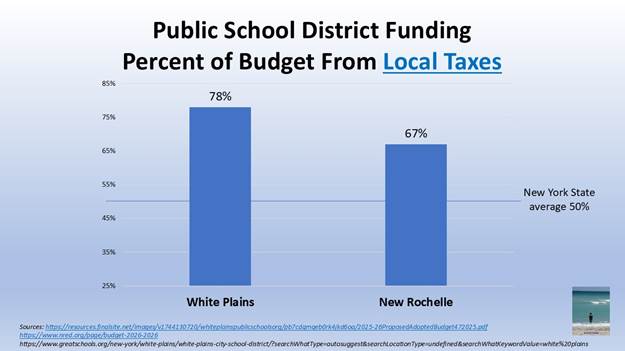
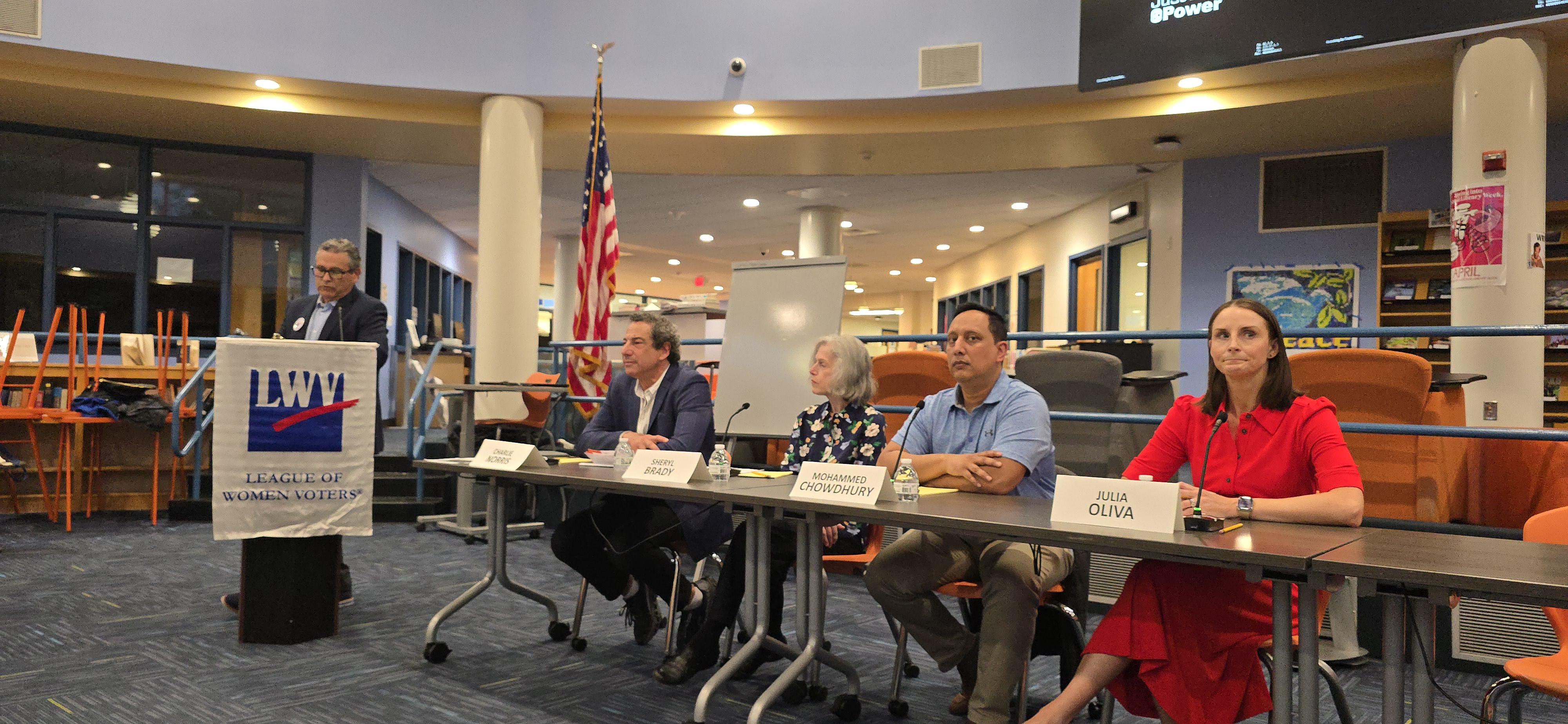
White Plains is not immune. There, a two-seat school board race has drawn four candidates—two incumbents and two challengers. Sheryl Brady and Charlie Norris have each served for over 15 years. They are status quo guardians who toe the superintendent’s line, not particularly concerned about antisemitism indoctrination in the district, favor “age-appropriate” instruction on gender identity to even the youngest students in kindergarten, and are giddy about the city’s capital program that has professional-grade football fields. Their governance has led to skyrocketing costs—over $40,000 per student, among the highest in the state—while academic outcomes for minority students, especially Black and Hispanic students, have remained poor. That astronomical cost is funded 78% with local taxes, also a high in the state where the normal local tax burden for public schools is around 50%.

Enter Julia Oliva, a new candidate who is running on a platform of fiscal discipline, academic excellence, and common sense. She has a child in the public elementary school and believes in redirecting funds from flashy capital projects toward things that actually benefit students: vocational training, classroom instruction, and teacher development.
While it is unclear how she will do in a board setting, Oliva deserves our support. She would bring a fresh, needed voice to a board that desperately needs one.
The fourth candidate, Dr. Mohammed S Chowdhury, has no children in the school, is unfamiliar about the weak performance of minority students and the enormous budget, and not a serious invested candidate.
The Broader Trend: Silence Is Not Neutrality
Some in our community may ask, “Why get involved in school board politics?” Here’s why:
- School boards set the tone for everything: what’s taught, how it’s taught, and whether bias—subtle or overt—is allowed to fester. They help set the budget for the public schools and influence whether charter schools or transportation for students at private schools will get funded.
- These elections are winnable. Most school board races are decided by just a few hundred votes. In districts like New Rochelle and White Plains, the Jewish vote is not only significant—it is decisive.
- The opposition is not sleeping. Progressive networks have identified these races as key footholds. They are training, funding, and running candidates who align with their views. If we stay home, we hand them the keys.
Remember: the same activist energy that got Bowman elected now animates many of these local candidates. They may not use his name—but they are advancing his ideology.
What You Can Do
- Vote on May 20. Put it in your calendar. Bring a friend. Tell your synagogue or community group. You do not need to have students in public school to vote. You pay taxes and fund the future.
- Support Jacob and Klein in New Rochelle. Support Julia Oliva in White Plains.
- Vote on the school budget: Reject the White Plains budget to lower the expenses by $3.4 million.
- Prepare to run in 2026: There is an election every year, and all that is needed is 100 signatures from the district.
- Speak up: Attend board meetings, write letters, post on social media. White Plains Superintendent is Dr. Joseph Ricca (Josephricca@wpcsd.k12.ny.us 914-422-2019)
- Volunteer: Local races are won with word-of-mouth and turning out.
These are low-turnout races. Your vote isn’t one in a million—it might be the one that tips the balance.
Final Word: This Is Where the Fight Is Now
We can’t let down our guard. The battle against Bowman was just the beginning. The activists who filled his rallies are now aiming for school board seats. And they are counting on your apathy.
Don’t give it to them.
Vote on May 20.
Stand up—for our children, our community, and our values.
RESOURCES
If you are out of town or unable to vote on May 20, you can pick up absentee ballots and drop them off before May 20.
White Plains Board of Education election information
New Rochelle Board of Education information
Related articles:
School Board Case Studies: White Plains and New Rochelle
Anti-Israel Socialists Are Coming For Public Schools
Talking About Local School Boards In New York State
Ignoring Columbia’s – And The Education Industry’s – Systemic Antisemitism (July 2024)
Follow the Money: Democrats and the Education Industry (November 2020)



 First One Through