
There is a familiar script in the American imagination: the banana republic. A place where public money leaks into private pockets, where cronies get rich, and where the state exists less to serve citizens than to lubricate loyalty. We usually imagine this as something foreign—dictatorships, juntas, autocrats with offshore accounts.
But Minnesota has offered a more modern, democratic variant.
The Somali community fraud cases that emerged from COVID relief funds, child-nutrition programs, and early-learning initiatives were not small-time scams. Tens of millions—eventually billions— of dollars flowed through nonprofit fronts. Programs meant to feed hungry children and support families became vehicles for enrichment. People inside the community became millionaires. Luxury homes, cars, and cash replaced the language of charity.
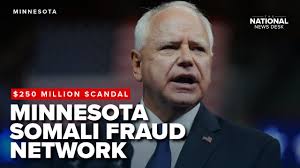
It didn’t stop with pandemic money. The same networks appeared again in other state and federal programs. Kickbacks were alleged. In some cases, parents were implicated. Oversight mechanisms failed repeatedly. Red flags were raised and ignored.
Which leads to the uncomfortable question that hovers over every such scandal: how much of this was invisible, and how much was merely inconvenient?
Because money of that scale does not move without institutional permission—explicit or implicit. If government officials knew and looked away, if warnings were buried to keep a constituency satisfied, if enforcement was delayed because elections loomed, then the fraud begins to blur into something murkier. Not theft from the shadows, but theft tolerated in the light.
And once it is tolerated, the line between crime and policy becomes disturbingly thin.
This is not uniquely American.
In Israel, a parallel story has unfolded for decades in a more formalized way. When the state was founded, the Haredi (ultra-Orthodox) community was granted exemptions from military service. They were few in number, devastated by the Holocaust, and the exemption was framed as a temporary measure to rebuild a shattered world of Torah learning.
That world rebuilt itself—spectacularly. Today the Haredi population approaches 15% of Israel’s citizens and an even larger share – approaching 60% – of its youth. Their exemption from military service has become one of the most volatile fault lines in Israeli society, especially over the last two years of war, when reserve soldiers have been called up again and again while entire neighborhoods remain exempt.
The state pays. Child allowances, stipends, subsidies. And despite mounting public anger, the government—under Benjamin Netanyahu—continues to send checks. The reason is not hidden. Haredi parties vote as disciplined blocs. Their support keeps coalitions alive. The transaction is transparent.
It is deeply unfair. It corrodes social trust. But it is not a crime, because it is legislated, budgeted, and justified in public.
This is the key distinction that matters less than we pretend.
Governments control trillions of dollars. Politicians direct those flows—sometimes explicitly, sometimes through euphemism—to keep voters happy. In plainer language, they buy loyalty. Niche communities that vote as a bloc have disproportionate leverage. When challenged, they retreat behind the language of discrimination, marginalization, or historical injustice. The whistleblower becomes the villain.
Movements that openly favor redistribution, such as the Democratic Socialists of America, are at least honest about the direction of travel. They believe the treasury should be used to shift wealth and power to favored or protected groups. They don’t pretend the redistribution is an element of corruption—it is the point of government.
Contrast this with the classic banana republic. There, a dictator steals for himself and his inner circle. The corruption is crude, centralized, and personal.
In a democracy, the corruption is softer and more dangerous. The state funnels money to preferred constituencies under moral banners: equity, justice, relief, rebuilding. The beneficiaries vote. The politicians win. Accountability dissolves.
No villas on the Riviera are required. No coup is needed.
What emerges instead is a democratic socialist banana republic: not ruled by a single strongman, but by a web of incentives where public funds are traded for political survival. Fraud becomes harder to prosecute, because it nests inside policy. Waste becomes invisible, because it wears the language of virtue.
And when someone finally asks whether this is really a crime, the most honest answer may be the most unsettling one of all:
No. It’s worse.

 First One Through