
Jenin did not drift into the headlines after 2022. It started producing them.
What emerged in Jenin was a terrorist factory. Fighters from Hamas, Palestinian Islamic Jihad, and Al-Aqsa Martyrs’ Brigades fused into a loose network called the Jenin Brigades that did not need a central command to be effective. Decentralized cells, shared infrastructure, constant regeneration.
The output showed up quickly. Bnei Brak shootings killed five. Tel Aviv shootings killed three. Elad stabbings and hacking with axes killed four. Different attackers, same origin point: Jenin.
Israeli investigations kept circling back to the same networks that planned, armed, and launched the murders. The response followed the pattern. Raids intensified through 2023 and 2024. Weapons labs were targeted and IED networks were dismantled. Yet the factory kept running, because the underlying condition never changed.
Governance had receded.
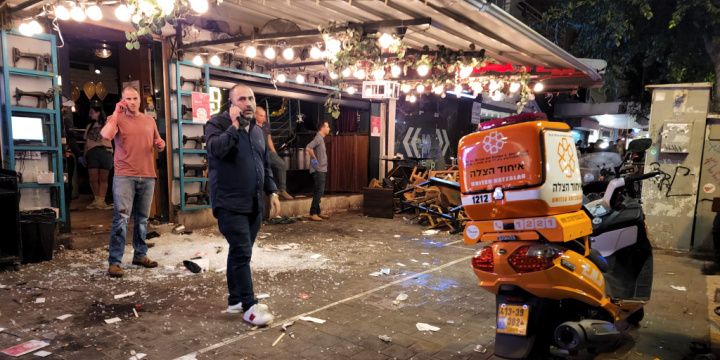
By 2024, the Palestinian Authority was largely absent inside the camp. Armed groups operated openly. Weapons moved with little friction. Jenin functioned less as a governed space and more as an incubator.
When the Palestinian Authority finally moved in, it revealed the reality it had long avoided. Arrests. Clashes. Fighters targeted in the same streets that had projected violence outward. An internal confrontation that made clear what Jenin had become.
That move came under pressure. As the transition toward Donald Trump in January 2025 approached, the Authority needed to show it could control territory. It signaled to Washington that it could confront militias, that it could govern, that it still mattered. At the same time, it faced a harder truth: those militias had the street. Polling from the Palestinian Center for Policy and Survey Research showed strong support for armed groups, especially in places like Jenin where the Brigades carried both weapons and legitimacy. The Authority moved against forces that many Palestinians saw as their representatives.
68% support the formation of armed groups, such as the “Lions’ Den,” and 87% believe the PA does not have the right to arrest members of these groups – PCPSR poll, March 2023
And then the story is exported for western audiences.
“The Freedom Theatre,” founded in 2006 inside the same camp, showcases a different version of Jenin. Its language is culture, resistance, narrative. On April 12, 2026, that version appears in Kingston, NY with a screening and discussion at the Old Dutch Church.
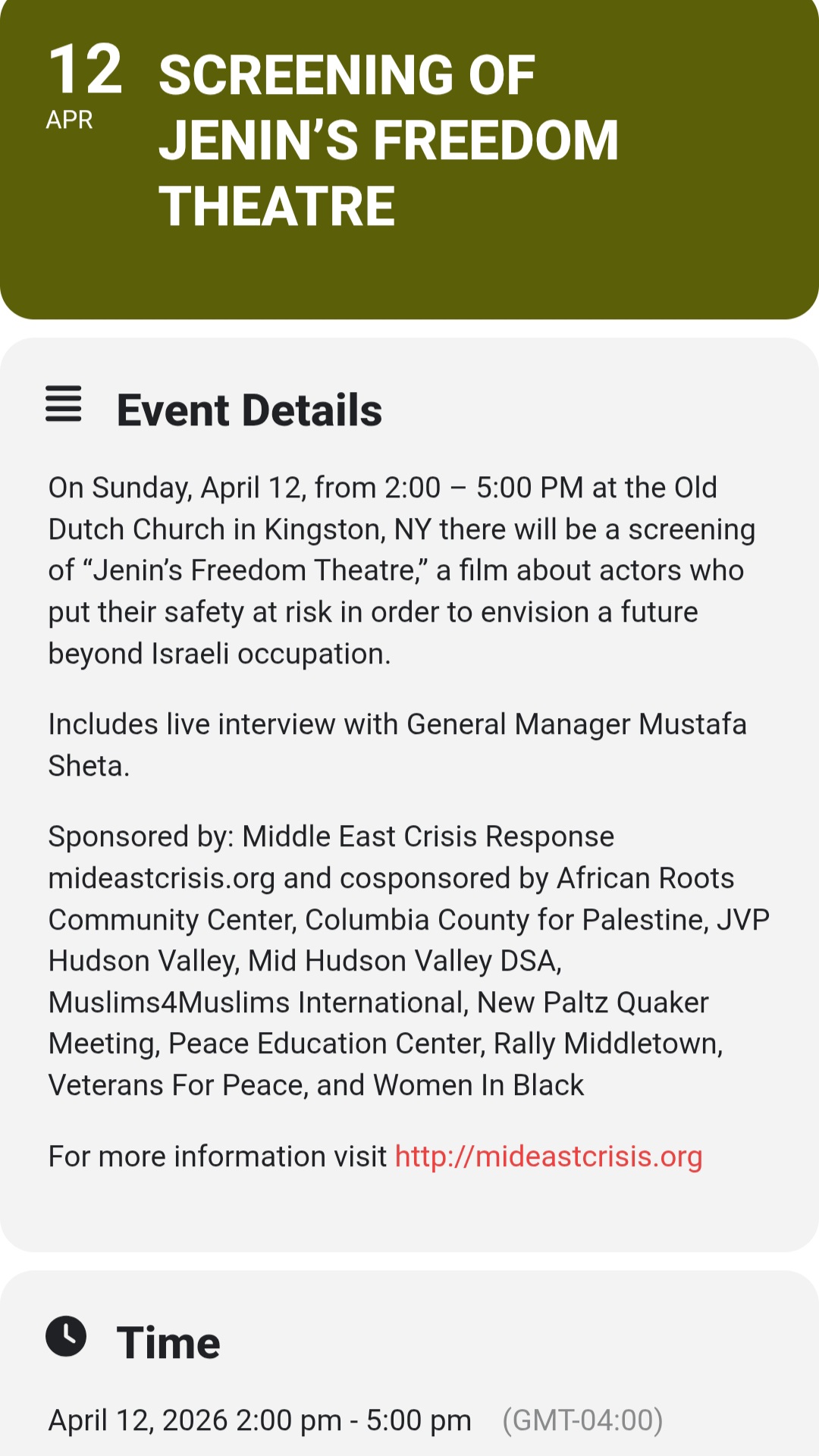
What arrives there is a story stripped of origin. No Bnei Brak attack. No Dizengoff murders. No Elad hacking. No accounting for the networks that produced them or the infrastructure that sustained them. The factory disappears. The output is reframed.
Groups like Jewish Voice for Peace and Democratic Socialists of America amplify that version—one that travels without the genocidal bloodlust, speaks the language of “grievance” and “resistance”, and leaves out the mechanics of violence that made Jenin central in the first place.
Two things now move out of Jenin. One is violence, forcing constant military response. The other is narrative, reshaping how that violence is understood far from its source. They are not separate tracks. One conditions the other.
Jenin is no longer just a location. It is a generator—of attacks, of responses, of competing realities.

 First One Through