Over July 24-6, 2014, a chapter of religious pluralism ended in the city of Mosul, Iraq and its sister city across the Tigris, the ancient city of Ninveh. The Islamic militants of ISIS forced out all of the Christians, and blew up the Tombs of Seth (son of Adam and Eve) and of the Prophet Jonah.
Jonah
Jonah was the last prophet considered holy to each of the monotheistic religions. His story was unusual in several respects which enabled him to capture the imagination and dreams of Christians, Muslims and Jews.
Thousands of years ago, Judaism was the only monotheistic religion. The people in the Middle East practiced a variety of religions and worshiped many gods. The non-Jews were not particularly interested in the Hebrew Bible, and the Bible – seemingly – did not address them. The prophets in the Old Testament almost universally addressed the Jews: the children of Abraham, Isaac and Jacob.
That held true until Jonah. Jonah was given an unusual task by God: leave the land of Israel and go to a far away land because the people there did not behave properly:
“Arise, go to Nineveh, that great city, and proclaim against it;
for their wickedness is come up before Me.”
The story of what comes next is famous. Jonah fled from God and boarded a ship that was tossed in a storm. The sailors reluctantly threw Jonah overboard to appease his angry God whereupon Jonah was swallowed by a big fish. After three days, the fish vomited him onto land to fulfill his task of admonishing the people of Ninveh. The people of Ninveh – including the king- took Jonah’s words to heart, repented, and all was forgiven.
The story of Jonah has many messages. The Jewish rabbis consider them so important that the only time the story is read in synagogue is on the holiest day of the year, Yom Kippur. The lessons of Jonah include that:
- Repentance through prayer and action can save a great city (Ninveh) and a lone individual (Jonah in the fish);
- It is not sufficient for Jews to only be concerned with the welfare of their people, but must work to help others as well;
- A person should not run from a divine mission;
- God is everywhere, and you cannot hide from Him
For Christians, the story of Jonah is not just about prayer and repentance, but about rebirth. They consider the story of Jonah’s reemergence from the great fish after three days as a precursor to the resurrection of Jesus.
For Muslims, Jonah was the only one of the twelve minor prophets mentioned in the Koran. Mohammed was said to recognize the holiness of Jonah and referred to Ninveh as “the city of Jonah”.
Three monotheistic religions embraced the mission of a man who (perhaps reluctantly) tried to help other people change their ways, while not trying to make them change their religion.
Religions in Modern Iraq
When Iraq became an independent state in 1932, roughly 120,000 Jews lived in the country comfortably. However, when the UN voted to partition Palestine in 1947, the Iraqi government and people turned on the Jews. Pogroms and public hangings became celebrated events. Operation Ezra & Nechemia from 1949 to 1951 got most of the Jews out of the country, with the balance leaving over the 1960s and 1970s. Almost no Jews remain today.
The Christian community in Iraq extends back roughly 1600 years, before the founding of Islam. As recently as 2003, the number of Christians in the country numbered about 1.5 million. However, the numbers declined rapidly during the US-Iraq war. In 2014, ISIS took over much of the country and actively pushed to remove Christians. In Mosul, the Christian community was given a choice that had historically been put before Jews in various countries over the past 1000 years: convert; pay a huge tax; or be killed. There may only be 100,000 Christians left in the country by the end of 2014.
ISIS belongs to the Salafi movement of Islam which is against the worship of the dead, and therefore opposes the use of tombs as shrines. They have destroyed many tombs of Muslim leaders, in addition to those that are important to Jews and Christians. They razed the tomb of Seth, the fifth person created in the Bible (not as famous as his siblings Cain and Abel) for the same reason. They are also slaying fellow Muslims who practice differently by the thousands.
Religions- God and Practice
During the time of Jonah, most people believed in many Gods. When Jonah addressed the sailors on the ship and the king of Ninveh, they readily accepted the words of the Jewish God – not exclusively- but alongside the other Gods they worshiped. Their openness to various Gods let them listen and pray openly together. Such receptiveness to a new God was not universal as demonstrated by the Greeks and Romans who defiled the Jewish Temple in Jerusalem centuries later.
As new monotheistic religions emerged – first Christianity and then Islam – that openness was further challenged. As each religion accepted a single God, the uniqueness of each religion became based on either: 1) unique Gods; or 2) the same God, but with a different set of practices. If the Gods were different, then only one religion could be correct. If the religions had the same God, then distinction between them was based on the method of worship and priorities.
Religious scholars debate whether the monotheistic religions all believe in the same God, just with different names and observances. In practice, the religions have battled each with the fervor of unique Gods for centuries: Muslim invasions; Christian Crusades; enforced Inquisitions. Religious wars scar most of mankind’s history.
For Muslims, it has been intra-religious battles that have been the bloodiest. Since 1948, 90% of all deaths in wars involving Muslim countries have been at the hands of other Muslim countries. In 2014, ISIS killed many more Muslims than other religious groups, and Syrian President Assad killed many more Muslims than people of other faiths. The peculiarities of practice position the battle lines.
The Demise of the Shared
July 2014 yielded a sad watershed moment. The Tomb of Jonah, whom Jews, Christians and Muslims all revered as a religious leader, was demolished. The Tomb of Seth, for whom Bible believers consider a common forbear, was destroyed. In a single week, religious fanatics dismantled physical and metaphysical symbols that united the three monotheistic faiths. If the religions shared a common God, they had a common prophet. If they had different Gods, they still had the same forbears. The tombs were not just shrines to the ancients; they were opportunities for Jews, Christians and Muslims to meet and re-establish their common bonds today. No longer.
Thousands of years ago, a Jew left his homeland to help non-Jews. He did not seek to convert or change their methods of worship, just to pass along a message from God to end evil behavior. He became a celebrated hero to billions of people of different faiths and different practices. As recently as 70 years ago, Jews, Christians and a variety of Muslims (including Sunni and Shiites) prayed together at the tomb of this common hero. But the advance of bigotry consumed them: first they got rid of the Jews, then the Christians. Now they are ridding fellow Muslims. God’s message through Jonah of reaching out to “others” has been replaced by man’s effort to destroy the “others”. Perhaps that was the original wickedness of Ninveh 2600 years ago.
Part of the magic of the story of Jonah was that there were no casualties: Jonah; the city of Ninveh and all of its inhabitants; the sailors; and even the fish, all escaped harm.
In today’s dark reality, we may marvel more at that part of the legend and forget what we all have lost.
Sources:
http://www.washingtonpost.com/news/morning-mix/wp/2014/07/25/after-leveling-iraqs-tomb-of-jonah-the-islamic-state-could-destroy-anything-in-the-bible/
http://www.mechon-mamre.org/p/pt/pt1701.htm
http://www.newsweek.com/isis-destroys-shiite-mosques-and-shrines-iraq-257683
http://www.jewsnews.co.il/2014/07/25/muslims-just-made-history-in-mosul-killing-and-exiling-every-last-christian/
http://english.alarabiya.net/en/News/middle-east/2014/07/26/ISIS-destroy-Prophet-Sheth-shrine-in-Mosul-.html
https://www.jewishvirtuallibrary.org/jsource/anti-semitism/iraqijews.html
http://nypost.com/2014/07/27/iraqs-abandoned-christians/
http://www.ibtimes.co.uk/isis-militants-destroy-tomb-jonah-mosul-1458469
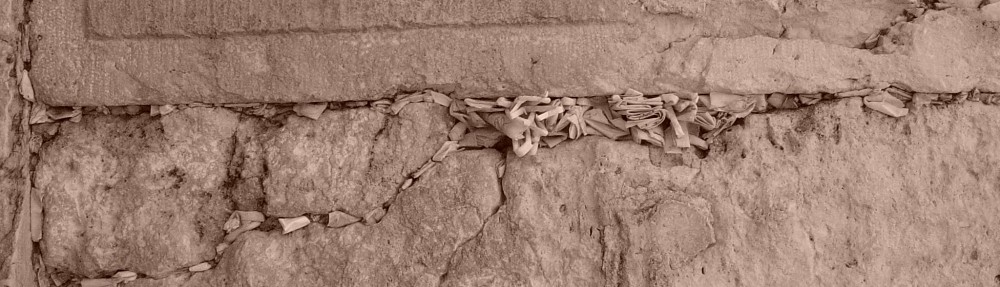


 First One Through