Red Herrings on the Red Line

Summary: Obama’s anger at Israel’s Netanyahu was about Netanyahu’s anger at White House policy on Iran. All of the other excuses that Obama threw out proved inaccurate. However, Obama’s actions have introduced a partisan split over Israel into DC politics.
 obama netanyahu
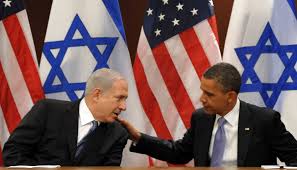
Netanyahu and Obama

US President Obama took umbrage with Republican House Speaker John Boehner’s invitation to Israeli Prime Minister Benjamin Netanyahu to speak to a joint session of Congress. Obama aired a number of reasons, which all proved to be red herrings:

  1. Break in Protocol: Obama initially criticized the break in protocol of Israeli Prime Minister Benjamin Netanyahu accepting an invitation without consulting the White House. A report later came out that the White House was informed about the invitation before Netanyahu accepted. The White House anger should have been directed at Boehner, not Netanyahu, even if this reason held any truth.
  2. Israeli elections: Obama offered another excuse to skip Netanyahu’s address: Obama said that it was US policy to not invite a foreign leader to address Congress in an election season as it would be seen as influencing the elections of another country. In fact, US President Bill Clinton invited then Israeli Prime Minister Shimon Peres to speak to Congress one month before the Israeli election. Further, the timing was a function of Secretary of State John Kerry’s announced Iranian deal deadline on March 24, not the timing of Israeli elections.
  3. Bi-partisan Support: The Obama administration then offered another reason why he and members of his cabinet would leave town during Netanyahu’s visit to D.C.: that Netanyahu was playing partisan politics. The reality is detailed below.

clinton peres
President Clinton and Israeli PM Shimon Peres,
Before Israeli elections in 1996

Israel and the United States have been strong allies regardless of the party in the White House. Israel’s relationship with Bill Clinton (D) was much better than with George HW Bush (R); and better with George W Bush (R) than with Barack Obama (D). There is no benefit or desire for an Israeli leader to choose one party over the other as Netanyahu reiterated in his remarks in the US in March 2015. The dynamics of particular leadership personalities play a role in the tone, but not the substance of the overall relationship between all of the elected US parties in government and the Jewish State.  Netanyahu and Obama have dealt with each other for six years where at times they’ve agreed or disagreed on a variety of issues; in each case, the parties in Congress maintained their support of Israel.

At this moment, Netanyahu strongly disagrees with Obama’s position in the Iranian nuclear negotiations.  It happens to be that Republican leadership also disagrees with the Obama administration. It was solely on that topic that Netanyahu spoke to a joint session of Congress – a major “existential” issue of direct significant impact on Israel.

The difference in opinion about a particular policy does not mean that Netanyahu or Israel now prefer Republicans to Democrats, nor should it mean that elected Democrats or Republicans should treat Netanyahu or Israel any differently. However, the Obama administration made the claim that this was partisan politics, and kept members of the administration from meeting with Netanyahu and asked Democratic party members to stay away from the address, thereby creating a partisan issue.

That may very well have been the goal of Boehner. But the Democrats seemed all too willing to take the bait and insult Israel and Netanyahu by snubbing him. Democrats decided that a distorted idea of party loyalty was more important than hearing the concerns of an ally that has been threatened with annihilation by the very country with which the administration is creating a pathway for nuclear weapons.
Bibi Boehner
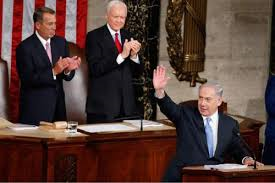
Netanyahu addressing Congress about Iranian nuclear weapons,
March 2015

The gulf in the support of Israel between the right and left of the American public is not new. Republicans support Israel by almost a 2-to-1 ratio compared to liberals around the country. Liberals support opening warmer relations with Muslim countries by over a 2-to-1 ratio over conservatives. But those statistics are in the general population of the United States. Obama has now brought that partisanship into the legislative branch of government in D.C. itself. At the administration’s urging, 58 Democrats boycotted Netanyahu’s speech to Congress. No Republicans missed the address.

Perhaps Obama used Netanyahu’s speech to pivot the party into a closer position with his loyal base of liberal Americans. If so, the implications for Israel will be very negative.

The only silver lining to the shattered red lines of Iran’s nuclear program will likely be that the Palestinian Arabs might return for peace talks with Israel as they will never have such an advocate in the White House as President Obama. What price will Obama make Israel pay? How much will it matter in the coming nuclear tinderbox of the Middle East?


Related First.One.Through articles:

On accepting invitations: https://firstonethrough.wordpress.com/2015/02/09/on-accepting-invitations/

Liberal preference for fairness and conservatives preference for safety: https://firstonethrough.wordpress.com/2015/03/01/the-gap-between-fairness-and-ramifications-wmds-in-iraq-and-iran/

Obama’s Iranian red line: https://firstonethrough.wordpress.com/2014/11/24/obamas-iranian-red-line/

On Accepting Invitations

Summary: While Obama can pretend to be insulted by Netanyahu’s failure to follow protocol in accepting an invitation to speak to a joint session of Congress, Obama did much worse to Netanyahu in 2013. It shows that if you are a friend, you forgive, and if you want to be angry, you can always find a cause to validate your anger.

bibi congress
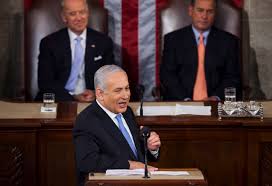
Israeli PM Netanyahu addressing US Congress May 2011

There is a brouhaha over Israeli Prime Minister Netanyahu accepting an invitation from US Speaker of the House John Boehner to address a joint session of Congress in March 2015 about Iran’s march towards nuclear weapons. The complaint, according to the White House, is about a failure to follow protocol – one would imagine, a forgivable error. However, the comments from an unnamed senior source at the White House fumes that accepting the invitation was a direct insult to the president, and that Netanyahu “spat in our face publicly and that’s no way to behave. Netanyahu ought to remember that President Obama has a year and a half left to his presidency, and that there will be a price.

Netanyahu’s acceptance of an invitation specifically addressed to him, to discuss a topic that he considers an existential threat to his country, to speak to an incredible audience that also cares deeply about the subject of Iran doesn’t seem to be a snub to Obama at face value. However, if one considers that the audience does not agree with the president’s current course of action, and that Netanyahu’s opinion does not fit squarely with the president’s approach, well, that’s a different story- that could theoretically have been a snub and attempt to bypass the president that is…what’s the word? Familiar.

Obama Declined Invitation to Speak to the Israeli Knesset

In March 2013, Israel invited US President Barack Obama to visit Israel and speak to the Knesset, the Israeli parliament. Both of the two previous US presidents, Bill Clinton (1994) and George W Bush (2008) addressed the Knesset while they were in office. Obama declined the invitation.

clinton knesset
Present Bill Clinton Addressing Israeli Knesset 1994

This US administration wanted to bypass the Israeli government and address the Israeli citizens directly, saying that Obama had a speech for “the Israeli public and that really was our priority.” The White House arranged to have an audience of students from Israeli universities (except he did not allow students from schools on the West Bank of the Jordan) to hear his remarks.

  • Was declining an invitation to speak to the Knesset a nice thing to do? It is not something Israel extends to most world leaders.
  • Was it appropriate to use that same time slot to speak to “the Israeli public” instead? Did Obama not realize that Israel is the democracy and the politicians are elected by the people and represent the people? (As opposed to his “New Beginnings” address to the Egyptian government in 2009.
  • Obama cherry-picked his “Israeli public” to be those young people who may have been more receptive to his remarks than an audience that truly represented the broad opinions of the citizens of the country and the Knesset.

How did Netanyahu react to these insulting actions of the White House? Did he take umbrage? Did he refuse to see Obama and did Bibi direct members of his political party to ignore Obama on his visit? Not at all. He acted like a perfect host.

Note that these various 2013 actions of Obama were not a single failure to coordinate as it was for the 2015 Netanyahu invitation. Obama carefully scripted the entire Knesset-snub, direct-to-some of-the-people message.

In Obama’s opening remarks to the student body he said: “any drama between me and my friend, Bibi over the years was just a plot to create material for Eretz Nehederet (an Israeli comedy show)”. I wonder how Obama will react if Bibi opts to make a similar joke about his buddy “Barack” in his address to Congress in March.

obama israelUS President Obama speaking to Israeli STUDENTS 2013

And what was the crux of Obama’s speech in March 2013? Why did he feel the need to give a cold-shoulder to the Knesset and Netanyahu?

On the Iranian nuclear threat, Obama argued that a “strong and principled diplomacy is the best way to ensure that the Iranian government forsakes nuclear weapons….But Iran must know this time is not unlimited.  And I’ve made the position of the United States of America clear:  Iran must not get a nuclear weapon.“ Words that sounded nice to a generation that believed “hope” was a policy.

Obama knew that the Israeli Knesset and Prime Minister Netanyahu were very skeptical about Obama’s push to curtail sanctions on Iran. Obama therefore opted to bypass them and speak to a select audience that would applaud his vision.

Netanyahu Accepts Invitation to Speak to US Congress

Now, two years have passed and Iran is closer to nuclear weapons. Obama scaled back Iranian sanctions and has continued to delay the timetable he laid out to stop their nuclear program. The majority of Congress doesn’t like the situation and they don’t agree with Obama’s process.

As such, the House Speaker asked a close ally which is in the crosshairs of the Iranian regime to call out the president for the failed process. Netanyahu’s response: “As Prime Minister of Israel, I am obligated to make every effort in order to prevent Iran from achieving nuclear weapons that would be aimed at the State of Israel. This effort is worldwide and I will go anywhere I am invited in order to enunciate the State of Israel’s position and in order to defend its future and its existence.”

Does Obama really lack complete sensitivity to Israel’s fears about a nuclear Iran that he would inflate a matter of protocol over an invitation to such a degree?  Or is it just a ploy for Obama to influence Israel’s elections by trying to put downhis friend Bibi”?


 Emily Post Five Points on Accepting an Invitation

There are a good number of people who have suggested that Netanyahu should cancel his March speech. Of course, they include his political opponents in Israel, but they also include some Democrats in the US Congress and leaders of Jewish organizations.

Emily Post, the expert of etiquette, suggests five key steps to responding to an invitation:

  • “RSVP: reply promptly”: done
  • “Reply in the Manner Indicated”: done, but partially outside of normal protocol
  • “Is that Your Final Answer?” SEE BELOW
  • “May I bring…?”: not relevant
  • Say “Thank you”: done

According to invitation etiquette, there are very few instances to change a response:

  • Changing a ‘yes’ to a ‘no’ is only acceptable on account of: illness or injury, a death in the family or an unavoidable professional or business conflict. Call your hosts immediately.” Vice President Joe Biden and some Democrats seem to be manufacturing this excuse for not attending now.
  • Canceling because you have a “better” offer is a sure fire way to get dropped from ALL the guest lists.
  • Being a “no show” is unacceptable.
  • Changing a ‘no’ to a ‘yes’ is OK only if it will not upset the hosts’ arrangements.”

In short, it is inappropriate for Netanyahu to turn down the invitation at this time. It would be up to Speaker Boehner to consider changing the date of the invitation, should he choose to smooth this inflated side-issue to get everyone focused on the main issue.