
This is Part Three of a series examining the surge in antisemitism: Conspiracy theories magnified at the United Nations
In May 2021, Pakistan, acting on behalf of the Organization of Islamic Cooperation, introduced a resolution at the United Nations Human Rights Council establishing a permanent commission to investigate Israel and the Palestinian territories. It passed 24–9, with 14 abstentions. China, Russia, Cuba, Pakistan and Venezuela supported it. Germany, Austria and the United Kingdom opposed it. Neither Israel nor the United States voted, as neither was a council member.
The commission received a sweeping mandate to investigate alleged violations of international law and the historical causes of the conflict. Its mandate had no expiration date – a highly unusual move.
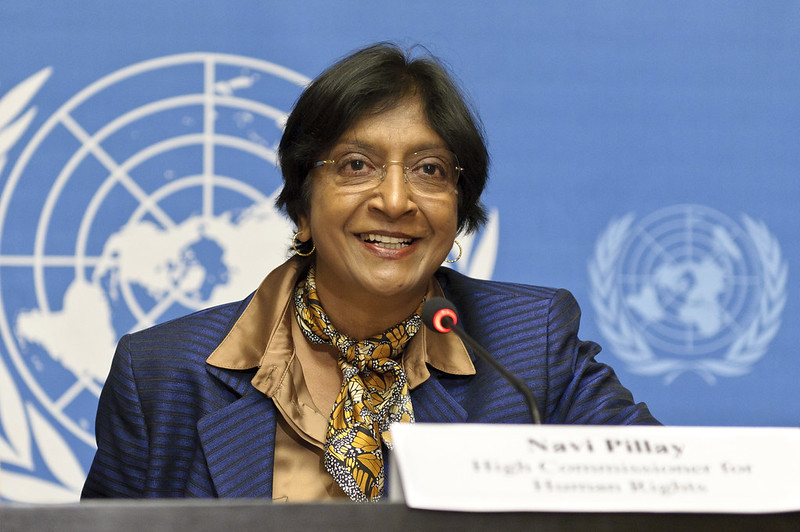
Three commissioners were appointed in July 2021: Navi Pillay of South Africa, a former UN High Commissioner for Human Rights, as chair; Miloon Kothari of India, a former UN Special Rapporteur on housing; and Chris Sidoti, a former Australian Human Rights Commissioner.
A year later, Kothari publicly repeated antisemitic conspiracy theories about Jewish power while questioning Israel’s place in the United Nations.
The Jewish Lobby Controls What People Read
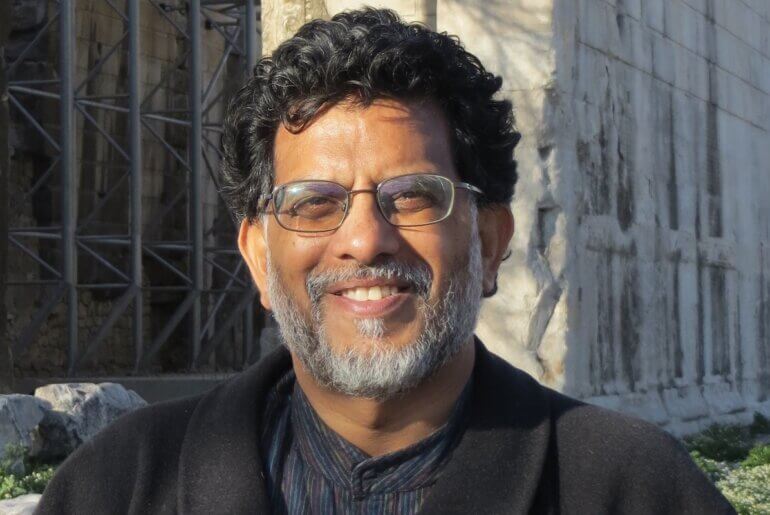
In July 2022, Kothari spoke with Mondoweiss, a publication strongly critical of Israel. Complaining about opposition to his commission, he declared: “We are very disheartened by the social media that is controlled largely by – whether it is the Jewish lobby or specific NGOs.”
He also alleged that substantial money was being spent to discredit the investigators.
For centuries, antisemites have claimed that Jews secretly control newspapers, publishing, entertainment and public opinion. Kothari updated that conspiracy for social media, coupling supposed Jewish control of information with financial power.
These were central themes of the fabricated Protocols of the Elders of Zion, which portrayed Jews as manipulating society through the press, finance and politics. Nazi propaganda later exploited these accusations to depict Jews as dangerous enemies of society.
These remarks came from one of three UN officials entrusted with investigating the Jewish state.
Jewish Influence and International Accountability
Kothari also accused Israel of undermining the United Nations: “They, in fact, consistently, either directly or through the United States, try to undermine UN mechanisms.”
His allegations followed a familiar antisemitic narrative: Jewish influence over information, money and powerful governments supposedly shielding Israel from accountability.
Kothari also suggested that accusations of antisemitism were used against critics of Israel. Under this reasoning, objections to antisemitic statements become further evidence of the supposed conspiracy.
When an investigator sees criticism as evidence of a Jewish conspiracy, he has already found a reason to dismiss those who challenge his conclusions.
From Criticizing Israel to Questioning Its Legitimacy
Kothari went further: “I would go as far as to raise the question of why [Israel is] even a member of the United Nations.” He argued that Israel failed to respect its international obligations.
His historical interpretation was equally expansive: “What has transpired in the occupied territories since ’67 is something that had already been happening inside the Green Line since ’48”
Kothari explained that the commission was examining human rights “from the river to the sea” and added: “There are similarities inside and outside Green Line, so linkages must be made.”
He also argued that apartheid alone was insufficient to explain the conflict and that the commission needed to examine “settler-colonialism.” His framework placed Israel’s founding, rather than particular government decisions, at the center of the commission’s indictment.
From Personal Prejudice to UN Findings
Not surprisingly, the commission’s first report, issued in June 2022, emphasized systematic discrimination, territorial control and historical causes of the conflict. Kothari explained the commission’s ambitions: “Our work is to collect a repository of all the evidence that we gather.”
He said the material could eventually be handed to judicial bodies. Commission members had already met with officials at the International Criminal Court, including a deputy prosecutor, and contemplated approaching governments about arms transfers and companies operating in Israeli settlements.
The investigation was designed to influence international legal proceedings, diplomatic pressure and commercial relationships.
The commission’s October 14, 2026 report demonstrated how its historical framework endured. Paragraph 58 begins: “Since the 1947-48 war, Israel has continuously striven to expand territorially and displace Palestinians through violence.” The report attributes Israeli actions across generations to territorial expansion, demographic control and discrimination.
Four years earlier, Kothari had connected events in 1948 and 1967 through the same historical interpretation. The new report, issued under different commissioners, carried that framework forward, expressly directing readers to consider its earlier investigations.
An interpretation advanced by a commissioner who publicly invoked antisemitic conspiracy theories had become part of the commission’s continuing institutional narrative.
The Apology and the Institution That Remained
Kothari’s remarks in Mondoweiss drew condemnation from American officials, including Deborah Lipstadt, the US Special Envoy to Monitor and Combat Antisemitism, and Ambassador Michèle Taylor. European governments, Canadian officials and Jewish organizations also criticized him. Human Rights Council President Federico Villegas warned that Kothari’s comments could stigmatize Jewish people.
Commission chair Navi Pillay defended Kothari, arguing that his remarks had been misrepresented. Yet Kothari himself apologized in August 2022, acknowledging that describing social media as largely controlled by a Jewish lobby was wrong. He also clarified that he did not question Israel’s existence or advocate its expulsion from the UN.
The commission continued.
On October 26, 2026, it publicized its October 14 report accusing Israel of genocide in Gaza, crimes against humanity in the West Bank and deliberately targeting Palestinian children. Its historical account portrayed Israeli policy since 1948 as a continuing project of territorial expansion and Palestinian displacement.
Once incorporated into successive UN reports, contested historical interpretations acquire the appearance of independently verified facts, available for citation by governments, universities and political movements. The commission also recommended action by other countries and international institutions concerning Israel’s policies.
Kothari’s antisemitic conspiracy theories prompted an apology but little institutional reckoning. The investigations he helped shape became the foundation for successive UN reports, accumulating authority long after his departure and influencing global opinion, diplomatic campaigns and potentially international legal proceedings against Israel.
The UN allowed antisemitic conspiracy theories to take root in its reports, turning them into foundational texts for a new wave of anti-Israel invective cloaked in international authority.
Sources
- UN Human Rights Council resolution and vote, May 2021
- Miloon Kothari interview, Mondoweiss, July 2022
- Navi Pillay’s defense of Kothari, July 2022
- Kothari’s written apology, August 2022
- UN Commission report A/81/430, October 14, 2026
- UN Commission press statement, October 26, 2026


Pingback: The Limited Counter To Antisemitic Conspiracy Theories | First One Through