
I have been fortunate to visit Israel dozens of times. I have come for work and to vacation. To celebrate Jewish holidays and family and friends’ celebrations. During wars and “intifadas” as well as times of peace.
July 2024 was different. I came to a country held hostage.
The Individual Hostages In Gaza

The first thing one sees upon arrival at the airport is a large sign “Bring them home now!” with sample dog tags showing the date October 7 when over 250 people from Israel – living and dead – were seized by Palestinian Arabs and hauled into Gaza.
The faces of the hostages were found everywhere: in the airport, on the streets and in office lobbies. On stickers, banners and shirts. Israel is consumed with the people abducted by terrorists. Their faces, names and stories refuse to be forgotten.


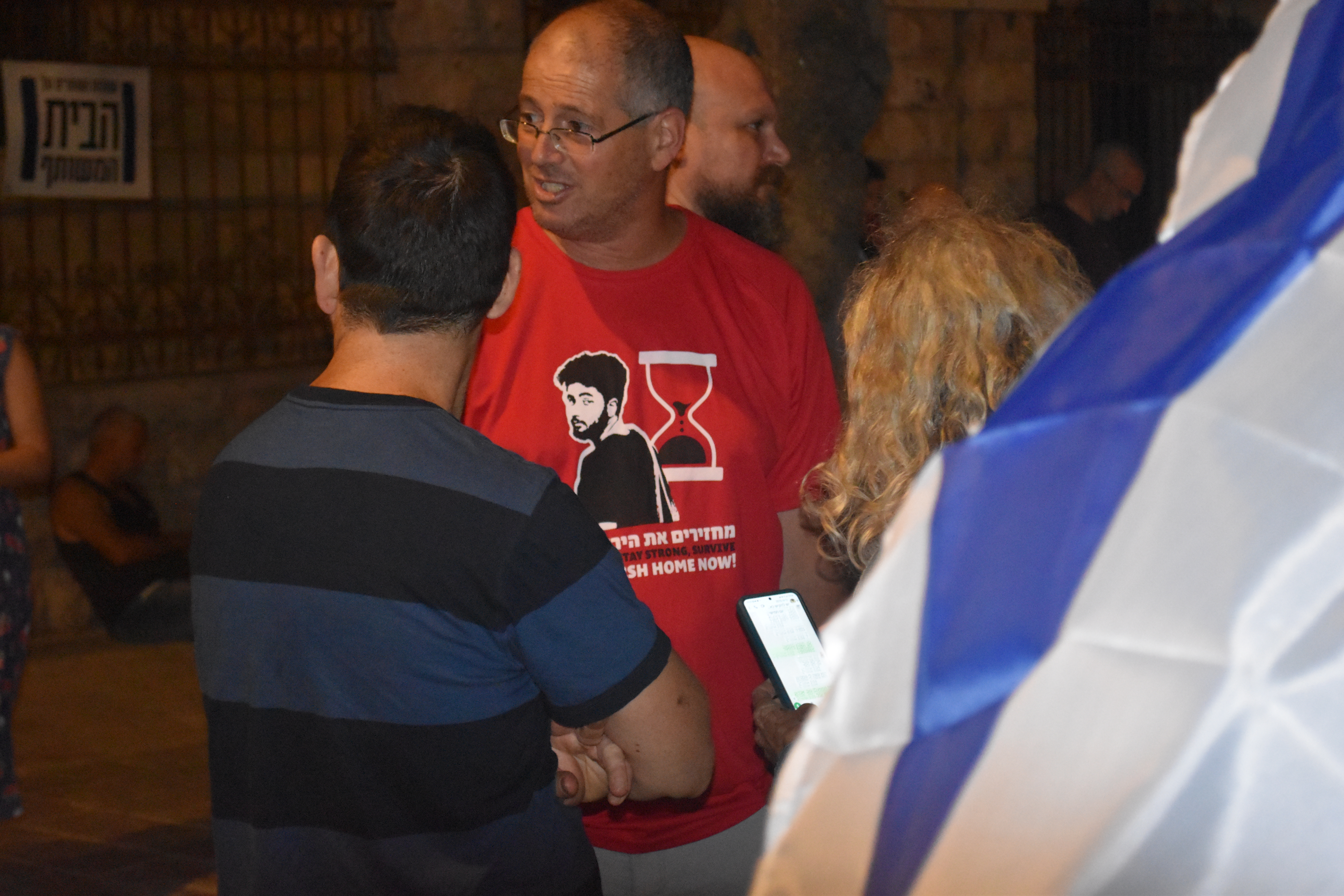
Hostage To Memories And Emotions
Outside the Tel Aviv Museum is Hostage Square, an encampment of families and friends who sit in shelters to talk to people about the abducted amidst a range of emotional tributes and installations. Most of the people try to avoid talking about politics or the war, and are solely focused on the innocent people ripped from their homes and regular lives.

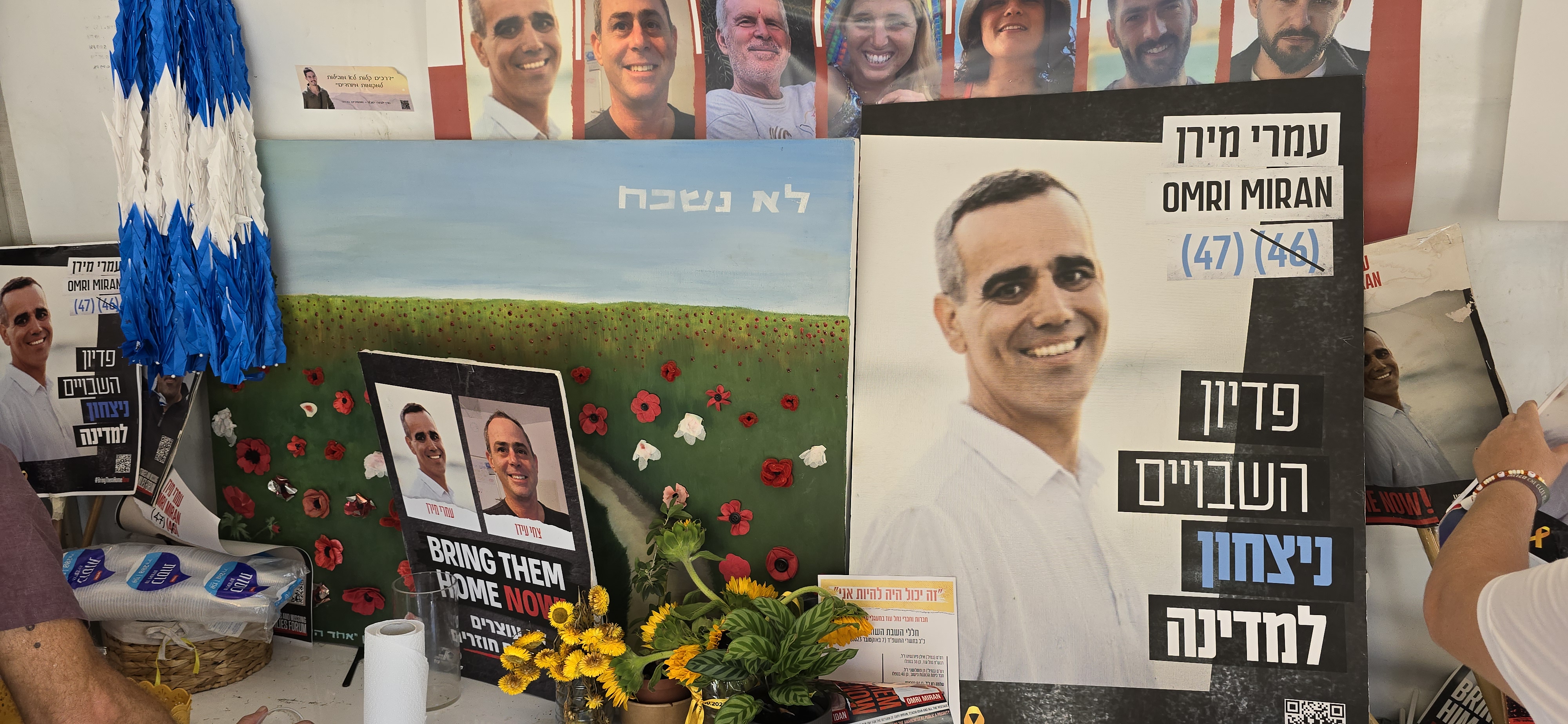


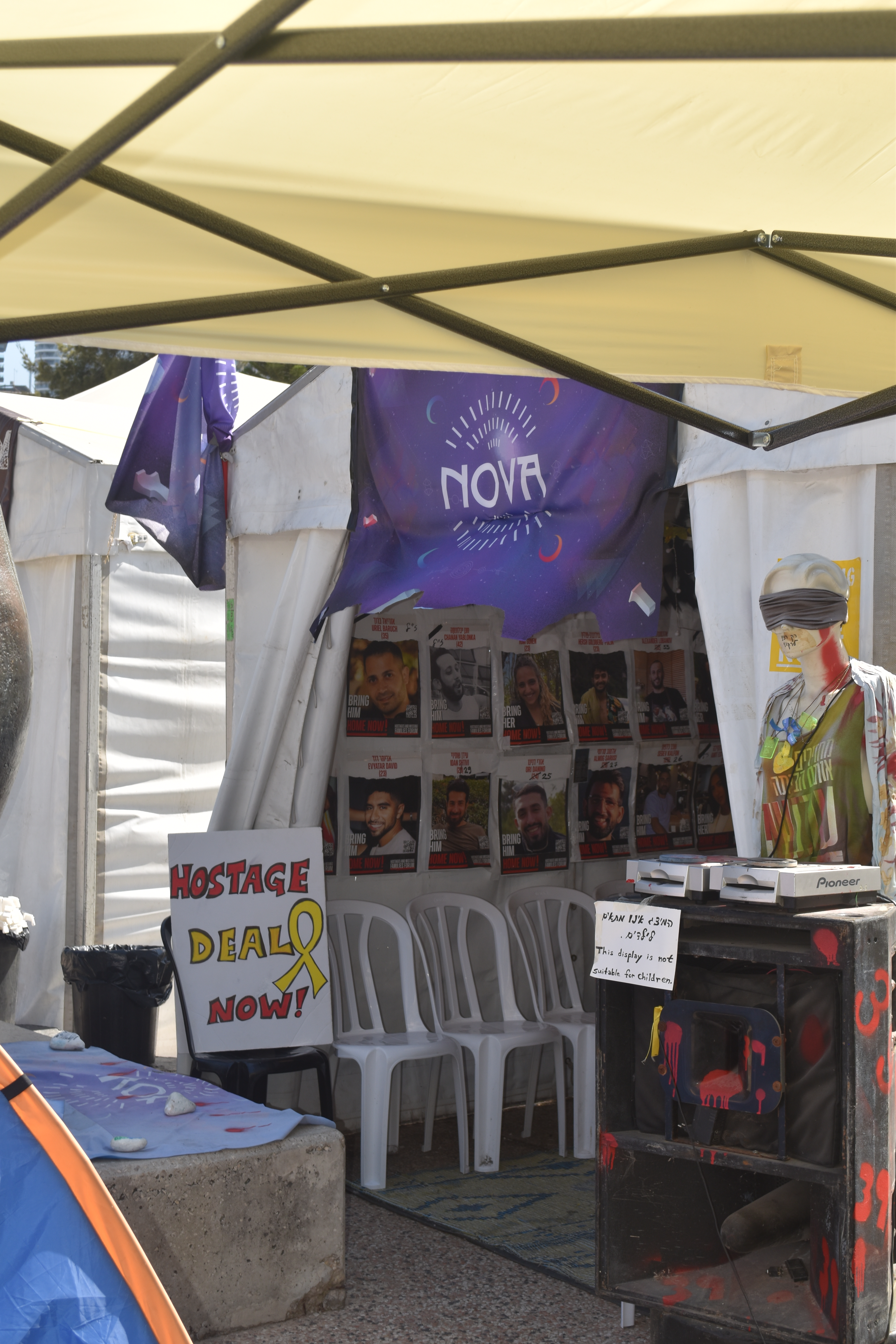


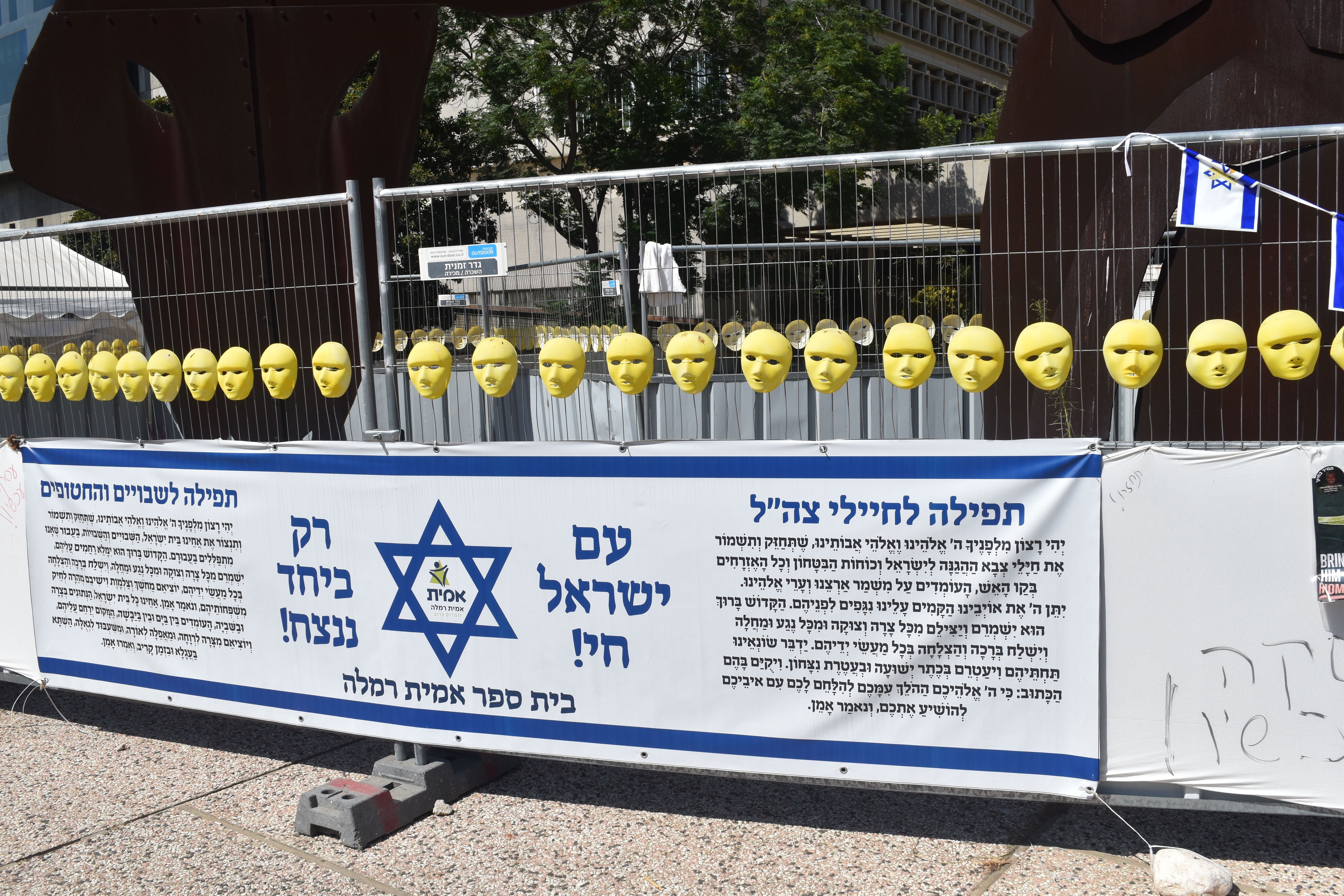

One of people I met in a tent for one of the kibbutz communities attacked was a Ukrainian-Israeli who confided that she liked to talk to tourists. She felt it difficult to talk to fellow Israelis who were enmeshed in the ongoing tragedy but could “unload” to strangers and not be alone.
She pointed to a picture over the door and said that the bearded man was her old boyfriend who was killed on October 7 and his body was hauled into Gaza. The Israel Defense Forces retrieved his body just a few weeks earlier.
While this woman talked to me, another women from the kibbutz had been talking to another female visitor. That kibbutz woman introduced a middle aged lady who shared that she was a neighbor of the Ukrainian’s old boyfriend. The Ukrainian covered her mouth and began to bawl. She attempted to speak and then fled the tent.
Hostages To War
I have visited the Shaare Zedek Medical Center in Jerusalem many times. In 2003, during the Second ‘Intifada’, I had the opportunity to get a tour of the new emergency room by Dr. David Applebaum two weeks before he and his daughter were killed in a Palestinian terrorist bombing on the eve of her wedding. I came to visit now to see how the hospital was functioning during a war.
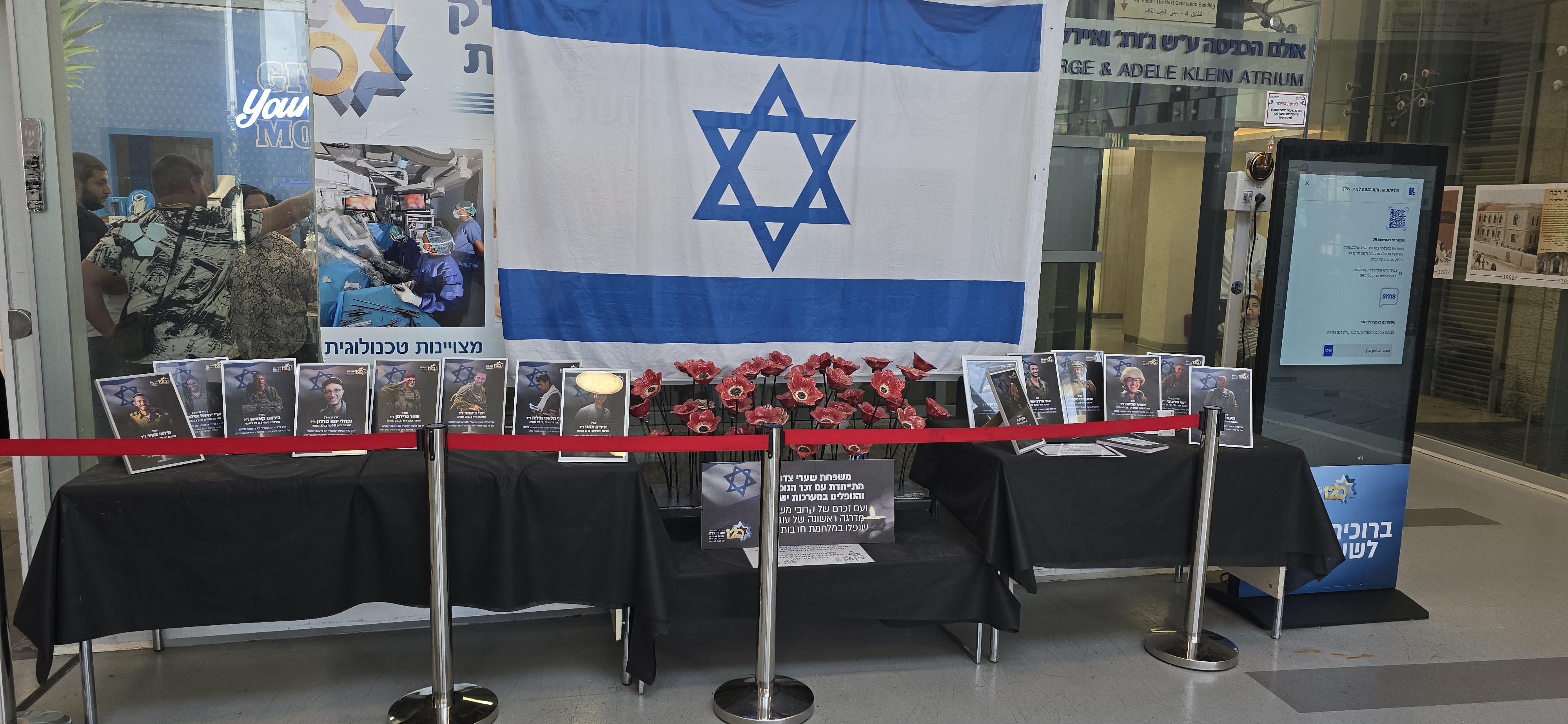
The hospital lobby has a long table filled with pictures of family members of hospital workers who were killed over the nine months of war. Some were killed during the October 7 massacre while others died in the fighting to free the hostages and to bring the terrorists to justice.
The guide shared that this war had an enormous casualty-to-death ratio relative to past wars. The reason is that many soldiers who would have been killed in the past were saved due to some tactical measures.
Firstly, Israeli soldiers entered the hornet’s nest of Gaza wearing tourniquets. With a battlefield loaded with booby traps, many people were losing limbs as bombs exploded. In the past, those soldiers would have bled to death but now, tourniquets provided precious time for them to be rescued.
Behind the wave of infantry were medics equipped with various equipment to stabilize the injured quickly for immediate transfer out of Gaza into Israel a short distance away. As soon as the injured entered Israel, well-equipped medical helicopters flew the seriously injured to hospitals like Shaare Zedek, a short 15 minute flight, while those in non-life threatening situations were transferred via ambulance. The sophisticated medical helicopters had advanced equipment like sonars which evaluate the soldier’s condition to prepare the emergency room at the hospital to receive the injured and operate quickly. There were cases that a person was on an operating table less than 45 minutes from the moment of attack.
The tour of the hospital also featured a large empty underground intensive care unit, should air sirens be blasted in Jerusalem and very sick patients need to be moved into a shelter.

Hostages To The Government
Many Israelis are deeply upset with their leadership and Prime Minister Benjamin “Bibi” Netanyahu. They are angry at the failure to protect the border, allowing the October 7th massacre to occur. They are furious at the inability to finish off Hamas and release the hostages.

They are angry at Bibi’s failure to conclude a hostage deal and his refusal to step down and hold elections. They feel trapped by his incompetence and ego but have few tools to call for an early election.
The Saturday night protest near the prime minister’s house in Jerusalem was not shrill and it seemed like the the crowd was worn out from many months of little progress.
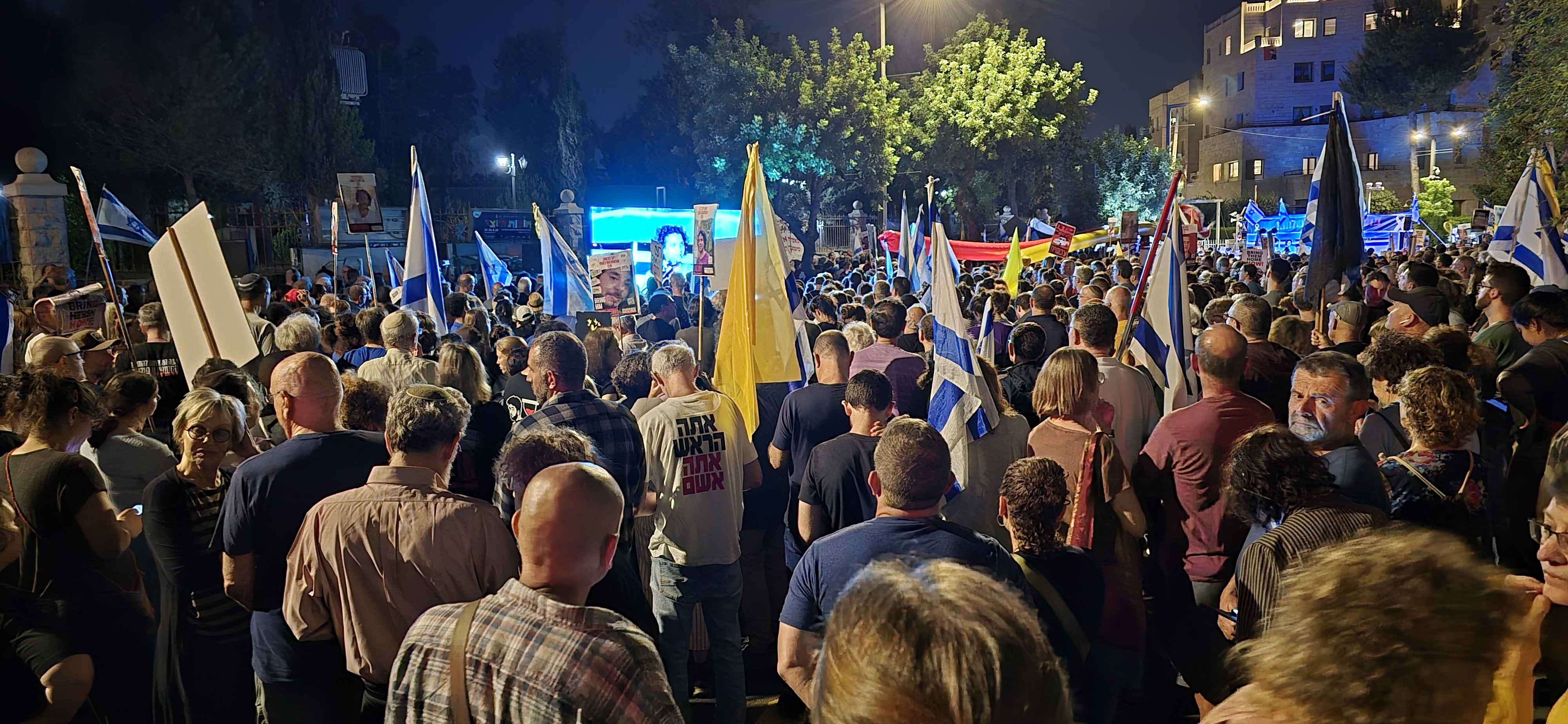


But they keep turning out.
Hostages To Family Fighting
Many Israelis are exhausted in every manner of the word. They have family members who have been fighting in Gaza or up north on-and-off for nine months. They all have or know of families who have lost loved ones. They are desperate to leave the country for a much needed respite but feel unable to do so while family is on the front lines.
Those who remain in the country ask each other difficult questions: do you postpone a wedding until after the war? Do you start dating someone who is on the front lines, who might suffer a terrible injury or death?
The soldiers occupy their every action and prayers. They have also been captured into a war zone since October 7, a war which no one wanted.
Hostages To Tradition
In the Jerusalem neighborhood of Romema, many new buildings are going up to accommodate the rapidly growing numbers of ultra-Orthodox Haredi Jews who want to live in Jerusalem, Judaism’s holiest city. While the vast majority of that community do not serve in the army, many are trying to contribute to the war effort in their own way.
On the first floor of a small building, a cramped kitchen has been set up by volunteers who cook and pack meals for families who have people fighting in Gaza or the Lebanese border. They pack hundreds of meals including soup, meatballs, spaghetti and dessert. Each package is customized according to the size of the family who has asked to receive the meals. The day I came to help pack, the meals were going to the community in Beit El.

Economy Held Hostage
Israel has a citizen army in which everyone serves. While 18 to 21 year olds serve before they attend college, people also continue to get called up for milu’im, occasional service as the army needs people. In the course of this war, thousands of people in their 30s, 40s and 50s have left their jobs to fight the Palestinian Arab terrorists. Beyond the direct financial cost of the war, the impact on the country’s economy has been dramatic as millions of work-hours have vanished to defend the country.
There is still no end in sight all these months later, as fronts with Hezbollah in Lebanon and the Houtis in Yemen open up further.
Homes Held Hostage
Many hotels and apartments in Jerusalem have unusual activity. Whole families from the country’s north near Lebanon, as well as from near the Gaza Strip have relocated to the middle of the country. For nine months, they have been living as internally-displaced people. In the immediate aftermath of October 7, the numbers surpassed 200,000 but is now closer to 90,000.
According to UN Watch, “Despite the unprecedented massive displacement within Israel, both the UN refugee agency (UNHCR) and the UN Special Rapporteur on Internally displaced people (IDPs), Paula Gaviria Betancur—the two UN representatives one would expect to champion the rights of the displaced Israelis—have been largely silent on the issue.”
Israelis – roughly the population of Duluth, MN – have lost access to their homes, and the world has remained silent.
Hostages To Creeping Ambivalence
So many Israelis share the refrain that they “do not want the situation of hostages to become normalized.” They refuse to live in a country in which it is accepted that more than one hundred people are trapped in Gaza. They rail against a world which cannot fathom the deep trauma of the country that innocent civilians were kidnapped from their homes by thousands of terrorists.
As each day morphs to another, people afix new numbers to tape on their chests: 278, 279, 280, 281… People are not only more fearful about the fate of the hostages as time goes by but that their lives and stories grow more distant to the world.
Resistance
While many feel trapped by the current war, Israelis are taking action incorporating the new reality. They try to transform points of pain to rays of light.
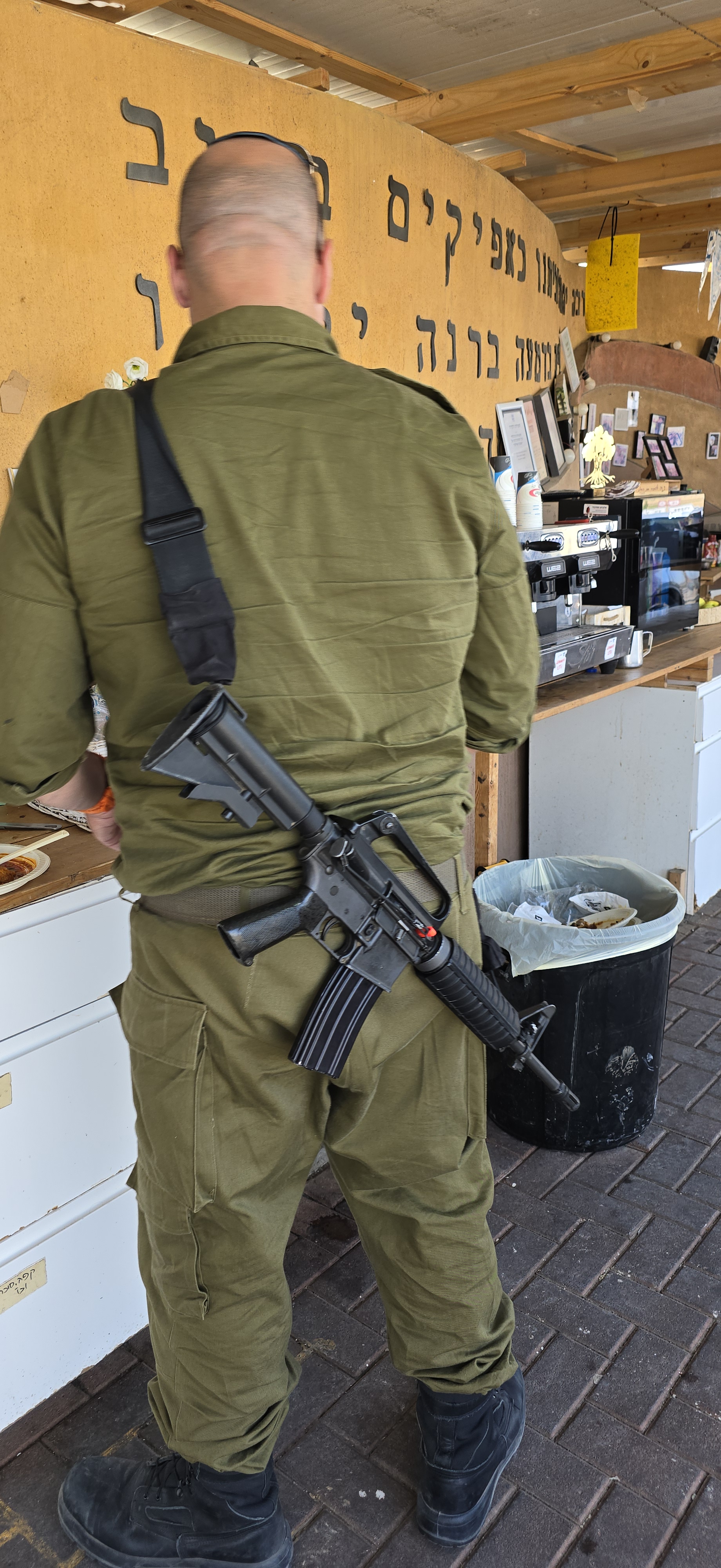
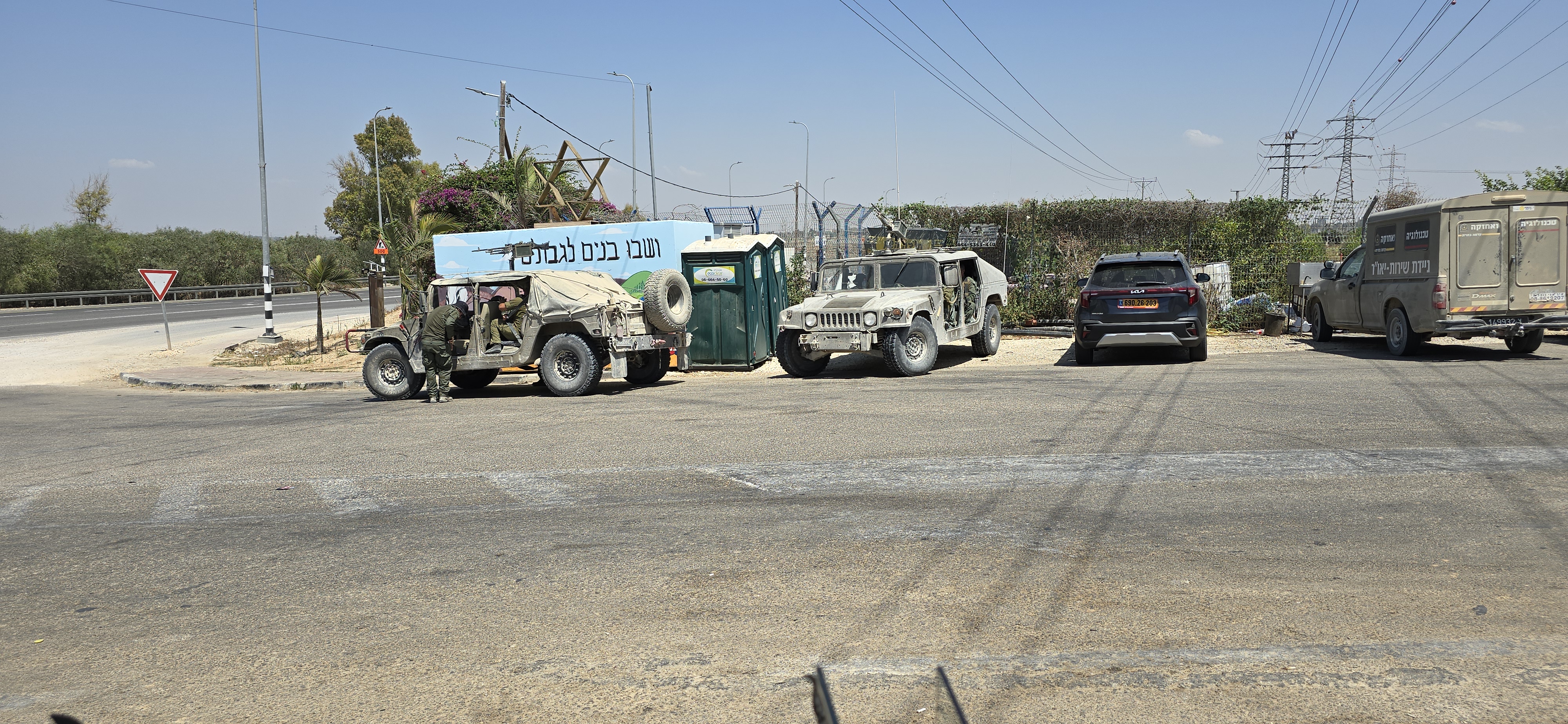
Shuva Junction, about 5km from Gaza, was originally the location where people brought dead and wounded people from the October 7 massacre. Since that time, it has become a makeshift hub where Israeli soldiers come to rest and get food. Roughly 1,500 people are fed every day at a cost of roughly $5,000, all done by volunteers.



Already an outlier among countries allowing sperm extraction from a dead man by a spouse, Israel is debating allowing parents to do posthumous sperm retrieval for their fallen sons post-October 7. The bereaved parents want their sons to live on somehow, after sacrificing everything for the nation.
Beyond the war is living life. While it felt strange to go out for dinner or shop while a war was raging and over a hundred people were still being held hostage, the overall environment always felt like it included both fighters and hostages.
I was fortunate to attend a Hanan Ben Ari concert in the Sultan’s Pool right outside the Old City of Jerusalem. The stage was illuminated by the number of days that hostages were captive along with a yellow ribbon.
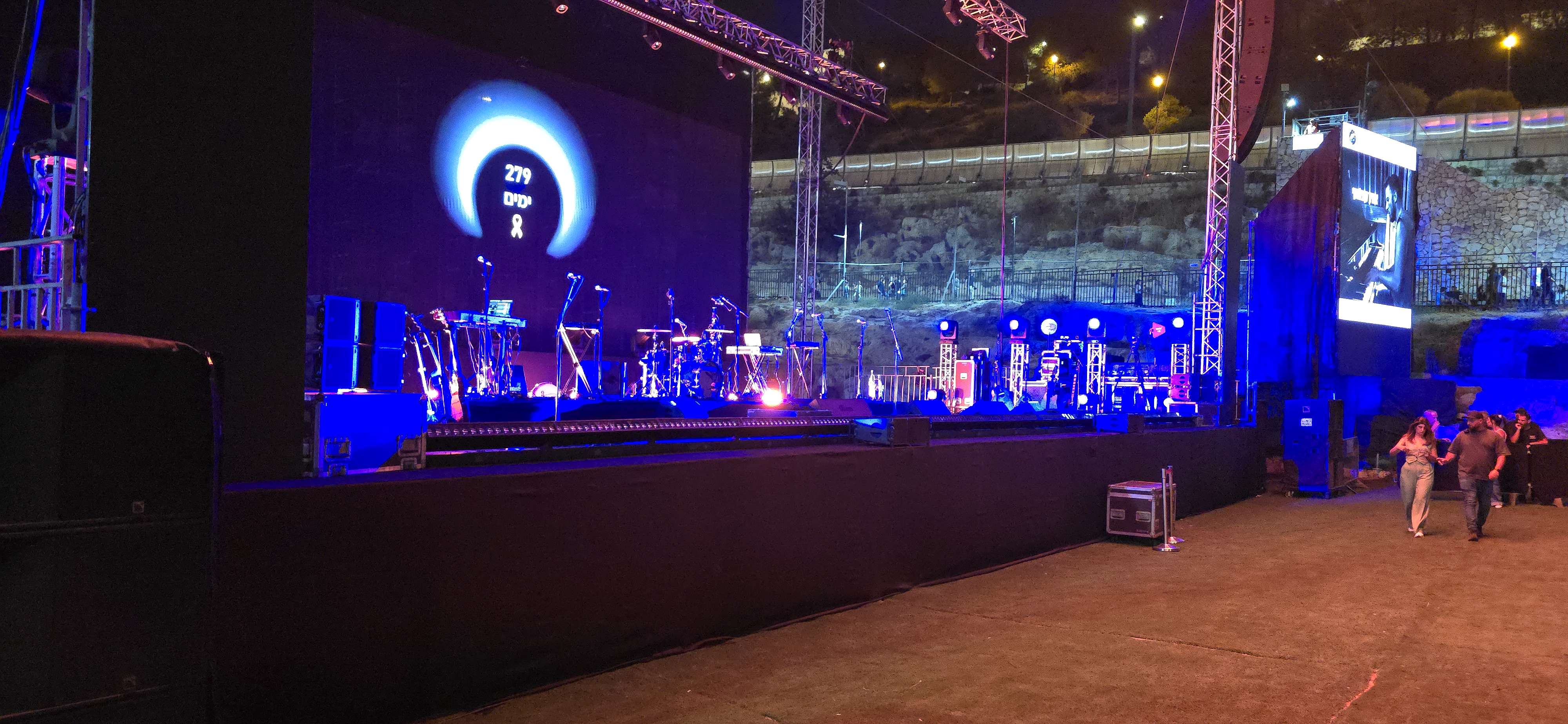
I was unfamiliar with the singer and my Hebrew is not great, so I needed to listen particularly closely to the words. I heard a man praying for his children. I listened to a singer honoring his grandfather who was buried on Har Meuchut, on the other side of the Old City walls.

And I watched the crowd of secular, modern and ultra-Orthodox Jews sing along. I saw young and old, men and women dance and sway to the music.
And cry.
Hanan Ben Ari put up a picture of one of his road managers, along with one of him with his family. Hanan spoke of him and how he was working the Nova music festival and slaughtered on October 7. Ben Ari then showed two people in his crew who were still held captive in Gaza.
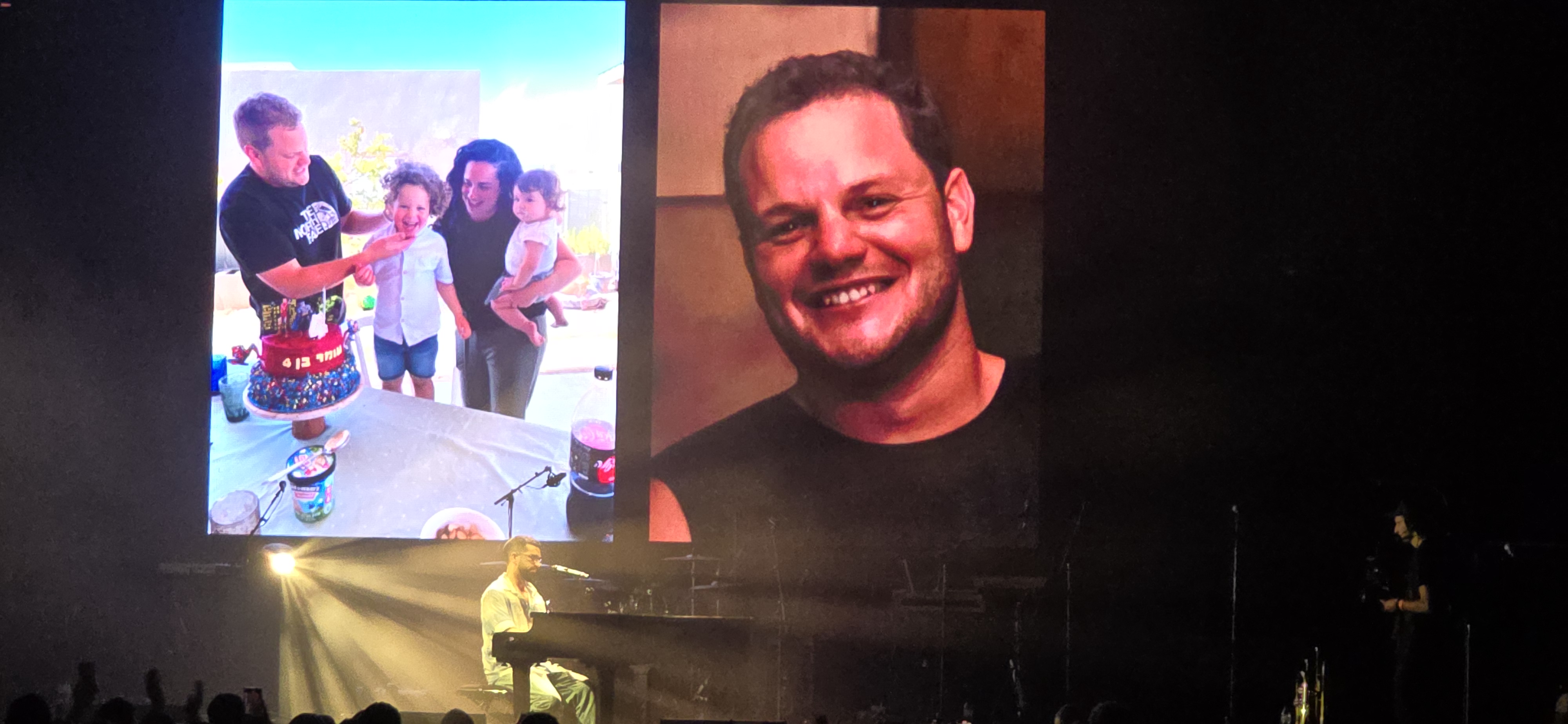

He then asked people to hold the flashlights on their phones if they know of someone killed in the war. All 6,000 people in the audience raised their arms and began crying to a mournful song, Shvurei lev, a song of a broken heart.
I have been to Israel durings wars and sensed a people who had long ago accepted that they lived in a region amongst people who did not accept their basic presence or humanity. Still, they believed the episode would pass; the country will prevail in the near-term battles and in the longer-term, peace will prevail when the Jewish State’s enemies internalize that they are never leaving.
But that was not the nation I visited in July 2024.
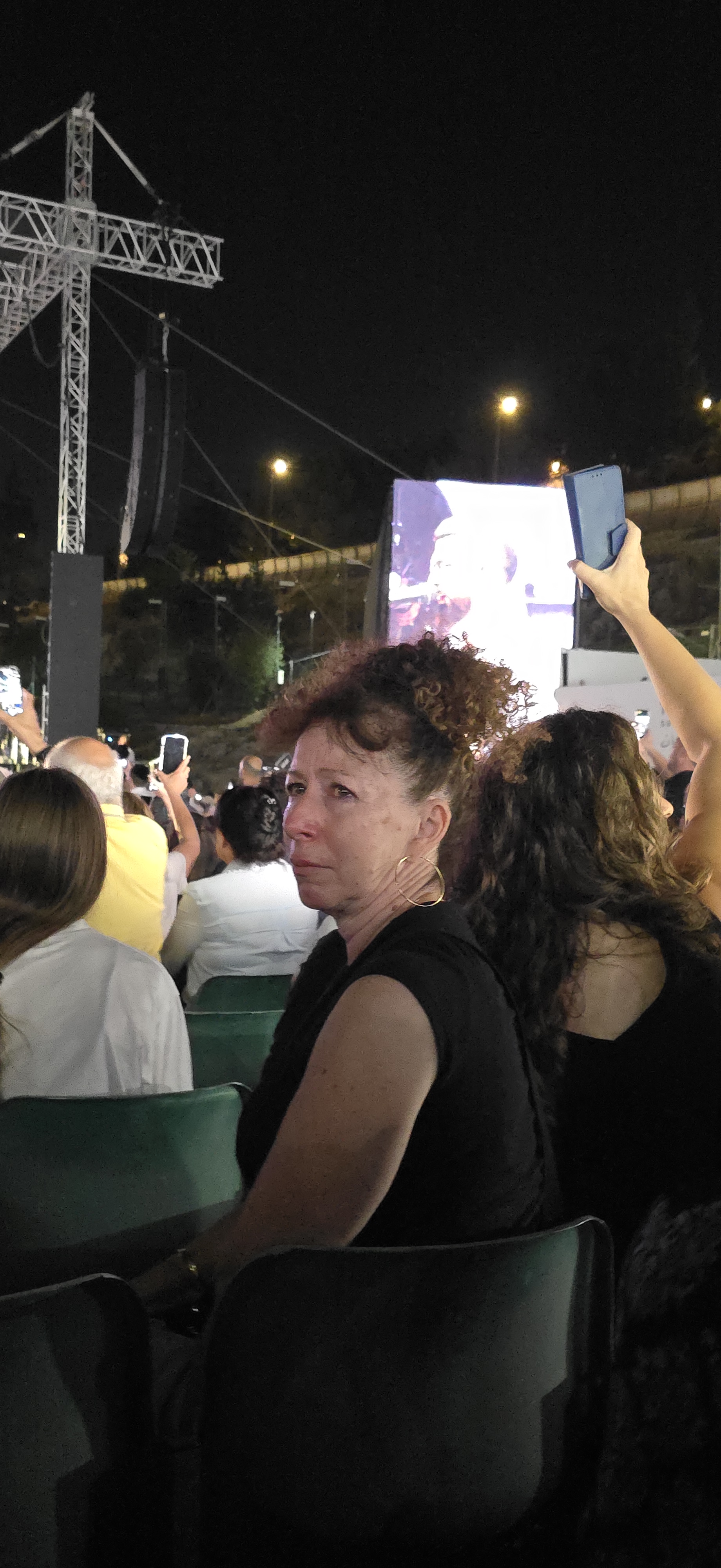
Israelis are deeply scarred by those killed and the manner in which they were butchered on October 7. They were rocked by the government and army’s failure to protect them. They are tortured by the ongoing hostage situation. They are deeply troubled by their strongest ally of the United States being rocked with rabid antisemitism which had previously only been displayed in Europe. They are livid at being blamed for a war they never wanted and want to end as quickly as possible.
The Jewish State is being held hostage in Gaza because Judaism believes that every life is a world. It is being held hostage by the scars of the barbarity of October 7 massacre. It is being held hostage by the fear of living next door to people who support such crimes against humanity. It is being held hostage by its own government that won’t step down and hold new elections. It is being held hostage by a false narrative at the United Nations and the ICC. It is being held hostage by a single powerful ally fading in its support.
There are more than 100 hostages. There are millions.
Israel has long known war and is confident that it can defeat Palestinian terrorists.
This is more than a war against a weak genocidal foe. This is a battle in the cramped crevices of hearts and minds to salvage humanity. Alone.

Related articles:
Casualness Of Jewish Hostages (June 2024)
“Context” For Attacking People In The West Regarding Situation In The Middle East (May 2024)
When Founding Fathers Are Psychopaths And Cowards (January 2024)
The Rape And Torture Of Jewish Women By Emasculated Palestinian Men (January 2024)
The Scale And Barbarity Of The Hamas Massacre (October 2023)
Palestinians Are Still Actively Fighting The 1947-9 War Against The Jewish State. They’re Losing Again (September 2022)
Taking the Active Steps Towards Salvation (April 2018)

 First One Through
Pingback: Talking About The Gaza War At Work | First One Through
Pingback: October 7 And A Year | First One Through
Pingback: For The Sins of 5784… | First One Through
Pingback: A Warm Israeli Heart In Brooklyn | First One Through