
This is Part Two of a series examining the surge in antisemitism: Following the Evidence Across Ten Countries
In June 2024, a 12-year-old Jewish girl was raped and assaulted by three boys, aged 12 and 13, in Courbevoie, a suburb of Paris. The attackers subjected her to antisemitic insults and threats. Two were subsequently sentenced to seven and nine years in prison, while the third was found guilty of complicity and placed under educational supervision.
The presiding judge concluded that the girl would never have been subjected to the attack had she not been Jewish.
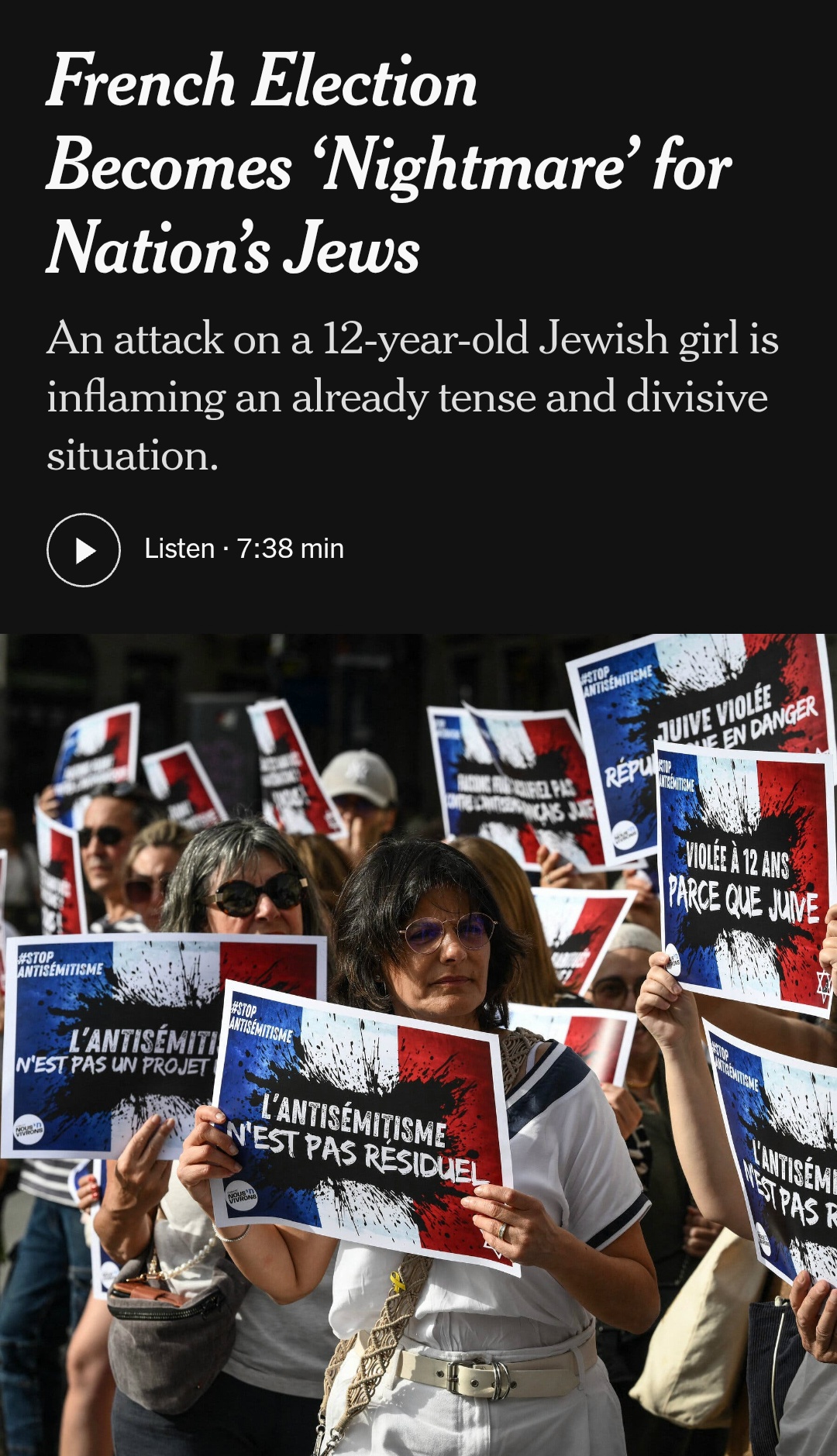
The attack raises a disturbing question. How did children barely into adolescence acquire such intense hatred of Jews, and what made them willing to act upon it?
It is a question that reaches far beyond France.
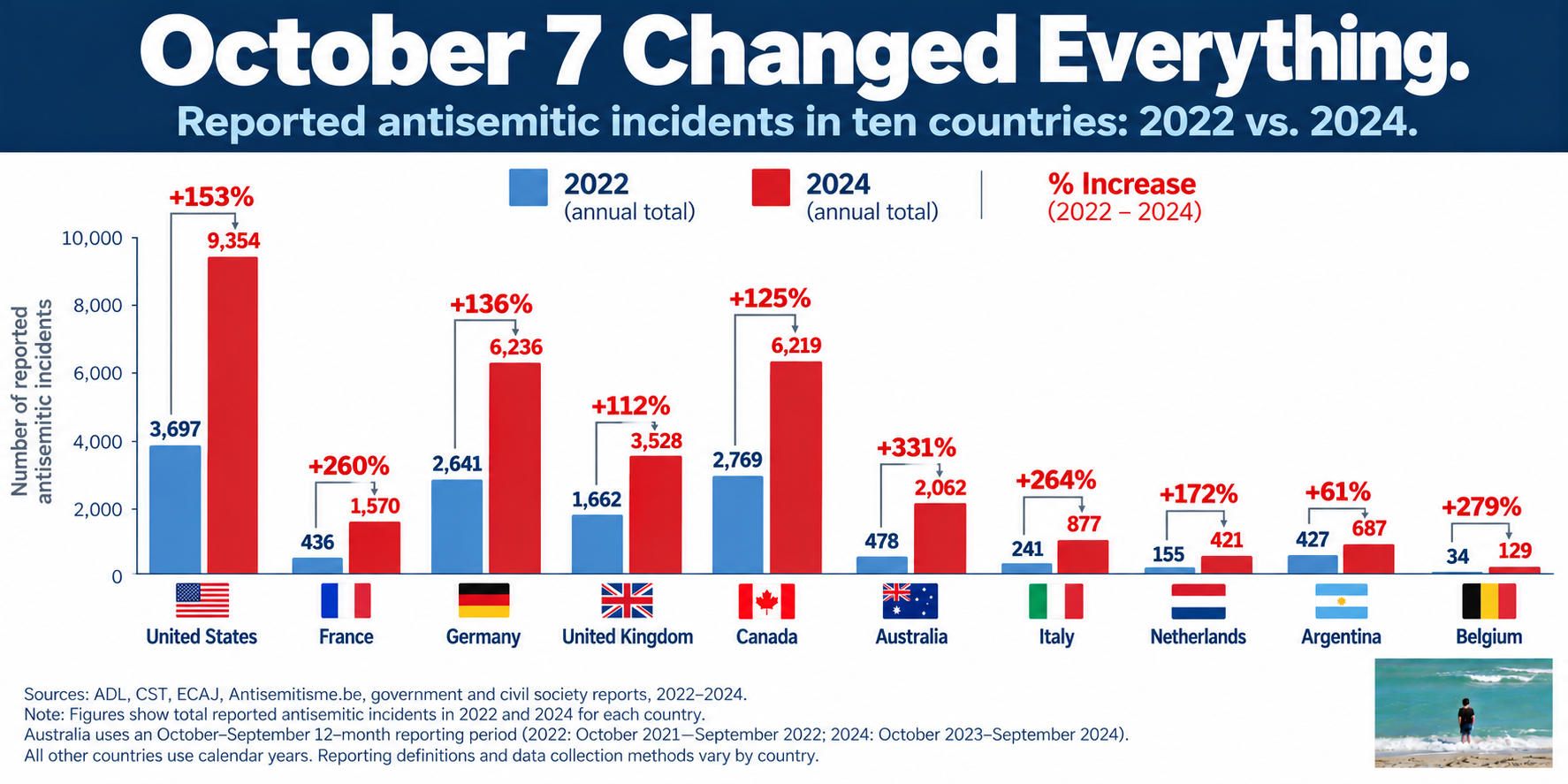
Following Hamas’s October 7, 2023 attack on Israel, reported antisemitic incidents surged across the United States, Britain, France, Germany, Canada, Australia, Italy, the Netherlands, Belgium and Argentina. Between 2022 and 2024, increases ranged from 61% in Argentina to more than 300% in Australia.
Ten countries across four continents, with different populations, economies, governments and relationships with Israel, experienced the same extraordinary escalation: Anti-Israel feelings manifest in antisemitic attacks globally.
I next sought to look at the available evidence to understand why. What characteristics correlate with antisemitism? Which beliefs make people more likely to hate Jews? And what explains the sudden transformation of that hatred into harassment, threats and physical violence?
Some of the strongest findings involve conspiracy theories, attitudes toward Israel and younger generations. Other explanations that seem intuitively obvious – and First One Through has discussed frequently – show surprisingly little relationship with the surge.
The Conspiracy Connection
Antisemitism has always found fertile ground in conspiracy theories.
For centuries, Jews have been accused of secretly controlling governments, financial markets, newspapers and wars. The accusations have changed with technology and politics, but their essential message remains the same: powerful Jews are supposedly manipulating events behind the scenes.
“They were behind World War I, when they were able to destroy the Islamic Caliphate, making financial gains and controlling resources. They obtained the Balfour Declaration, formed the League of Nations through which they could rule the world. They were behind World War II, through which they made huge financial gains by trading in armaments, and paved the way for the establishment of their state. It was they who instigated the replacement of the League of Nations with the United Nations and the Security Council to enable them to rule the world through them. There is no war going on anywhere, without having their finger in it.” – 1988 Hamas Foundational Charter, Article 22
In 2024, the Anti-Defamation League and YouGov surveyed 7,000 adults across seven countries: the United States, Britain, France, Germany, Canada, Australia and Argentina. They found that people who believed in secret plots controlling world events generally, were significantly more likely to accept antisemitic stereotypes.
The relationship was among the strongest measured in the survey.
Britain’s Community Security Trust found the same narratives appearing in actual incidents. In 2024, it recorded 487 antisemitic incidents involving conspiracy theories, including 345 concerning supposed Jewish control over politics, media, finance and other institutions.
Conspiracy theories offer a simple explanation for complicated events. Economic difficulties, political defeats, global pandemics and international conflicts can all be blamed on a hidden enemy.
When Jews are assigned extraordinary collective power, blaming them for events in which they have no involvement becomes easier.
That is especially dangerous when the event in question is a war involving Israel.
When Hostility Toward Israel Becomes Hatred of Jews
The strongest evidence of what changed after October 7 comes from Britain.
In 2022, the Community Security Trust recorded 246 antisemitic incidents involving Israel-related rhetoric. By 2024, that number had reached 1,844. Israel-related incidents accounted for approximately 86% of Britain’s entire increase in reported antisemitism over those two years. Other antisemitic incidents increased much more modestly.
Germany experienced a similar ideological shift. Among the antisemitic crimes police specifically connected to October 7 and the subsequent Middle East conflict, more than 85% were classified under foreign or religious ideological motivation. Right-wing extremism remained a major source of German antisemitism overall but the offenses connected to the war had a different ideological profile.
France documented hundreds of incidents involving explicit references to Palestine. In the United States, the ADL found that 58% of recorded antisemitic incidents in 2024 contained elements related to Israel or Zionism. Italy and Argentina also documented the intersection of anti-Israel rhetoric with established antisemitic accusations.
The pattern crossed borders, languages and political systems.
A synagogue in Paris, a Jewish student in New York or a Jewish business in London could become a target for anger over events in Israel.

The connection to conspiracy thinking is significant. When people already believe Jews possess collective political power, they can more readily assign collective responsibility for Israel’s actions to Jews everywhere.
A Troubling Generational Divide
The age of the Courbevoie attackers raises another important question: What are younger people learning about Jews?
The seven-country ADL survey found that 23% of Generation Z respondents and 24% of millennials believed Jews were responsible for most of the world’s wars. By comparison, Baby Boomers and older respondents, the figure was 10%.
Younger respondents were also substantially more likely to express favorable opinions of Hamas.
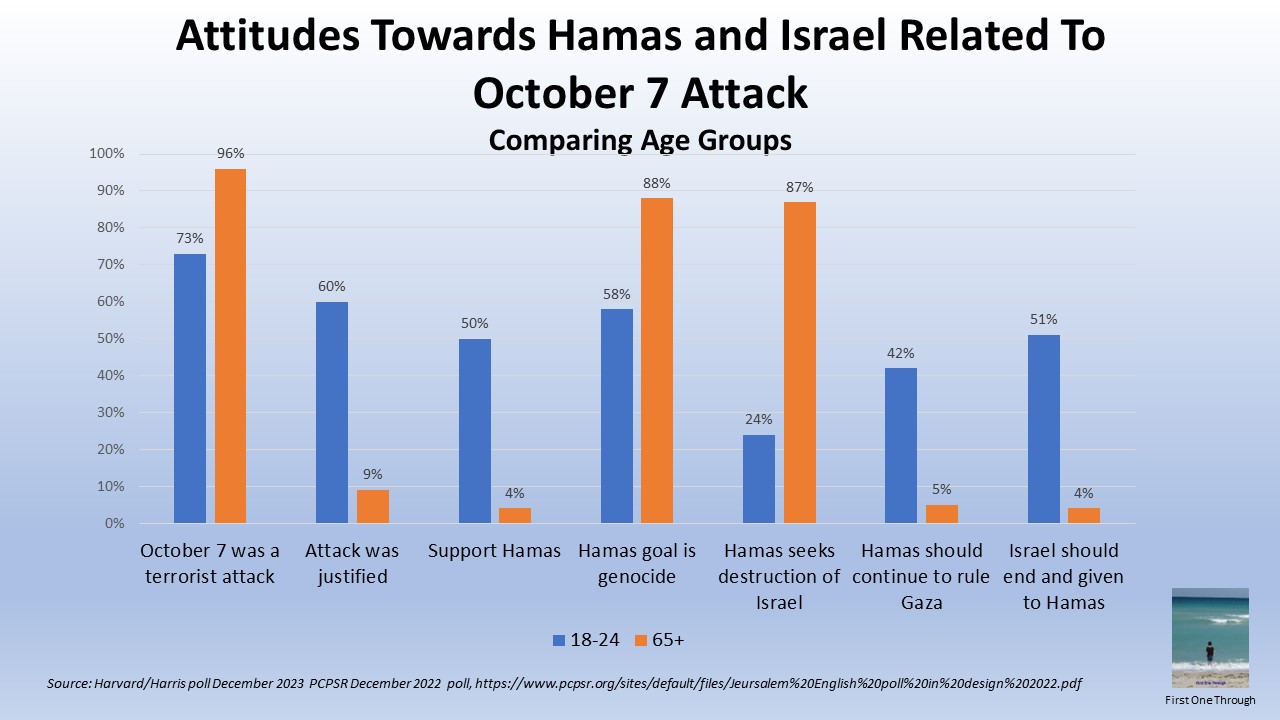
German researchers studying young people before and after October 7 found increasing traditional antisemitic prejudice, with conspiracy thinking and religious fundamentalism among the associated factors. A separate study of American and German respondents likewise found younger age to be an important predictor of certain antisemitic attitudes.
In Britain, minors were involved in approximately 30% of antisemitic physical assaults where the offender’s age was known, compared with 15% of other antisemitic incidents.
Canada’s police records also show an increase in the proportion of young people accused of religion-motivated hate crimes, from 23% to 35% when comparing 2019–2021 with 2022–2024. Those figures cover crimes against several religious communities, rather than Jews alone.
Social Media Gives Old Hatreds New Reach
A century ago, conspiracy theories spread through newspapers, pamphlets and political speeches. Today, accusations about Jewish control, Israeli conspiracies and collective Jewish responsibility can circulate globally within minutes.
Research in the United States and Germany has found associations between intensive social-media consumption, conspiracy thinking and antisemitic attitudes.
Britain’s incident records provide another revealing comparison. In 2024, 71% of online antisemitic incidents involved Middle East-related rhetoric, compared with 42% of offline incidents.
Political and ideological accusations were particularly prevalent online.
In Britain, X accounted for substantially more recorded antisemitic incidents than Facebook, Instagram or TikTok. Argentina’s monitoring likewise found more reported antisemitic activity on X and Facebook.
These records identify where incidents were reported, rather than measuring how strongly each platform influences its users. Still, they reveal how familiar antisemitic accusations have found new audiences and new means of circulation.
A young person encountering repeated claims that Jews control world events, manipulate governments or bear responsibility for a distant war may come to regard those accusations as ordinary political explanations. The messages become familiar and their acceptance can make collective blame seem reasonable.
From Prejudice to Physical Violence
The escalation after October 7 went far beyond hostile words.
In the United States, antisemitic physical assaults increased from 111 in 2022 to 196 in 2024. Britain recorded 137 physical attacks in 2022 and 202 in 2024. Australia’s reported physical assaults increased from 11 to 65 between its 2023 and 2024 reporting years, nearly a sixfold increase. Argentina recorded ten physical assaults in 2024, compared with one in 2022. France recorded 106 physical assaults during 2024.
These attacks included people being punched, kicked, spat upon and otherwise assaulted because they were Jewish.
The increases occurred in countries with very different demographic and political characteristics.
They also varied in severity. In Australia, physical assaults increased faster than overall antisemitic incidents. In Britain, the total number of incidents increased faster than physical assaults.
The international escalation had different local expressions, even as Jewish communities across multiple countries faced greater physical danger.
The challenge is understanding what separates people who hold antisemitic beliefs from those willing to act violently upon them.
The Explanations That Failed the Test
We also examined several factors that might seem obvious explanations for the international surge. The results were surprising.
Immigration did little to explain the differences. Countries with higher levels of overall immigration did not consistently experience larger increases in antisemitic incidents.
Muslim population share was also a poor national predictor. Countries with larger Muslim populations did not systematically experience greater increases in reported antisemitism.
This is a different question from identifying the ideologies or backgrounds of individual offenders. Germany’s police records demonstrate the importance of ideological motivation, while the national population comparison shows that demographic proportions alone explain little about the size of the surge.
Economic hardship produced mixed results. Unemployment showed no consistent relationship with the increase in antisemitic incidents. Some relatively prosperous countries experienced enormous increases, while others facing greater economic challenges recorded smaller ones.
Government positions toward Israel were equally unhelpful. We compared countries’ voting alignment with the United States on Israel-related resolutions at the United Nations. The relationship with antisemitic incident growth was virtually zero. A government’s diplomatic position offered little indication of how much antisemitism would increase among its population.
Countries with more widespread antisemitic beliefs did not necessarily experience larger increases in antisemitic incidents. The ADL’s international surveys measure agreement with familiar antisemitic stereotypes, including accusations of excessive Jewish power and influence. Across seven countries, the average number of stereotypes endorsed had almost no relationship with the percentage increase in reported antisemitism.
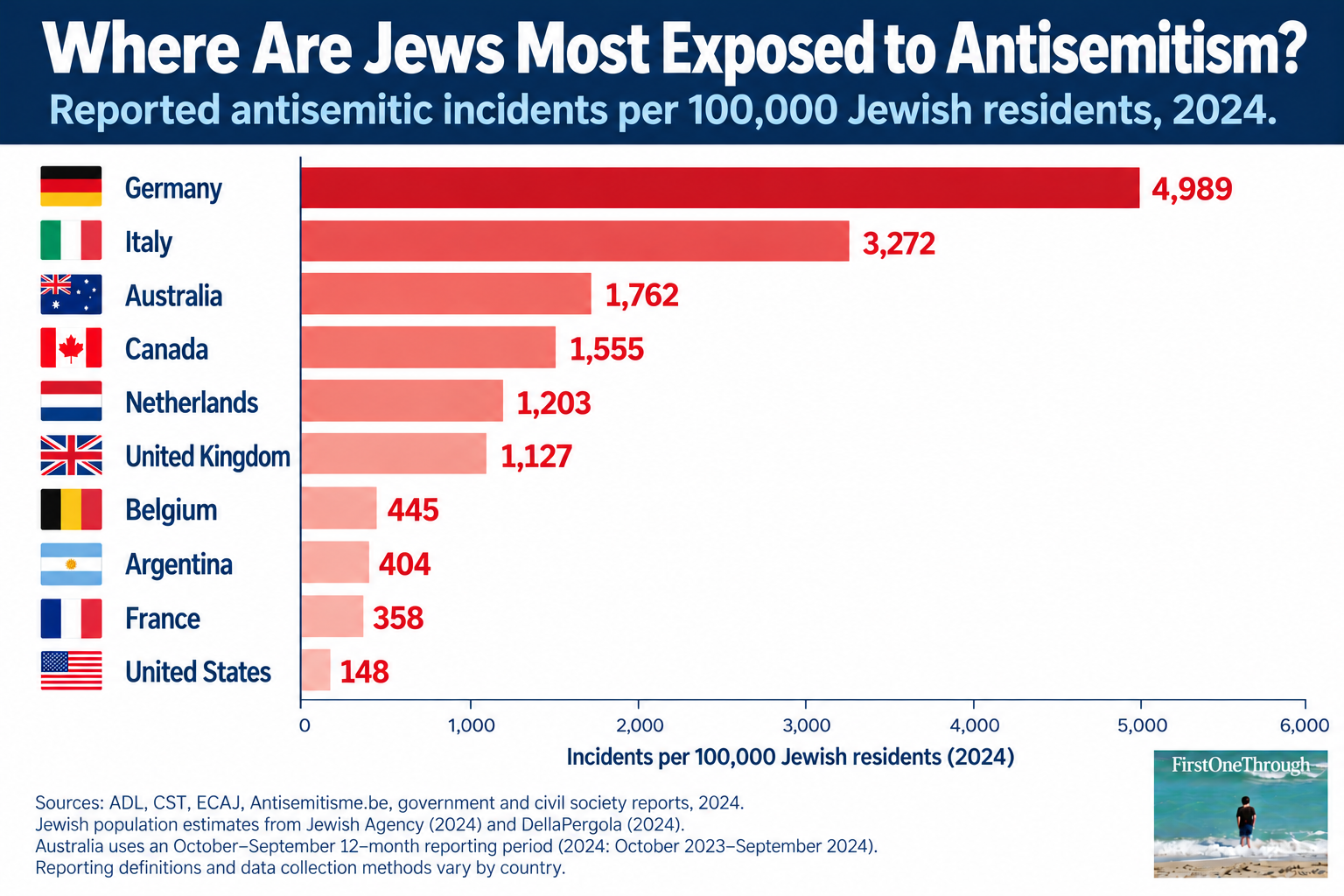
Argentina had relatively high levels of measured antisemitic prejudice but the smallest proportional increase in incidents among our nine countries. France had lower measured prejudice yet experienced a much larger escalation.
These comparisons concern the growth of recorded incidents, rather than the absolute risk of an attack. They also draw on different national reporting systems. Nevertheless, the absence of a consistent positive relationship is revealing.
The amount of prejudice already present in a society appears to be only part of the story. Something else determines when those beliefs become more openly expressed, politically mobilized or translated into attacks.
What the Ten Countries Reveal
The evidence points toward a distinction between the existence of antisemitic prejudice and the circumstances that bring it into the open.
Conspiracy thinking is strongly associated with antisemitic attitudes. October 7 and the subsequent war provided an international event around which hostility toward Israel and Jews became increasingly intertwined. Social media circulated the accusations widely, especially under younger people.
In multiple countries, the escalation extended into physical violence.
The most striking finding is that broad national characteristics – immigration levels, Muslim population shares, economic conditions, government voting patterns and even the prevalence of antisemitic stereotypes—did little to predict which countries would experience the largest increases.
The war provided a common international catalyst. The response reflected the beliefs people held, the narratives they encountered and the willingness of some to blame Jews collectively for events in Israel.

Return to the 12-year-old girl in Courbevoie.
Her attackers were children. She was a child. The court determined that her Jewish identity was the reason she was targeted. The tragedy reveals what is at stake when anti-Jewish prejudice becomes a justification for violence.
The most urgent challenge is to confront the ideas and conspiracy theories that turn Jews into collective enemies—before another child, student, worshipper or passerby becomes their target.


