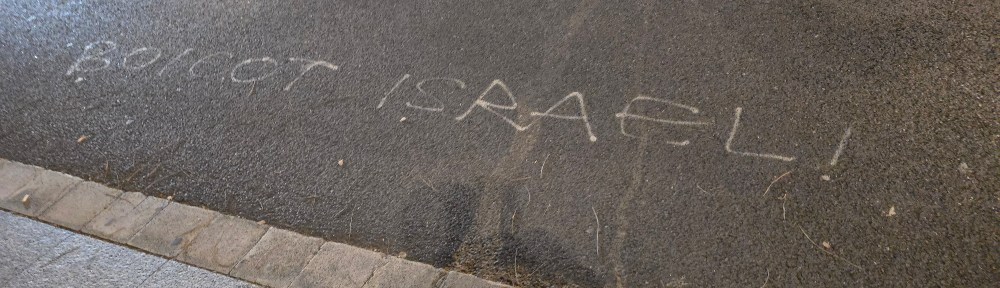
In a sharp escalation of transatlantic tensions, U.S. President Donald Trump announced that the United States will “cut off all trade with Spain”, publicly castigating the Spanish government for refusing to allow U.S. military bases on its soil to be used in operations linked to strikes against the Islamic Republic of Iran and for what he termed Spain’s failure to contribute sufficiently to NATO defense spending. Trump declared that he “doesn’t want anything to do with Spain,” framing the dispute as a response to Madrid’s resistance to what he described as confronting evil in the Middle East and paying its fair share for collective defense.
What follows is not about this immediate crisis. It’s about deeper historical currents that help explain some of the underlying dynamics in Spanish public life that stretch back to the fifteenth century and still matter today.
In Western Europe outside Scandinavia and the United Kingdom, the two countries with the smallest Jewish presence relative to population are Spain and Portugal (about 0.02% of each countries’ overall populations).
That is not a statistical curiosity. It is a civilizational fact.
Five centuries ago, the Iberian Peninsula expelled its Jews. What had been one of the great centers of Jewish life vanished over a five and a half year short window. The Alhambra Decree in 1492 ordered practicing Jews out of Spain. Portugal followed with forced conversions and the Inquisition. Open Jewish life disappeared. What had been woven into the intellectual, commercial, and spiritual fabric of the peninsula was purged.
And it stayed removed.
Unlike other parts of Western Europe where Jewish communities, even after catastrophe, remained visible and rebuilt, Iberia entered the modern era with almost no Jews at all. Medieval synagogues became churches, then museums. Sephardic music became heritage. Jewish quarters became tourist sites. The living community remained tiny.
Fast forward to the present.
In Spain, large protests erupt over the Israeli-Stateless Arabs from Palestine (SAPs) conflict. Municipal councils pass symbolic measures aligned with boycotts. Parliament debates recognition of Palestine. Streets fill with Palestinian flags while graffiti targets Israel.
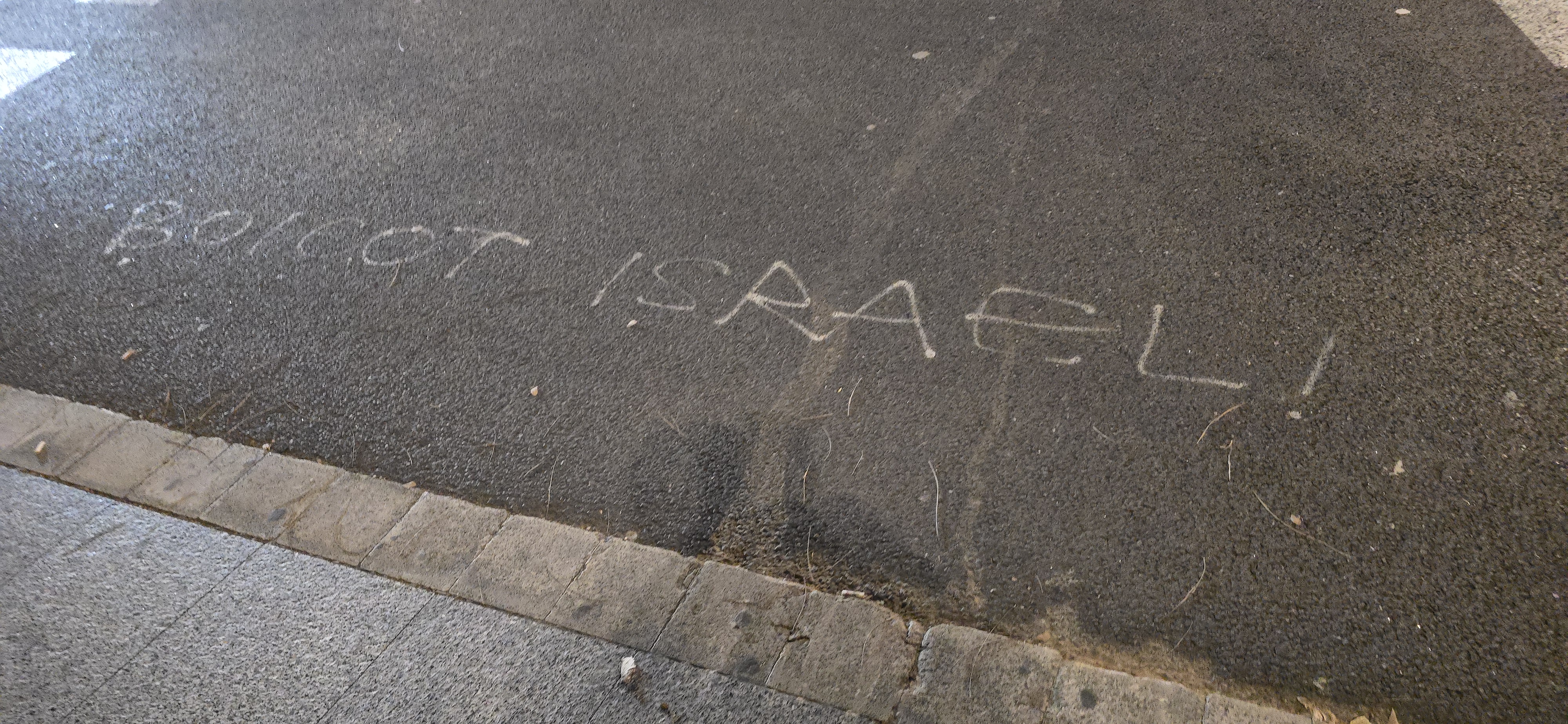
In Portugal, while public demonstrations are generally smaller, political and diplomatic critiques of Israeli policy align with broader European debates.
And yet.
There are no comparable national protest cultures around Sudan. No sustained marches over Somalia. No municipal votes over Afghanistan. Iran’s repression and mass slaughter of its citizens cannot find a sympathetic voice in Iberian plazas, and the Rohingya tragedy never became a regular mobilizing cause.
The difference is not just geopolitical proximity or media cycles. It is structural.
Germany, by contrast, carries the Holocaust in living memory. Its leaders speak of Israel’s security as part of state responsibility. Jewish life is visible, rebuilt, acknowledged. The past is recent enough to shape policy language. The moral vocabulary is immediate.
Spain does not carry that twentieth-century reckoning. Its rupture with Jewish life occurred in 1492, so there is no generational memory of deportation trains. The story of Jews is medieval, not modern.
When a society has lived five hundred years without Jews, when Jewish presence is primarily historical exhibit rather than daily reality, does Israel become easier to turn into abstraction? Does outrage attach more easily to a distant Jewish state when there is little lived Jewish experience at home?
Or is it even worse than detachment?
A peninsula that removed its Jews in the fifteenth century now hosts some of the smallest Jewish communities in Western Europe, public squares with the most intensely anti-Israel protests, and a government unwilling to mobilize in the slightest manner to defang the leading state sponsor of terror, especially against Jews.
Five centuries is not only long enough for history to fade; it is long enough for it to harden into culture.

 First One Through