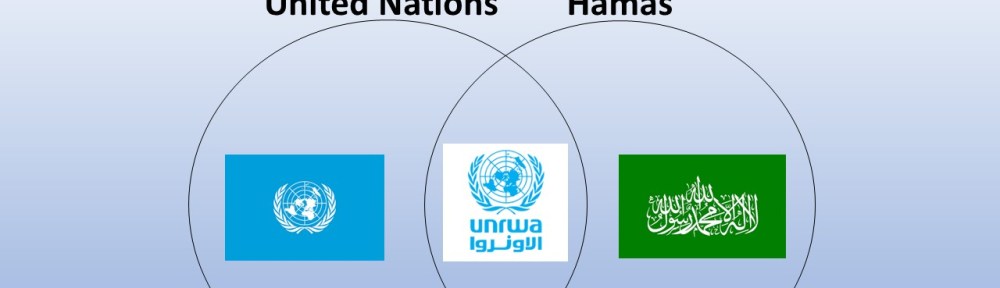
The United Nations has chosen the wrong enemy.
António Guterres wants the world to believe that peace can be engineered with a spreadsheet — that inequality is the disease, redistribution the cure, and justice a matter of financial rearrangement. In his January 15 address, he warned that concentrated wealth corrupts institutions and that most low-development countries are in conflict. The implication is unmistakable: balance the books and peace will follow.
“The top 1 per cent holds 43 per cent of global financial assets. And last year alone, the richest 500 individuals added $2.2 trillion to their fortunes.
Increasingly, we see a world where the ultra-wealthiest and the companies they control are calling the shots like never before — wielding outsized influence over economies, information, and even the rules that govern us all.
When a handful of individuals can bend global narratives, sway elections, or dictate the terms of public debate, we are not just facing inequality — we are facing the corruption of institutions and our shared values.” – UNSG Antonio Guterres
But choosing the wrong enemy guarantees the wrong war.
Because evil is not an accounting problem.
The UN’s failure begins in its diagnosis. It treats terrorism as a social pathology when it is, in fact, an ideological one.
Terrorism is not born in empty wallets. It is born in minds captured by belief.
Two decades of research have demolished the claim that poverty causes terror. Terrorists are rarely the poorest of the poor. They are often educated, middle-class, and technically trained — the engineers of jihad, the lawyers of holy war. The suicide bomber is seldom starving. He is convinced.
If poverty produced terrorism, the poorest societies would be its factories. They are not. Many desperately poor states remain largely untouched by global jihad, while terror movements arise from politically radicalized societies with functioning middle classes and ideological incubators.
What correlates with terrorism is not poverty, but ideas combined with power: religious absolutism, revolutionary nationalism, grievance cultures, and failed identity — not failed GDP.

This is not an academic distinction. It is the fault line between clarity and catastrophe.
If money could defeat jihad, Gaza would be the proof. It is not — it is the refutation.
Gaza has received billions in international aid. What emerged was not prosperity, but the most elaborate terrorist war machine ever embedded in a civilian population: tunnels beneath hospitals, command bunkers under schools, rockets from playgrounds, children trained for martyrdom.
This was not a failure of funding. It was the success of ideology. And the UN instigates that very ideology claiming that Israel should have no sovereign control of who enters its country, and specifically that almost every Arab living in Gaza will move into Israel with UN support.
“We are totally committed in the cause of peace in Gaza, Ukraine, Sudan and far beyond.” – UNSG Antonio Guterres
Hamas did not build tunnels because Gazans were poor. Hamas built tunnels because its charter demands Israel’s destruction, because martyrdom is sacred, because jihad is identity. Money did not create this worldview — it merely financed its execution.
You can flood a society with aid, but if its governing ideology is annihilationist, all you finance is a more capable war machine.
Once the UN misdiagnoses ideology as economics, the next failure becomes inevitable.
For decades, it has constructed and sustained a grievance system around the Stateless Arabs from Palestine (SAPs) that functions symbiotically with jihadist aims. Through its agencies and resolutions, it has promised millions of SAPs who have never lived in Israel that they will one day “return” en masse into Israel — effectively proposing Israel’s demographic erasure through mass population transfer via international decree.
No state can survive if an external body claims authority over who may enter it and redefine its citizenship from the outside. Yet the UN has made this assault on sovereignty a central plank of its Palestine policy — while calling it “humanitarian.”
Through UNRWA’s unique multigenerational refugee status, displacement becomes inherited identity rather than a temporary humanitarian condition. Grievance becomes doctrine. Statelessness becomes culture. A territorial dispute becomes a perpetual weapon.
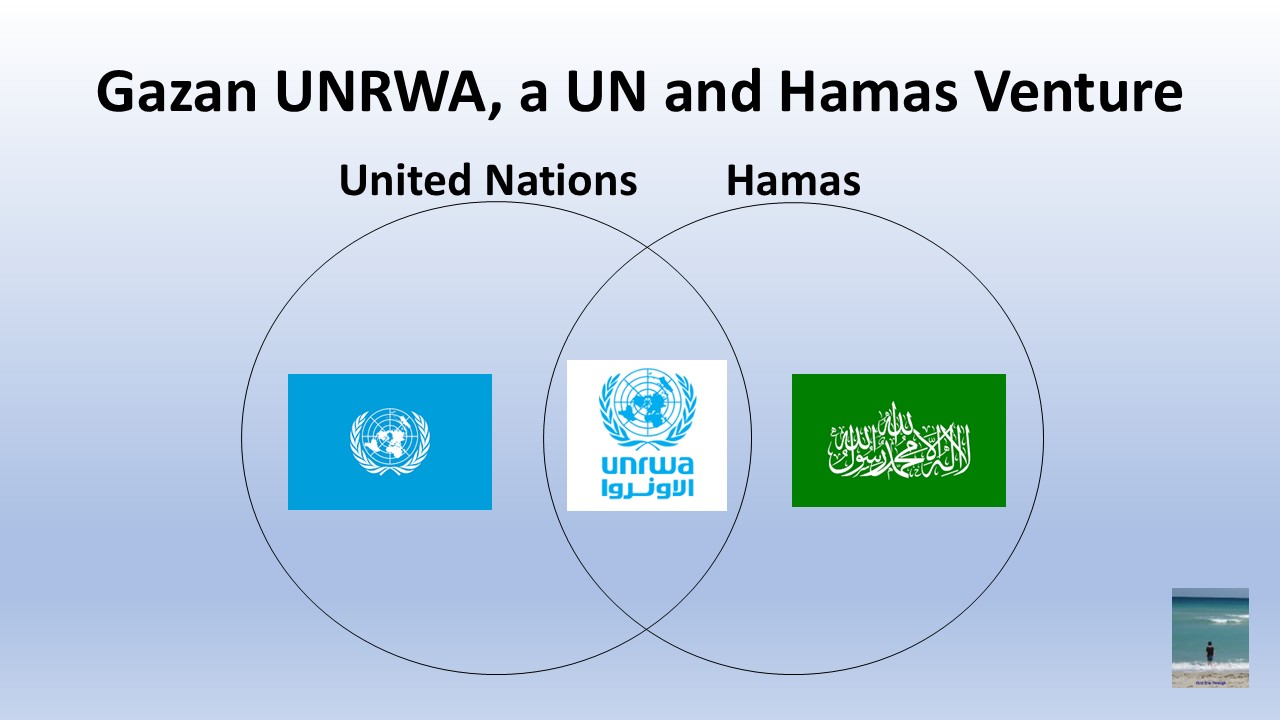
And then the UN asks for more money to sustain it.
Why does the UN persist in this inversion?
Because it refuses to judge belief systems.
It will not confront jihad as an ideology.
It will not describe Islamic terrorism as such.
It will not wade into cultural or civilizational dynamics because it sees itself as a neutral global body.
But neutrality toward ideology does not produce peace. It produces permission.
And because the UN will not fight belief systems, it substitutes economics.
It reframes terror as inequality.
It reframes jihad as deprivation.
It reframes mass murder as misallocated capital.
In doing so, it becomes part of a broader machinery seeking to shift wealth and power from the Global North to the Global South — not merely for development, but as moral rebalancing, regardless of whether this addresses the real drivers of violence.
Redistribution becomes its ritual response whenever violence erupts.
Which means: more authority, more money, more relevance for the UN.
This is not accidental. It is institutional self-preservation dressed as virtue.
So the world is invited to believe the problem is billionaires rather than beheaders. That terror is born from inequality rather than indoctrination. That peace will come from redistribution rather than defeating enemies.
Evil is not a pocketbook problem.
It is an ideology.
And no amount of redistribution will make a death cult lay down its weapons.

 First One Through