
In January 2024, bestselling Afghan-American author Khaled Hosseini appealed to the school board of Brevard County, Florida, to keep his novel The Kite Runner in school libraries.
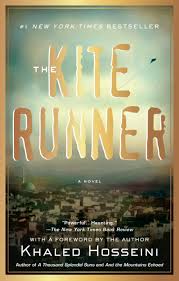
The book introduced millions of people to Afghanistan, a country many knew only through news reports of war and misery. In his letter to the school board, published by PEN America, Hosseini described the opportunities afforded students through literature:
to broaden their human community, to let them walk the world in another’s shoes for a while, to foster empathy for others
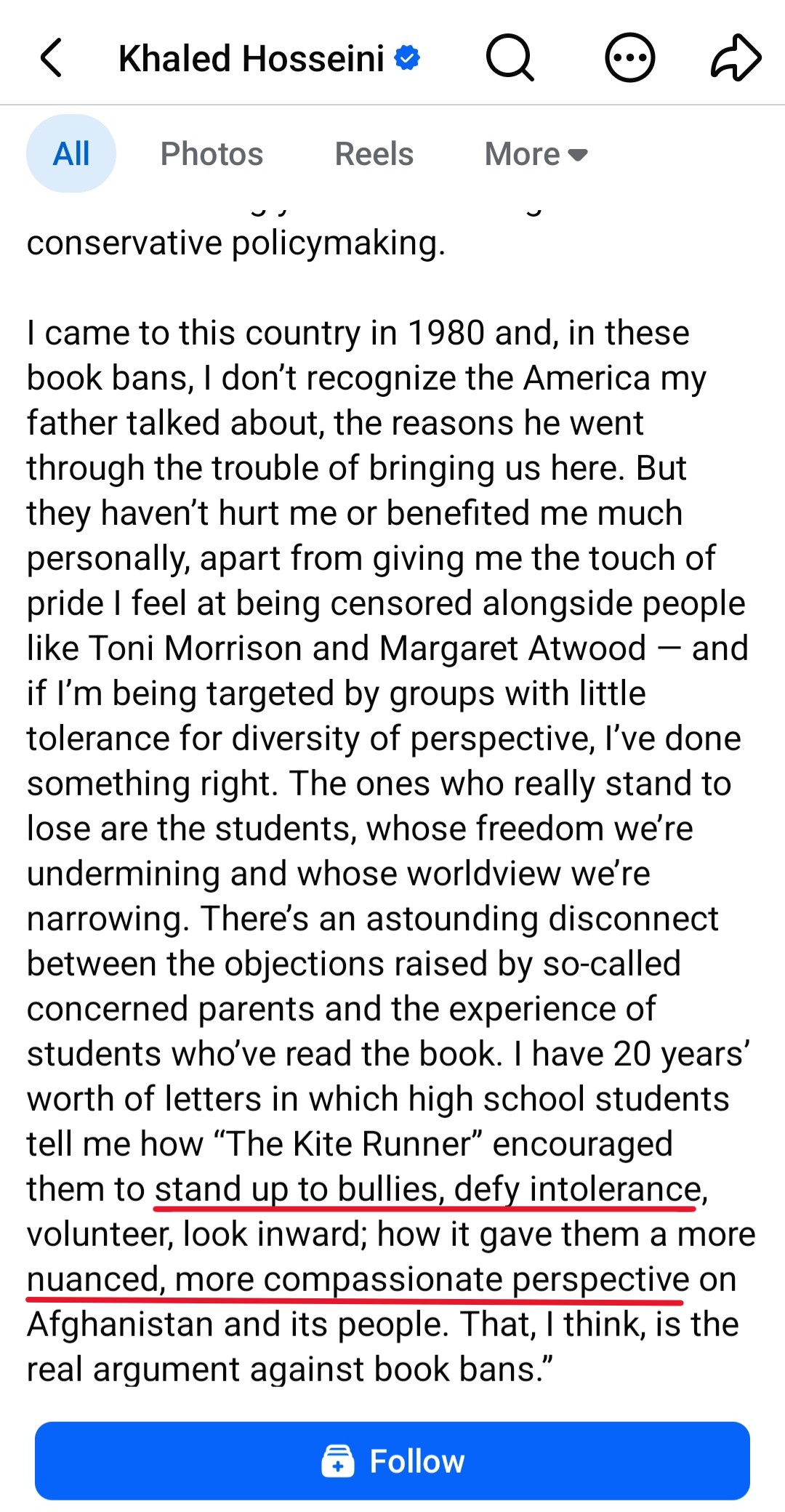
The school board voted to retain his book. The following month, Hosseini compared the rise of book censorship in America to Europe in the 1930s. In remarks shared on his Facebook page, he took particular issue with groups intolerant of diverse perspectives:
The ones who really stand to lose are the students, whose freedom we’re undermining and whose worldview we’re narrowing.
A short while later, Hosseini joined a boycott of Israeli literary institutions.
On December 12, 2024, Publishers for Palestine announced that Hosseini was among more than 7,000 literary professionals who had signed a declaration describing Israel’s history as “75 years of displacement, ethnic cleansing and apartheid.” The declaration asserted:
To work with these institutions is to harm Palestinians
While the organizers distinguished between institutions and individual authors, their campaign extended to Israeli publishers that remained politically silent. To escape the boycott, publishers had to denounce Israel as a “genocidal apartheid regime” and endorse Palestinian Arab so-called “right of return.”
Of the 98 Israeli publishers examined by the boycott organizers, only one met their conditions. That publisher expressly opposed Israel’s existence as a Jewish state.
The politics of the publisher took precedence over the prose of the author.
Hosseini’s own books benefited from literary exchange across political divides. His literary agency’s 2024 Frankfurt rights catalog listed Russia’s Phantom Press and Israel’s Matar as publishers of And the Mountains Echoed. In November 2023, his agency announced the sale of Chinese publishing rights to The Kite Runner.
Did Hosseini demand that his Russian publisher condemn the invasion of Ukraine or that his Chinese publisher denounce the persecution of the Uyghurs? There is no public record of comparable demands.
In July 2026, the same PEN America that had championed Hosseini’s book documented the growing exclusion of Israeli and Jewish writers. An Israeli literary agent who typically sold five Israeli novels annually to American publishers had not sold a single one since December 2023.
Hosseini had argued that his novel gave students:
a more nuanced, more compassionate perspective on Afghanistan and its people.
Would American students benefit any less from reading Israeli novels? Would Israeli students benefit any less from reading about Afghanistan in Hebrew?
Is that the real goal of the literary boycott, to make sure that the world does not have a “compassionate perspective” of Israelis?
Readers should ask Hosseini on his official Facebook page whether he will continue to authorize Hebrew translations of his books without imposing political conditions on his Israeli publisher, and whether he will reconsider his participation in the Israeli literary boycott.
Hosseini’s own books offer a compelling argument against his boycott.


