The Israeli-Palestinian conflict is often described as frozen. It isn’t.
Both Israelis and Palestinians appear to believe that now is NOT the moment for a final peace agreement. Instead of negotiating, each side is using this period to improve its position for whatever comes next.
They have adopted two very different strategies.
Israel’s strategy is physical.
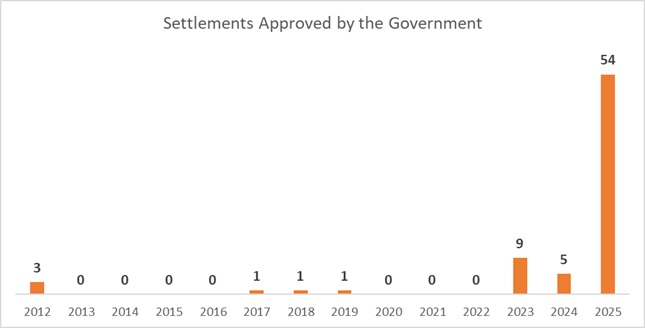
The settlement movement is racing to create new facts on the ground – approving settlements, establishing outposts, extending infrastructure, and expanding the Israeli presence in disputed territory of Judea and Samaria. The calculation is straightforward: when negotiations eventually resume, the map itself will have changed.
The pace has been striking.
| ACTION | 2025 | 2026 (through April) | What it Measures |
|---|---|---|---|
| Official settlements approved | 54 | 34 additional approvals (bringing the current government’s total to 102 since January 2023) | Government approval of new settlements or legalization of existing communities. |
| New unauthorized outposts established | 86 | Total outposts reached 363, with 212 created under the current government | New communities established before formal authorization. |
| Agricultural (herding) outposts | 60 | Continued expansion | Agricultural communities that often extend practical control over large surrounding areas through grazing, roads, fencing, and infrastructure. |
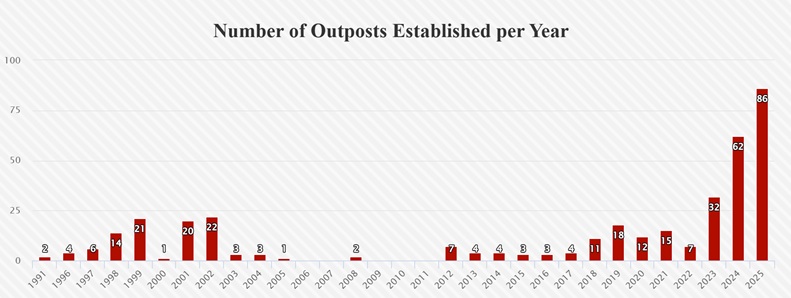
Every month that passes without negotiations leaves more roads, homes, infrastructure, and communities for future negotiators to contend with.
The Palestinian strategy is political.
Rather than altering the geography, Palestinian leaders have concentrated on shifting international opinion. They have sought additional recognition from foreign governments, expanded support within international organizations, pursued legal and diplomatic campaigns against Israel, and strengthened ties with constituencies – particularly within the U.S. Democratic Party – that may wield greater influence under a future American administration. Their calculation is equally straightforward: when negotiations eventually resume, the political environment will have changed.
That effort has also produced measurable gains.
| Diplomatic Milestone | Since October 7, 2023 | Why It Matters |
|---|---|---|
| New recognitions (2024) | Norway, Ireland, Spain, Slovenia, Armenia, Bahamas, Barbados, Jamaica, Trinidad & Tobago | Expanded formal recognition beyond the Global South. |
| Major Western powers (2025) | France, United Kingdom, Canada, Australia | First major Western/G7 countries to recognize Palestine, signaling a shift among traditional allies of Israel. |
| International legal initiatives | Expanded | Increased reliance on the UN, the International Court of Justice, and the International Criminal Court to advance Palestinian objectives. |
| Political support | Increased | Growing support in parts of Europe and among segments of the U.S. Democratic Party. |
Measured by their own objectives, both sides can point to progress. Israel has expanded its physical footprint while the Palestinians have expanded their diplomatic footprint. One strategy seeks to change the map while the other seeks to change the politics surrounding the map.
What is striking is what neither side is emphasizing.
Neither is devoting comparable energy to the difficult work of strengthening governance at home: confronting corruption, reforming institutions, addressing political dysfunction, or building the domestic political consensus that any lasting agreement would ultimately require.
Instead, each is attempting to improve its negotiating position by changing the external environment. It is a race between geography and diplomacy.
The next round of negotiations will not begin where the last one ended. It will begin with a new map and a new political landscape.


