
The international community keeps reaching for the same tool and calling it a solution.
It wasn’t in southern Lebanon. It won’t be in Gaza.
After the 2006 Lebanon War, the United Nations Security Council passed Resolution 1701 with clarity: no armed groups south of the Litani River except the Lebanese state and United Nations Interim Force in Lebanon. Hezbollah would withdraw. The area would be demilitarized.
It never happened.
Hezbollah didn’t disarm. It adapted. Fighters disappeared into civilian life. Weapons moved into homes and tunnels. Infrastructure embedded deeper. Over time, Hezbollah became stronger in the very zone it was supposed to vacate.
UNIFIL patrolled. It reported. It de-escalated when it could.
It did not enforce.
It could not.
That is not a tactical failure. It is the model.
A peacekeeping force without the authority or backing to impose outcomes becomes a bystander to violations it is tasked to prevent.
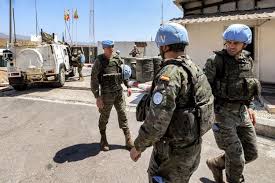
Now the same model is being proposed for Gaza.
Disarm Hamas. Install a new authority. Deploy a multinational force to secure the peace.
It sounds familiar because it is.
Hamas, like Hezbollah, is not just a militia. It is a political and social organism backed by the Islamic Republic of Iran that is embedded in the population, sustained by ideology, and built to survive pressure. It will not voluntarily disarm into irrelevance.
And no external force—operating with limited mandate, constrained rules, and no appetite for sustained combat—will disarm it for them.
This is where the illusion breaks.
Peacekeeping works when peace already exists. It locks in outcomes. It does not create them. When deployed in the absence of resolution, it manages conflict. It does not end it.
That is what happened under 1701.
The “demilitarized zone” became a monitored one. Violations became routine. The temporary became permanent.
Hezbollah didn’t defy the system. It learned how to live inside it.
There is every reason to expect Hamas would do the same.
The problem is not execution. It is the belief that presence equals control. Blue helmets, patrols, liaison offices—they project order. They do not establish it.
Without a force willing and able to dismantle armed infrastructure and impose monopoly on violence, disarmament is not policy. It is aspiration.
Lebanon already ran this experiment. It didn’t produce peace.
It produced a battlefield with spectators.

 First One Through