
On elite campuses, something more consequential than protest is unfolding. Jewish life is being redefined by extremists.
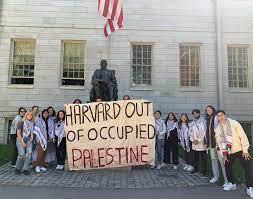
Groups like Jewish Voice for Peace and “Jews for Liberation” present themselves as the authentic moral voice of Jewish students. They speak in the language of justice, liberation, and equality that resonates with their peers. But strip away the branding and the position is blunt: the Jewish state is illegitimate and cast as a project of racial supremacy, apartheid, even genocide.
That is not critique. That is an argument for erasure.
The danger is not only that these claims are false. It is that they are being laundered into the mainstream through the fig leaf of Jewish identity. When anti-Israel activism is voiced by non-Jews, it is political. When it is voiced by Jews, it is marketed as moral truth. Then the fringe becomes credible and slogans become scholarship. Eliminationist ideas acquire the authority of internal dissent.
That shift matters.
Once Israel is no longer seen as a flawed state – much like others – but as an illegitimate one, every boundary collapses. If the state itself is the crime, dismantling it becomes justice, and whatever follows can be rationalized as liberation.
This is how language is turned into a weapon.

Mainstream Jewish campus institutions have not met this moment with equal clarity. Groups like Hillel are focused, rightly, on building Jewish life: community, ritual, continuity. They create space. They avoid litmus tests. They keep doors open. But when the central attack is not on Jewish practice but on Jewish legitimacy, generality reads as hesitation.
When others define Zionism as racism, it is not enough to respond with programming and belonging. The argument has moved to first principles. It demands an answer at that level.
And so a vacuum has opened.
Into that vacuum have stepped the loudest voices, not the most representative ones. The result is a distorted picture of Jewish opinion, one in which the extremes are visible and the center is absent.
That center needs a voice of its own.
Not a mirror image of the anti-Zionist fringe. Not a reaction that turns legitimate security concerns into collective hostility toward all Arabs. But a clear, unapologetic articulation of what most Jews actually believe, and what a sustainable future requires.
That position is not complicated.
The Jewish people have a right to sovereignty in their historic homeland. Israel must remain secure and capable of defending itself against those who seek its destruction. Terrorism and the glorification of violence are disqualifying, not contextual. No serious political future can be built on a culture that celebrates October 7 or teaches that murder is resistance.
The “two-state solution” is treated as moral doctrine, as if repeating it resolves the conflict. It does not. Self-determination is not a slogan tied to a single map. It can take different forms across different political arrangements. Millions of Palestinian Arabs have held Jordanian citizenship. Others live under varying structures of autonomy. The real question is not whether self-determination exists in theory, but whether any proposed structure can produce stability rather than violence.
A future Palestinian state, if it is ever to emerge, must come after a profound transformation: demilitarization, institutional reform, and an educational shift away from incitement and toward coexistence. Statehood is not an entitlement. It is a responsibility.
This is baseline reality, yet it is rarely stated plainly on campus.
A new kind of Jewish student group is needed, one that is explicit where others are cautious and disciplined where others are reckless. A group that centers Israel not as an abstraction but as a living, embattled state. One that can say, without hedging, that Jewish self-determination is legitimate, that its delegitimization is dangerous, and that moral seriousness requires both strength and restraint.
Such a group would do three things differently.
- It would reject the language trap. Words like apartheid and genocide would be treated not as serious analysis but as distortions that inflame rather than illuminate.
- It would refuse the false binary. Supporting Israel does not require abandoning moral judgment. Rejecting terror does not require rejecting an entire people.
- It would re-anchor the conversation in reality. Israel exists. Threats are real. Peace requires conditions, not just intentions.
The goal is not to win an argument in a seminar room. It is to prevent a generation from being taught that the existence of the world’s only Jewish state is a moral error to be undone.
Campus Jewish life needs a mainstream voice that is willing to speak clearly – and be heard.

 First One Through