
For decades the international community has insisted it already knew what a two-state solution should look like. The United Nations drew the parameters. Diplomats repeated the formula. Conferences were held. Resolutions were passed.
And tens of thousands of people died.
The problem may not be the idea of two states. The problem may be that the plan was written without the participation of the country expected to live beside that second state, after countless wars waged to eliminate it.
Israel accepted the concept of two states repeatedly. The Arab world rejected it outright in 1947 and chose war instead. For decades the objective was not coexistence but the elimination of the Jewish state “in any part of Palestine.“
Only much later did some Palestinian leaders begin to speak about accepting two states. Even then the proposal contained a remarkable asymmetry: Arabs could potentially live in both Israel and a future Palestinian state while Jews would be barred from living in Palestine. Even under these terms, acceptance amongst the stateless Arabs from Palestine (SAPs) remained partial and fragile. Large segments of Palestinian society continued to reject the legitimacy of Israel itself.
War therefore continued.
The deeper flaw lay in the diplomatic architecture. The UN framework repeatedly demanded territorial concessions from Israel while simultaneously challenging the basic elements of Israeli sovereignty. The proposed Palestinian state would claim rights that no other neighboring state claims over another country, including constraints on Israel’s control over borders and immigration.
The Oslo Accords attempted to move the process forward through gradual autonomy. Palestinians gained control of Gaza, Area A of the West Bank, and some control in Area B. These territories were meant to become the early foundations of Palestinian self-governance and peaceful coexistence.
Instead they became platforms for continued war. Rockets came from Gaza. Terror networks operated openly in areas under Palestinian control. October 7 was simply the most brutal expression of a reality that had been building for years.
After October 7 it is difficult to imagine any Israeli government accepting the same international blueprint that guided diplomacy for the past thirty years.
Which raises a simple question that has never been asked: What would a two state solution designed by Israel actually look like?
For decades the world has demanded that Israel accept a state designed by others. When Israel raised concerns about security, sovereignty, or enforcement, those concerns were treated as obstacles to peace rather than as conditions necessary to achieve it.
Perhaps the time has come to reverse the process.
Instead of repeating a diplomatic formula that has failed repeatedly, the international community could ask Israel to define the conditions under which it could realistically accept a Palestinian state. Security arrangements, borders, governance standards, demilitarization, and phased recognition could all become part of a framework designed around coexistence rather than wishful thinking.
Whether the SAPs are willing to accept such conditions is a separate matter. Neither side ever fully accepted the UN blueprint. But continuing to impose a model that both parties reject has already produced decades of bloodshed.
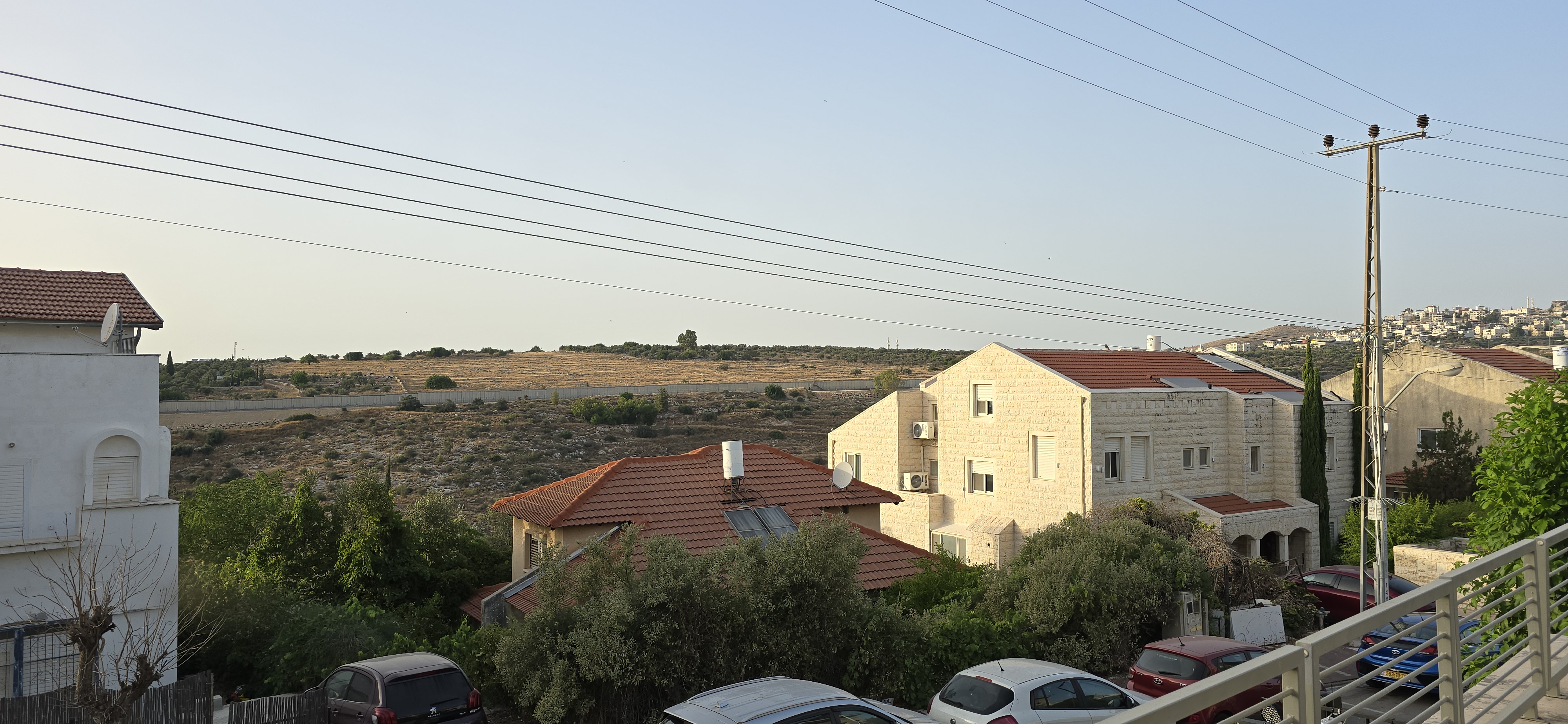
The first fruits of Oslo were rotten. Continuing to plant the same tree will not produce a different harvest.
If the world truly wants two states living in peace, it may finally be time to ask the state expected to survive beside that new second state what peace actually requires.

 First One Through
it’s a fallacy to expect Israel to ever approve a two state solution. There never was a “palestinian” people. They are Arabs, pure and simple who only care about the destruction of Israel. So why would Israel, as long as it’s led by a right wing coalition, allow for its destruction, especially when their charter has never been changed?
LikeLike
The answer is, there is none. The issue isn’t a state, and never has been. The issue is that the complete obliteration of Israel is the core and essence of whatever national identity the so-called “Palestinians” have. Without it, they are just a bunch of tribes and clans with nothing in common, who don’t really get along with one another.
Why would we *ever* allow such a psychopathic faux-nation to exist on our border? If we haven’t learned that by now, we probably deserve for the PalNazis to win.
LikeLike