
The blood libel begins with how the Book of Exodus is misremembered. Exodus is a story of Jewish liberation, yet antisemites preserve it as a story of punishment. That inversion is not confusion but tradition. Every generation dresses the libel in new language, while the structure never changes.
The plagues were directed at dismantling Egyptian authority with precision. The opening strike hit the Nile—Egypt’s god, economy, and source of life—and exposed a crime already committed there. Egypt had drowned Israelite infants in that river to erase a future it feared. The first plague named that bloodshed and stripped Egypt of moral order.
What followed was escalation with restraint. Egypt lost land, productivity, and cosmic claims. Darkness collapsed Pharaoh’s divine authority. What remained was the empire’s final refuge: the belief that continuity would return, that tomorrow would repair what today exposed.
The final plague took it. The death of the firstborn judged a state that had already made children expendable. It revoked Egypt’s claim on the future. Regimes that destroy children forfeit moral legitimacy. Measure followed measure.
The Israelites did not celebrate death. They marked their doors, stayed inside, and departed at dawn. Their defining act was escape from bloodlust, not indulgence in it. Freedom—not punishment—was the center of the story.
Antisemitism begins by erasing that fact.
Across centuries, Jews were remembered not as a people who fled violence but as a people who embodied it. Divine judgment on a tyrannical state was detached from context and reassigned as a permanent Jewish trait. Victims became perpetrators. Liberation became threat. From this inversion, the blood libel followed naturally, and not surprisingly, during Jewish celebrations of Passover when they left Egypt.
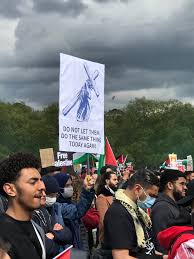
The charge did more than justify violence; it recoded Jews as a permanent danger. If society believes Jews possess bloodlust, then Jews must be watched, monitored, restricted, and scrutinized. They become an unwanted risk. Suspicion overwhelms citizenship. Surveillance replaces equality. In this logic, it is only a matter of time before Jews are assumed to act—and preemptive punishment becomes rationalized as self-defense.
This is how the libel works. It marks Jews forever as dangerous rather than as people who long for freedom. It recasts victims as villains and turns survival itself into evidence of guilt. The blood libel means that Jews are never trusted as equals, and never accepted as free.
That inheritance governs today’s rhetoric. Calling Jews “baby killers” is not a factual claim; it is the inherited reflex of a culture that never accepted Jewish freedom. The accusation is identity-based, not evidence-based. It exists to keep Jews outside the circle of legitimate humanity and to deny the moral standing of Jewish self-defense before it is even asserted.
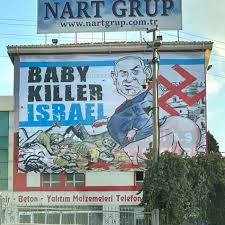
This mindset survives because it is passed down, laundered through new vocabulary, and presented as moral concern. But it is the same lie. It refuses to see Jews as a people who escaped societies that murdered their children and insists instead on seeing Jews as the source of murder itself.
The story that antisemitism started when Pharoah forgot Joseph and became worried about the growing number and power of Jews was the fear of a monarch. Antisemitism was instilled in the masses when the Exodus story was flipped that Jews had a bloodlust and didn’t deserve equality. Every society that accepted the libel eventually convinced itself that Jewish freedom was intolerable—and acted accordingly.

 First One Through