
Every UN humanitarian agency coordinates with the authority that governs where it operates—except in Jerusalem. That exception is not a footnote. It is the story. And it exposes a mandate failure driven by politics, not humanitarian necessity.
UNRWA holds that humanitarian work requires coordination with governing authorities. In practice, it does so almost everywhere: with Jordan, Lebanon, Syria, the Palestinian Authority—and even with Hamas in Gaza, despite Hamas’s terrorist designation by the United States, the EU, the UK, and others.
In Jerusalem alone, UNRWA refuses to coordinate with Israel, the authority exercising full municipal, policing, and regulatory control over the city.
Call it “coordination for access” if you like. It is still coordination. And municipal coordination is not a sovereignty concession (if one believes that Israel does not have sovereignty over eastern Jerusalem despite annexing it in 1980); it is a humanitarian necessity.
How the Facilities Came to Exist
UNRWA’s Jerusalem facilities were established between 1949 and 1967, when Jordan seized and annexed the eastern half of the city in a move not recognized by the UN or the international community. UNRWA nonetheless coordinated with the Hashemite authorities to build schools, clinics, and service centers—because humanitarian work requires coordination with whoever governs in fact.
That history matters. UNRWA’s Jerusalem footprint exists specifically because it once coordinated with an unrecognized occupier.
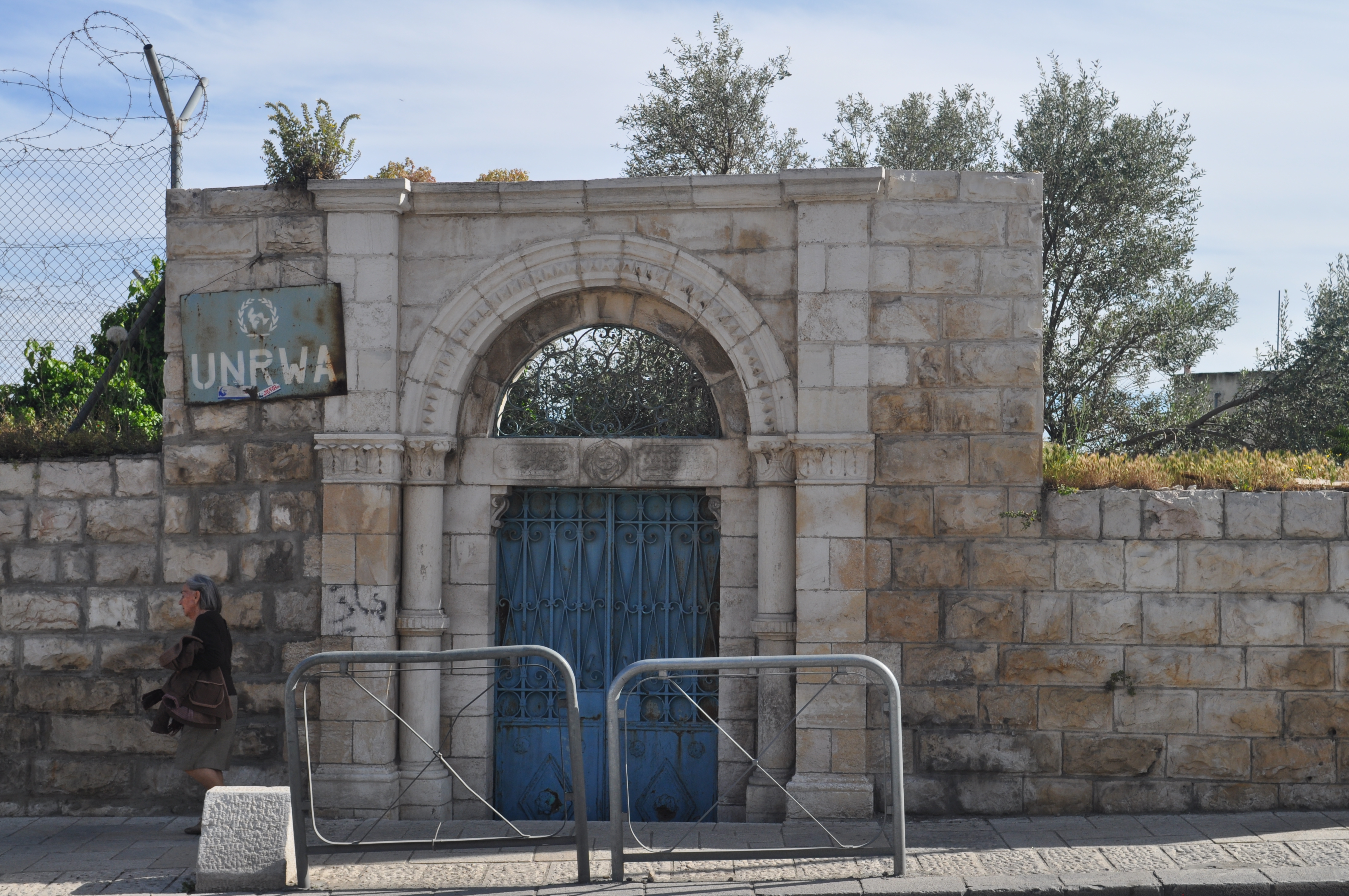
The Reversal
In 1967, Jordan entered the war, violated the armistice, and lost control of Jerusalem. Israel assumed governance and unified the city. Palestinian Arab residents became permanent residents with access to Israeli courts, healthcare, municipal services, and the right to apply for citizenship.
At that point, UNRWA reversed its logic. Where it coordinated with Jordan despite non-recognition, it now refuses to coordinate with Israel—by labeling eastern Jerusalem “occupied Palestinian territory,” theoretically negating its obligation to work with Israel.
That label sits uneasily with the UN’s own history. The 1947 Partition Plan never intended Jerusalem—east or west—to belong to an Arab state. The city was designated a corpus separatum, an internationally administered entity. Jerusalem was never meant to be Arab sovereign territory.

An Outlier by Design
UNRWA’s mandate emphasizes cooperation with local authorities to ensure access, security, and civilian protection. That cooperation exists everywhere except Jerusalem. UNRWA coordinates with armed groups and unrecognized authorities elsewhere, yet refuses coordination with the governing authority in the city where coordination is most essential.
Refusing to coordinate with the authority responsible for public safety is not neutrality. It is an affirmative political act—one that inverts humanitarian logic by privileging narrative over civilian protection. UN immunity exists to facilitate coordination, not to replace it.
Continuity of Care—and the Standoff
Israel has enacted laws to shutter UNRWA offices in Jerusalem. UNRWA refuses to comply, invoking immunity and operating facilities largely outside municipal oversight. The confrontation exists because UNRWA chose inconsistency in the one city where consistency matters most.
“The UNRWA Jerusalem Health Centre, which serves hundreds of Palestine refugee patients every day is, for most of them, their only possibility of having access to primary healthcare….
These [Israeli] measures are a violation of the inviolability of United Nations premises and an obstacle to the implementation of the clear mandate of the General Assembly for UNRWA’s continued operations in the Occupied Palestinian Territory, including East Jerusalem.” – UN Secretary General Antonio Guterres January 15, 2026
The closure of UNRWA offices in Jerusalem would not create a humanitarian vacuum. Education, healthcare, and social services are already provided through municipal systems, national institutions, other UN bodies, and a dense NGO network operating in the city. What would end is not care delivery, but UNRWA’s parallel governance model.
Palestinian Arabs in Jerusalem rely daily on municipal emergency services, hospitals, and courts. UNRWA’s non-coordination removes the safety mechanisms coordination is meant to provide—for civilians, staff, students, and patients alike.
The Reckoning
UNRWA coordinated with Jordan when Jordan’s rule was unrecognized. It coordinates with Hamas despite terrorist designations. Yet it refuses to coordinate with Israel while Israel governs the city, extends legal status to its Arab residents, and has a network of service providers which can easily replace UNRWA in Jerusalem.
That is not humanitarian principle. It is selective politics.
Consistency is the minimum requirement of a mandate.
A mandate that works everywhere but Jerusalem is not a mandate—it is a message, and it is that UNRWA is not a humanitarian organization.
UNRWA remains a rusty tool of the 1947 Partition Plan which insists that holy sites in Jerusalem never fall under Jewish rule.

 First One Through
Pingback: UNRWAs Jerusalem-Ausnahme | abseits vom mainstream - heplev