
Jerusalem is a city of gates. Stone thresholds worn smooth by centuries of feet. Arches that promise passage, and others that deny it.
Nowhere is this more literal—and more symbolic—than at the gates to the Temple Mount.
There are many gates along its walls. Some are sealed, some are ceremonial, and some are active. But in practice, Muslims ascend and descend freely through multiple entrances, while non-Muslims are funneled through a single ramp, tightly controlled, time-limited, and revocable at will.
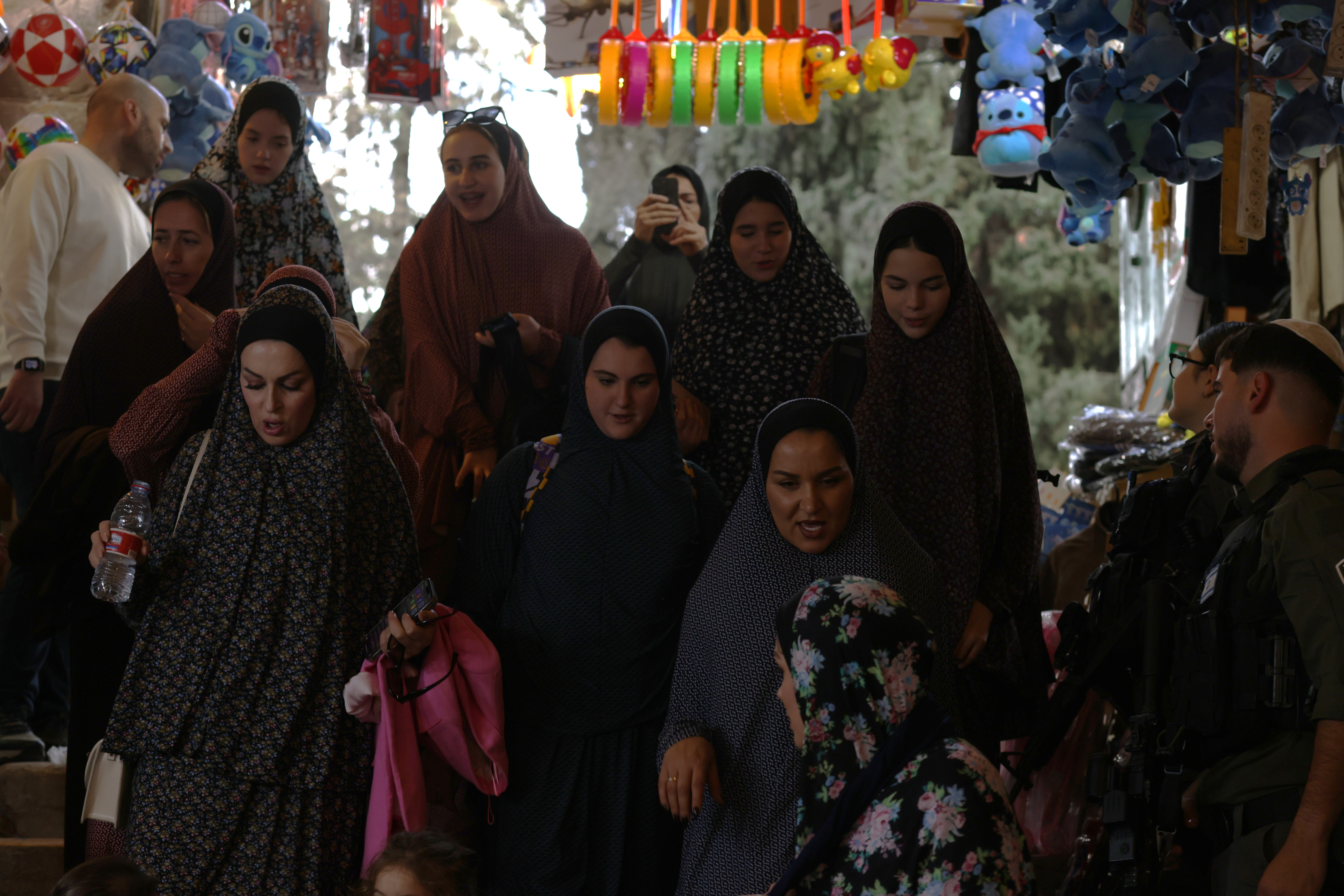
This is not accidental. It is policy.
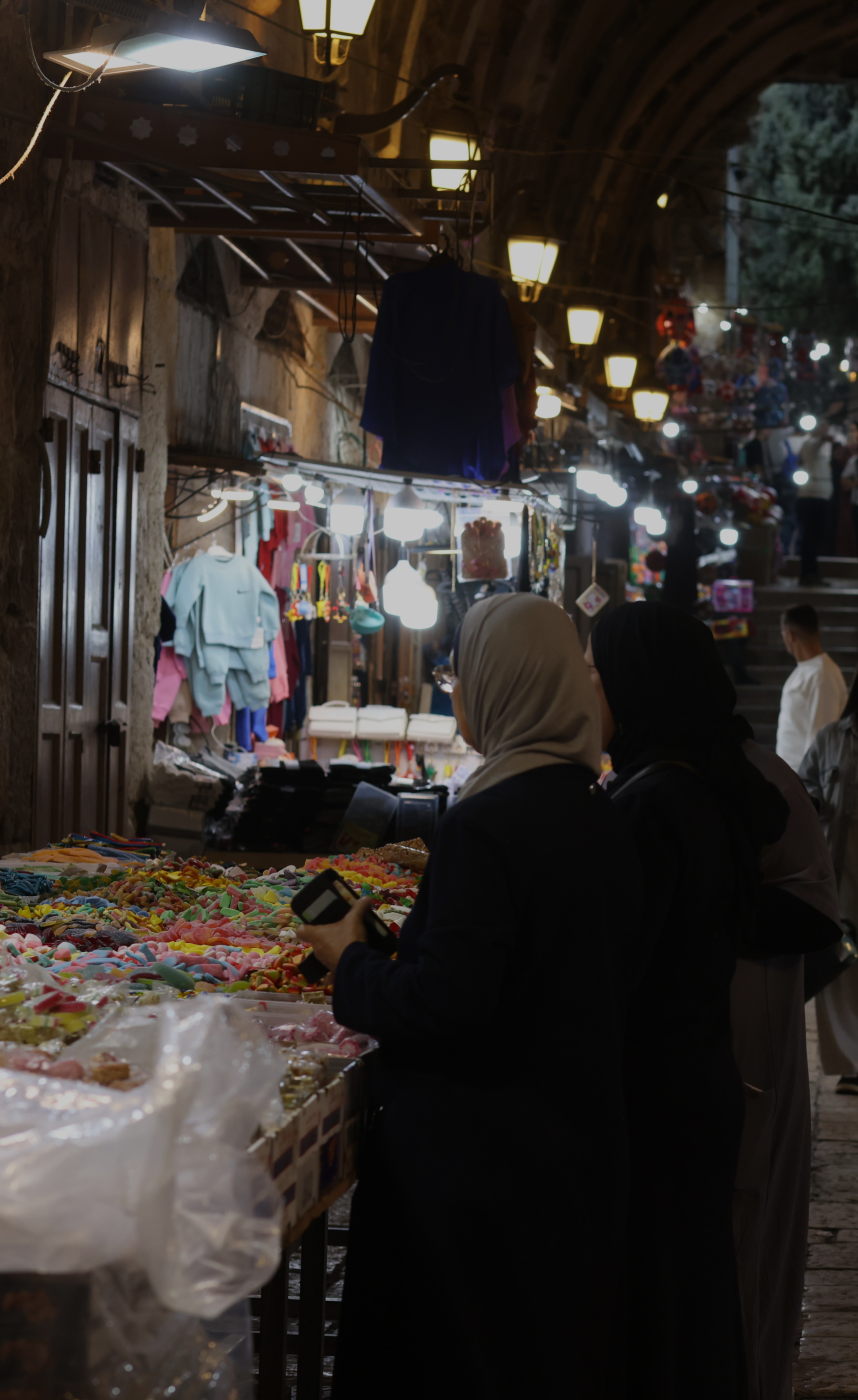
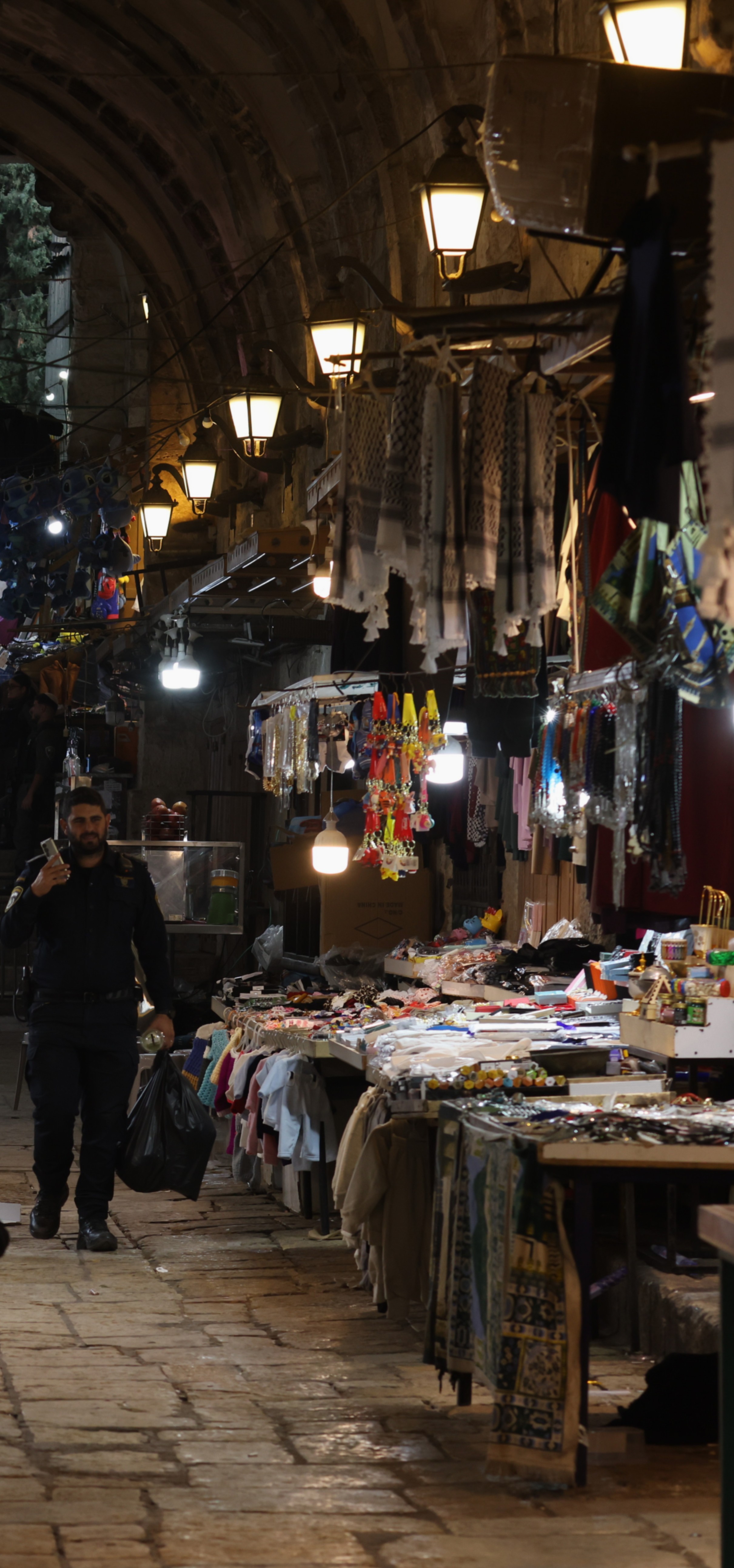
Muslims enter through gates embedded naturally in the Old City’s fabric—the Cotton Merchants’ Gate among them. There, the walls are alive. Candy shops spill color onto the stones. Children’s clothing hangs in soft defiance of gravity. The scent of sweets mixes with dust and history. Life flows in and out, up and down, as it has for generations.
Jews, by contrast, are stopped.
They are turned away from nearly every gate. Not questioned. Not debated. Simply blocked.
Despite the Temple Mount being the holiest site in Judaism, Jews are told—by police, by signs, by precedent—that they may not enter as worshippers.
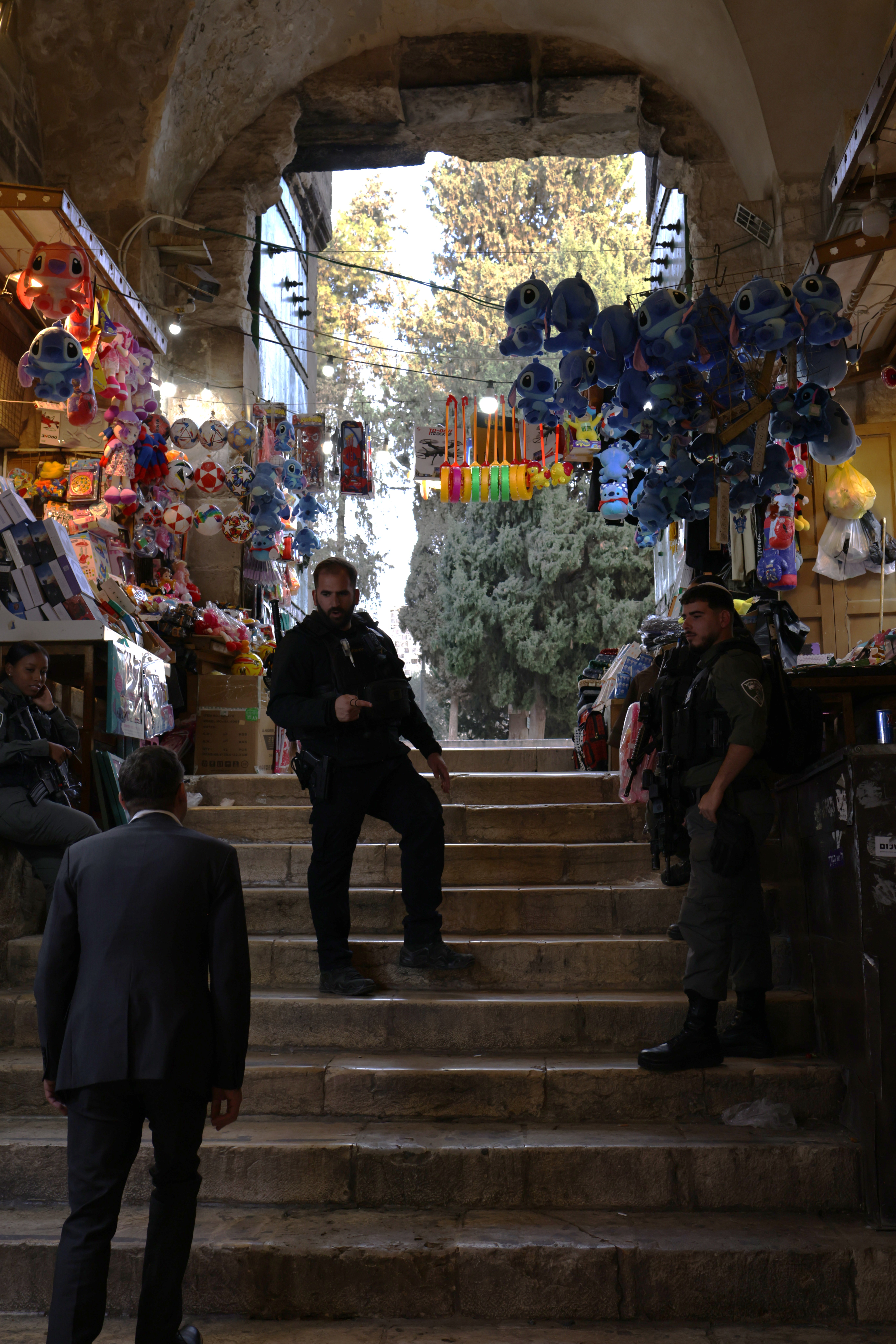
They are redirected instead to a single entrance ramp, detached from the Old City’s living arteries. The ramp rises from the edge of the Western Wall plaza, a vast open expanse that functions less like a neighborhood and more like a giant stone parking lot. From there, Jews may ascend only during narrow windows, under escort, forbidden to pray, forbidden to whisper, forbidden even to move their lips in devotion.
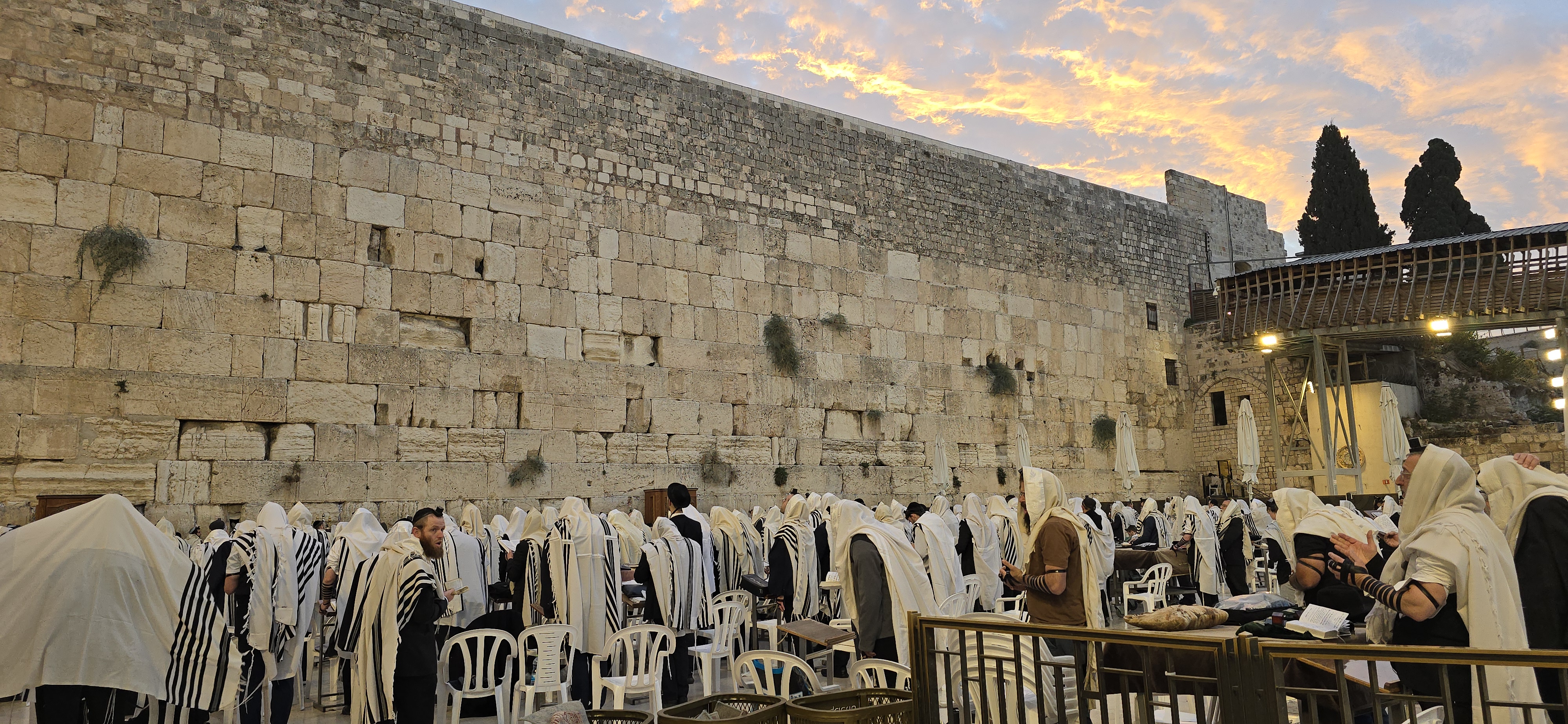
Jews are told to make do.
Make do with praying to a retaining wall of the Temple Mount.
Make do with history filtered through permission.
Make do with holiness at a distance.
This arrangement is often called the “status quo,” as if it were ancient, neutral, or inevitable. It is none of those things. It is modern. It is enforced. And it rests on a single premise: Islamic supremacy over the site requires Jewish silence at Judaism’s holiest place.
Muslims may ascend and descend at will. Jews may only look up.
The irony is almost unbearable. Judaism sanctified this mountain long before Islam existed. The Temples stood here before the Qur’an was written, before the Dome of the Rock was imagined, before the word “status quo” could be used to freeze injustice in place.
And yet today, Jewish presence itself is treated as a provocation.
Not violence. Not disruption. Presence.
The gates tell the story more honestly than any diplomatic statement ever could. Gates that welcome. Gates that redirect. Gates that close.
It’s a caste system familiar to Black Americans. “For Whites Only” is now “For Muslims Only” for 90% of the gates to the Temple Mount. “Negro Entrance” read “Non-Muslim Entrance” is plastered atop a ramp in the far corner of the Temple Mount. While racial Jim Crow laws ended in the U.S. decades ago, Jews remain subject to open religious discrimination at their holiest location. At the insistence of the United Nations.
In Jerusalem, everyone speaks of coexistence. But coexistence cannot survive when one faith ascends freely and another is barred from its own summit.

 First One Through
Pingback: Die Tore zum Tempelberg | abseits vom mainstream - heplev