
Much of the attention on the Balfour Declaration—issued on November 2, 1917—focuses on the United Kingdom’s pledge to “facilitate” “the establishment in Palestine of a national home for the Jewish people.” Israel-haters rage at this clause, claiming that Jews had no historical connection to their ancestral homeland and that Britain had no right to “hand over” immigration rights from local Arabs to Jews.
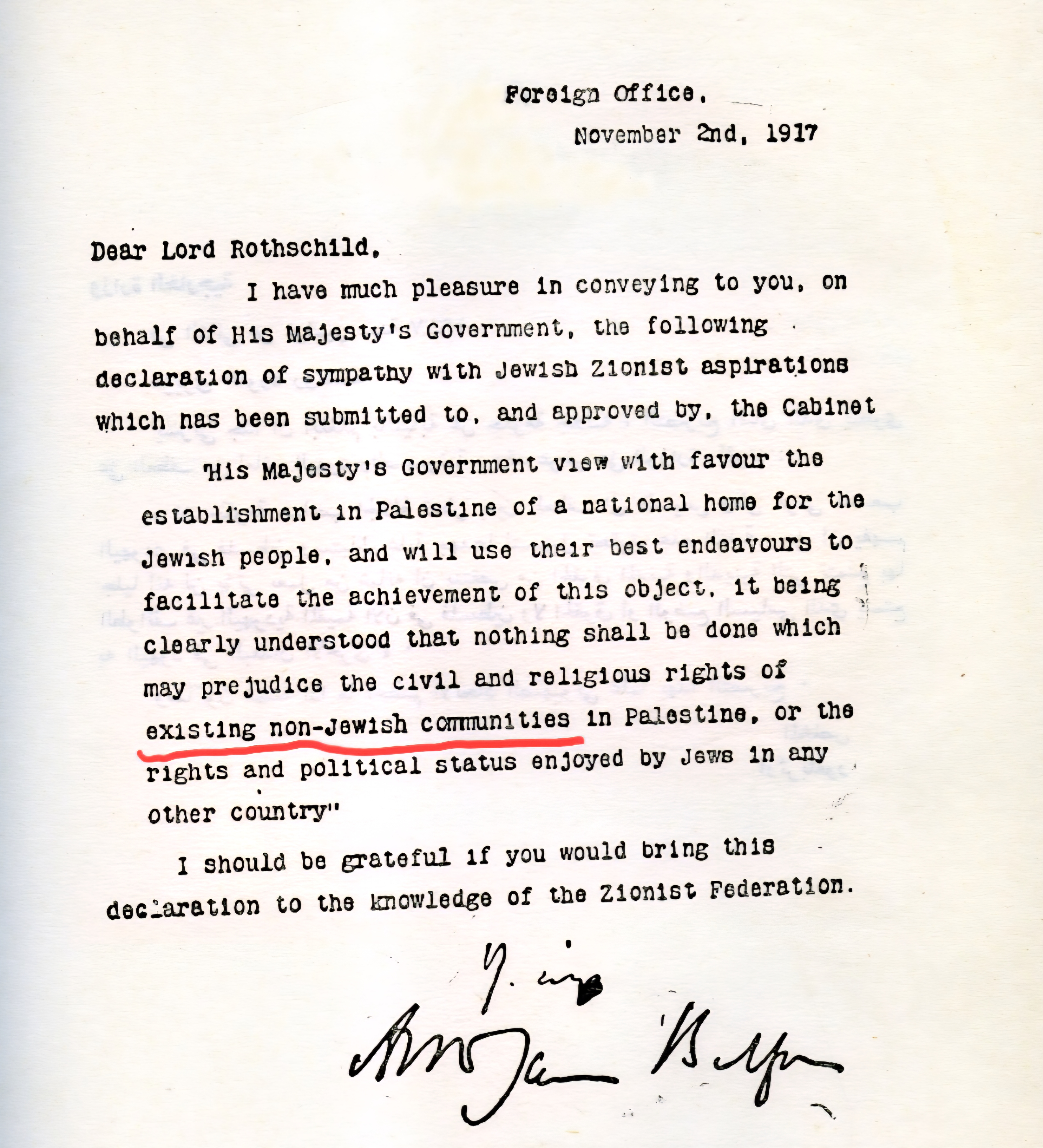
On the anniversary of the Declaration in 1943, Heinrich Himmler of Nazi Germany sent a telegram to the “Grand Mufti” of Jerusalem that Nazis and Arabs had the same enemies – Jewish invaders. In 2016, the President of the Palestinian Authority, Mahmoud Abbas demanded an apology and reparations from Britain for issuing the Balfour Declaration, having repeatedly failed to destroy the Jewish State.
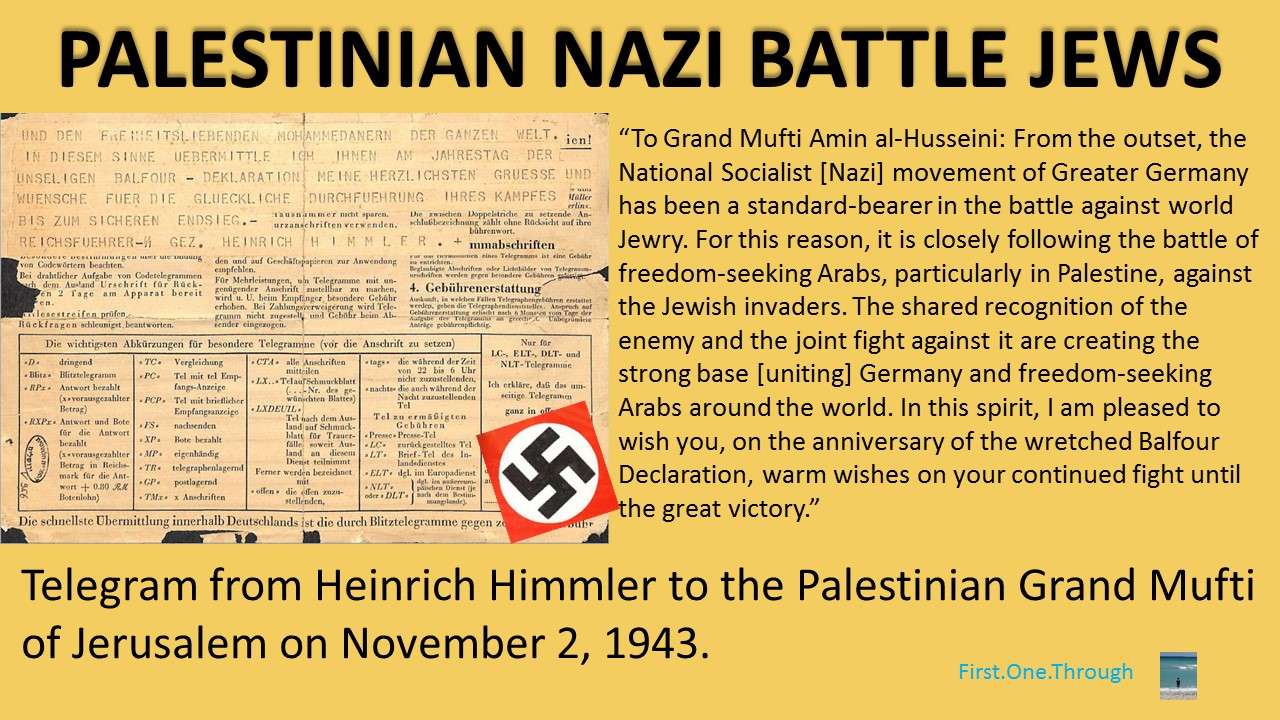
But there’s another part of that same document that antisemites also detest. The closing line reads:
“…nothing shall be done which may prejudice the civil and religious rights of existing non-Jewish communities in Palestine, or the rights and political status enjoyed by Jews in any other country.”
That final clause—protecting Jews’ rights around the world—is precisely what modern antisemitic movements are trying to undermine. Groups like Within Our Lifetime, CAIR, and the Democratic Socialists of America openly campaign to dismantle what they deride as “Jewish power” in America.
They smear Jews as self-serving “capitalists,” accuse them of exploiting “Black and Brown bodies” for profit (as Rep. Rashida Tlaib has said), and seek to push Jews to the margins of public life—all because Jews affirm that the land of Israel is their homeland.
A century after the Balfour Declaration, its promise remains under attack—not only in the Jewish homeland but wherever Jews dare to live proud and free.

 First One Through
Important points my cousin adds:
1. Even in “Altneuland” (Herzl’s visionary novel), there is a clear reference to partnership with the Arabs living in the Land of Israel — see the character of Rashid Bey, the Arab engineer who is a co-leader of the renewed settlement.
2. The Jewish settlements reestablished in the Land of Israel up to 1948 were built on land that had been legally purchased — often at exorbitant prices — from Arab and Turkish landowners, usually in desolate or swampy areas.
3. De facto, the State of Israel existed long before 1948, with thriving health, education, and economic systems that attracted many Bedouins and Arabs from surrounding regions.
4. In practice, Britain did not fulfill its promises in the Balfour Declaration. Under Arab pressure, it issued the “White Papers,” which blocked Jewish immigration to Israel — even when it was known that Jews in Europe faced annihilation (for example, the case of the Exodus ship).
5. There was not a single instance in which Jews initiated attacks on Arabs. All Jewish defensive actions arose from the need to protect themselves against Arab riots and assaults, without any provocation from the Jewish side.
LikeLike
Pingback: Der andere Teil der Balfour-Erklärung – der, den die Antisemiten hassen | abseits vom mainstream - heplev