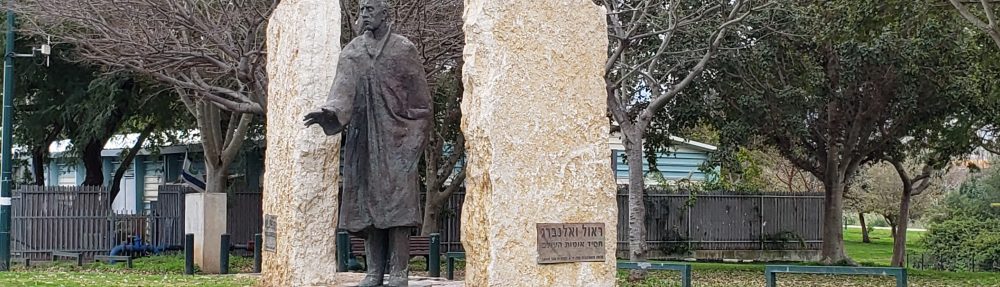
There’s a fundamental difference between Yom HaZikaron and how most countries remember their fallen. In many places—think of Memorial Day in the U.S.—remembrance exists alongside distance. Time has passed, wars feel historical, and public life has moved on. The rituals are real, but they share space with long weekends, travel, sales, and barbecues.
In Israel, there is no distance.
Israel is small. Military service is near universal. Loss is not abstract or inherited from history books—it is current, personal, and interconnected. The name read on television is rarely just a name. It is a classmate. A neighbor’s child. A cousin of a colleague. And beyond the battlefield, the victims of terrorism—on buses, in cafés, in homes—collapse any illusion that war lives somewhere else.
There is no clean line between soldier and civilian. The same people who argue politics, build companies, and raise families are the ones who serve, and sometimes die, in uniform. The same streets that carry ordinary life have carried violence. So when the siren sounds, it is not symbolic; it is recognition. The cost of survival has been paid by people just like you—often people you actually knew.
Other countries observe remembrance days. Israel mourns.
In a synagogue on the Upper East Side of Manhattan, far from the sirens of Israel, that truth took human form.
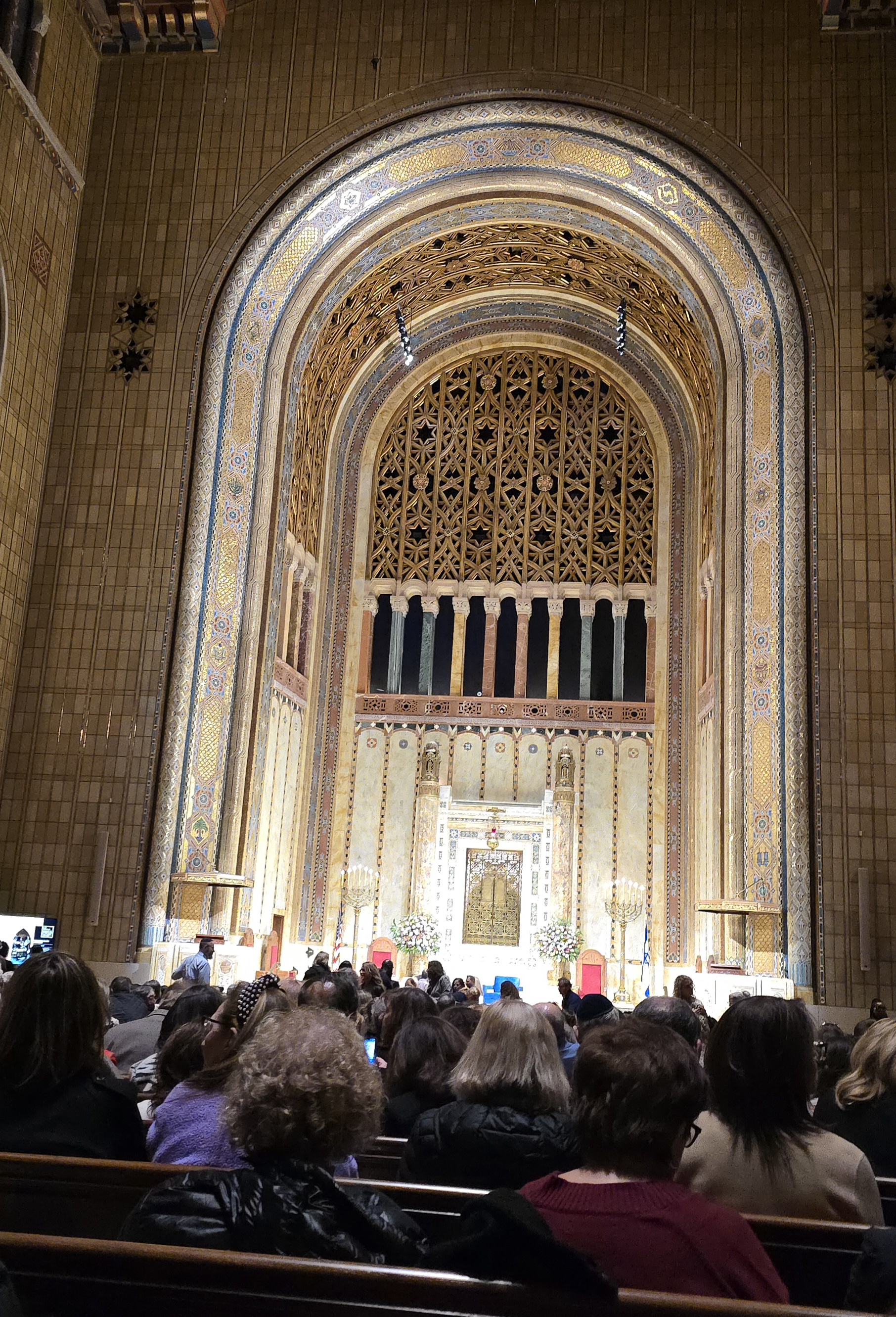
At Temple Emanu-El in New York City, before an audience of more than a thousand people, Rachel Goldberg-Polin sat in conversation with Dan Senor. The setting was the diaspora. The subject was the same wound.
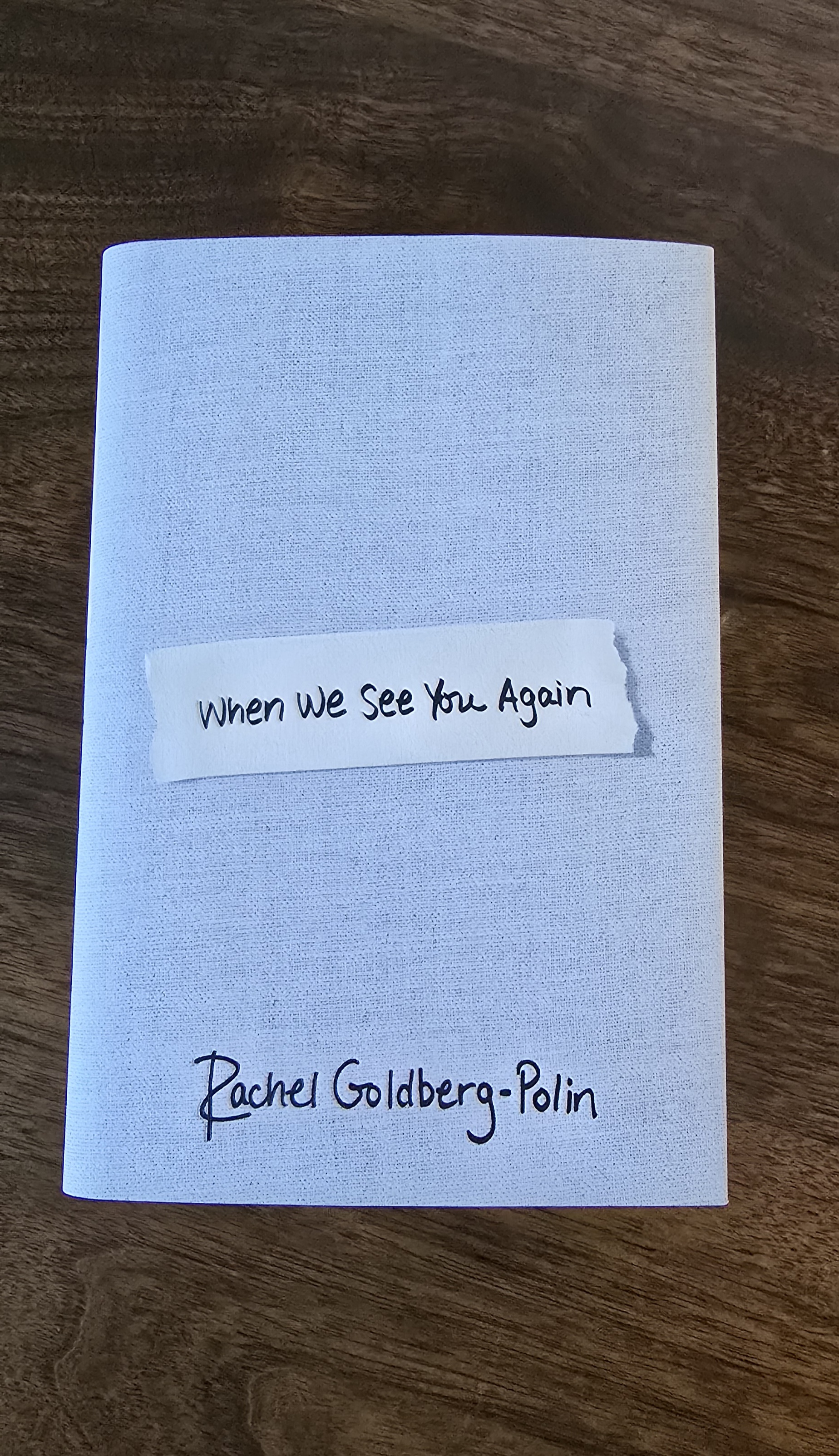
Her son, Hersh Goldberg-Polin, had been injured during the October 7 Palestinian Arab attacks, taken hostage into Gaza, and held for more than a year before being killed in the tunnels. She had come to speak about a book she wrote in response to a question people kept asking her: how are you doing?
The answer was not linear. It was not hopeful in the way people expect hope to sound. It was precise.
Pain wrapped in love. Love wrapped in pain.
She described her life now in three periods: before October 7, the time of her son’s captivity, and the period after his death. Not stages of healing. Not steps toward closure. Distinct worlds, separated by something irreversible.
And then she said something that lands differently once you understand Yom HaZikaron.
She does not believe things should get better with time. She does not understand why much of the world holds that as aspiration. The wound is there. Permanent. The task is not to erase it, or soften it, or move beyond it. The task is to carry it—together with the love that created it—in full.
Forever.
That is not just a mother speaking. It is the emotional grammar of a country.
Yom HaZikaron is not designed to heal. It is designed to remember without dilution. To hold loss and love in the same space and refuse to let either fade. To insist that what was lost remains present, not as history, but as part of the living fabric.
In other places, remembrance days ask for reflection. In Israel, and for those bound to it, the day asks for something harder: to accept that some wounds are not meant to close.
A siren sounds. A country stops. And what fills the silence is not only memory.
It is love that refuses to let go, and pain that refuses to fade.


Everything you say is true, but the only difference from other countries is we in Israel are still in unending war. In World Wars I & II, everyone went off to war in GB, Canada USA, etc It was a war of survival against evil, just as you describe. I am told I lost relatives fighting, and many relatives saw action. Many men did not return. Many did not return whole. The people of Poland, Manchuria and dozens of other countries didn’t even get to fight, murdered by the millions, including soldiers. No graves, no records.
LikeLike
Distance doesn’t not exist in Israel. Everything is near and dear
LikeLike