Some arguments don’t come as arguments. They come as word choices.
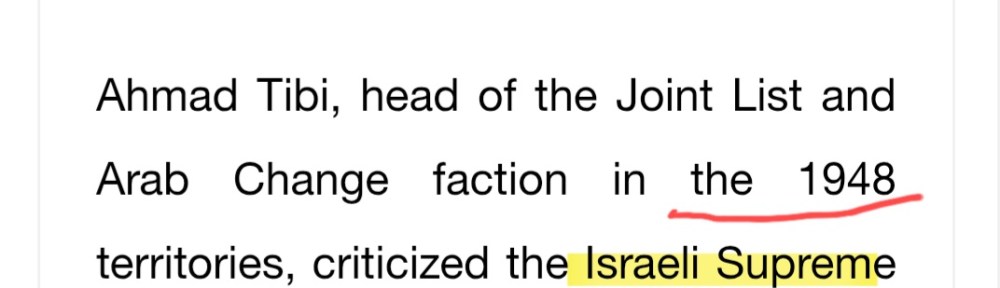
In a recent dispatch, the Palestinian Authority’s official news agency, WAFA, made a choice that says everything. Israel appears as an adjective when attached to institutions. Its actions carry familiar condemnations. And the land itself is recast as “the 1948 territories.”
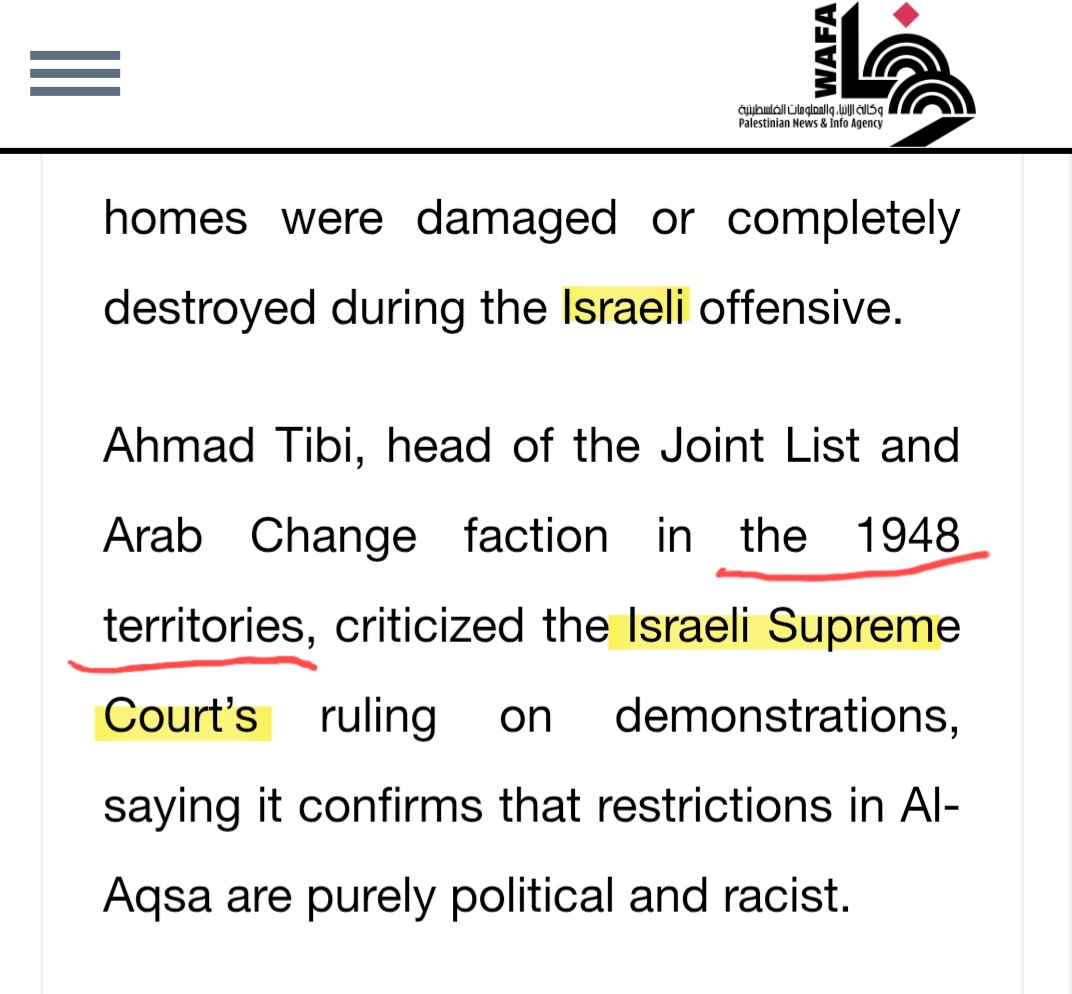
That is not reporting. That is positioning.
1948 is a year of war and statehood. It marks the moment Israel came into being and survived an attempt to erase it at birth. Turning that year into a place rewrites the present. It drags today back into a permanent opening chapter, where the outcome still hangs in the balance.
A country becomes a placeholder. Sovereignty becomes provisional. Everything sits on ground that the language refuses to make firm.
This is how maximal claims stay alive.
If a state only exists as “1948,” then its future remains permanently negotiable.
The contradiction is visible in plain sight. Daily coordination with a functioning state on one hand. A refusal to grant that state permanence on the other. Even more, that the very land of that state is illegal, stolen. The phrase allows engagement without acceptance.
That approach carries consequences.
Conflicts move when both sides deal with what is actually there. Language that recasts reality into a provisional state keeps the dispute locked at its most basic level. Every negotiation floats above a refusal that pulls it back down.
This pattern extends well beyond a single outlet. It echoes across official statements, classrooms, and international stages. Words are chosen with care because they preserve a claim that facts have long since settled.
Israel is a state with institutions, borders, citizens, allies, and critics. It participates in the global system, fights wars, signs agreements, and argues with itself in open courts. None of that fits inside a date.
Calling it “the 1948 territories” keeps the founding war alive in the present tense.
And as long as that language holds, the conflict never leaves its opening scene.

 First One Through