
We tend to think of “ground zero” as a place, a site of destruction. Where you can point to and say: it happened here.
The new ground zeros are not simply where attacks occur. They are where the vulgar idea stops sounding outrageous.
They form in environments where the rules quietly change, where violence against Jews is never explicitly endorsed, but is no longer cleanly condemned. It is where it is explained. Contextualized. Where the language shifts just enough that the victim is converted into the villain.
You can see it in parts of political culture that elect figures like Rashida Tlaib and Zohran Mamdani without seriously confronting the ideological space around them.

Ayman Mohamad Ghazali, the man who came to murder hundreds of children at a Jewish day school in Michigan, lived in Rashida Tlaib’s Michigan district, home to thousand of people who believe Tlaib’s rhetoric, who support – or least excuse – her vile antisemitism.
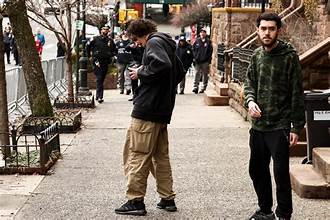
The same motion can be seen in New York City where Emir Balat, 18, and Ibrahim Kayumi, 19, pledged allegiance to the Islamic State and came to the city that elected a jihadist mayor to rain violence on perceived enemies.
Ideas shape environments. And environments shape what becomes possible.
It happens quickly: it took barely a decade for NYC to go from a capitalist moderate Jewish mayor in Michael Bloomberg, to an anti-capitalist jihadist in Zohran Mamdani.
When enough people participate in erasing the moral line, the boundary that once made violence unthinkable begins to weaken. And when that boundary weakens, the outliers don’t need instructions.
They need atmosphere.
The new ground zero is not the place where it happens. It is where it no longer feels impossible.

 First One Through