
A man attempted to massacre Jews at a synagogue and preschool in Michigan.
He drove a truck into the building, fired a rifle, and carried explosives and gasoline. Inside were more than a hundred children and staff. Only the quick response of security guards prevented what could have been a mass slaughter of Jewish children.
That should have been the story.
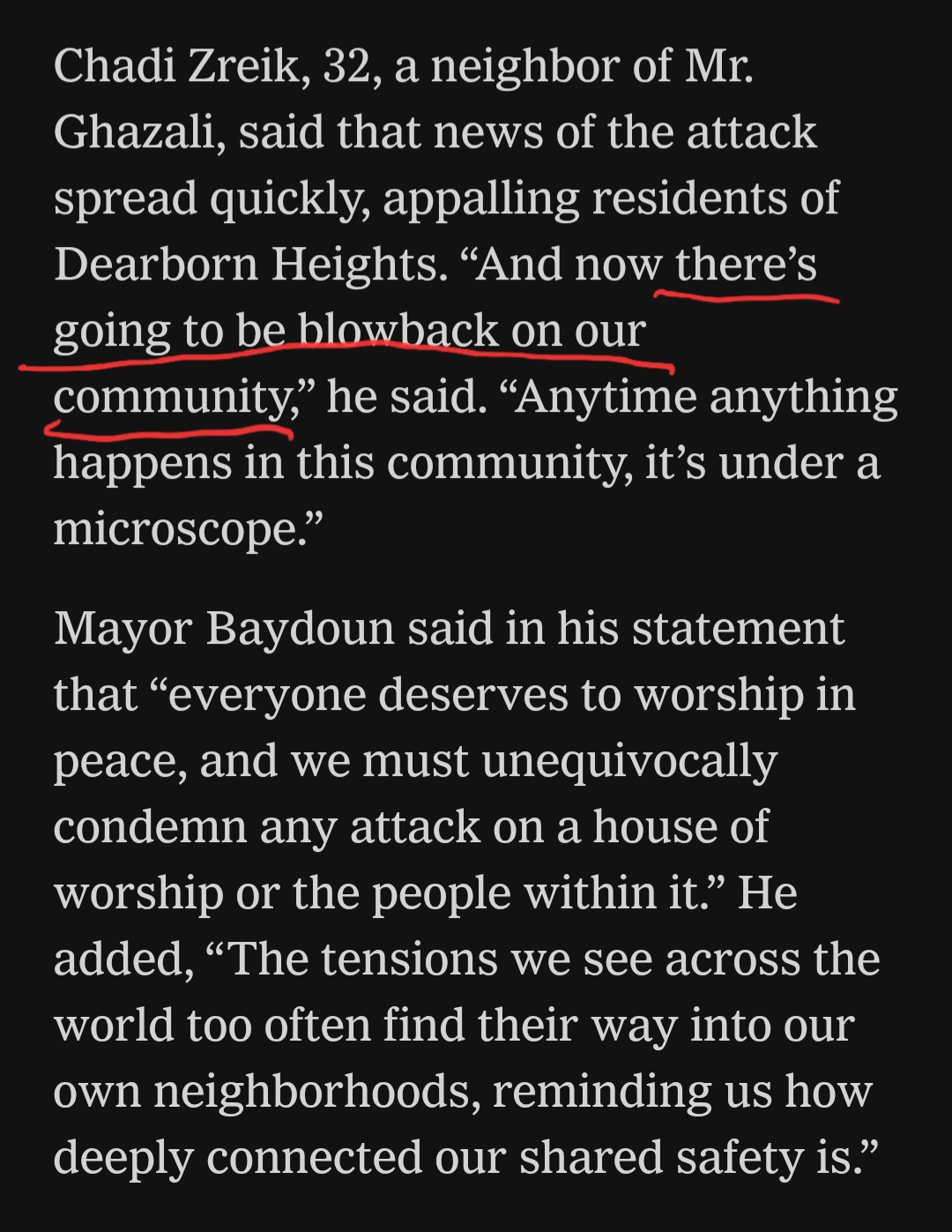
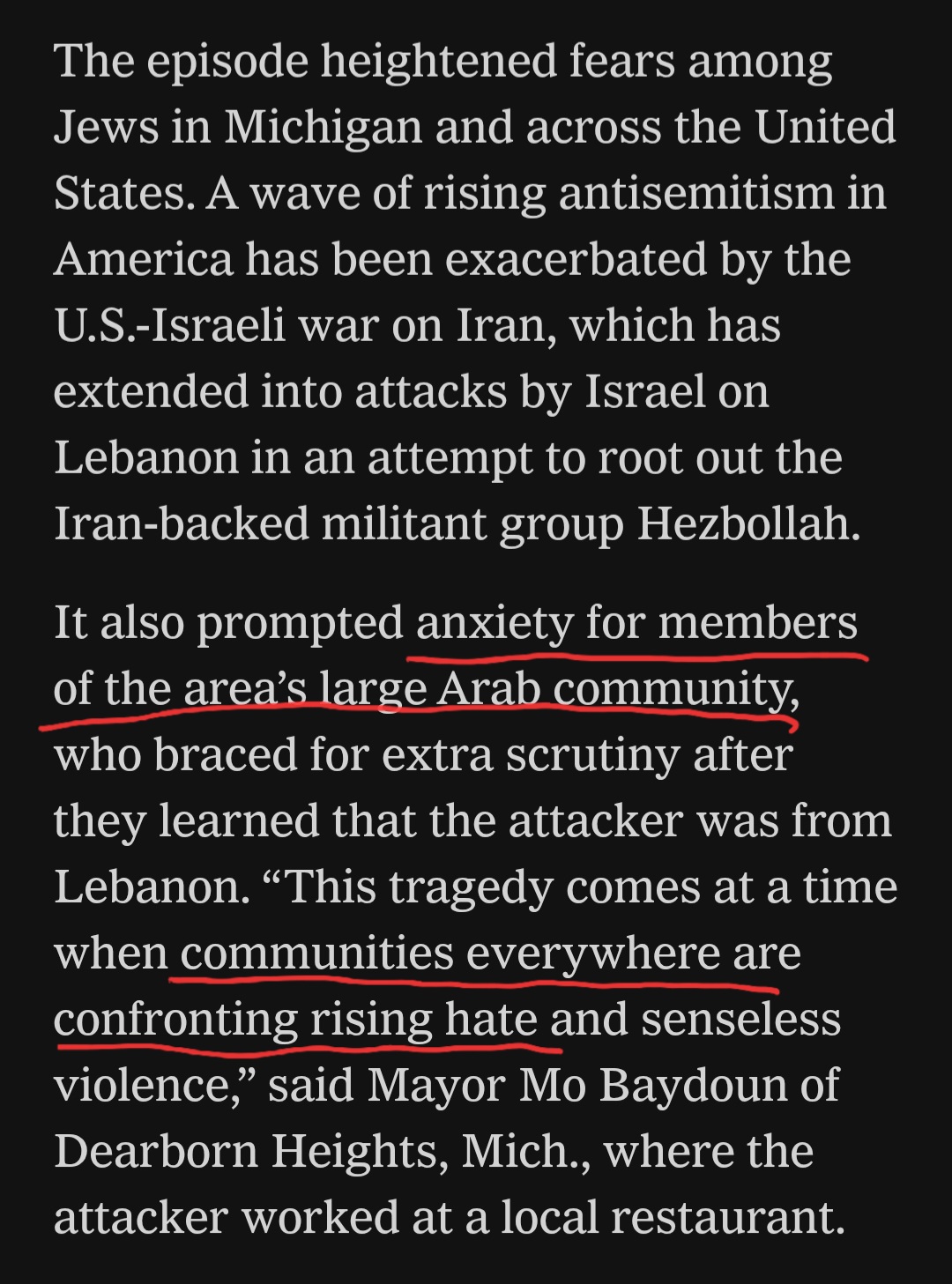
Instead, in its coverage of the attack, The New York Times quickly shifted the emotional center somewhere else. The paper highlighted concern that Muslims or members of the local Arab community had “anxiety,” worried they might face might face “blowback” after the attack.
Pause for a moment and consider the moral inversion.
A man tries to murder Jewish children in a synagogue, and the newspaper of record worries about the social consequences for people who share the attacker’s background, and “communities everywhere.. confronting rising hate.”
Would this framing appear in any other circumstance?
If a white nationalist attempted to burn down a Black church, would the central concern in the article be whether white Americans might face uncomfortable scrutiny?
If a neo-Nazi attacked a mosque, would journalists pivot immediately to the anxiety of Christians worried about backlash?
Of course not.
The victims would be the story. The ideology behind the violence would be examined directly and without hesitation.
But when Jews are attacked – especially by jihadists – the narrative too often drifts away from them.
The Reality the Coverage Avoids
There is another uncomfortable fact that often disappears in these discussions.
In the United States, Jewish institutions have repeatedly been targets of ideological violence.
Synagogues, kosher markets, Jewish schools, and community centers have been attacked by extremists motivated by antisemitism and/or jihadist ideology.
The list is tragically familiar:
- the Tree of Life synagogue massacre in Pittsburgh
- the Poway synagogue shooting
- the Jersey City kosher market attack
- the Colleyville synagogue hostage crisis
Across Europe the pattern is even clearer: the Toulouse Jewish school massacre, the Hyper Cacher supermarket attack in Paris, and numerous synagogue shootings and plots across the continent have been by jihadists.
Yet the reverse pattern is almost nonexistent.
There is no recurring history in the United States of Jews entering mosques to massacre Muslims, no wave of Jewish attackers targeting Muslim schools or grocery stores.
The asymmetry matters.
Jewish institutions build security fences, hire armed guards, and train for active shooters not because of paranoia, but because experience has taught them they are frequent targets.
The Michigan synagogue had security for exactly this reason.
Without it, the story might have been hundreds of funerals.
A Pattern of Moral Softening
The New York Times’ framing of the Michigan attack fits a broader pattern that has become increasingly visible in recent years.
When jihadist-inspired violence occurs, the language often softens. Motives become vague. Ideology dissolves into references to “grievances,” “tensions,” or the emotional distress of communities associated with the attacker.
Select context is provided for the perpetrator that make him appear a victim, such as mourning the loss of family members in the Middle East, without sharing that those family members were members of jihadi terrorist groups.
This is no longer news but distortion.
Journalism is supposed to clarify reality, not obscure it. When coverage instinctively protects the social sensitivities of the attacker’s community while barely dwelling on the intended victims, it creates a moral fog.
No serious observer believes entire communities are responsible for the crimes of individuals. That principle should remain unquestioned.
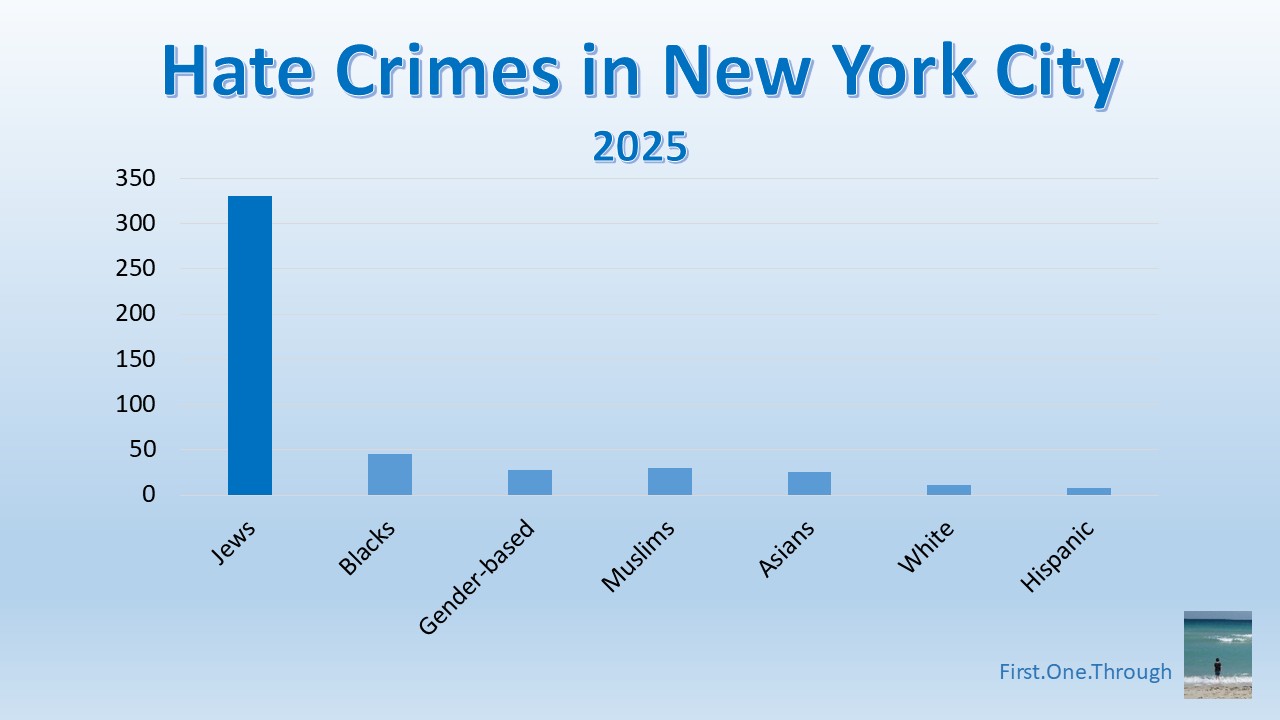
But shifting sympathy away from the Jewish victims of an attack to the jihadi attacker is a failure to report the truth clearly for the purpose of a twisted narrative. One that continues to put the most attacked minority-minority in the crosshairs while falsely painting their most frequent attackers as the ones needing sympathy.

 First One Through