The choice of words reveals more than the facts.
In a recent article about Iranian influence among Shiite communities, The New York Times described Kashmir this way:
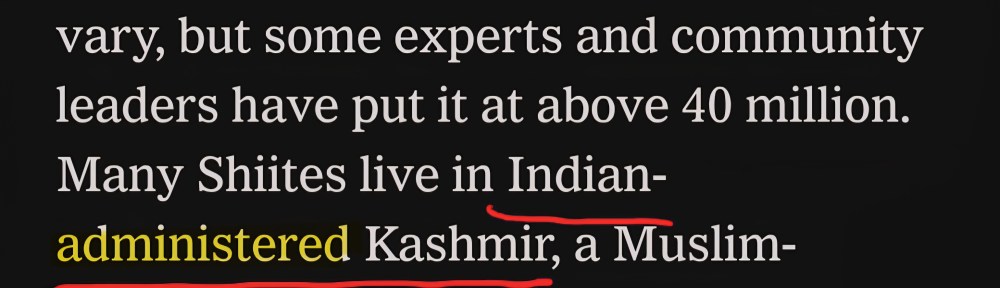
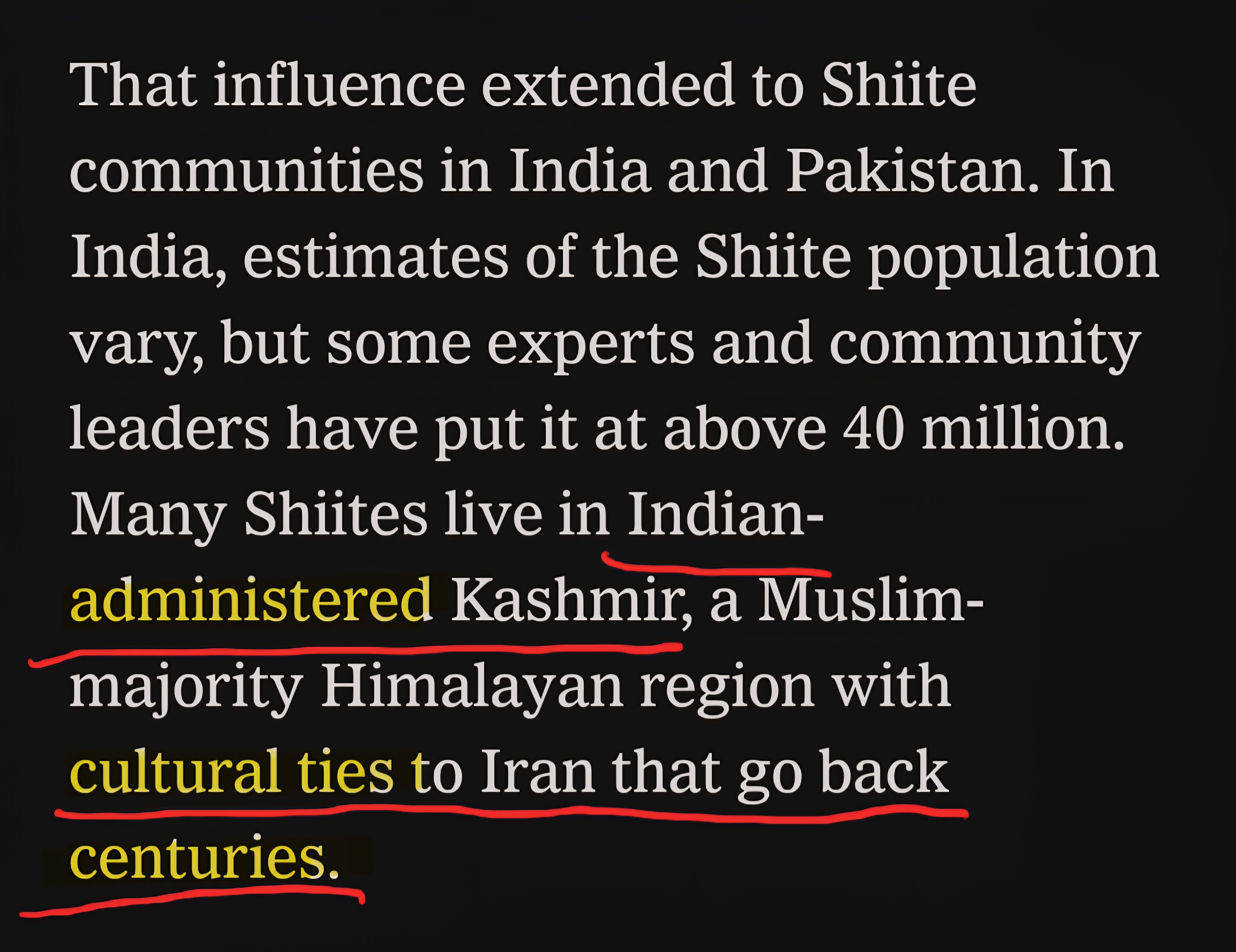
“Many Shiites live in Indian-administered Kashmir, a Muslim-majority Himalayan region with cultural ties to Iran that go back centuries.”
Pause for a moment and consider what is happening in that sentence.
Kashmir is not a settled territory. It is one of the longest running territorial disputes in the world. Since 1947, the region has been fought over by India and Pakistan, with both claiming sovereignty and both controlling different portions of the territory.
Yet the phrasing chosen by the Times is calm and almost pastoral. Kashmir is “administered.” The Shiite population is described as having “cultural ties to Iran that go back centuries.” The wording conveys history, continuity, and legitimacy. It sounds organic, even inevitable.
Now compare that language with how the same newspaper routinely describes the territory known historically as Judea and Samaria, today commonly referred to as the West Bank.
There the language changes dramatically.
Israel does not “administer.” Israel “occupies.”
Jewish communities are rarely described as having ancient ties. Instead readers are told that settlements are new and “considered illegal by most countries.”
Notice what disappears in that framing. The region called the “West Bank” only since 1967, contains places that formed the very center of Jewish civilization for more than a millennium. Hebron, Bethlehem, and Shiloh appear throughout the Hebrew Bible and in continuous Jewish historical memory. The kingdoms of ancient Israel and Judah rose and fell in these hills long before modern states existed.
Before Islam existed.
In other words, if the standard applied to Kashmir were applied consistently, readers might encounter sentences like this:
“Many Jews live in Israeli-administered Area C in Judea and Samaria, a region with cultural and historical ties to the Jewish people that go back more than three thousand years.”
But that sentence never appears.
Instead, the history is compressed into the language of illegality and occupation, as if the Jewish connection to the land began in 1967 rather than in antiquity.
This is not merely semantic. Language frames legitimacy. When one disputed territory is described through the lens of administration and centuries-old cultural ties, while another is defined primarily through the vocabulary of occupation and illegality, readers absorb very different impressions of the conflict.
The facts on the ground may be complicated in both cases. Kashmir is disputed. So is the West Bank.
But journalism that claims neutrality should apply the same descriptive standards to both.
Otherwise the language itself becomes the argument.

 First One Through
Pingback: Namen und Narrative: Hier „verwaltet“. Dort „besetzt“. | abseits vom mainstream - heplev