Anti-Jewish attacks in the United States have escalated from words to actions over the past two years. While antisemitism has always been the most prevalent hatred in the United States, the alarming escalation has even caught the attention of media that helped promote the Jew hatred for years.
In June 2025 articles and opinions, the New York Times called out attacks on Jews, seemingly ignoring its past of ignoring the scourge, and encouraging attacks with smears that Jews are “powerful” and steal money from public schools and taxpayers.
Yet it rationalized the attacks, even as it condemned people for making excuses for it.


The Times – which has long attempted to argue that despising the Jewish State is not antisemitism – said that Israel’s treatment of Palestinian Arabs is the reason that American Jews are being attacked. In a June 2 article, the author noted that in three recent attacks, “In Colorado and Washington, authorities said, the suspects shouted “Free Palestine” on the scene. In Pennsylvania, the arsonist later said he had set the fire as a response to Israeli attacks on Palestinians.”
Rather than state the obvious, that the antisemitic chants to “globalize the intifada” have gathered supporters who are killing Jews, it placed the blame on the Jewish State. It therefore made Jews responsible for antisemitic hate crimes rather than condemn the globalization of Jew-hatred. It’s a form of blood libel, where Jews only have themselves to blame for the world hating them.
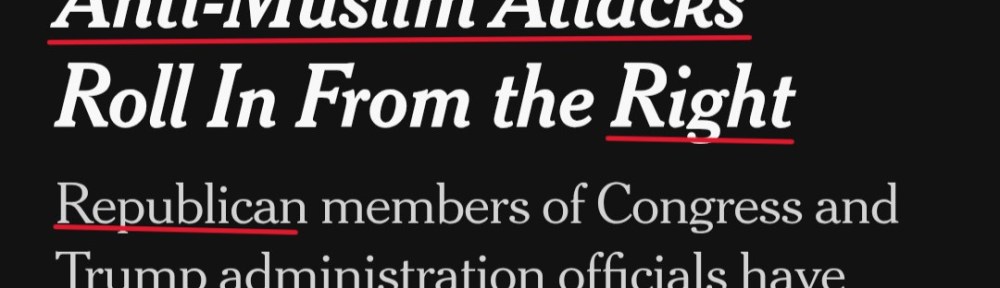
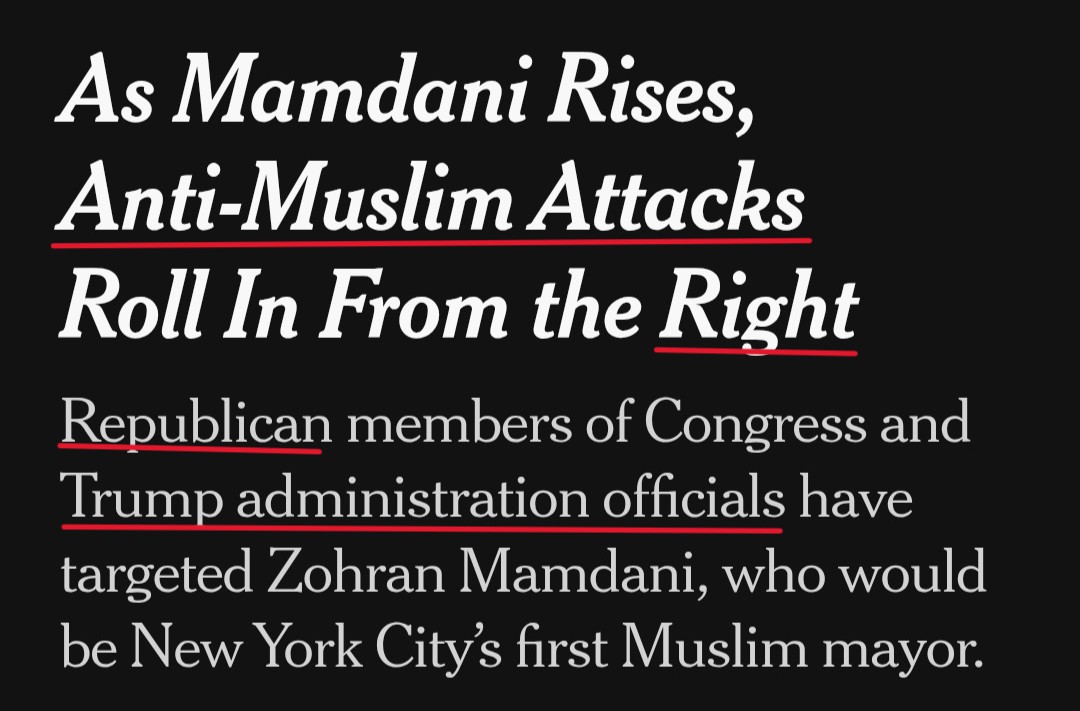
The Times would do no such acrobatics about anti-Muslim verbal attacks on Democratic mayoral candidate Zohran Mamdani.
The Times did not mention the latest US battle against the Islamic Republic of Iran which refers to America as the “Great Satan.” It did not bring up possible Iranian sleeper cells attacking Americans. It did not mention Houthi Muslims in Yemen attacking American ships. It did not mention the US-designated terrorist political jihadi group Hamas launching a war on Israel, an American ally, slaughtering 1,200 people and taking 250 people hostage.
There was no global backdrop of Muslim countries and groups attacking Americans and American interests in contextualizing “anti-Muslim attacks” as it did about attacks on Jews.
Instead, the Times sought to recast the discussion into an issue of racism from the “right” and “Republicans.” It repeats the narratives of the paper: only White Republicans are racist, and anti-Muslim attacks are real and recognizable.
The Gap In Storytelling in Anti-Jew and Anti-Muslim Attacks
In the Times’ accounts, Jews are a monolith. Every Jew is responsible for the action of any other Jew on the planet unless they actively and publicly shed such association. For example, for centuries, Jews were labeled as Christ killers – unless they converted to Christianity. Today, they need to declare themselves anti-Zionists to shed blood libel accusations.
Not so for Muslims. A Palestinian-American need not account for the barbaric crimes of Hamas. It is similarly understood that a Muslim in the U.S. should not be vilified for the antisemitic actions of Iran or any other Islamic country.
To suggest that all Muslims are accountable for the action of any Muslim around the world would be labeled racist. Yet it is rationalized for Jews. Jews are viewed as a single unit while distinctions are made for other religious groups.
The gap in the Times’ storytelling is itself telling.
Korach And Tzitzit
In this week’s Torah portion, Korach incites a mini rebellion against Moses (Numbers 16). He charged Moses of elevating himself above the rest of the Jews, even though “all the community are holy” (16:3). Korach argued that everyone should be viewed as equals, with no distinction or ranking.
Rabbi Jonathan Sachs pointed out that this story comes immediately after the law of tzitzit in the Torah. That commandment called for a unique single blue thread amongst others on the garment on one hand, but on the other, everyone had the same commandment to wear such garment. Korach argued that just like everyone wore tzitzit with the royal blue color thread, everyone had the same level of holiness.
Korach used tzitzit as a metaphor to undermine Moses’ leadership. Whether the tzitzit garment is all blue or all white, the attached threads still need to have a single thread of blue upon which to focus. Whether everyone or a single person wears the tzitzit, the matter is the same: the distinction of the blue thread is what drives the attention and direction towards God.
Korach turned the concept of uniqueness on its head: from a focus on the heavens to centering on earth. From a means to inspire prayer to a tool to encourage a rebellion.
The Jewish Distinction And Anti-Jewish Rebellion
No religious group in the world is obligated to account for the actions of co-religionists – except for Jews.
As the “Chosen people,” Jews are held apart – like the blue thread of tzitzit. While the other monotheistic religions are built upon the Jewish Bible, they see Jews as Korach saw the blue thread of tzitzit: a distinction without purpose. While it may have been ordained by God in the scriptures, the commandment is common to everyone. The supposed uniqueness becomes a subject of mockery. And leads to an uprising.
While each faith is unique, Jews are the subject of examination. Their small number – like the single blue thread in tzitzit – makes the focus more singularly intense. Until and unless Jews bleach themselves of their special color, they are considered a single unit separate from others.
There are times and certain groups who focus on Jews as a source of inspiration, such as Evangelical Christians. Yet there are others like secularists who despise Jewish particularism in favor of universalism. Still others like Rep. Rashida Tlaib (D-MI) and Hamas who simply see Jews as enemies which persecute them and therefore targets for attack.
Rationalizing Jew-hatred strips it of antisemitic intent. It morphs Jew-hatred into a “perceived antisemitism,” a problem for Jewish “Karens.” It simultaneously grants absolution to the antisemites. In contrast, anti-Muslim hatred gets no backstory, so the racism and “Islamophobia” is laid bare.
Antisemitism is so ingrained in society, that even stories meant to address the disgusting hatred are infused with the venom.
Related:
UN Secretary General Accuses Israel Of “Islamophobia War” (March 2024)
NY Times Minimizes Antisemitism While Flagging Islamophobia (November 2023)
Anti-Semitism Is Harder to Recognize Than Racism (September 2019)
The Non-Orthodox Jewish Denominations Fight Israel (January 2018)
New York Times Finds Racism When it Wants (January 2015)

 First One Through
Column: Moving Beyond Prayers – After Shootings in D.C. and Minnesota, Let’s Take Lessons from Austria and Other Countries – Boulder Jewish News https://boulderjewishnews.org/2025/column-moving-beyond-prayers-after-shootings-in-d-c-and-minnesota-lets-take-lessons-from-austria-and-other-countries/
>
LikeLike