
Why the American Founders believed that free elections were only the beginning of a free society.
Democracy is one of the great achievements of human civilization. The idea that ordinary people should select their leaders, determine the direction of their country and peacefully replace those in power represents an extraordinary departure from thousands of years of human history.
For much of that history, people lived under kings, emperors, military rulers and hereditary elites. Government was imposed upon them. Democracy introduced the revolutionary proposition that government derives its authority from the consent of the governed.
Yet democracy carries an inherent contradiction. While allowing people to choose their government is a beautiful principle, the political process through which those choices are made can be remarkably ugly.
Elections encourage competition, division, personal attacks and promises that cannot be fulfilled. Political parties organize people into opposing camps. Candidates exaggerate differences, question their opponents’ motives and convince supporters that the future of the country depends on their victory.
Ambrose Bierce (1842–1914), in The Devil’s Dictionary, offered a cynical definition of politics: “A strife of interests masquerading as a contest of principles.”
Democracy gives people the right to choose their government. It also gives political winners the opportunity to exercise power over those who voted against them.
The American Founders understood this danger. They sought to create a constitutional republic that would preserve popular government while restraining the political power that electoral victories conferred.
The Unavoidable Problem of Politics
People naturally disagree about the society in which they want to live.
Some favor higher taxes to fund public services. Others prefer lower taxes and greater private control over resources. People hold different religious beliefs, economic interests, cultural traditions and ideas about individual freedom.
These differences are inevitable in a free society. Indeed, the freedom to hold different opinions is among democracy’s greatest virtues.
But elections transform those differences into contests for political power.
Two neighbors may disagree about religion, education, taxation and immigration while maintaining a perfectly cordial relationship. Neither has the authority to impose his preferences on the other.
Politics changes that relationship. When one neighbor can enlist the power of government to advance his beliefs, their differences become much more consequential.
James Madison (1751–1836) recognized this problem in Federalist No. 10, published in 1787. He described competing groups organized around shared interests or passions as factions, and understood that they would always exist wherever people enjoyed liberty.
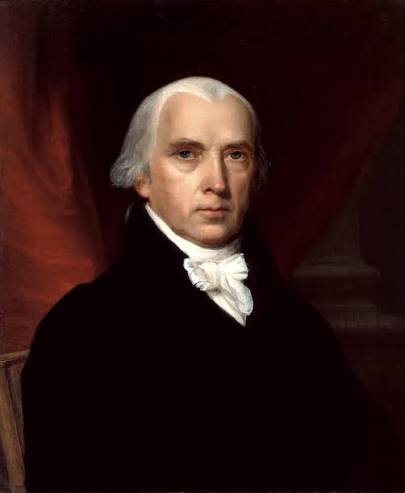
Madison argued that eliminating factions would require destroying the freedom that allowed them to form. His objective was to control their harmful effects rather than eliminate political disagreement.
He distinguished between what he called a pure democracy, in which citizens govern directly, and a republic, in which elected representatives exercise governmental authority.
Madison believed that representative government, particularly across a large and diverse republic, could make it more difficult for any single faction to dominate the others. Representatives might refine public opinion through deliberation, while the diversity of interests would complicate efforts to assemble oppressive majorities.
The objective was to accommodate competing interests without allowing political winners to destroy the rights of political losers.
When the Majority Becomes a Threat
Democracy relies upon majority rule. When people disagree about public policy, voting provides a peaceful mechanism for reaching decisions.
But does winning 51% of the vote give a political majority the right to do whatever it wishes?
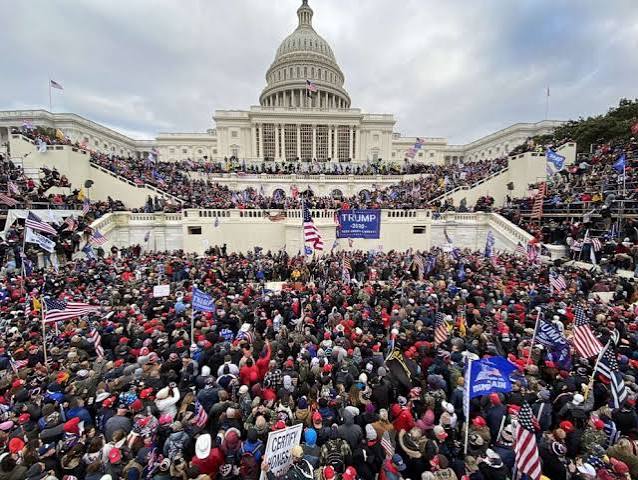
Suppose a majority decides to confiscate the property of a wealthy minority, prohibit the religious practices of an unpopular community or silence political opponents who challenge government policies.
Each decision might enjoy majority support. None would necessarily be just.
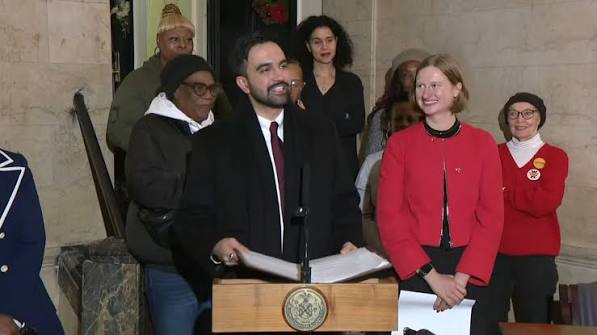
The fundamental problem is that elections determine who exercises political authority, but they do not establish the moral limits of that authority.
A majority can be oppressive just as a king or dictator can be oppressive. The fact that political power is obtained democratically does not guarantee that it will be exercised fairly.
Furthermore, minorities are not simply the people who voted for the losing candidate. A citizen may support the winning party while belonging to a religious, ethnic or economic minority whose rights are threatened by the government.
Political coalitions change with every election. Individual rights must endure regardless of those changes.
The Founders understood that property rights, freedom of conscience, due process and equal treatment under the law required protections extending beyond ordinary electoral outcomes.
Democracy determines who has the authority to govern. A constitution establishes what government has the authority to do.
The challenge is to reconcile the right of the majority to govern with the right of every individual to remain free.
The Founders’ Constitutional Republic
The American Founders spent considerable time debating how to resolve this dilemma.
They had rejected the arbitrary authority of a monarchy but faced two competing dangers. A government that was too powerful could threaten liberty. One that was too weak could fail to enforce laws, maintain order or protect the nation.
Alexander Hamilton (1755–1804) advocated a stronger national government capable of addressing national interests. Thomas Jefferson (1743–1826), writing from France, emphasized individual liberty and the dangers of centralized authority. The Anti-Federalists feared that the proposed Constitution did not adequately protect citizens against federal power.
Their objective was not the weakest possible government, but one powerful enough to govern and restrained enough to preserve liberty.
The resulting Constitution incorporated competing ideas rather than embracing any single political philosophy.
It established a representative republic in which the people would select their leaders, but those leaders would operate within defined boundaries.
Power was divided among the legislative, executive and judicial branches, and between federal and state governments. Elections would provide accountability, while independent institutions and competing centers of authority would restrain abuses of power.
Madison captured the challenge in Federalist No. 51 in 1788: “You must first enable the government to control the governed; and in the next place oblige it to control itself.”
The Bill of Rights, ratified in 1791, added explicit protections for fundamental liberties, including freedom of religion, speech, assembly and due process.
The Constitution also made its foundational rules deliberately difficult to change. Ordinary legislation could be enacted by elected representatives, but constitutional amendments generally required approval by two-thirds of both houses of Congress and ratification by three-fourths of the states.
Public policy needed to respond to changing circumstances, while fundamental constitutional principles required a much broader consensus to alter.
The Founders’ achievement was imperfect. The original Constitution accommodated slavery and failed to secure equal rights for all Americans. Subsequent amendments abolished slavery, established equal protection and expanded voting rights.
That history illustrates both the importance of enduring constitutional protections and the necessity of preserving a mechanism to correct fundamental injustices.
A constitution must be durable without becoming incapable of reform.
Making Political Defeat Bearable
Constitutional restraint serves another important purpose: it reduces the stakes of political competition.
The more authority government exercises over people’s lives, the more consequential every election becomes.
If political victory determines not only taxes and public spending but also religious expression, educational choices, property rights, business opportunities and personal freedoms, the consequences of winning or losing become enormous.
Political opponents may begin to view one another as existential threats. Compromise becomes dangerous because it might allow the opposing faction to gain power. Electoral defeat becomes frightening because the winners may fundamentally change the lives of those who opposed them.
“The people of America look around this political system and think that all this money, chasing all these political candidates, is a nightmare, and they’re right.” – Justice Elana Kagan, October 2026
George Washington (1732–1799) warned of this danger in his 1796 Farewell Address, describing “the alternate domination of one faction over another, sharpened by the spirit of revenge.”
Washington understood that partisan retaliation could become a recurring feature of government, with each victorious faction seeking to punish or reverse the actions of its predecessor.
The incentives of campaigning and governing are also fundamentally different.
Campaigns reward candidates for distinguishing themselves from opponents, mobilizing supporters and emphasizing disagreements. Governing a diverse society requires negotiation, restraint and recognition that political opponents remain citizens with legitimate interests.
Politicians may campaign as though winning an election grants them a mandate to remake society. A constitutional republic places limits on how far that mandate can reach.
The objective is to give government sufficient authority to perform its legitimate functions while protecting citizens from arbitrary interference. Laws, national defense, public infrastructure and the protection of individual rights all require effective institutions.
Likewise, constitutional protections should allow elected representatives to make ordinary policy decisions. A government incapable of acting would frustrate democratic accountability.
The challenge is to distinguish matters properly decided through elections from fundamental freedoms that should survive every election.
When those boundaries are respected, political competition becomes a contest over the direction of government rather than a struggle for control over society itself.
The Greater Achievement of a Free Society
Democracy is often celebrated because it allows people to choose the government they want. But in a society of millions of people with different interests and convictions, no government can satisfy everyone.
The more ambitious achievement is creating a society in which people can live freely even when they disagree with those exercising political power.
A free society requires more than the ability to choose its government. It requires space for people to live their lives beyond the reach of government. When government becomes the primary means of resolving every social disagreement, differences that people might otherwise accommodate become battles for political control.
The constitutional republic offers a different approach. Elections determine who governs, while foundational rights establish boundaries around what government may control.
The greatest achievement of such a system is not that everyone gets the government they want. It is that people can disagree about government without having to fight for control over every aspect of one another’s lives.
As we enter elections season, we must acknowledge that politics is often a very ugly business in a process to continue our dream of a stable democratic republic. We owe it to our nation to focus on electing leaders who will preserve our laws and rights, and not dissolve our great republic in the pursuit of a fictional purely democratic utopia.


