
What happened at Cornell University is not complicated.
A student threatened to bomb, stab and rape Jews and was eventually convicted. A professor described the mass slaughter of Jews and the burning of families as “exhilarating.” Jewish students faced open hostility in spaces that were supposed to protect them.
That is the story.
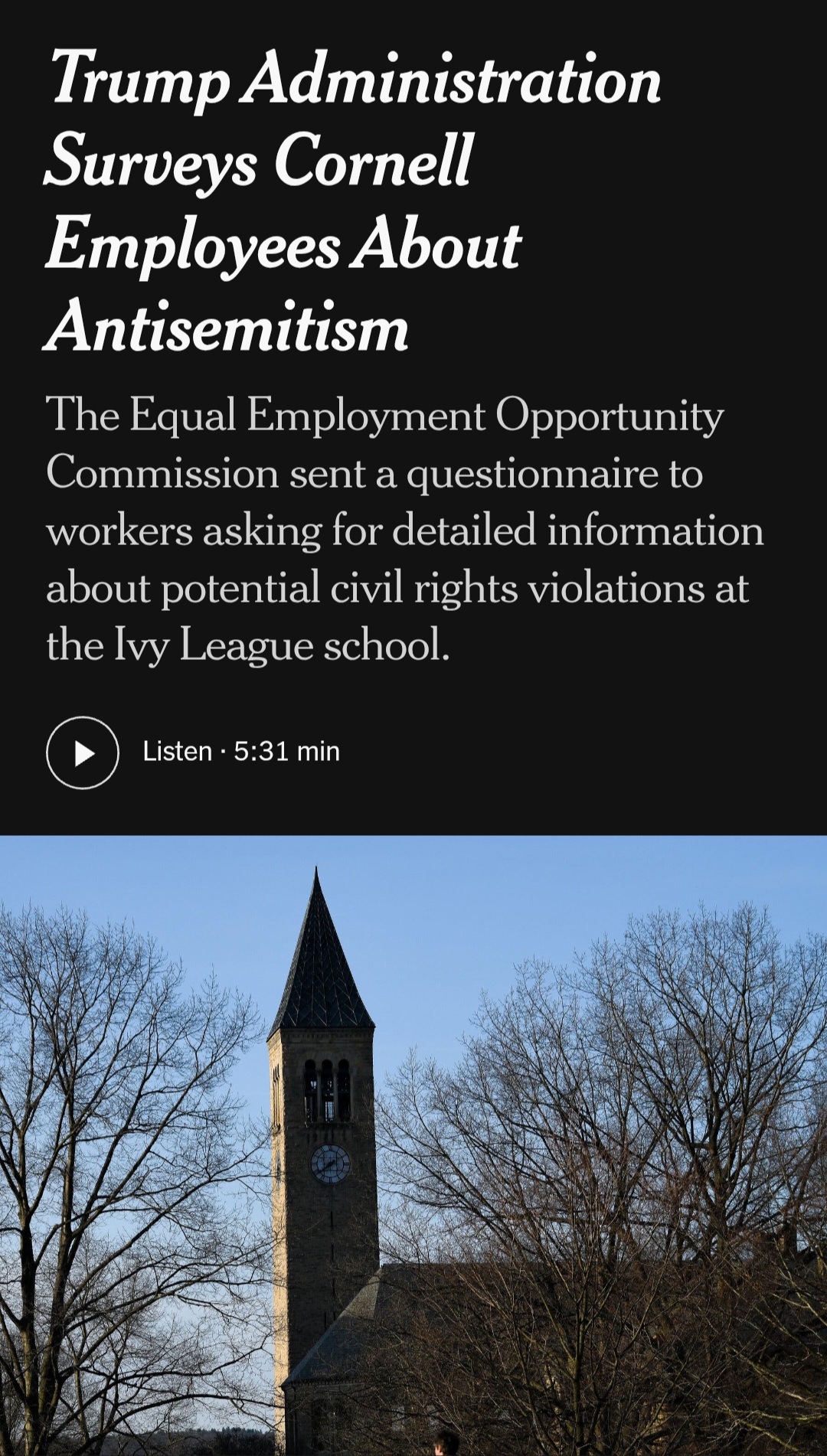
But you would not know any of it from reading The New York Times.
There, the story is something else entirely.
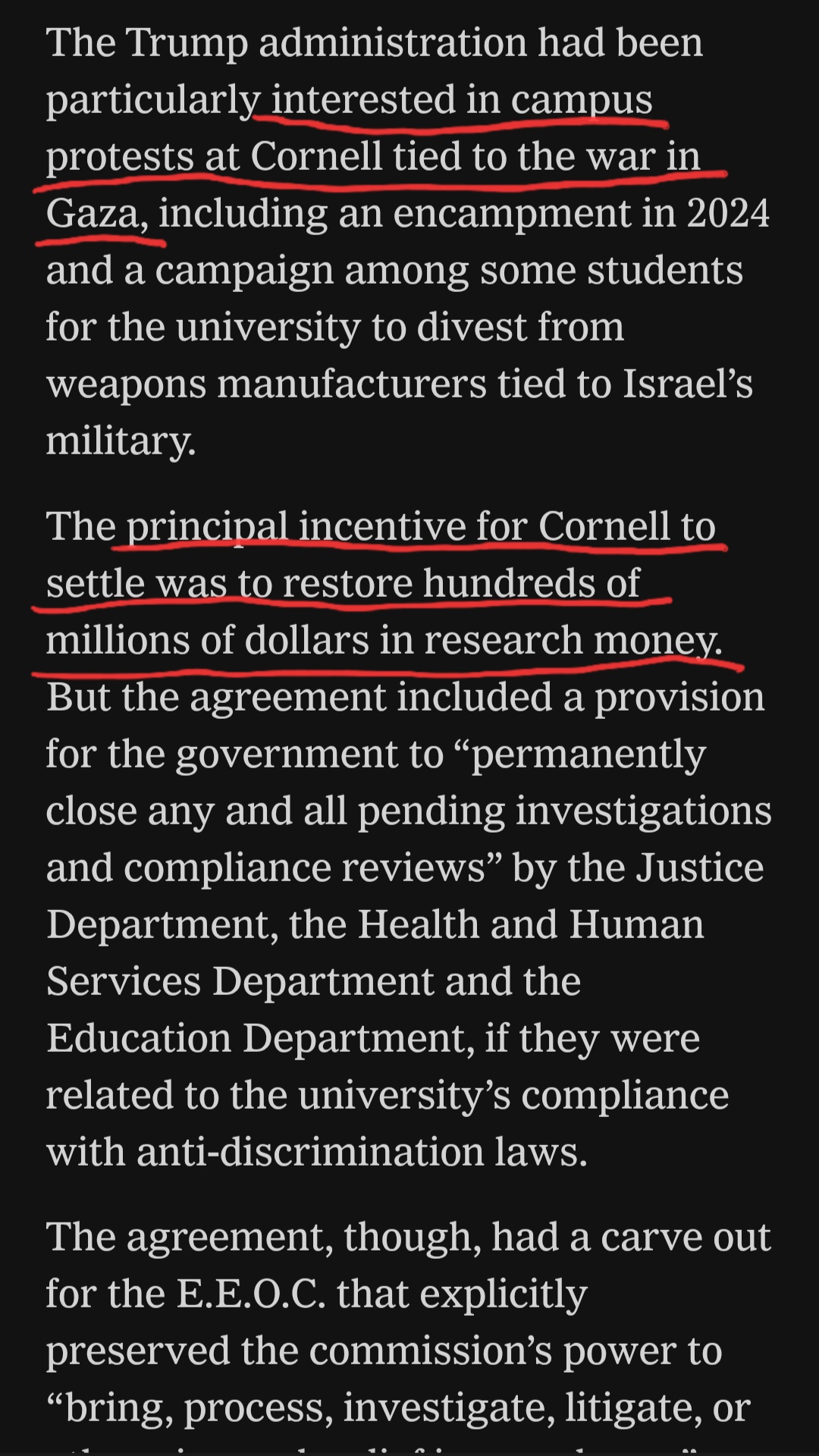
It is about leverage and negotiations. About a university navigating pressure from Washington, in which “[t]he principal incentive for Cornell to settle was to restore hundreds of millions of dollars in research money.”
Antisemitism is not the subject. It is merely the backdrop.
Once Jew-hatred is relegated to the background, everything else falls neatly into place. Cornell is no longer responding to hatred; it is managing a dispute. The federal government is no longer addressing civil rights concerns; it is applying political pressure. The moral stakes dissolve into process and incentives.
This is not omission by accident. It is construction by design.
Because centering what actually happened – explicit threats against Jews, open celebration of their murder – would force a conclusion that cannot be comfortably absorbed into the paper’s worldview: that serious, virulent antisemitism has taken root inside institutions it instinctively protects.
So the frame shifts.
Facts that clarify are excluded, while context that softens is elevated, and the reader is guided, carefully, away from the obvious.
It is a familiar pattern.
When antisemitism comes from ideological adversaries – white supremacists, Christian nationalists, “your father’s antisemitism” – mainstream media names it plainly and condemns without hesitation. It is the headline, the thesis, the moral center.
But when it emerges from favored spaces – elite campuses, activist movements, intellectual circles – the noxious hatred disappears. It is reframed as protest, as speech, as tension, as politics. Anything but what it is.
Because if every instance of antisemitism were treated with the same clarity, the same urgency, the same willingness to name what is happening, then the victims of preference would face unwanted scrutiny.
So it is managed instead.
Turn a story about Jews being threatened into a story about money. The antisemitic horde combines the two naturally anyway.
The New York Times is no longer just erasing antisemitic actions by majority-minorities and woke institutions, it is participating in the targeting of Jews for future attacks.

 First One Through