
Political power is built when ideology is fused to daily life. Theory alone persuades few and charity alone commands none. Durable movements embed a worldview inside services people rely on, until dependence becomes loyalty.
That was the formula in Gaza. It is the same formula now visibly rising in New York.
Hamas entered Gaza with a rigid morally corrupt worldview long before it ruled. Its clinics, schools, mosques, and charities were never neutral. They delivered aid while teaching a doctrine that explained suffering, identified enemies, and promised redemption through allegiance. Service and ideology arrived together.
The Democratic Socialists of America advances along the same dual track in American cities. Mutual aid, tenant organizing, bail funds, and rent clinics function as delivery systems for a moral framework that divides society into oppressors and oppressed, treats ownership as suspect, and elevates redistribution as justice. Assistance arrives bundled with belief.
In both cases, aid becomes initiation and gratitude becomes allegiance.
The Manifesto: How Movements Legitimize Seizure
Grassroots legitimacy does not sustain power by itself. Movements require a manifesto—a moral architecture that explains why people suffer and who is to blame.
Hamas supplied that architecture in its 1988 foundational charter. The document framed politics as a total moral struggle, casting Jews collectively as illegitimate manipulators of capital and institutions, thieves of land and destiny. Jewish presence, ownership and sovereignty were criminalized. Seizure was the cure to restoration. Compromise vanished and was vilified. The charter’s function was clear: define an enemy class, strip legitimacy, and authorize permanent struggle.
The New York analogue operates through a different medium with the same effect. In the DSA ecosystem, capitalists and landlords are portrayed as extractive and illegitimate. Profit is framed as violence with ownership recast as theft. Confiscation is moralized as justice.
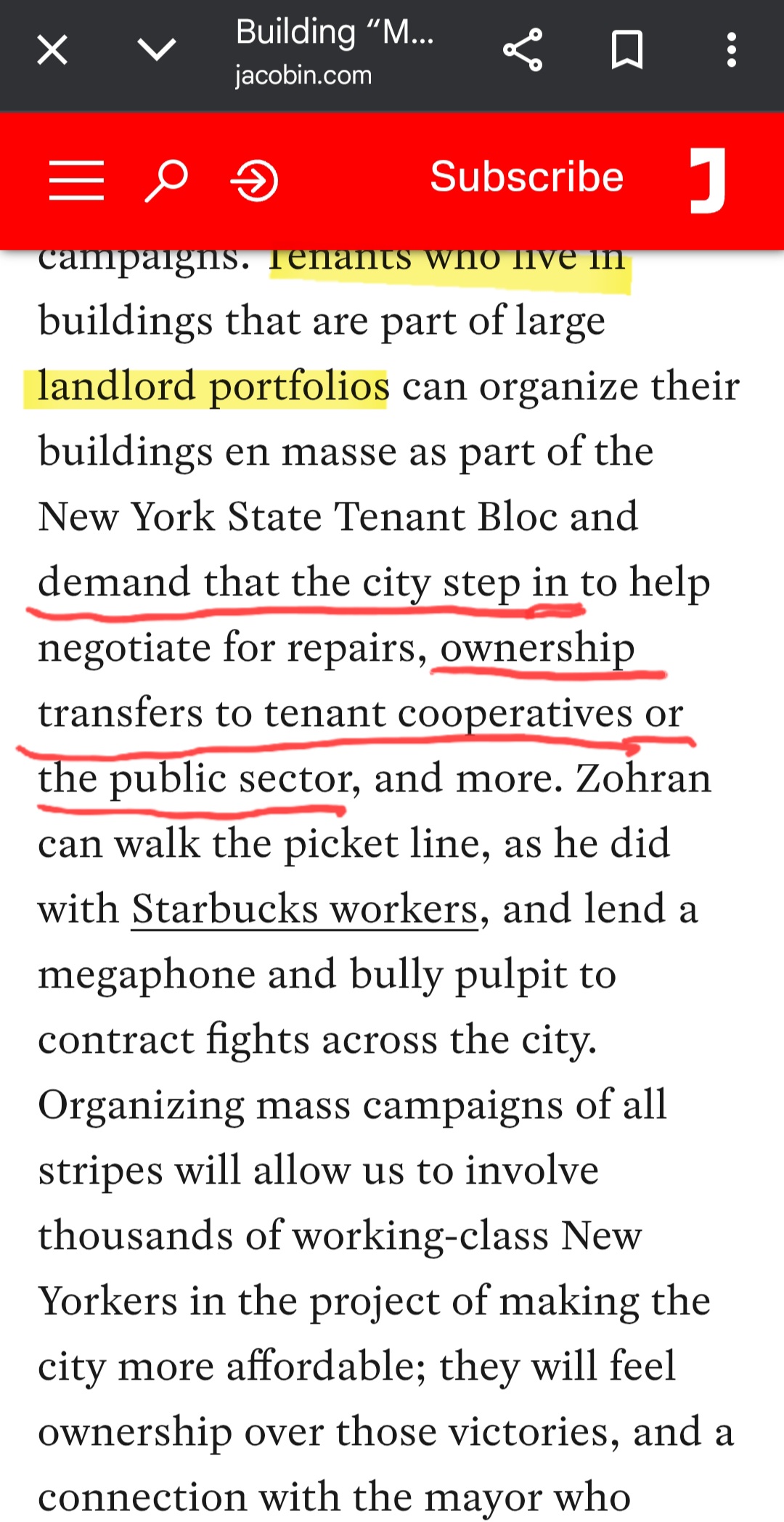
Jews are often implied rather than named—refigured as landlords, financiers, “Zionists,” or beneficiaries of immoral systems. Jewish capital becomes shorthand for illegitimate capital. The logic is identical: identify a moral contaminant and justify its removal.
Every mass movement needs a villain. The manifesto supplies one.
After Victory: Asset Capture as Governance
When Hamas seized Gaza in 2007, its parallel institutions fused into rule. Aid became leverage. Employment became conditional. Permits learned loyalty.
Then came Hamas’s most consequential real-estate empire: the tunnel network. A vast underground system ran beneath homes, schools, mosques, and hospitals—an invisible city binding the population into the movement’s infrastructure. Security, storage, command, and coercion converged below ground. Benefits flowed to the loyal. Dissent was isolated.
Governance became permanent: mobilization with infrastructure.
The governing theory now circulating in New York mirrors this logic. Mass governance insists movements never demobilize after elections.
Housing is the fulcrum. Advocates call for seizing or socializing rental property, transferring control to movement-aligned entities, and moralizing ownership itself. What cannot leave becomes the lever.
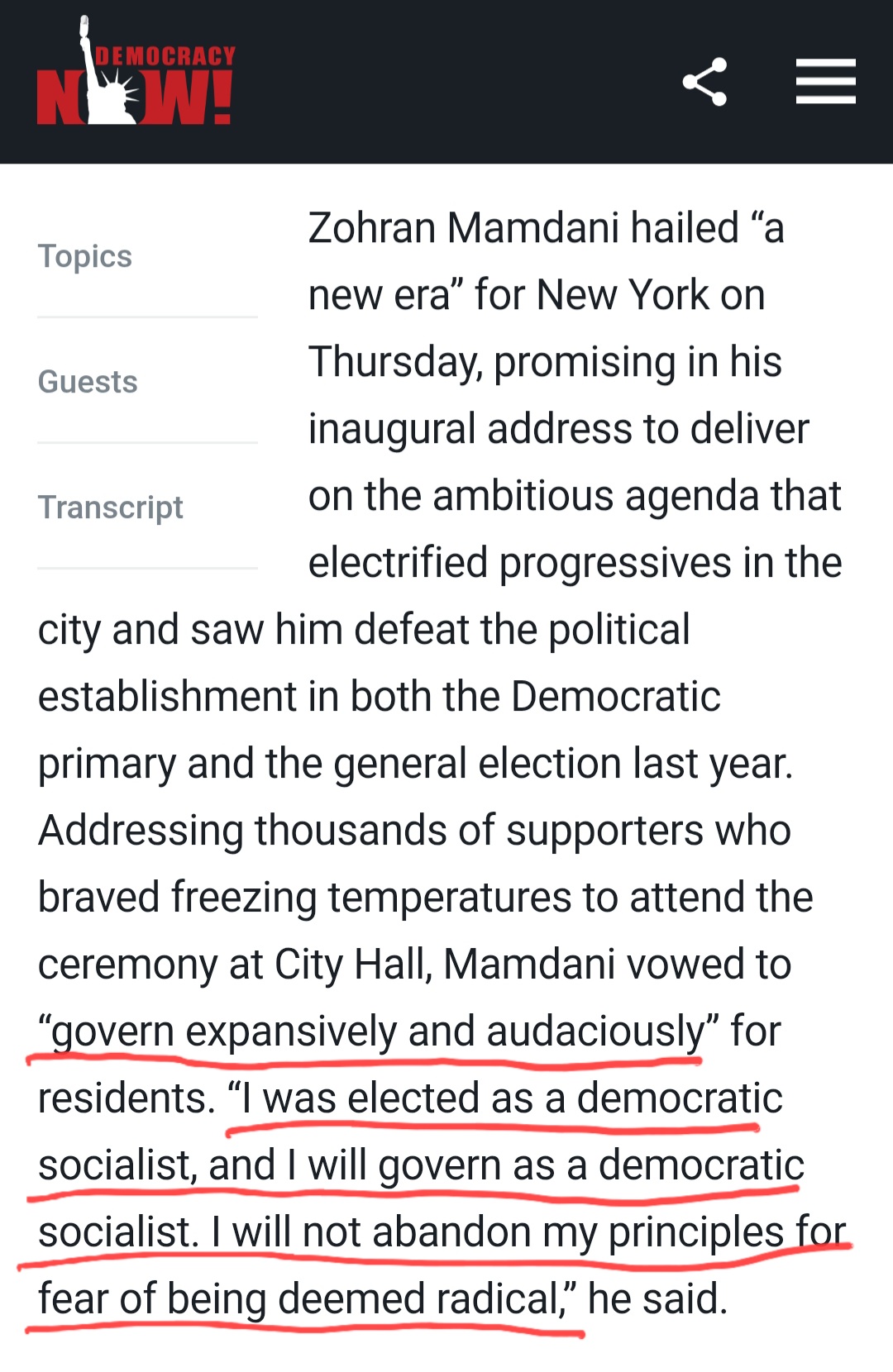
New York City Mayor Zohran Mamdani states openly that he will “govern expansively and audaciously” and not change course for being deemed too “radical.” What was once viewed as crazy is being normalized and soon to be implemented.
Redistribution Without Production
Hamas never built a productive economy in Gaza. It did not need to. External money—almost all of it routed through international “aid”—financed the broken economy. Governance ran on grievance and allocation. The system extracted and redistributed; it did not grow.
The same risk shadows New York’s mass-governance vision. There is no emphasis on productivity, investment, or growth. The emphasis is on free stuff and redistribution from outside: state transfers, federal dollars, and seizing capital from more wealthy citizens. When the mobile capital inevitably leaves, the focus will intensify on seizing what cannot leave: real estate. As jobs and taxpayers depart, redistribution turns inward. Assets are moralized, then absorbed.
The Bigger Warning: This Is Happening in New York
This is not unfolding in a peripheral city. It is unfolding in New York City—the capital of capitalism.

A redistribution-first governing theology imposed here would not be contained. When growth is dismissed as immoral and allocation is elevated as virtue, capital leaves, talent migrates, and pressure turns inward.
The danger compounds because New York is also home to one of the largest Jewish populations in the world. History is unambiguous: when movements moralize capital and cast Jews—explicitly or implicitly—as its avatars, the outcome is rupture. Flight. Confrontation. Violence.
An antisemitic movement consolidating power beside Jewish life at this scale resulted in the deaths of tens of thousands in Israel and the terrorist enclave of Gaza. It is an impending disaster in New York.
The warning signs are already visible:
- Meritocracy cast as a fiction
- Growth dismissed as immoral
- Redistribution elevated as governance
- Private property declared illegitimate
- Pressure treated as legitimacy
- Protection deemed conditional
- Jews recast as symbols of theft
Hamas showed the arc in Gaza: from grassroots mobilization plus ideology, to framing the enemy who causes despair, to asset confiscation and control, to an entrenched vicious philosophy financed by redistribution without production.
DSA-NYC is following the same arc, adapted to American law and language.

When the capital of capitalism abandons growth and sanctifies seizure, the city stops creating wealth and starts fighting over remnants.

 First One Through