
For the last several parshas, Moses has been addressing the children of Israel with a constant refrain: follow the commandments in the land, and you will be blessed; stray from them, and you will lose your inheritance. To us today, these verses are about mitzvot — the commandments that define Jewish life. But to the Israelites standing on the banks of the Jordan, the charge must have sounded different.
They had just watched an entire generation die in the desert. The memory of the spies still lingered — those men who declared that the land was too difficult to conquer, that the people within were too mighty to destroy. Could such whispers have been forgotten? Surely the children had heard rumors of what their parents had repeated around campfires for forty years. And now, standing on the edge of the land, they might have expected Moses to lay out the strategy, the order of battle, the plan of conquest.
Instead, Moses did something else entirely. He skipped the war. He jumped straight to what life would look like after. The rules of worship, the rhythms of daily life, the blessings and curses of obedience. It was as if the battles ahead — Jericho’s walls, Ai’s ambush, the wars against mighty kings — would be non-events.
Imagine a coach gathering his team before kickoff and skipping the playbook. Instead, he passes out dinner menus for the victory banquet to follow. No Xs and Os. No defensive schemes. Only a vision of celebration after the game.
Why? Perhaps it was Joshua’s role to direct the war, the next chapter of the Tanach already waiting to be written. Perhaps Moses, who knew he would not enter the land, wanted to leave the people with principles for the future. Or perhaps Moses was teaching something deeper: that the wars were only one part of securing a peaceful future. That the real challenge was not in winning the land, but in living faithfully within it.
The truth is, the dream of the land was already realized — even if the Israelites didn’t know it. Hundreds of years of diaspora were ending. The promise was being fulfilled before their eyes, not through a war plan but through divine decree. The land would be theirs. The victory was guaranteed. What remained in doubt was whether they would keep it.
Moses understood: the conquest would be won by God’s hand, but the inheritance would be maintained only through God’s law. The spies had feared giants and fortified cities, but the true danger was disobedience and forgetfulness once the land was secured. That is why Moses spoke not of how to conquer, but of how to live.
The people knew that Joshua would lead them to battle, just as he had over Amalek. And they had seen that Moses was their intermediary with God, who prayed for their success (Exodus 17:10-13). Now Moses was telling the people: you no longer need me as your agent; you are they keys to victory. Prayers during battle to secure victory; obedience thereafter to keep the peace.

And so it is today. The battles of our time are real, but they are only part of the threat. We must not be complacent. We must not assume that everything is on the battlefield. Beyond the battle plans lies our own responsibilities in living a meaningful life and knowing the source of our strength.
ACTION PLAN
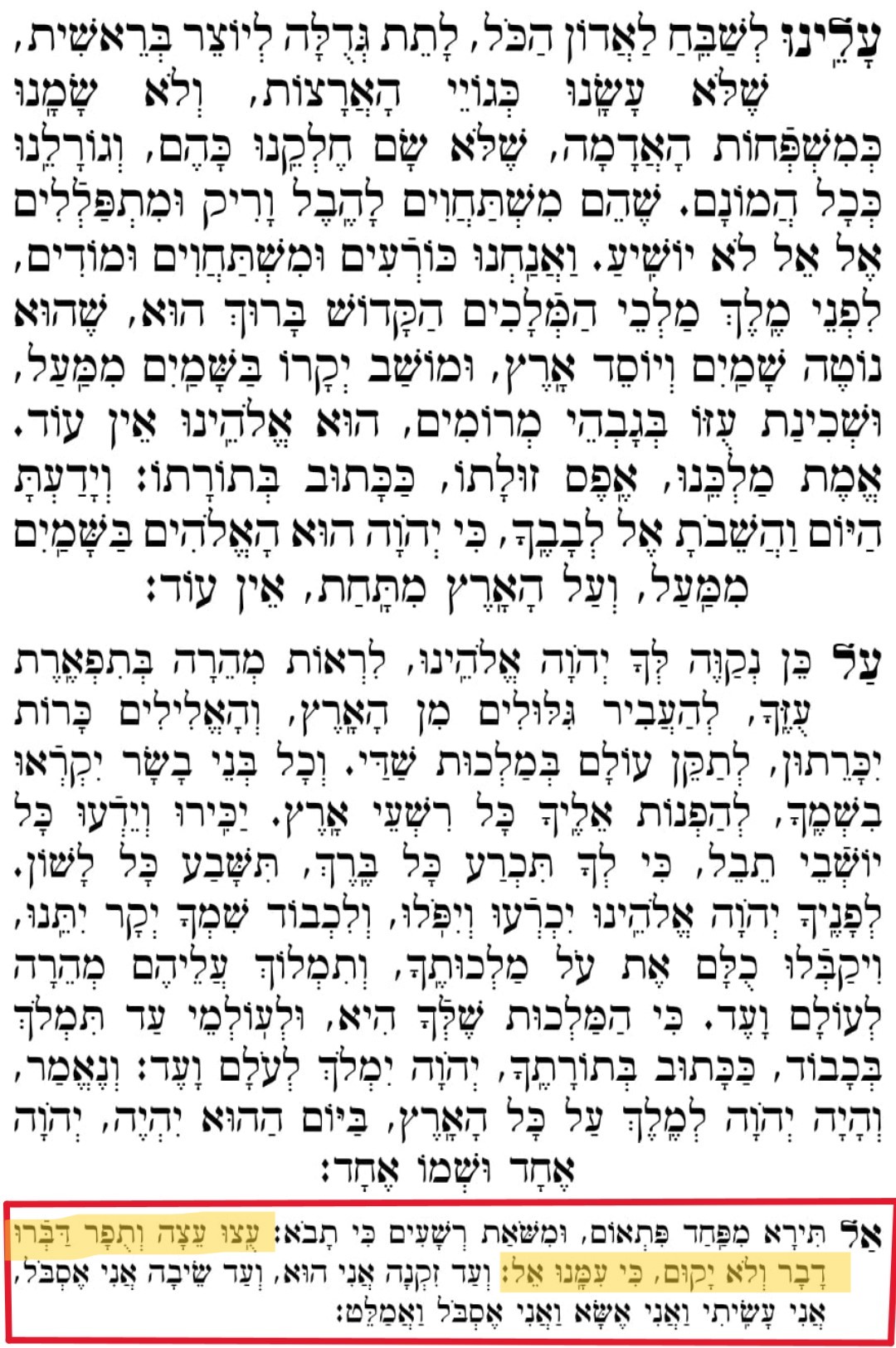
Go to the United Nations and sing outside the line from Al Tira, “Utzu Etza”: “Take counsel together, and it shall come to nought; speak the word, and it shall not stand: for God is with us.”

 First One Through