
The Economist warned this week that “Israel is flirting with the next intifada,” arguing that violent Jewish settlers may push West Bank Arabs into another uprising.
It has the intifada backwards.
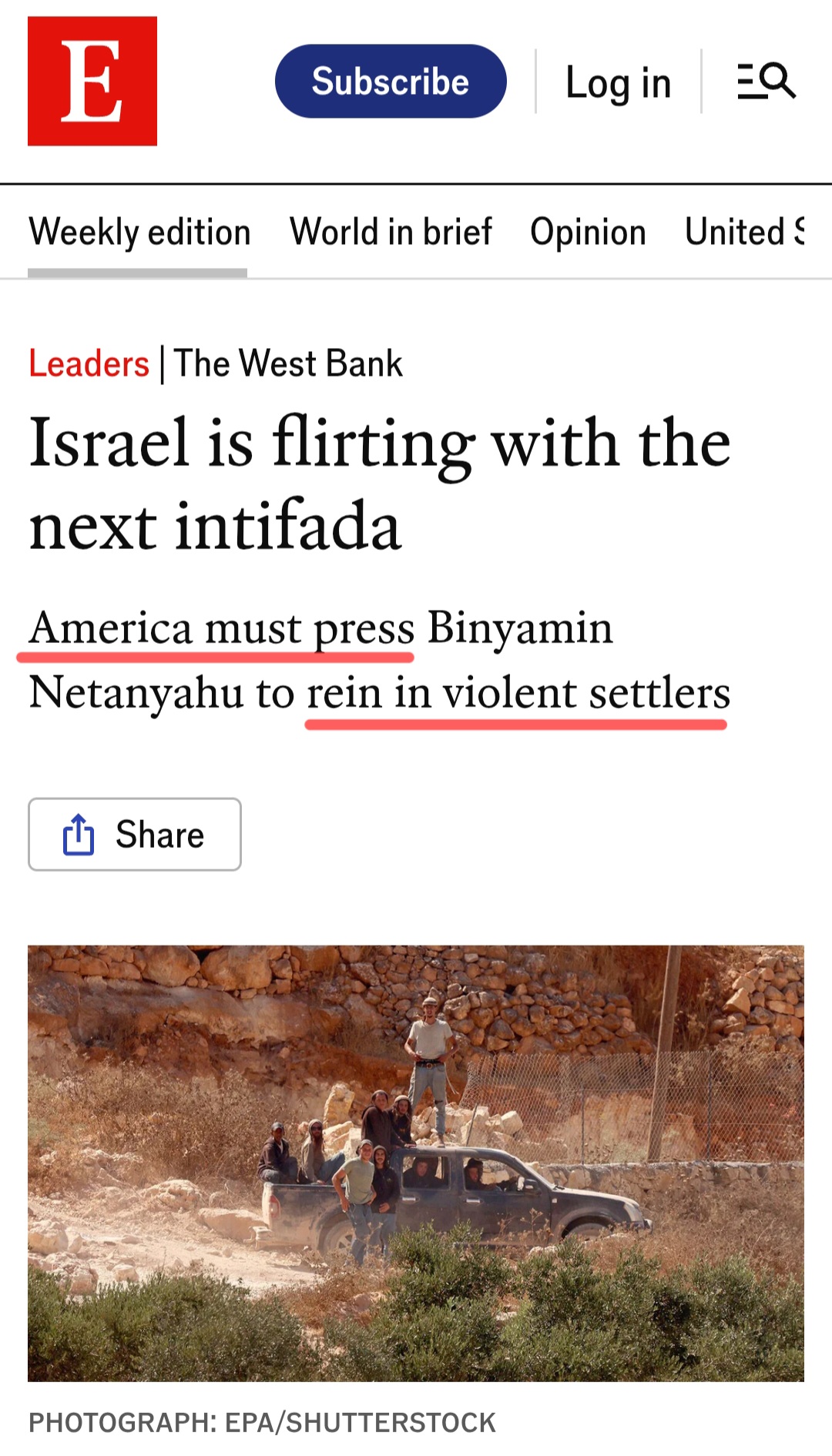
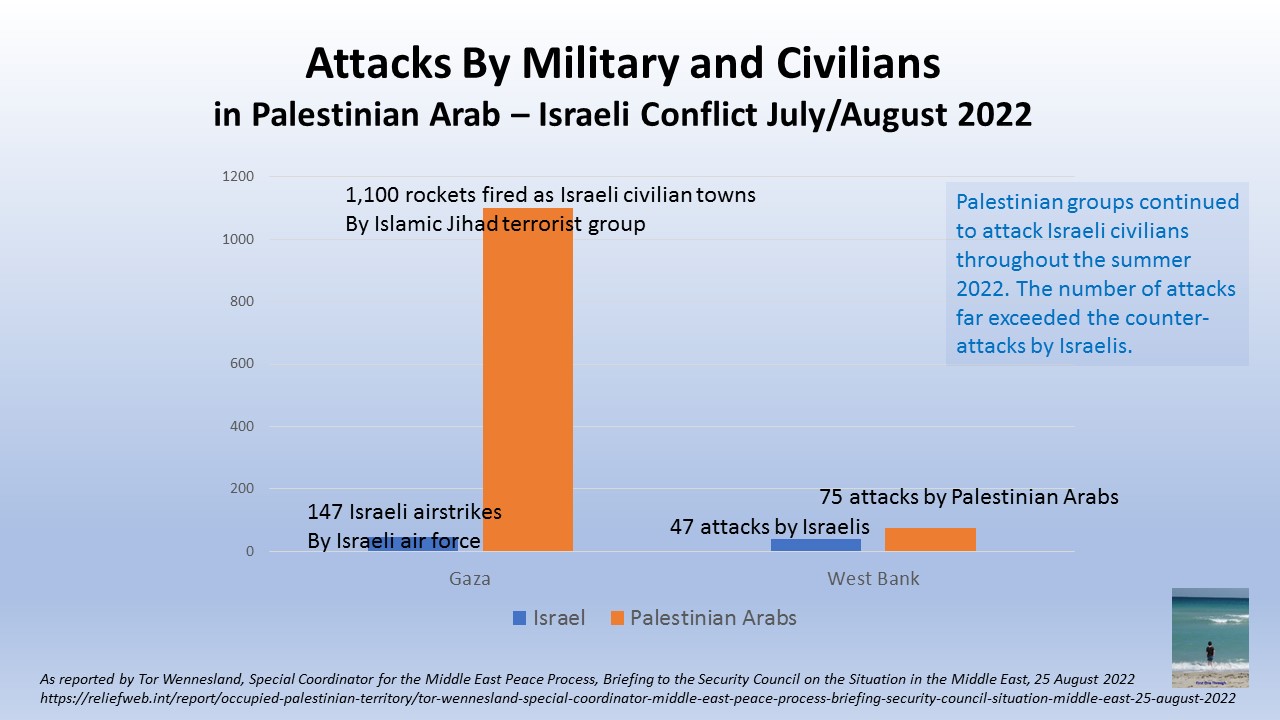
West Bank Arabs do not need West Bank Jews to introduce them to political violence. Palestinian Arab attacks against Jews in Judea and Samaria have been a persistent feature of the conflict for years, even when nobody attached the formal label “intifada” to them.
By 2021 and 2022, new armed groups were emerging in Jenin and Nablus, including the Jenin Brigades, Nablus Brigades and Lions’ Den. Their attacks spread beyond Judea and Samaria into Israeli cities, while the Lions’ Den became popular among Palestinian Arabs and the Palestinian Authority resisted demands to suppress it.
That was the environment in which I wrote “The Settler Intifada” on July 2, 2023, three months before the October 7 massacre.
The argument was that something new was happening among Jews in Judea and Samaria.
For years, Palestinian Arabs had murdered Jews while Jewish residents generally relied upon the Israeli government and military for protection. That slowly began to change. “Price tag” attacks appeared, followed by much larger retaliatory attacks after Jews were murdered.
In February 2023, after two Jewish brothers were shot and killed while driving, hundreds of Jews descended on Huwara and burned cars and buildings. In June, after four Jews were murdered at a restaurant and gas station, hundreds went into Turmus Ayya and again burned property.
I wrote then that Jews in Judea and Samaria had become “exasperated and are starting to engage in massive revenge attacks.” I warned that as Palestinian Arab attacks continued, Jewish violence could “morph from retaliatory in nature to constant.”
That was the idea of a settler intifada.
The word intifada has become so closely associated with Palestinian Arabs that journalists instinctively use it only for Arab violence against Jews. The Arabic word means an uprising. Palestinian Arabs do not own it only when they perpetrate it.
If a population believes its government cannot protect it, loses faith in existing institutions and begins taking matters into its own hands through recurring political violence, that can fairly be described as an intifada whether the people carrying it out are Arabs or Jews.
And the October 7 massacre made the situation even more toxic.
Jews in Judea and Samaria saw their government’s incompetence in allowing the massacre to take place. From 2021 to 2023 they had seen how West Bank Arabs attacked them with impunity, and now they saw Israeli Jews get hunted in their homes by thousands of Gazans.
Close to home, Arabs celebrated the slaughter of Jews. In the Palestinian Center for Policy and Survey Research’s December 2023 poll, 82% of West Bank respondents said Hamas was correct to launch the October 7 offensive. Support for Hamas surged after the attack, even more amongst West Bank Arabs than the Gazans who committed the crimes against humanity.

Jews in Judea and Samaria increasingly concluded that waiting for the Israeli government to stop Palestinian attacks was insufficient. Some began retaliating directly. Those attacks grew larger, more organized and less isolated.
But The Economist begins the movie in the middle. It sees Jewish violence today and warns that it may provoke a future Palestinian intifada. The more interesting story is that the Judea and Samara intifada is already underway.

 First One Through