
In the book of Numbers, the Moabite king Balak summons the non-Jewish prophet Bilaam to curse the Israelite nation which was traveling near Moab. What unfolds, is one of the most mysterious blessings in the Bible.
As Bilaam gazes upon the people of Israel, he declares:
“How can I damn whom God has not damned, How doom when God has not doomed? As I see them from the mountain tops, Gaze on them from the heights, There is a people that dwells apart, Not reckoned among the nations,” “הֶן־עָם֙ לְבָדָ֣ד יִשְׁכֹּ֔ן וּבַגּוֹיִ֖ם לֹ֥א יִתְחַשָּֽׁב“(Numbers 23:8–9)
The statement is peculiar – a nation which dwells alone – has befuddled rabbis for centuries. Is it a curse? A blessing? A prophecy?
At first glance, the idea of being alone evokes discomfort. In Genesis, God explicitly declares, “It is not good for man to be alone” “לֹא־ט֛וֹב הֱי֥וֹת הָֽאָדָ֖ם לְבַדּ֑וֹ” (Genesis 2:18). From this verse, Jewish tradition emphasizes the centrality of community, companionship, and connection. So why would Bilaam say something seemingly negative—and continue with a positive blessing in Numbers 23:10 “Who can count the dust of Jacob, Number the dust-cloud of Israel? May I die the death of the upright, May my fate be like theirs!”

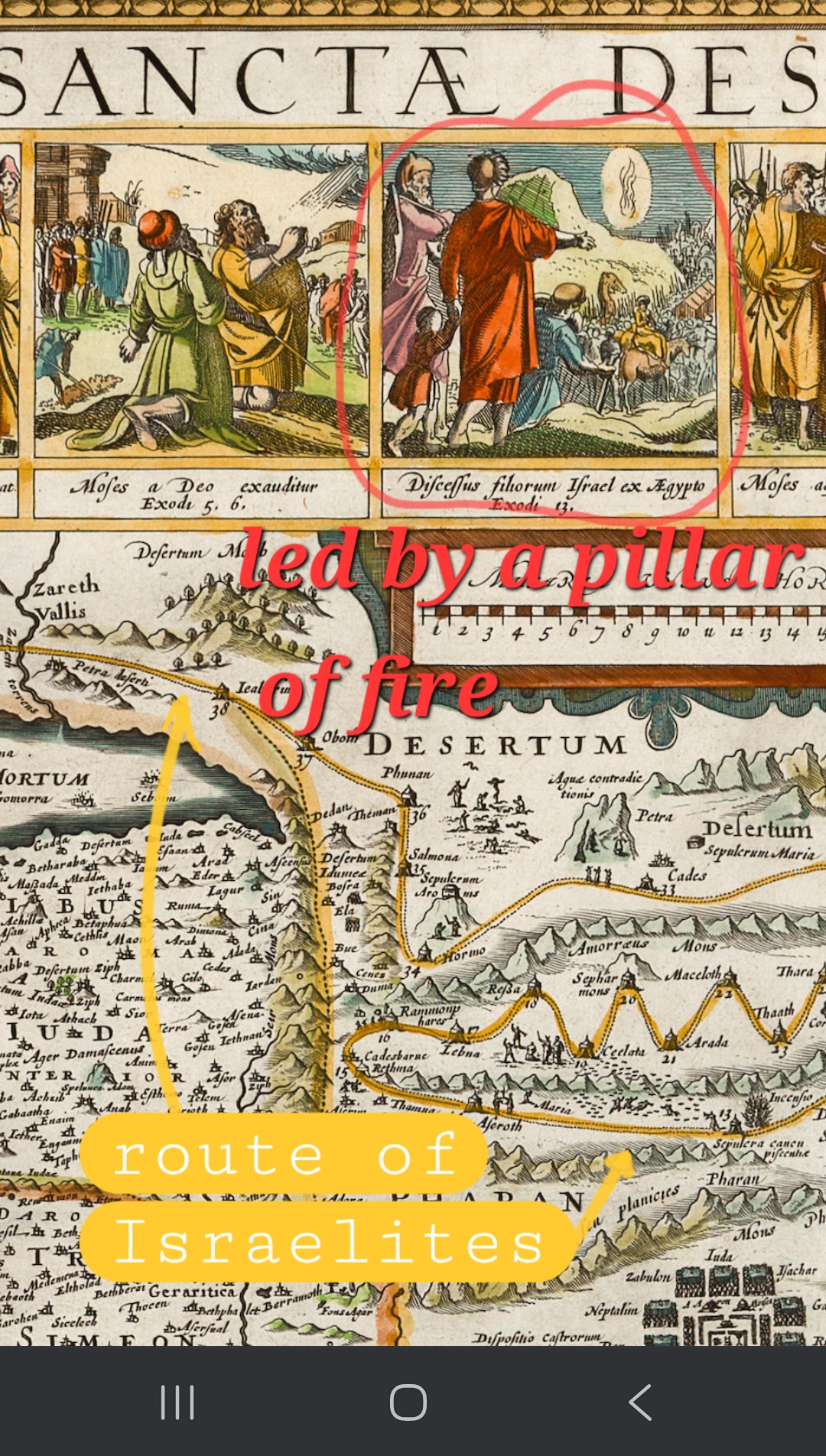
The answer may lie in context of the event and the deeper meaning of distinctiveness. Bilaam was not commenting on mere social isolation. He was marveling at the singularity of an entire people traveling together through the desert, in unison, yet set apart in character and destiny. He was struck by the sight of an entire nation—young and old, rich and poor—not scattered as refugees or as imperial conquerors, but moving as one, under a divine mission. This was a nation on a journey, and yet already a people. They were not defined by geography, wealth, or military might—but by a relationship with God.

In Jewish tradition, blessings are tied to recognition and distinction. Consider the rules of berachot (blessings): when a person eats an apple, it receives the blessing “borei pri ha’etz”—a specific blessing for fruit of the tree. If the apple is altered, like mashed into applesauce or mixed with other foods, the blessing remains the same ONLY if the fruit can still be identified. But if the fruit is so blended or processed that its original form can no longer be distinguished, it receives the general blessing of “shehakol“. The highest form of blessing is given to that which is most clearly recognizable.
In this light, Bilaam’s words take on added meaning. The Jewish people, by dwelling alone, are not to be pitied but admired. They are not a mashed mixture indistinguishable from general society but a clearly defined people, worthy of the highest blessing. Their uniqueness—religiously, culturally, and morally—is their spiritual signature.
Moreover, Bilaam wasn’t simply remarking on ethnic isolation. He noted the nation’s relationship with the Divine. Even when they seemed to be isolated, they were never truly alone—they were accompanied by God. The camp of Israel may have appeared vulnerable in the wilderness, but it was surrounded by divine presence, protected by a covenant older and stronger than any human alliance. As a prophet, he could not help but shout “How can I damn whom God has not damned” and “May my fate be like theirs!”
This point is emphasized by commentators like Rashi (1040-1105), who notes that Bilaam’s phrase can be read as prophetic: “They do not come under the same reckoning (לא יתחשב) with other nations. — Another explanation is: When they rejoice, no other nation rejoices with them.”
This is certainly the case today, as Israel defeats one enemy after another. Each – Hamas, Hezbollah, Iran – armed with both weaponry and genocidal intent, have been neutralized. The Jewish world is relieved and gives thanks, while the United Nations runs to condemn the Jewish State for its defensive war.
The aloneness feels like isolation but is it? Is the success – and “aloneness” – to be read as a glory to God? Bilaam’s blessing isn’t merely poetic—it is theological. He sees a people whose separation from other nations isn’t a curse but a connection to God – for those, like him, who can appreciate the holy tie.
For those who recognize this divine connection, the Jewish people become a source of blessing. As Bilaam says later, “Blessed are those who bless you, and cursed are those who curse you” (Numbers 24:9). But for those who fail to see the holiness of that distinction and connection to God—who seek to blend, suppress, or erase it—the reading is a curse. The uniqueness is condemned as outside societal standards.
In the end, Bilaam’s words are not a curse in disguise. They are a prophetic blessing that reveals a truth that many overlook: there is holiness in standing apart when one stands with God. The Jewish people, though often alone among the nations, are never alone in essence. They are accompanied by the Divine, distinguished by faith, memory, and mission.
Related:
Judaism’s Blessings and Curses (June 2021)
The Karma of the Children of Israel (January 2021)

 First One Through
Pingback: 30 Prayers for the Month of November to Strengthen Your Faith and Renew Your Spirit - Prayer Inside
Pingback: From War To Heritage | First One Through