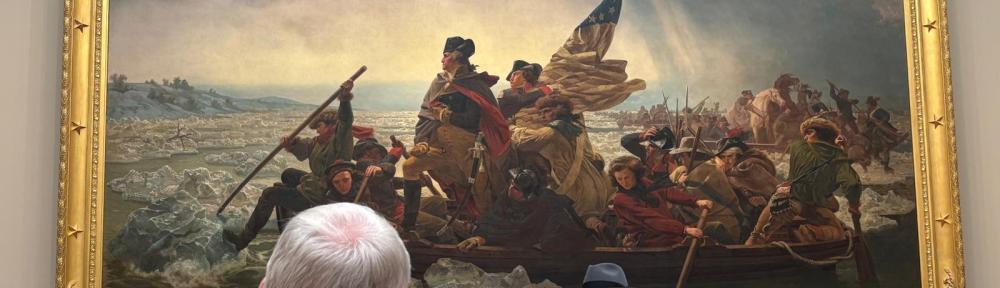
Nations don’t usually come into the world naked. They inherit laws, customs, monarchs, churches, debts, grudges, and centuries of someone else’s decisions.
The thirteen colonies wore all of Britain’s garments in 1775: the crown’s authority wrapped around their necks, a state church stitched onto their backs, mercantilist restrictions cinched tight around their waists. It was a wardrobe designed to keep them subjects, not citizens.
And then, in 1776, America stripped.
The Declaration of Independence wasn’t merely a break. It was an undressing – the deliberate peeling away of everything the colonists decided was corrosive, constricting, or corrupt. They shed monarchy because no free people should bow to a single man by accident of birth. They cast off the established church because faith coerced by government is faith without meaning. They tore away the idea that rights were permissions, handed down by Parliament or king, and claimed instead that rights are natural, woven into the human condition by something greater than government.
“We hold these truths to be self-evident, that all men are created equal, that they are endowed by their Creator with certain unalienable Rights, that among these are Life, Liberty and the pursuit of Happiness.” – Thomas Jefferson in the Declaration of Independence (1776)
This was America’s birthday suit: liberty, natural rights, self-government, and pluralism.
Britain offered representation, but only inside the structure it controlled. America answered with a more radical proposition: the people themselves are sovereign, and governments exist only with their consent. Britain offered subjects. America offered citizens.
Even the revolutionaries understood the irony — they were fighting the mother country by returning to the mother truth: all people are created equal, and legitimate power grows only from their permission. Strip away the titles, the aristocratic robes, the bishops’ vestments, and what remains is the basic dignity of the individual. The founders held that up like a newborn being lifted into the world — raw, unadorned, unmistakably human.
“In America the law is king. For as in absolute governments the King is law, so in free countries the law ought to be King; and there ought to be no other.” – Thomas Paine in Common Sense (1776)
And while the young nation failed to live up to those ideals for far too long – enslaved people left unclothed in humanity, women denied their place in public life, Native nations pushed aside – the principles themselves remained America’s original outfit. They were the measure by which future generations would challenge, correct, and expand the promise of 1776.
As the United States approaches its 250th birthday and on the birthday of its first president, it’s worth remembering what it chose to wear on day one. Not imperial gowns. Not inherited privilege. Not a state religion. Not the pomp of monarchs or the chains of decrees.
“Religion… can be directed only by reason and conviction, not by force or violence; and therefore all men are equally entitled to the free exercise of religion.” – George Mason in the Virginia Declaration of Rights (1776)
Just the simple fabric of freedom: liberty stitched to equality, rights fastened to responsibility, self-government woven into every seam.
And if we want to honor that inheritance, we should strip off our own modern costumes – the red and blue jerseys, the tribal uniforms of outrage, the ideological armor we sharpen every election season. Beneath all of that, we were born the same way this country was born: in the common belief that people can govern themselves, worship freely, speak openly, and live without bending the knee to any king.
That is America’s true birthday suit — the shared principles that clothed us at the beginning, and the only garments sturdy enough to hold us together now.

 First One Through