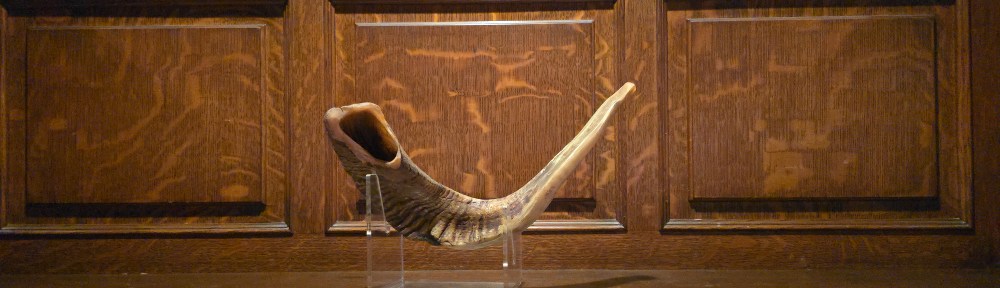
The sound of the shofar is meant to pierce the heavens. Sometimes the shofar’s story pierces the heart.
I remember coming home one day to find my son in tears. His beloved shofar — a gift from his grandfather — had been chewed by his dear dog. The horn was mangled beyond salvation. I carried it to the rabbi in desperation, asking if it could be saved. Perhaps the mouthpiece could be trimmed…. Alas, it could not, and I never saw it again.
My father had given it to him not long before, teaching his grandson how to coax sound from its ancient curves in preparation for his bar mitzvah. That shofar, which transitioned from a smooth polished mouthpiece to a rough and natural opening, was more than bone and horn — it was a link between generations.
My father bought my son a new shofar and continued to teach him how to blow. He was there on the bimah as my son blew it proudly in Jerusalem on the first day of Elul for his bar mitzvah. I took in the special moment, and also considered my son’s previous shofar that was not there. Even more, the profound emotion of a young boy torn at losing his grandparent’s bar mitzvah gift – to a dog whom he also loved, who was just being a dog. The gathered family and milestone in Jerusalem were the key celebrations of the day, but recalling my son’s well of tears months earlier over this moment which may not have happened, enriched it.
My father’s own shofar has a different story. He blew it for decades in his shul, year after year, his steady blasts calling our community to repentance. Eventually the horn began to crack, to dry, to lose its voice. He gifted the treasure to me some years ago, and I have placed it on my living room mantle, its curves still beautiful though its sound has fallen silent.

This year, my father — approaching 90 — will not blow the shofar. While he’s strong enough to walk to synagogue, some health issues will keep him from the bimah as he has done for as long as I can remember. The body ages. The shofar ages.
There are shofars that pass through the generations, blown by grandparents and great-grandparents a hundred years ago and still blown today. They carry not just sound but touch — the hands that held them, the lips that pressed them, the prayers that filled them. In many ways, these shofars still live.
We think of the shofar as the instrument through which we hear God’s call on Rosh Hashanah. It is the vehicle – and the subject. The shofar itself has its own biography. Some are placed on mantles, mute witnesses to decades of service. Some are destroyed, leaving only the memory of their sound. Some are retired to museums as quiet curiosities.
As we enter a new year, I think of two particular shofars in my life — one that I can no longer see, one that I can no longer hear — and of the special people who breathed life through them whom I am blessed to still hold and cherish. These horns, like us, are finite. But their stories resound forever, calling us to remember, to connect, and to pray for many more years of holding them and each other as a family and community.
The Touch of the Sound of the Shofar (September 2015)

 First One Through
This is a beautiful & touching story. G-d bless you & your family.
LikeLike
Thank you. Please share
LikeLike